
Exodus 34:6
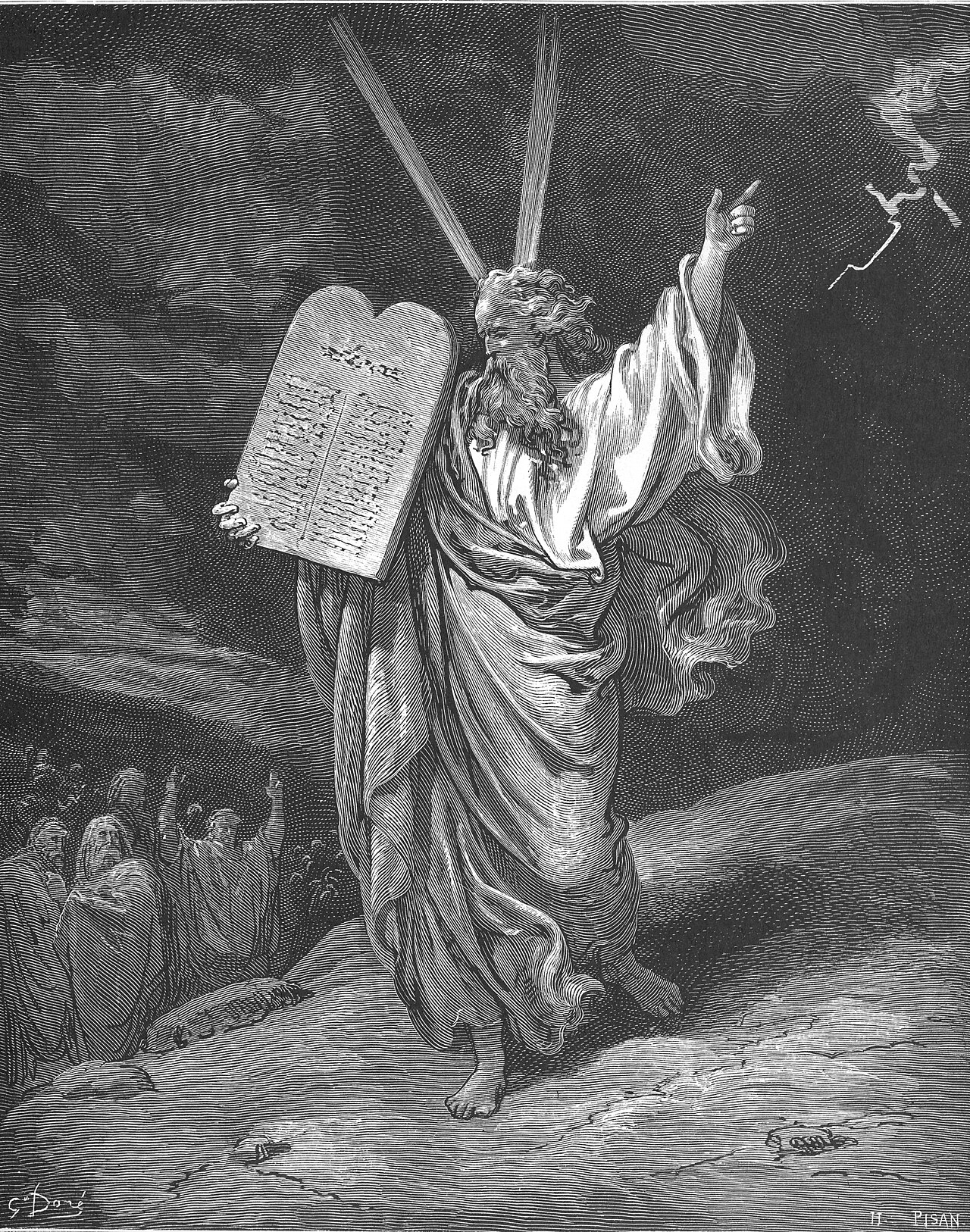
in Exodus 34Then the LORD passed in front of Moses and called out: “The LORD, the LORD God, is compassionate and gracious, slow to anger, abounding in loving devotion and faithfulness,
BSB
The same verse in ASV and KJV ▾
ASV
And Jehovah passed by before him, and proclaimed, Jehovah, Jehovah, a God merciful and gracious, slow to anger, and abundant in lovingkindness and truth;
KJV
And the Lord passed by before him, and proclaimed, The Lord, The Lord God, merciful and gracious, longsuffering, and abundant in goodness and truth,
⋯
This verse in Exodus 34
Commentary
7 notes on this verseAnd the Lord passed by - and proclaimed, The Lord, etc. - It would be much better to read this verse thus: “And the Lord passed by before him, and proclaimed Jehovah,” that is, showed Moses fully what was implied in this august name.
This site's exposition
And the Lord passed by before him
God's own description of himself opens with mercy and grace, and the order of the words carries the sentence. The rest of the Old Testament quotes or echoes this line more often than any other statement about God, at Numbers 14:18, Nehemiah 9:17, Psalm 86:15, Psalm 103:8, Psalm 145:8, Joel 2:13, Jonah 4:2 and Nahum 1:3. It is spoken over a nation that had just made a calf, which is why it stands here and not back at chapter 20.
The record, by era
The Puritans and the Awakening3 voices
Mercy entailed upon thousands of generations, even to those upon whom the ends of the world are come; nay, the line of it is drawn parallel with that of eternity itself. 6thly, He forgiveth iniquity, transgression and sin - Pardoning mercy is instanced in, because in that divine grace is most magnified, and because that it is that opens the door to all other gifts of grace.
And the Lord passed by before him,....
His mercy is grace, free grace; this teaches us to be not only pitiful, but courteous, 1 Pet. iii. (3.) He is long-suffering. This is a branch of God's goodness which the wickedness of sinners gives occasion for; that of Israel had done so: they had tried his patience, and experienced it.
The Nineteenth Century2 voices
A commentator
Jamieson, Fausset & Brown1802–1910
Commentary Critical and Explanatory on the Whole Bible (1871)
Being about to republish His law--the sin of the Israelites being forgiven and the deed of pardon about to be signed and sealed by renewing the terms of the former covenant--it was the most fitting time to proclaim the extent of the divine mercy which was to be displayed, not in the case of Israel only, but of all who offend.
A commentator
Albert Barnes1798–1870
Notes, Explanatory and Practical, on the Old and New Testaments (1832-1869)
proposed
This was the second revelation of the name of the God of Israel to Moses. The first revelation was of Yahweh as the self-existent One, who purposed to deliver His people with a mighty hand Exo 3:14; this was of the same Yahweh as a loving Saviour who was now forgiving their sins. The two ideas that mark these revelations are found combined, apart from their historical development, in the second commandment, where the divine unity is shown on its practical side, in its relation to human obligations (compare Exo 34:14; Exo 20:4). Both in the commandment and in this passage, the divine love is associated with the divine justice; but in the former there is a transposition to serve the proper purpose of the commandments, and the justice stands before the love. This is strictly the legal arrangement, brought out in the completed system of the ceremonial law, in which the sin-offering, in acknowledgment of the sentence of justice against sin, was offered before the burnt-offering and the peace-offering. But in this place the truth appears in its essential order; the retributive justice of Yahweh is subordinated to, rather it is made a part of, His forgiving Love (see Exo 32:14 note). The visitation of God, whatever form it may wear, is in all ages the working out purposes of Love toward His children. The diverse aspects of the divine nature, to separate which is the tendency of the unregenerate mind of man and of all paganism, are united in perfect harmony in the Lord Yahweh, of whom the saying is true in all its length and breadth, “God is love” 1Jn 4:8. It was the sense of this, in the degree to which it was now revealed to him, that caused Moses to bow his head and worship Exo 34:8. […]
The words behind it
15 Hebrew wordsEvery Hebrew word of this verse in the order it stands, with what it means and the door to its own study. The last column counts the times a word stands in the whole Bible: the rarer the word, the more the places it appears belong together.
| Hebrew | Sound | Meaning | Word study | In the Bible |
|---|---|---|---|---|
| וַיַּעֲבֹ֨ר | vaiyaavor | and he passed by | H5674 → | 556 times |
| יְהוָ֥ה׀ | yahweh | Yahweh | H3068 → | 6520 times |
| עַל־ | ʾal- | on | H5921 → | 5755 times |
| פָּנָיו֮ | panav | face his | H6440 → | 2123 times |
| וַיִּקְרָא֒ | vaiyikra' | and he proclaimed | H7121 → | 733 times |
| יְהוָ֣ה׀ | yahweh | Yahweh | H3068 → | 6520 times |
| יְהוָ֔ה | yahweh | Yahweh | H3068 → | 6520 times |
| אֵ֥ל | ʾel | a God | H410 → | 241 times |
| רַח֖וּם | rachum | compassionate | H7349 → | |
| וְחַנּ֑וּן | vechanun | and gracious | H2587 → | |
| אֶ֥רֶךְ | ʾerekh | long of | H750 → | |
| אַפַּ֖יִם | ʾapayim | anger<s> | H639 → | 276 times |
| וְרַב־ | verav- | and great of | H7227 → | 454 times |
| חֶ֥סֶד | chesed | covenant loyalty | H2617 → | 247 times |
| וֶאֱמֶֽת׀ | veemet | and faithfulness | H571 → |
וַיַּעֲבֹ֨רand he passed by
vaiyaavorH5674 →556 times
יְהוָ֥ה׀Yahweh
yahwehH3068 →6520 times
עַל־on
ʾal-H5921 →5755 times
פָּנָיו֮face his
panavH6440 →2123 times
וַיִּקְרָא֒and he proclaimed
vaiyikra'H7121 →733 times
יְהוָ֣ה׀Yahweh
yahwehH3068 →6520 times
יְהוָ֔הYahweh
yahwehH3068 →6520 times
אֵ֥לa God
ʾelH410 →241 times
רַח֖וּםcompassionate
rachumH7349 →
וְחַנּ֑וּןand gracious
vechanunH2587 →
אֶ֥רֶךְlong of
ʾerekhH750 →
אַפַּ֖יִםanger<s>
ʾapayimH639 →276 times
וְרַב־and great of
verav-H7227 →454 times
חֶ֥סֶדcovenant loyalty
chesedH2617 →247 times
וֶאֱמֶֽת׀and faithfulness
veemetH571 →
A shaded row is a word that stands 400 times or fewer in the Bible.
The walk
8 stopsEach card is a verse this one points to, and under it the verses that one points to in turn. Where several paths arrive at the same place, that place is listed first: the text keeps returning to it.
Through
Joel 2:13So rend your hearts and not your garments, and return to the LORD your God. For He is gracious and compassionate, slow to anger, abounding in loving devotion. And He relents from sending disaster.
it leads to
- Psalms 86:15
But You, O Lord, are a compassionate and gracious God, slow to anger, abounding in loving devotion and faithfulness.
Reached by 2 separate paths from here.
- Psalms 34:18
The LORD is near to the brokenhearted; He saves the contrite in spirit.
- Isaiah 57:15
For thus says the One who is high and lifted up, who inhabits eternity, whose name is Holy: “I dwell in a high and holy place, and with the oppressed and humble in spirit,…
- Exodus 34:6–7
Then the LORD passed in front of Moses and called out: “The LORD, the LORD God, is compassionate and gracious, slow to anger, abounding in loving devotion and faithfulness,
- Psalms 86:15
Through
Psalms 86:15But You, O Lord, are a compassionate and gracious God, slow to anger, abounding in loving devotion and faithfulness.
it leads to
- Psalms 103:8
The LORD is compassionate and gracious, slow to anger, abounding in loving devotion.
Reached by 2 separate paths from here.
- Ephesians 2:4–7
But because of His great love for us, God, who is rich in mercy,
- Psalms 103:8
Through
Psalms 145:8The LORD is gracious and compassionate, slow to anger and abounding in loving devotion.
it leads to
- Psalms 86:5
For You, O Lord, are kind and forgiving, rich in loving devotion to all who call on You.
Reached by 2 separate paths from here.
- Numbers 14:18
‘The LORD is slow to anger and abounding in loving devotion, forgiving iniquity and transgression. Yet He will by no means leave the guilty unpunished; He will visit the iniquity of the fathers upon…
- Psalms 86:5
Where this verse is studied
By subject
Grace35 verses
Mercy35 verses
On this page
About Exodus
Who and where
1 name in this verse with a page on the site.
This page draws on Adam Clarke, Commentary on the Bible; Albert Barnes, Notes, Explanatory and Practical, on the Old and New Testaments (1832-1869); Jamieson, Fausset & Brown, Commentary Critical and Explanatory on the Whole Bible; John Calvin, Commentary on the Four Last Books of Moses Arranged in the Form of a Harmony; John Gill, Exposition of the Old Testament (1748-1763); John Wesley, Explanatory Notes upon the Old Testament and Matthew Henry, Commentary on the Whole Bible.