
John 1:14
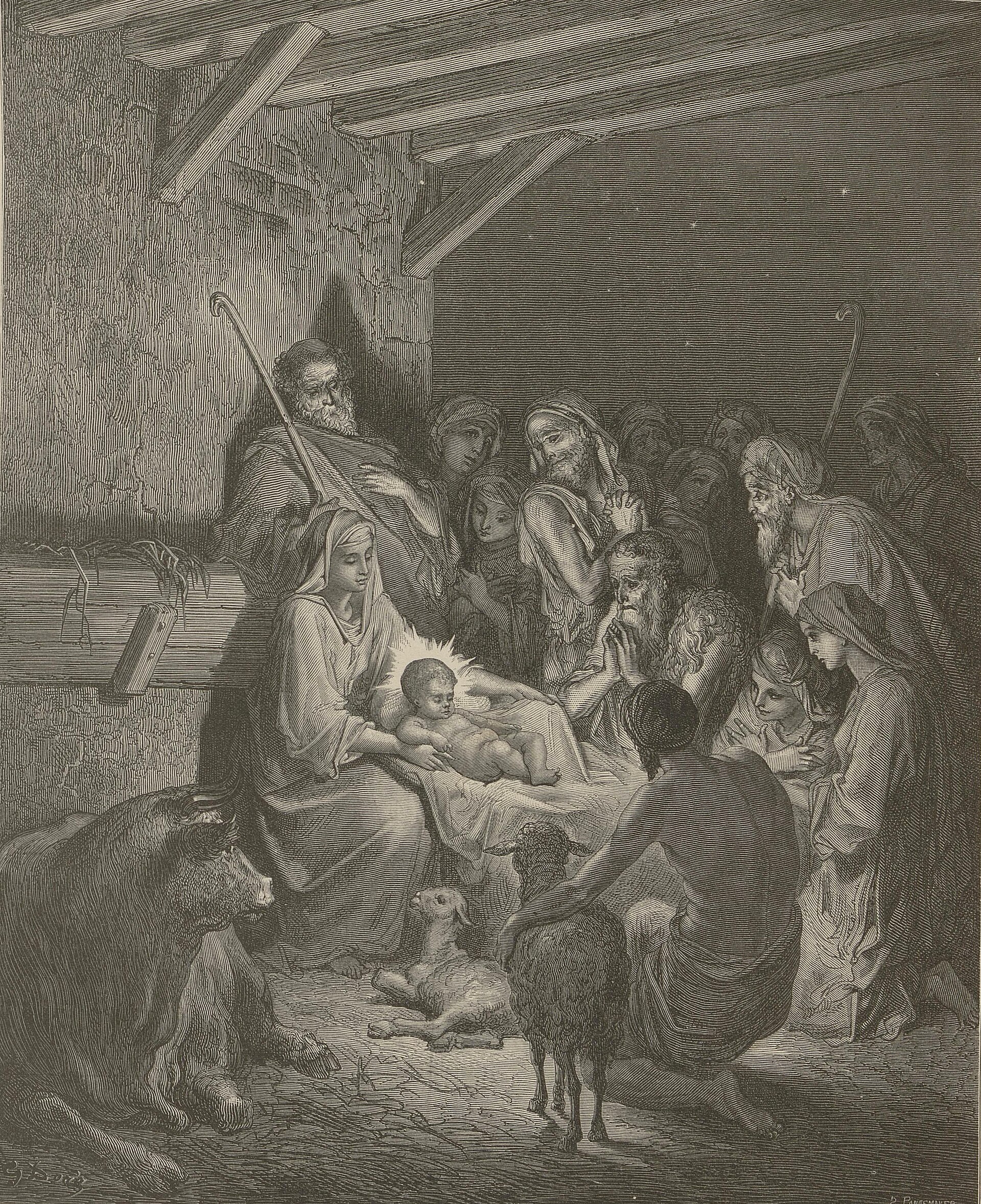
in John 1The Word became flesh and made His dwelling among us. We have seen His glory, the glory of the one and only Son from the Father, full of grace and truth.
BSB
The same verse in ASV and KJV ▾
ASV
And the Word became flesh, and dwelt among us (and we beheld his glory, glory as of the only begotten from the Father), full of grace and truth.
KJV
And the Word was made flesh, and dwelt among us, (and we beheld his glory, the glory as of the only begotten of the Father,) full of grace and truth.
⋯
This verse in John 1
Commentary
97 notes on this verseA commentator
Athanasius of Alexandria296–373
On the Incarnation of the Word 9.1-4 · Written before 373.
For the Word perceived that death was the only way that the corruption of people could be undone. However, it was impossible for the Word to suffer death, being immortal and Son of the Father. Therefore, he takes to himself a body capable of death, so that such a body, by partaking of the Word who is above all, might be worthy to die in the stead of all, and might, because of the Word that had come to dwell in it, remain incorruptible. In this way, the corruption of all might be checked by the grace of the resurrection.
This site's exposition
The Word became flesh
Made His dwelling renders eskenosen, pitched a tent, so the glory that filled the tabernacle at Exodus 40:34 now fills a human life. It is full of grace and truth, as the LORD described Himself at Exodus 34:6.
The record, by era
The Church Fathers5 voices
Let us then aim at the fulfilment of the commandments by the works of the Lord; for the Word Himself also, having openly become flesh, exhibited the same virtue, both practical and contemplative. Wherefore let us regard the Word as law, and His commands and counsels as the short and straight paths to immortality; for His precepts are full of persuasion, not of fear.
Now the Word of God says, "I am the truth." The Word is then to be contemplated by the mind. ... Now the Word issuing forth was the cause of creation; then also he generated himself, "when the Word had become flesh," that He might be seen.
A commentator
Dionysius of AlexandriaFrom the Two Books on the Promises · Written before 264.
proposed
For the Gospel and the Epistle agree with each other, and both commence in the same way. For the one opens thus, "In the beginning was the Word;" while the other opens thus, "That which was from the beginning." The one says: "And the Word …
A commentator
Ambrose of MilanOn the Sacrament of the Incarnation of the Lord 6.59 · Written before 397.
proposed
It is written, they say, "The Word was made flesh." It is written. I do not deny it. But consider what follows, for there follows: "And dwelt among us," that is, that word that took on flesh, this Word dwelt among us, that is, dwelt in human flesh, and so he is called Emmanuel, that is, "God with us." So this statement, "The Word was made flesh," stands for that which took place. He became man even as he said in Joel: "I will pour out of my spirit upon all flesh," for the future pouring out of spiritual grace is promised not for irrational flesh but for humanity.
A commentator
Augustine of HippoEnchiridion, On Faith, Hope and Love, Chapter 10 · Written before 430.
proposed
For who can unfold in cogent enough fashion this statement, that "the Word became flesh and dwelt among us," so that we should then believe in "the only Son of God the Father Almighty, born of the Holy Spirit and Mary the Virgin." Yet it is indeed true that the Word was made flesh, the flesh being assumed by the Divinity, not the Divinity being changed into flesh. Of course, by the term "flesh" we ought here to understand "man," an expression in which the part signifies the whole, just as it is said, "Since by the works of the law no flesh shall be justified," which is to say, no man shall be justified. Yet certainly we must say that in that assumption nothing was lacking that belongs to human nature. But it was a nature entirely free from the bonds of all sin. It was not a nature born of both sexes with fleshly desires, with the burden of sin, the guilt of which is washed away in regeneration. Instead, it was the kind of nature that would be fittingly born of a virgin, conceived by His mother's faith and not her fleshly desires. Now if in his being born, her virginity had been destroyed, he would not then have been born of a virgin. It would then be false (which is unthinkable) for the whole Church to confess him "born of the Virgin Mary." This is the Church which, imitating his mother, daily gives birth to his members yet remains virgin.
90 more voices on this verse
The Church Fathers57 voices
What you see here, beloved, on the table of the Lord, is bread and wine; but this bread and this wine by the word become the body and blood of the Word. For the Lord, who in the beginning was the Word, and the Word was with God, and the Word was God, because of His mercy, by which He did not despise what He created in His own image, the Word was made flesh, and dwelt among us, as you know; for the Word also assumed man, that is, the soul and flesh of man, and became man, remaining God. Because of this, because He also suffered for us, He entrusted to us in this sacrament His body and blood, which He also made us ourselves. For we too have become His body, and by His mercy, what we receive, we are.
He assumed poverty and did not lose riches. Rich inside, poor outside. God hidden in riches, appearing as man in poverty. See his riches: In the beginning was the Word, and the Word was with God, and the Word was God. He was in the beginning with God. All things were made through him. What is richer than he through whom all things were made? One can have gold and be rich, one cannot create. Therefore, since these riches of his were commended, see his poverty: And the Word was made flesh, and dwelt among us. By this poverty of his we are enriched, because in his blood which flowed from his flesh, which the Word became flesh and dwelt among us, the sack of our sins was torn apart. Through that blood we cast off the rags of iniquity, that we might be clothed in the robe of immortality.
He made Himself a mother while He was with the Father: and when He was made from the mother, He remained with the Father. How could God cease to exist when He began to be man, who granted to His mother that she should not cease to be a virgin when she gave birth? Hence, the Word made flesh did not cease to be the Word by perishing into flesh; but flesh came to the Word, so that it should not perish: that as man is soul and flesh, so Christ would be God and man. The same God who is man, and who is God is the same man: not by confusion of nature, but by unity of person. Finally, He who is the Son of God, co-eternal with the Father, always from the Father, the same began to be the son of man from the Virgin. Thus, humanity is added to the divinity of the Son; and yet, the Trinity does not become a quaternity, but remains a Trinity.
These, then, "were born not of the will of the flesh, nor of the will of man, but of God." But that men might be born of God, God was first born of them. For Christ is God, and Christ was born of men. It was only a mother, indeed, that He sought upon earth; because He had already a Father in heaven: He by whom we were to be created was born of God, and He by whom we were to be re-created was born of a woman. Marvel not, then, O man, that thou art made a son by grace, that thou art born of God according to His Word. The Word Himself first chose to be born of man, that thou mightest be born of God unto salvation, and say to thyself, Not without reason did God wish to be born of man, but because He counted me of some importance, that He might make me immortal, and for me be born as a mortal man. When, therefore, he had said, "born of God," lest we should, as it were, be filled with amazement and trembling at such grace, at grace so great as to exceed belief that men are born of God, as if assuring thee, he says, "And the Word was made flesh, and dwelt among us." Why, then, dost thou marvel that men are born of God? Consider God Himself born of men: "And the Word was made flesh, and dwelt among us." But because "the Word was made flesh, and dwelt among us," by His very nativity he made an eye-salve to cleanse the eyes of our heart, and to enable us to see His majesty by means of His humility. Therefore "the Word was made flesh, and dwelt among us:" He healed our eyes; and what follows? "And we beheld His glory." His glory can no one see unless healed by the humility of His flesh. Wherefore were we not able to see? Consider, then, dearly beloved, and see what I say. There had dashed into man's eye, as it were, dust, earth; it had wounded the eye, and it could not see the light: that wounded eye is anointed; by earth it was wounded, and earth is applied to it for healing. […]
Of that man we have to-day heard it said: "One Mediator of God and men, the man Christ Jesus." The Psalms also foretold, saying, "My mother is Sion, shall a man say." A certain man, the Mediator man between God and men, says, "My mother Sion." Why says, "My mother is Sion"? Because from it He took flesh, from it was the Virgin Mary, of whose womb He took upon Him the form of a servant; in which He deigned to appear most humble. "My mother is Sion," saith a man; and this man, who says, "My mother is Sion," was made in her, became man in her. For He was God before her, and became man in her. He who was made man in her, "Himself did found her; the Most High was made man in her most low." Because "the Word was made flesh, and dwelt among us." "He Himself, the Most High, founded her." Now, because He founded this country, here let Him have honor. The country in which He was born rejected Him; let that country receive Him which He regenerated.
(Tr. ii. 15) Having said, Born of God; to prevent surprise and trepidation at so great, so apparently incredible a grace, as that men should be born of God; to assure us, he says, And the Word was made flesh. Why marvellest thou then that men are born of God? Know that God Himself was born of man. (de Trin. xv. c. 20. [xi.]) As our wordq becomes the bodily voice, by its assumption of that voice, as a means of developing itself externally; so the Word of God was made flesh, by assuming flesh, as a means of manifesting Itself to the world. And as our word is made voice, yet is not turned into voice; so the Word of God was made flesh, but never turned into flesh. It is by assuming another nature, not by consuming themselves in it, that our word is made voice, and the Word, flesh. (con. Serm. Arian. c. 7. [9.]) If men are disturbed however by its being said that the Word was made flesh, without mention of a soul; let them know that the flesh is put for the whole man, the part for the whole, by a figure of speech; as in the Psalms, Unto thee shall all flesh come; (Ps. 65:2) and again in Romans, By the deeds of the law there shall no flesh be justified. (Rom. 3:20) In the same sense it is said here that the Word was made flesh; meaning that the Word was made man. (in Joan. Tr. ii. c. 16) Or thus; in that the Word was made flesh and dwelt among us, His birth became a kind of ointment to anoint the eyes of our heart, that we might through His humanity discern His majesty; and therefore it follows, And we saw His glory. No one could see His glory, who was not healed by the humility of the flesh. For there had flown upon man's eye as it were dust from the earth: the eye had been diseased, and earth was sent to heal it again; the flesh had blinded thee, the flesh restores thee. […]
For our word is so made in some way into an articulate sound of the body, by assuming that articulate sound by which it may be manifested to men's senses, as the Word of God was made flesh, by assuming that flesh in which itself also might be manifested to men's senses. And as our word becomes an articulate sound, yet is not changed into one; so the Word of God became flesh, but far be it from us to say He was changed into flesh. For both that word of ours became an articulate sound, and that other Word became flesh, by assuming it, not by consuming itself so as to be changed into it.
Christ, he means, the wisdom and power of God the Father, hath builded His house, i.e., His nature in the flesh derived from the Virgin, even as he (John) hath said beforetime, "The Word became flesh, and dwelt among us." As likewise the wise prophet testifies: Wisdom that was before the world, and is the source of life, the infinite "Wisdom of God, hath builded her house" by a mother who knew no man,-to wit, as He assumed the temple of the body. "And hath raised her seven pillars; "that is, the fragrant grace of the all-holy Spirit, as Isaiah says: "And the seven spirits of God shall rest upon Him," But others say that the seven pillars are the seven divine orders which sustain the creation by His holy and inspired teaching; to wit, me prophets, the apostles, the martyrs, the hierarchs, the hermits, the saints, and the righteous. And the phrase, "She hath killed her beasts," denotes the prophets and martyrs who in every city and country are slain like sheep every day by the unbelieving, in behalf of the truth, and cry aloud, "For thy sake we are killed all the day long, we were counted as sheep for the slaughter." And again, "She hath mingled her wine" in the bowl, by which is meant, that the Saviour, uniting his Godhead, like pure wine, with the flesh in the Virgin, was born of her at once God and man without confusion of the one in the other. "And she hath furnished her table: "that denotes the promised knowledge of the Holy Trinity; it also refers to His honoured and undefiled body and blood, which day by day are administered and offered sacrificially at the spiritual divine table, as a memorial of that first and ever-memorable table of the spiritual divine supper. And again, "She bath sent forth her servants: "Wisdom, that is to say, has done so-Christ, to wit-summoning them with lofty announcement. […]
He also styles Him Son, and Aletheia, and Zoe, and the "Word made flesh, whose glory," he says, "we beheld; and His glory was as that of the Only-begotten (given to Him by the Father), full of grace and truth." (But what John really does say is this: "And the Word was made flesh, and dwelt among us; and we beheld His glory, the glory as of the only-begotten of the Father, full of grace and truth.") Thus, then, does he [according to them] distinctly set forth the first Tetrad, when he speaks of the Father, and Charis, and Monogenes, and Aletheia. In this way, too, does John tell of the first Ogdoad, and that which is the mother of all the Aeons. For he mentions the Father, and Charis, and Monogenes, and Aletheia, and Logos, and Zoe, and Anthropos, and Ecclesia. Such are the views of Ptolemaeus.
For this is the knowledge of salvation which was wanting to them, that of the Son of God, which John made known, saying, "Behold the Lamb of God, who taketh away the sin of the world. This is He of whom I said, After me cometh a man who was made before me; because He was prior to me: and of His fulness have all we received." This, therefore, was the knowledge of salvation; but [it did not consist in] another God, nor another Father, nor Bythus, nor the Pleroma of thirty Aeons, nor the Mother of the (lower) Ogdoad: but the knowledge of salvation was the knowledge of the Son of God, who is both called and actually is, salvation, and Saviour, and salutary. Salvation, indeed, as follows: "I have waited for Thy salvation, O Lord." And then again, Saviour: "Behold my God, my Saviour, I will put my trust in Him." But as bringing salvation, thus: "God hath made known His salvation in the sight of the heathen." For He is indeed Saviour, as being the Son and Word of God; but salutary, since [He is] Spirit; for he says: "The Spirit of our countenance, Christ the Lord." But salvation, as being flesh: for "the Word was made flesh, and dwelt among us." This knowledge of salvation, therefore, John did impart to those repenting, and believing in the Lamb of God, who taketh away the sin of the world.
John, however, does himself put this matter beyond all controversy on our part, when he says, "He was in this world, and the world was made by Him, and the world knew Him not. He came unto His own [things], and His own [people] received Him not." But according to Marcion, and those like him, neither was the world made by Him; nor did He come to His own things, but to those of another. And, according to certain of the Gnostics, this world was made by angels, and not by the Word of God. But according to the followers of Valentinus, the world was not made by Him, but by the Demiurge. For they say that he, the Lord and Creator of the plan of creation, by whom they hold that this world was made, was produced from the Mother; while the Gospel affirms plainly, that by the Word, which was in the beginning with God, all things were made, which Word, he says, "was made flesh, and dwelt among us."
But, according to these men, neither was the Word made flesh, nor Christ, nor the Saviour, who was produced from [the joint contributions of] all [the Aeons]. For they will have it, that the Word and Christ never came into this world; that the Saviour, too, never became incarnate, nor suffered, but that He descended like a dove upon the dispensational Jesus; and that, as soon as He had declared the unknown Father, He did again ascend into the Pleroma. Some, however, make the assertion, that this dispensational Jesus did become incarnate, and suffered, whom they represent as having passed through Mary just as water through a tube; but others allege him to be the Son of the Demiurge, upon whom the dispensational Jesus descended; while others, again, say that Jesus was born from Joseph and Mary, and that the Christ from above descended upon him, being without flesh, and impassible. But according to the opinion of no one of the heretics was the Word of God made flesh. For if anyone carefully examines the systems of them all, he will find that the Word of God is brought in by all of them as not having become incarnate and impassible, as is also the Christ from above. Others consider Him to have been manifested as a transfigured man; but they maintain Him to have been neither born nor to have become incarnate; whilst others [hold] that He did not assume a human form at all, but that, as a dove, He did descend upon that Jesus who was born from Mary. Therefore the Lord's disciple, pointing them all out as false witnesses, says, "And the Word was made flesh, and dwelt among us."
He shall also judge all those who are beyond the pale of the truth, that is, who are outside the Church; but he himself shall be judged by no one. For to him all things are consistent: he has a full faith in one God Almighty, of whom are all things; and in the Son of God, Jesus Christ our Lord, by whom are all things, and in the dispensations connected with Him, by means of which the Son of God became man; and a firm belief in the Spirit of God, who furnishes us with a knowledge of the truth, and has set forth the dispensations of the Father and the Son, in virtue of which He dwells with every generation of men, according to the will of the Father.
And to these things does John also, the disciple of the Lord, bear witness, when he speaks thus in the Gospel: "In the beginning was the Word, and the Word was with God, and the Word was God. This was in the beginning with God. All things were made by Him, and without Him was nothing made." And then he said of the Word Himself: "He was in the world, and the world was made by Him, and the world knew Him not. To His own things He came, and His own people received Him not. However, as many as did receive Him, to these gave He power to become the sons of God, to those that believe in His name." And again, showing the dispensation with regard to His human nature, John said: "And the Word was made flesh, and dwelt among us." And in continuation he says, "And we beheld His glory, the glory as of the Only-begotten by the Father, full of grace and truth." He thus plainly points out to those willing to hear, that is, to those having ears, that there is one God, the Father over all, and one Word of God, who is through all, by whom all things have been made; and that this world belongs to Him, and was made by Him, according to the Father's will, and not by angels; nor by apostasy, defect, and ignorance; nor by any power of Prunicus, whom certain of them also call "the Mother;" nor by any other maker of the world ignorant of the Father.
(Hom. 2) Full of grace and truth. Of this the meaning is twofold. For it may be understood of the Humanity, and the Divinity of the Incarnate Word, so that the fulness of grace has reference to the Humanity, according to which Christ is the Head of the Church, and the first-born of every creature: for the greatest and original example of grace, by which man, with no preceding merits, is made God, is manifested primarily in Him. The fulness of the grace of Christ may also be understood of the Holy Spirit, whose sevenfold operation filled Christ's Humanity. (Is. 11:2) The fulness of truth applies to the Divinity ... But if you had rather understand the fulness of grace and truth of the New Testament, you may with propriety pronounce the fulness of the grace of the New Testament to be given by Christ, and the truth of the legal types to have been fulfilled in Him.
In order to explain the word was, the Evangelist added kai eskēnōsen en hēmin, and "tabernacled in us," that is, in this sense he became flesh: he lived in our nature. Evidently the words stand for "lived among us," as also the apostle said about …
We did not agree to believe in him lightheartedly, [John says,] but accepted him as a true, only begotten Son because of those things that we saw. And the things we saw demonstrated the greatness of the one who appeared—they could belong to no one …
(x. de Trin. c. 21, 22) Some, however, who think God the Only-Begotten, God the Word, Who was in the beginning with God, not to be God substantially, but a Word sent forth, the Son being to God the Father, what a word is to one who utters it, these men, in order to disprove that the Word, being substantially God, and abiding in the form of God, was born the Man Christ, argue subtilly, that, whereas that Man (they say) derived His life rather from human origin than from the mystery of a spiritual conception, God the Word did not make Himself Man of the womb of the Virgin; but that the Word of God was in Jesus, as the spirit of prophecy in the Prophets. And they are accustomed to charge us with holding, that Christ was born a Man, notr of our body and soul; whereas we preach the Word made flesh, and after our likeness born Man, so that He Who is truly Son of God, was truly born Son of man; and that, as by His own act He took upon Him a body of the Virgin, so of Himself He took a soul also, which in no case is derived from man by mere parental origin. And seeing He, The Self-same, is the Son of man, how absurd were it, besides the Son of God, Who is the Word, to make Him another person besides, a sort of prophet, inspired by the Word of God; whereas our Lord Jesus Christ is both the Son of God, and the Son of man.
[The dignity of the Godhead is preserved] so that in the fact that the Word was made flesh, the Word, in becoming flesh, has not lost through being flesh what constituted the Word, nor has it become transformed into flesh, so as to cease to be the Word. But the Word was made flesh in order that the flesh might begin to be what the Word is.… God, knowing no change when made flesh, lost nothing of the prerogatives of his substance.
(P. iii. Hom. Theod. Ancyr. de Nat. Dom.) The discourse which we utter, which we use in conversation with each other, is incorporeal, imperceptible, impalpable; but clothed in letters and characters, it becomes material, perceptible, tangible. So too the Word of God, which was naturally invisible, becomes visible, and that comes before us in tangible form, which was by nature incorporeal.
Of the Father's love begotten before the beginning of the world, Called Alpha and Omega, himself both source and end Of all that is, has been, and will exist in times to come. He commanded and they were created, he spoke and they were made, …
A commentator
Athanasius of Alexandria296–373
Four Discourses Against the Arians, Discourse 2, Chapter 59 · Written before 373.
proposed
But this is God's kindness to man, that of whom He is Maker, of them according to grace He afterwards becomes Father also; becomes, that is, when men, His creatures, receive into their hearts, as the Apostle says, "the Spirit of His Son, crying, Abba, Father." And these are they who, having received the Word, gained power from Him to become sons of God; for they could not become sons, being by nature creatures, otherwise than by receiving the Spirit of the natural and true Son. Wherefore, that this might be, "The Word became flesh," that He might make man capable of Godhead.
A commentator
Athanasius of Alexandria296–373
On the Incarnation of the Word 54.3 · Written before 373.
proposed
He was made man that we might be made god. He manifested himself by a body that we might receive a conception of the unseen Father. He endured the hubris of humanity that we might inherit incorruptibility. For on the one hand, he himself was in no way injured, being impassible and incorruptible and very Word and God; but on the other hand, in his own impassibility he maintained and preserved those human beings who were suffering and for whose sakes he endured all this.
Why did our Lord clothe himself with our flesh? So that this flesh might experience victory and that [humanity] might know and understand the gifts [of God]. For if God had been victorious without the flesh, what praise could one render him? Second, so that …
On this day on which the Lord of all came among servants, let the lords also bow down to their servants lovingly.On this day when the rich One was made poor for our sake, let the rich man also make the poor man a sharer …
In his mercy he [our Lord] used our body, so that we might endure the sight of him and hear the sound of his voice, and so that we not suffer what the foremost disciples suffered on the mountain, when through his body his glory …
The Spirit of God in this passage must be the same as the Word. For just as, when John says, "The Word was made flesh," we understand the Spirit also in the mention of the Word: so here, too, we acknowledge the Word likewise in the name of the Spirit.
But by saying "made," he not only confirmed the statement, "The Word was made flesh," but he also asserted the reality of the flesh which was made of a virgin We shall have also the support of the Psalms on this point, not the "Psalms" indeed of Valentinus the apostate, and heretic, and Platonist, but the Psalms of David, the most illustrious saint and well-known prophet.
Constituting, therefore, His word as the life-giving principle, because that word is spirit and life, He likewise called His flesh by the same appellation; because, too, the Word had become flesh, we ought therefore to desire Him in order that we may have life, and to devour Him with the ear, and to ruminate on Him with the understanding, and to digest Him by faith.
He, therefore, who became flesh was not the very same as He from whom the Word came. "His glory was beheld-the glory as of the only-begotten of the Father;" not, (observe, ) as of the Father.
Now, whatever may be the substance, since he mentions "the body of Christ," whom he immediately after states to have been "raised from the dead," none other body can be understood than that of the flesh, in respect of which the law was called (the law) of death.
For as much, then, as the dispensation of God's purpose concerning His Son required that He should be born of a virgin, why should He not have received of the virgin the body which He bore from the virgin? Because, (forsooth) it is something else which He took from God, for "the Word "say they, "was made flesh." Now this very statement plainly shows what it was that was made flesh; nor can it possibly be that anything else than the Word was made flesh.
But when the Word of God descended into flesh,-(flesh) not unsealed even by marriage,-and "the Word was made flesh," -(flesh) never to be unsealed by marriage,-which was to find its way to the tree not of incontinence, but of endurance; which was to taste from that tree not anything sweet, but something bitter; which was to pertain not to the infernal regions, but to heaven; which was to be precinct not with the leaves of lasciviousness, but the flowers of holiness; which was to impart to the waters its own purities-thenceforth, whatever flesh (is) "in Christ" has lost its pristine soils, is now a thing different, emerges in a new state, no longer (generated) of the slime of natural seed, nor of the grime of concupiscence, but of "pure water" and a "clean Spirit.
"The Lord for the body: "yes; for "the Word was made flesh." "Moreover, God both raised up the Lord, and will raise up us through His own power; " on account, to wit, of the union of our body with Him.
How can the Godhead be in the flesh? In the same way as fire can be in iron: not by moving from place to place but by the one imparting to the other its own properties. Fire does not speed toward iron, but without itself undergoing any change it causes the iron to share in its own natural attributes. The fire is not diminished, and yet it completely fills whatever shares in its nature. So is it also with God the Word. He did not relinquish his own nature, and yet "he dwelt among us." He did not undergo any change, and yet "the Word became flesh." Earth received him from heaven, yet heaven was not deserted by him who holds the universe in being.…Let us strive to comprehend the mystery. The reason God is in the flesh is to kill the death that lurks there. As diseases are cured by medicines assimilated by the body, and as darkness in a house is dispelled by the coming of light, so death, which held sway over human nature, is done away with by the coming of God. And as ice formed on water covers its surface as long as night and darkness last but melts under the warmth of the sun, so death reigned until the coming of Christ; but when the grace of God our Savior appeared and the Sun of justice rose, death was swallowed up in victory, unable to bear the presence of true life. How great is God's goodness, how deep his love for us!
How did we behold his glory? We beheld it through the star of the magi, the angels, the shepherds, Anna, Simeon, Gabriel, the miraculous birth of the Virgin, the voice of the Father who witnessed to him, the Spirit descending upon him and many other …
But our Physician is the only true God, the unbegotten and unapproachable, the Lord of all, the Father and Begetter of the only-begotten Son. We have also as a Physician the Lord our God, Jesus the Christ, the only-begotten Son and Word, before time began, but who afterwards became also man, of Mary the virgin. For "the Word was made flesh." Being incorporeal, He was in the body; being impassible, He was in a passible body; being immortal, He was in a mortal body; being life, He became subject to corruption, that He might free our souls from death and corruption, and heal them, and might restore them to health, when they were diseased with ungodliness and wicked lusts.
Stop your ears, therefore, when any one speaks to you at variance with Jesus Christ, the Son of God, who was descended from David, and was also of Mary; who was truly begotten of God and of the Virgin, but not after the same manner. For indeed God and man are not the same. He truly assumed a body; for "the Word was made flesh," and lived upon earth without sin. For says He, "Which of you convicteth me of sin? " He did in reality both eat and drink. He was crucified and died under Pontius Pilate. He really, and not merely in appearance, was crucified, and died, in the sight of beings in heaven, and on earth, and under the earth.
Now, He suffered all these things for us; and He suffered them really, and not in appearance only, even as also He truly rose again. But not, as some of the unbelievers, who are ashamed of the formation of man, and the cross, and death itself, affirm, that in appearance only, and not in truth, He took a body of the Virgin, and suffered only in appearance, forgetting, as they do, Him who said, "The Word was made flesh; " and again, "Destroy this temple, and in three days I will raise it up; " and once more, "If I be lifted up from the earth, I will draw all men unto Me." The Word therefore did dwell in flesh, for "Wisdom built herself an house." The Word raised up again His own temple on the third day, when it had been destroyed by the Jews fighting against Christ. The Word, when His flesh was lifted up, after the manner of the brazen serpent in the wilderness, drew all men to Himself for their eternal salvation.
A commentator
Ignatius of AntiochEpistle of Pseudo-Ignatius to the Antiochians · Written before 108.
proposed
The Evangelists, too, when they declared that the one Father was "the only true God," did not omit what concerned our Lord, but wrote: "In the beginning was the Word, and the Word was with God, and the Word was God. The same was in the beginning with God. All things were made by Him, and without Him was not anything made that was made." And concerning the incarnation: "The Word," says [the Scripture], "became flesh, and dwelt among us." And again: "The book of the generation of Jesus Christ, the son of David, the son of Abraham." And those very apostles, who said "that there is one God," said also that "there is one Mediator between God and men." Nor were they ashamed of the incarnation and the passion. For what says [one]? "The man Christ Jesus, who gave Himself" for the life and salvation of the world.
A commentator
Ignatius of AntiochEpistle of Pseudo-Ignatius to the Philippians · Written before 108.
proposed
For there is but One that became incarnate, and that neither the Father nor the Paraclete, but the Son only, [who became so] not in appearance or imagination, but in reality. For "the Word became flesh." For "Wisdom builded for herself a house." And God the Word was born as man, with a body, of the Virgin, without any intercourse of man. For [it is written], "A virgin shall conceive in her womb, and bring forth a son." He was then truly born, truly grew up, truly ate and drank, was truly crucified, and died, and rose again. He who believes these things, as they really were, and as they really took place, is blessed. He who believeth them not is no less accursed than those who crucified the Lord. For the prince of this world rejoiceth when any one denies the cross, since he knows that the confession of the cross is his own destruction. For that is the trophy which has been raised up against his power, which when he sees, he shudders, and when he hears of, is afraid.
A commentator
Ignatius of AntiochEpistle of Pseudo-Ignatius to the Philippians · Written before 108.
proposed
For if the Lord were a mere man, possessed of a soul and body only, why dost thou mutilate and explain away His being born with the common nature of humanity? Why dost thou call the passion a mere appearance, as if it were any strange thing happening to a [mere] man? And why dost thou reckon the death of a mortal to be simply an imaginary death? But if, [on the other hand, ] He is both God and man, then why dost thou call it unlawful to style Him "the Lord of glory," who is by nature unchangeable? Why dost thou say that it is unlawful to declare of the Lawgiver who possesses a human soul, "The Word was made flesh," and was a perfect man, and not merely one dwelling in a man? But how came this magician into existence, who of old formed all nature that can be apprehended either by the senses or intellect, according to the will of the Father; and, when He became incarnate, healed every kind of disease and infirmity?
(ad Nes. Ep. 8) The Word uniting to Himself a body of flesh animated with a rational soul, substantially, was ineffably and incomprehensibly made Man, and called the Son of man, and that not according to the will only, or good-pleasure, nor again by the assumption of the Person alone. The natures are different indeed which are brought into true union, but He Who is of both, Christ the Son, is One; the difference of the natures, on the other hand, not being destroyed in consequence of this coalition.
A commentator
Cyril of AlexandriaCommentary on the Gospel of John, Book 1 · Written before 444.
proposed
And the Word was made Flesh. He has now entered openly upon the declaration of the Incarnation. For he plainly sets forth that the Only-Begotten became and is called son of man; for this and nought else does his saying that the Word was made Flesh signify: for it is as though he said more nakedly The Word was made Man. And in thus speaking he introduces again to us nought strange or unwonted, seeing that the Divine Scripture ofttimes calls the whole creature by the name of flesh alone, as in the prophet Joel: I will pour out My Spirit upon all flesh. And we do not suppose that the Prophet says that that the Divine Spirit should be bestowed upon human flesh soul-less and alone (for this would be by no means free from absurdity): but comprehending the whole by the part, he names man from the flesh: for thus it was right and not otherwise. And why, it is needful I suppose to say. Man then is a creature rational, but composite, of soul that is and of this perishable and earthly flesh. And when it had been made by God, and was brought into being, not having of its own nature incorruption and imperishableness (for these things appertain essentially to God Alone), it was sealed with the spirit of life, by participation with the Divinity gaining the good that is above nature (for He breathed, it says, into his nostrils the breath of life and man became a living soul). But when he was being punished for his transgressions, then with justice hearing Dust thou art and unto dust shalt thou return, he was bared of the grace; the breath of life, that is the Spirit of Him Who says I am the Life, departed from the earthy body and the creature falls into death, through the flesh alone, the soul being kept in immortality, since to the flesh too alone was it said, Dust thou art and unto dust shalt thou return. […]
A commentator
Cyril of AlexandriaCommentary on the Gospel of John, Book 1 · Written before 444.
proposed
And we beheld His glory, the glory as of the Only-begotten of the Father, full of grace and truth. Having said that the Word was made Flesh, that is Man, and having brought Him down to brotherhood with things made and in bondage, he preserves even thus His Divine dignity intact and shows Him again full of the own Nature of the Father inherent to Him. For the Divine Nature has truly stability in Itself, not enduring to suffer change to ought else, but rather always unvarying and abiding in Its own Endowments. Hence even though the Evangelist says that the Word was made Flesh, he yet affirms that It was not overcome by the infirmities of the flesh, nor fell from Its pristine Might and Glory, when It clad Itself in our frail and inglorious body. For we saw, he says, His Glory surpassing that of others, and such as one may confess befits the Only-Begotten Son of God the Father: for full was He of grace and truth. For if one looks at the choir of the saints and measures the things that are wondrously achieved by each, one will with reason marvel and be delighted at the good things that belong to each and will surely say that they are filled with glory from God. […]
A commentator
Cyril of AlexandriaCommentary on the Gospel of John, Book 1 · Written before 444.
proposed
And dwelt among us. The Evangelist profitably goes over again what he has said, and brings the force of the thought to a clearer comprehension. For since he said that the Word of God was made Flesh, lest any out of much ignorance should imagine that He forsook His own Nature, and was in truth changed into flesh, and suffered, which were impossible (for the Godhead is far removed from all. variableness and change into ought else as to mode of being): the Divine exceeding well added straightway And dwelt among us, that considering that the things mentioned are two, the Dweller and that wherein is the dwelling, you might not suppose that He is transformed into flesh, but rather that He dwelt in Flesh, using His own Body, the Temple that is from the Holy Virgin. For in Him dwelt all the fulness of the Godhead bodily, as Paul saith. But profitably does he affirm that the Word dwelt in us, unveiling to us this deep Mystery also: for we were all in Christ, and the community of human nature mounteth up unto His Person; since therefore was He named the last Adam,, giving richly to the common nature all things that belong to joy and glory, even as the first Adam what pertained to corruption and dejection. The Word then dwelt in all through one that the One being declared the Son of God with power according to the Spirit of holiness, the dignity might come unto all the human nature and thus because of One of us, I have said Ye are gods and all of you are children of the Most High might come to us also. Therefore in Christ verily is the bond made free, mounting up unto mystic union with Him Who bare the form of the servant; yet in us after the likeness of the One because of the relation after the flesh. For why doth He take on Him not the nature of angels but the seed of Abraham, whence in all things it behoved Him to he made like unto His brethren, and to become in truth Man? […]
We do not say that the nature of the Word was changed and became flesh or that it was converted into a whole man consisting of soul and body; but rather that the Word having personally united to himself flesh animated by a rational soul did in an ineffable and inconceivable manner become man and was called the Son of man, not merely according to the will, or being pleased to be so called, neither on account of taking to himself a person, but because the two natures being brought together in a true union, there is of both one Christ and one Son. For the difference of the natures is not taken away by the union, but rather the divinity and the humanity make perfect for us the one Lord Jesus Christ by their ineffable and inexpressible union.
Having declared that we were made "sons of God," and having shown in what manner, namely, by the "Word" having been "made Flesh," he again mentions another advantage which we gain from this same circumstance. What is it? "We beheld His glory, the glory as of the Only-Begotten of the Father"; which we could not have beheld, had it not been shown to us, by means of a body like to our own. For if the men of old time could not even bear to look upon the glorified countenance of Moses, who partook of the same nature with us, if that just man needed a veil which might shade over the purity of his glory, and show to them have face of their prophet mild and gentle; how could we creatures of clay and earth have endured the unveiled Godhead, which is unapproachable even by the powers above? Wherefore He tabernacled among us, that we might be able with much fearlessness to approach Him, speak to, and converse with Him.
But what means "the glory as of the Only-Begotten of the Father"? Since many of the Prophets too were glorified, as this Moses himself, Elijah, and Elisha, the one encircled by the fiery chariot, the other taken up by it; and after them, Daniel and the Three Children, and the many others who showed forth wonders; and angels who have appeared among men, and partly disclosed to beholders the flashing light of their proper nature; and since not angels only, but even the Cherubim were seen by the Prophet in great glory, and the Seraphim also: the Evangelist leading us away from all these, and removing our thoughts from created things, and from the brightness of our fellow-servants, sets us at the very summit of good. For, "not of prophet," says he, "nor angel, nor archangel, nor of the higher power, nor of any other created nature," if other there be, but of the Master Himself, the King Himself, the true Only-Begotten Son Himself, of the Very Lord of all, did we "behold the glory."
For the expression "as," does not in this place belong to similarity or comparison, but to confirmation and unquestionable definition; as though he said, "We beheld glory, such as it was becoming, and likely that He should possess, who is the Only-Begotten and true Son of God, the King of all." The habit (of so speaking) is general, for I shall not refuse to strengthen my argument even from common custom, since it is not now my object to speak with any reference to beauty of words, or elegance of composition, but only for your advantage; and therefore there is nothing to prevent my establishing my argument by the instance of a common practice. What then is the habit of most persons? Often when any have seen a king richly decked, and glittering on all sides with precious stones, and are afterwards describing to others the beauty, the ornaments, the splendor, they enumerate as much as they can, the glowing tint of the purple robe, the size of the jewels, the whiteness of the mules, the gold about the yoke, the soft and shining couch. But when after enumerating these things, and other things besides these, they cannot, say what they will, give a full idea of the splendor, they immediately bring in: "But why say much about it; once for all, he was like a king;" not desiring by the expression "like," to show that he, of whom they say this, resembles a king, but that he is a real king. Just so now the Evangelist has put the word As, desiring to represent the transcendent nature and incomparable excellence of His glory.
For indeed all others, both angels and archangels and prophets, did everything as under command; but He with the authority which becomes a King and Master; at which even the multitudes wondered, that He taught as "one having authority." Even angels, as I said, have appeared with great glory upon the earth; as in the case of Daniel, of David, of Moses, but they did all as servants who have a Master. But He as Lord and Ruler of all, and this when He appeared in poor and humble form; but even so creation recognized her Lord. Now the star from heaven which called the wise men to worship Him, the vast throng pouring everywhere of angels attending the Lord, and besides them, many other heralds sprang up on a sudden, and all, as they met, declared to one another the glad tidings of this ineffable mystery; the angels to the shepherds; the shepherds to those of the city; Gabriel to Mary and Elisabeth; Anna and Simeon to those who came to the Temple. Nor were men and women only lifted up with pleasure, but the very infant who had not yet come forth to light, I mean the citizen of the wilderness, the namesake of this Evangelist, leaped while yet in his mother's womb, and all were soaring with hopes for the future. This too immediately after the Birth. But when He had manifested Himself still farther, other wonders, yet greater than the first, were seen. For it was no more star, or sky, no more angels, or archangels, not Gabriel, or Michael, but the Father Himself from heaven above, who proclaimed Him, and with the Father the Comforter, flying down at the uttering of the Voice and resting on Him. Truly therefore did he say, "We beheld His glory, the glory as of the Only-Begotten of the Father."
The Evangelist therefore having brought together all these things, the marvels in our bodies, in our souls, in the elements (of our faith), the commandments, those gifts ineffable and higher than the heavens, the laws, the polity, the persuasion, the future promises, His sufferings, uttered that voice so wonderful and full of exalted doctrine, saying, "We beheld His glory, the glory as of the Only-Begotten of the Father, full of grace and truth." For we admire Him not only on account of the miracles, but also by reason of the sufferings; as that He was nailed upon the Cross, that He was scourged, that He was buffeted, that He was spit upon, that He received blows on the cheek from those to whom He had done good. For even of those very things which seem to be shameful, it is proper to repeat the same expression, since He Himself called that action "glory." For what then took place was (proof) not only of kindness and love, but also of unspeakable power. At that time death was abolished, the curse was loosed, devils were shamed and led in triumph and made a show of, and the handwriting of our sins was nailed to the Cross.
Having declared that they who received Him were "born of God," and had become "sons of God," he adds the cause and reason of this unspeakable honor. It is that "the Word became Flesh," that the Master took on Him the form of a servant. For He became Son of man, who was God's own Son, in order that He might make the sons of men to be children of God. For the high when it associates with the low touches not at all its own honor, while it raises up the other from its excessive lowness; and even thus it was with the Lord. He in nothing diminished His own Nature by this condescension, but raised us, who had always sat in disgrace and darkness, to glory unspeakable. Thus it may be, a king, conversing with interest and kindness with a poor mean man, does not at all shame himself, yet makes the other observed by all and illustrious. Now if in the case of the adventitious dignity of men, intercourse with the humbler person in nothing injuries the more honorable, much less can it do so in the case of that simple and blessed Essence which has nothing adventitious, or subject to growth or decay, but has all good things immovable, and fixed for ever. So that when you hear that "the Word became Flesh," be not disturbed nor cast down, For that Essence did not change to flesh, (it is impiety to imagine this,) but continuing what it is, It so took upon It the form of a servant.
Wherefore then does he use the expression, "was made"? To stop the mouths of the heretics. For since there are some who say that all the circumstances of the Dispensation were an appearance, a piece of acting, an allegory, at once to remove beforehand their blasphemy, he has put "was made"; desiring to show thereby not a change of substance, (away with the thought,) but the assumption of very flesh. For as when (Paul) says, "Christ hath redeemed us from the curse of the law, being made a curse for us," he does not mean that His essence removing from Its proper glory took upon It the being of an accused thing, (this not even devils could imagine, nor even the very foolish, nor those deprived of their natural understanding, such impiety as well as madness does it contain,) as (St. Paul) does not say this, but that He, taking upon Himself the curse pronounced against us, leaves us no more under the curse; so also here he (St. John) says that He "was made Flesh," not by changing His Essence to flesh, but by taking flesh to Himself, His Essence remained untouched.
If they say that being God, He is Omnipotent, so that He could lower Himself to the substance of flesh, we will reply to them, that He is Omnipotent as long as He continues to be God. But if He admit of change, change for the worse, how could He be God? for change is far from that simple Nature. Wherefore the Prophet saith, "They all shall wax old as doth a garment, and as a vesture shalt Thou roll them up, and they shall be changed; but Thou art the same, and Thy years shall not fail." (Ps. cii. 27, Ps. cii. 27 LXX.) For that Essence is superior to all change. There is nothing better than He, to which He might advance and reach. Better do I say? No, nor equal to, nor the least approaching Him. It remains, therefore, that if He change, He must admit a change for the worse; and this would not be God. But let the blasphemy return upon the heads of those who utter it. Nay, to show that he uses the expression, "was made" only that you should not suppose a mere appearance, hear from what follows how he clears the argument, and overthrows that wicked suggestion. For what does he add? "And dwelt among us." All but saying, "Imagine nothing improper from the word 'was made'; I spoke not of any change of that unchangeable Nature, but of Its dwelling and inhabiting. But that which dwells cannot be the same with that in which it dwells, but different; one thing dwells in a different thing, otherwise it would not be dwelling; for nothing can inhabit itself. I mean, different as to essence; for by an Union and Conjoining God the Word and the Flesh are One, not by any confusion or obliteration of substances, but by a certain union ineffable, and past understanding. Ask not how for It Was Made, so as He knoweth."
What then was the tabernacle in which He dwelt? Hear the Prophet say; "I will raise up the tabernacle of David that is fallen." (Amos ix. 11.) It was fallen indeed, our nature had fallen an incurable fall, and needed only that mighty Hand. There was no possibility of raising it again, had not He who fashioned it at first stretched forth to it His Hand, and stamped it anew with His Image, by the regeneration of water and the Spirit. And observe I pray you, the awful and ineffable nature of the mystery. He inhabits this tabernacle for ever, for He clothed Himself with our flesh, not as again to leave it, but always to have it with Him. Had not this been the case, He would not have deemed it worthy of the royal throne, nor would He while wearing it have been worshiped by all the host of heaven, angels archangels, thrones, principalities, dominions, powers. What word, what thought can represent such great honor done to our race, so truly marvelous and awful? What angel, what archangel? Not one in any place, whether in heaven, or upon earth. For such are the mighty works of God, so great and marvelous are His benefits, that a right description of them exceeds not only the tongue of men, but even the power of angels.
The Father begot the Son, not as a human mind begets a word. For the mind is substantially existent in us, but the word when spoken is dispersed into the air and comes to an end. But we know Christ to have been begotten not as a word pronounced but as a Word substantially existing and living; not spoken by the lips and dispersed but begotten of the Father eternally and ineffably, in substance … sitting at God's right hand; the Word understanding the Father's will and creating all things at his bidding: the Word, which came down and went up; for the word of utterance when spoken does not come down, nor does it go up; the Word speaking and saying, "I speak of what I have seen with my Father," the Word possessed of power and reigning over all things, for "all things have been delivered to him by my Father."
The Medieval Church18 voices
(in loc.) Apollinarius of Laodicea raised a heresy upon this text; saying, that Christ had flesh only, not a rational soul; in the place of which His divinity directed and controlled His body. (in loc.) The Evangelist intends by making mention of the flesh, to show the unspeakable condescension of God, and lead us to admire His compassion, in assuming for our salvation, what was so opposite and incongenial to His nature, as the flesh: for the soul has some propinquity to God. If the Word, however, was made flesh, and assumed not at the same time a human soul, our souls, it would follow, would not be yet restored: for what He did not assume, He could not sanctify. What a mockery then, when the soul first sinned, to assume and sanctify the flesh only, leaving the weakest part untouched! This text overthrows Nestorius, who asserted that it was not the very Word, even God, Who the Self-same was made man, being conceived of the sacred blood of the Virgin: but that the Virgin brought forth a man endowed with every kind of virtue, and that the Word of God was united to him: thus making out two sons, one born of the Virgin, i. e. man, the other born of God, that is, the Son of God, united to that man by grace, and relation, and lover. In opposition to him the Evangelist declares, that the very Word was made Man, not that the Word fixing upon a righteous man united Himself to him. (in v. 14) From the text, The Word was made flesh, we learn this farther, that the Word Itself is man, and being the Son of God was made the Son of a woman, who is rightly called the Mother of God, as having given birth to God in the flesh. (hoc loc.) Or, full of grace, inasmuch as His word was gracious, as saith David, Full of grace are thy lips; and truth, (Ps. 45:3) because what Moses and the Prophets spoke or did in figure, Christ did in reality.
Having said that we who believe in Christ, if we desire, become children of God, the Evangelist adds also the cause of so great a blessing. "You wish," he says, "to know what brought us this adoption? That the Word became flesh." But when you …
Since the effective principle of things could not have been, nor was it fitting to be, anything other than God; and since it is no less a thing to restore created things than to bring them into being, just as well-being is no less than …
Since the restorative principle restores through grace, and every thing is more fully and more perfectly in its font and origin than elsewhere, it is necessary that in our restorative principle, namely Christ the Lord, there was the fullness of all grace. And since the …
Since the restorative principle is not only the Word insofar as it is the Word, but also insofar as it is incarnate, which, by the very fact that it is incarnate, offers itself to all for the knowledge of truth and presents itself to all …
A commentator
BonaventureCollations on the Hexaemeron, Collation 3 · Written in the 13th century.
proposed
The second key is the understanding of the Incarnate Word, through whom all things are restored. Who is speaking? The Word of God, of whom John writes in his first chapter: "The Word was made flesh, and dwelt among us," where He displayed two natures …
A commentator
BonaventureCollations on the Hexaemeron, Collation 3 · Written in the 13th century.
proposed
This Hierarch is acceptable to God, for we need a most sacred Reconciler. And so John writes: "We saw His glory—glory as of the only-begotten of the Father—full of grace and of truth," because of the great number of graces. He enjoyed, indeed, the grace …
"And the Word was made flesh." Here the fourth point is touched upon, namely the mode of coming, which was through the assumption of flesh, in which there was the highest union: therefore he says: "The Word was made flesh": that is, united to flesh; …
A commentator
BonaventureOn the Reduction of the Arts to Theology · Written in the 13th century.
proposed
In this manner it is possible to find in the illumination of mechanical art, whose entire intention is directed toward the production of artifacts. In which we can perceive these three things, namely the generation and incarnation of the Word, the order of living, and …
A commentator
BonaventureOn the Reduction of the Arts to Theology · Written in the 13th century.
proposed
According to this same manner one may also find in the illumination of rational philosophy, whose principal concern turns upon discourse. In which there are three things to consider according to the threefold consideration of discourse itself, namely with respect to the speaker, by reason …
(lxviii. Moral. c. 6. [12.]) In Scripture language as, and as it were, are sometimes put not for likeness but reality; whence the expression, As of the Only-Begotten of the Father.
A commentator
Gregory the DialogistRegister of Epistles, Book 11, Epistle 67 · Written before 604.
proposed
But we say that the Word was made flesh not by losing what He was, but by taking what He was not. For in the mystery of His Incarnation the Only-begotten of the Father increased what was ours, but diminished not what was His. Therefore the Word and the flesh is one Person, as He says Himself, No man hath ascended up to heaven, but he that came down from heaven, even the Son of man which is in heaven. He Who is the Son of God in heaven was the Son of man who spoke on earth.
What does it mean that two angels are seen in the place of the Lord's body, one sitting at the head, and the other at the feet, except that in the Latin language an angel is called a messenger, and he was to be announced through his passion, who is both God before all ages, and man at the end of the ages? It is as if the angel sits at the head, when through the apostle John it is proclaimed that "in the beginning was the Word, and the Word was with God, and the Word was God." And it is as if the angel sits at the feet, when he says: "The Word was made flesh, and dwelt among us."
The feet can also be understood as the mystery of his incarnation, by which his divinity touched the earth, because he took on flesh. For the Word was made flesh and dwelt among us. Therefore we kiss the Redeemer's feet when we love the mystery of his incarnation with our whole heart. We anoint the feet with ointment when we proclaim the very power of his humanity with good report of sacred eloquence.
(in Joan. 1:1.) When we think how the incorporeal soul is joined to the body, so as that of two is made one man, we too shall the more easily receive the notion of the incorporeal Divine substance being joined to the soul in the body, in unity of person; so as that the Word is not turned into flesh, nor the flesh into the Word; just as the soul is not turned into body, nor the body into soul. Or, dwelt among us, means, lived amongst men.
Having explained the necessity for the Word's coming in the flesh as well as the benefits this conferred, the Evangelist now shows the way he came (v 14a). He thus resumes the thread with his earlier statement, he came unto his own. As if to …
179 Having set forth the incarnation of the Word, the Evangelist then begins to give the evidence for the incarnate Word. He does two things about this. First, he shows the ways in which the incarnate Word was made known. Secondly, he clarifies each way, …
This grace we receive from [Christ's] fullness always in proportion to our progress. Therefore, the one who keeps sacred the whole meaning of the Word of God's becoming incarnate for our sake will acquire the glory full of grace and truth of the one who …
The Puritans and the Awakening3 voices
Flesh sometimes signifies corrupt nature; sometimes the body; sometimes, as here, the whole man. We beheld his glory - We his apostles, particularly Peter, James, and John, Luke ix, 32. Grace and truth - We are all by nature liars and children of wrath, to whom both grace and truth are unknown.
Forasmuch as the children, who were to become the sons of God, were partakers of flesh and blood, he also himself likewise took part of the same, Heb. ii. The Socinians agree that Christ is both God and man, but they say that he was man, and was made a God, as Moses ( Exod. vii.
quarantine:debris (2026-07-29) — unbalanced-parens
And the word was made flesh,....
The Nineteenth Century5 voices
And the Word was made flesh - That very person who was in the beginning - who was with God - and who was God, Joh 1:1, in the fullness of time became flesh - became incarnated by the power of the Holy Ghost, in the womb of the virgin. Allowing this apostle to have written by Divine inspiration, is not this verse, taken in connection with Joh 1:1, an absolute and incontestable proof of the proper and eternal Godhead of Christ Jesus?
A commentator
Jamieson, Fausset & Brown1802–1910
Commentary Critical and Explanatory on the Whole Bible (1871)
proposed
By this Incarnation of Grace and Truth, the teaching of thousands of years was at once transcended and beggared, and the family of God sprang into Manhood. and we beheld his glory--not by the eye of sense, which saw in Him only "the carpenter." His glory was "spiritually discerned" (1Co 2:7-15;
quarantine:debris (2026-07-29) — unbalanced-parens
A commentator
J.C. Ryle1816–1900
Expository Thoughts on the Gospels: John (lightly modernized text, Grace Gems edition) (1869)
proposed
The passage of Scripture now before us is very short, if we measure it by words. But it is very long, if we measure it by the nature of its contents. The substance of it is so immensely important that we shall do well to give it separate and distinct consideration. This single verse contains more than enough matter for a whole exposition. The main truth which this verse teaches is the reality of our Lord Jesus Christ's incarnation, or being made man . John tells us that "the Word was made flesh, and dwelt among us."
A commentator
J.C. Ryle1816–1900
Expository Thoughts on the Gospels: John (lightly modernized text, Grace Gems edition) (1869)
proposed
The passage of Scripture now before us is very short, if we measure it by words. But it is very long, if we measure it by the nature of its contents. The substance of it is so immensely important that we shall do well to give it separate and distinct consideration. This single verse contains more than enough matter for a whole exposition. The main truth which this verse teaches is the reality of our Lord Jesus Christ's incarnation, or being made man . John tells us that "the Word was made flesh, and dwelt among us." The plain meaning of these words is, that our divine Savior really took human nature upon Him, in order to save sinners. He really became a man like ourselves in all things, sin only excepted. Like ourselves, he was born of a woman, though born in a miraculous manner. Like ourselves, He grew from infancy to boyhood, and from boyhood to man's estate, both in wisdom and in stature. (Luke 2:52.) Like ourselves, he hungered, thirsted, ate, drank, slept, was wearied, felt pain, wept, rejoiced, marveled, was moved to anger and compassion. Having become flesh, and taken a body, He prayed, read the Scriptures, suffered being tempted, and submitted His human will to the will of God the Father. And finally, in the same body, He really suffered and shed His blood, really died, was really buried, really rose again, and really ascended up into heaven. And yet all this time He was God as well as man! This union of two natures in Christ's one Person is doubtless one of the greatest mysteries of the Christian religion. It needs to be carefully stated. It is just one of those great truths which are not meant to be curiously pried into, but to be reverently believed. Nowhere, perhaps, shall we find a more wise and judicious statement than in the second article of the Church of England.
A commentator
Albert Barnes1798–1870
Notes, Explanatory and Practical, on the Old and New Testaments (1832-1869)
proposed
And the Word was made flesh - The word “flesh,” here, is evidently used to denote “human nature” or “man.” See Mat 16:17; Mat 19:5; Mat 24:22; Luk 3:6; Rom 1:3; Rom 9:5. The “Word” was made “man.” This is commonly expressed by saying that he became “incarnate.” When we say that a being becomes “incarnate,” we mean that one of a higher order than man, and of a different nature, assumes the appearance of man or becomes a man. Here it is meant that “the Word,” or the second person of the Trinity, whom John had just proved to be equal with God, became a man, or was united with the man Jesus of Nazareth, so that it might be said that he “was made flesh.” Was made - This is the same word that is used in Joh 1:3; “All things were made by him.” It is not simply affirmed that he was flesh, but that he was made flesh, implying that he had pre-existence, agreeably to Joh 1:1. This is in accordance with the doctrine of the Scriptures elsewhere. Heb 10:5; “a ‘body’ hast thou prepared me.” Heb 2:14; “as the children are partakers of flesh and blood, he also himself likewise took part of the same.” 1Jn 4:2; “Jesus Christ is come in the flesh.” See also 1Ti 3:16; Php 2:6; 2Co 8:9; Luk 1:35. The expression, then, means that he became a man, and that he became such by the power of God providing for him a body. […]
Modern Voices7 voices
A commentator
Reinhard Bonnke1940–2019
Faith: The Link with God’s Power (CfaN Bible study series)
proposed
This desire for the invisible to become visible, of course, is where the gospel steps into the picture—because God did become visible.
The saints, the most exalted of human figures, were also the most local. It was exactly the men whom we most easily connected with heaven whom we also most easily connected with earth.
Religious imagery, so far from being subtle, is the only simple thing left for poets. So far from being merely superhuman, it is the only human thing left for human beings.
"All the new people have left my shop. I cannot understand it. They seem to object to me on such curious and inconsistent sort of grounds, these scientific men, and these innovators. They say that I give people superstitions and make them too visionary; they …
A commentator
GK ChestertonThe Everlasting Man, Conclusion: The Summary of This Book (1925) (1925)
proposed
Right in the middle of all these things stands up an enormous exception. It is quite unlike anything else. It is a thing final like the trump of doom, though it is also a piece of good news; or news that seems too good to …
The more deeply we think of the matter the more we shall conclude that, if there be indeed a God, his creation could hardly have reached any other culmination than this granting of a real romance to the world. Otherwise the two sides of the …
Whenever you hear much of things being unutterable and indefinable and impalpable and unnamable and subtly indescribable, then elevate your aristocratic nose towards heaven and snuff up the smell of decay. It is perfectly true that there is something in all good things that is …
The words behind it
23 Greek wordsEvery Greek word of this verse in the order it stands, with what it means and the door to its own study. The last column counts the times a word stands in the whole Bible: the rarer the word, the more the places it appears belong together.
| Greek | Sound | Meaning | Word study | In the Bible |
|---|---|---|---|---|
| καὶ | kai | And | G2532 → | 9120 times |
| ὁ | ho | the | G3588 → | 19766 times |
| λόγος | logos | Word | G3056 → | 329 times |
| σὰρξ | sarx | flesh | G4561 → | 146 times |
| ἐγένετο | egeneto | became | G1096 → | 667 times |
| καὶ | kai | and | G2532 → | 9120 times |
| ἐσκήνωσεν | eskenosen | He dwelt | G4637 → | |
| ἐν | en | among | G1722 → | 2738 times |
| ἡμῖν, | hemin | us, | G3165 → | 1936 times |
| καὶ | kai | and | G2532 → | 9120 times |
| ἐθεασάμεθα | etheasametha | we beheld | G2300 → | 20 times |
| τὴν | ten | the | G3588 → | 19766 times |
| δόξαν | doxan | glory | G1391 → | 165 times |
| αὐτοῦ, | autou | of Him, | G846 → | 5565 times |
| δόξαν | doxan | a glory | G1391 → | 165 times |
| ὡς | hos | as | G5613 → | 500 times |
| μονογενοῦς | monogenous | of an only begotten | G3439 → | 9 times |
| παρὰ | para | from | G3844 → | 192 times |
| πατρός, | patros | [the] Father, | G3962 → | 410 times |
| πλήρης | pleres | full | G4134 → | |
| χάριτος | charitos | of grace | G5485 → | 153 times |
| καὶ | kai | and | G2532 → | 9120 times |
| ἀληθείας.¶ | aletheias | truth. | G225 → | 109 times |
καὶAnd
kaiG2532 →9120 times
ὁthe
hoG3588 →19766 times
λόγοςWord
logosG3056 →329 times
σὰρξflesh
sarxG4561 →146 times
ἐγένετοbecame
egenetoG1096 →667 times
καὶand
kaiG2532 →9120 times
ἐσκήνωσενHe dwelt
eskenosenG4637 →
ἐνamong
enG1722 →2738 times
ἡμῖν,us,
heminG3165 →1936 times
καὶand
kaiG2532 →9120 times
ἐθεασάμεθαwe beheld
etheasamethaG2300 →20 times
τὴνthe
tenG3588 →19766 times
δόξανglory
doxanG1391 →165 times
αὐτοῦ,of Him,
autouG846 →5565 times
δόξανa glory
doxanG1391 →165 times
ὡςas
hosG5613 →500 times
μονογενοῦςof an only begotten
monogenousG3439 →9 times
παρὰfrom
paraG3844 →192 times
πατρός,[the] Father,
patrosG3962 →410 times
πλήρηςfull
pleresG4134 →
χάριτοςof grace
charitosG5485 →153 times
καὶand
kaiG2532 →9120 times
ἀληθείας.¶truth.
aletheiasG225 →109 times
A shaded row is a word that stands 400 times or fewer in the Bible.
The walk
8 stopsEach card is a verse this one points to, and under it the verses that one points to in turn. Where several paths arrive at the same place, that place is listed first: the text keeps returning to it.
Through
John 1:1In the beginning was the Word, and the Word was with God, and the Word was God.
it leads to
- Genesis 1:1
In the beginning God created the heavens and the earth.
- John 17:5
And now, Father, glorify Me in Your presence with the glory I had with You before the world existed.
- Revelation 19:13
He is dressed in a robe dipped in blood, and His name is The Word of God.
- Colossians 1:17
He is before all things, and in Him all things hold together.
- 1 John 1:1–2
That which was from the beginning, which we have heard, which we have seen with our own eyes, which we have gazed upon and touched with our own hands—this is the Word of life.
- Genesis 1:1
Through
1 John 4:9This is how God’s love was revealed among us: God sent His one and only Son into the world, so that we might live through Him.
it leads to
- John 3:16
For God so loved the world that He gave His one and only Son, that everyone who believes in Him shall not perish but have eternal life.
- 1 John 5:11
And this is that testimony: God has given us eternal life, and this life is in His Son.
- John 3:16
Through
1 Timothy 3:16By common confession, the mystery of godliness is great: He appeared in the flesh, was vindicated by the Spirit, was seen by angels, was proclaimed among the nations, was believed in throughout the world,…
it leads to
- Hebrews 1:3
The Son is the radiance of God’s glory and the exact representation of His nature, upholding all things by His powerful word. After He had provided purification for sins, He sat down at the…
- Hebrews 1:3
Where this verse is studied
On this page
Studies62
On this verse
- Wisdom Seen on Earth
- The Designer's Fingerprint
- The Gospels
- Christ Our Wisdom: Proverbs 8 and the Wisdom of God
- Creation to New Creation
- The Creation Week
Show the next 6 titles
On this chapter
Show the next 6 titles
- Elijah the Tishbite
- Follow Me
- How Greek Works
- Irony in Scripture: More Than the Speaker Knows
- Jacob Wrestles the Angel
- Jesus on Discipleship
Show the next 6 titles
Show the next 6 titles
By subject
Grace35 verses
About John
This page draws on 77 works. Open the list of works
This page draws on Adam Clarke, Commentary on the Bible; Albert Barnes, Notes, Explanatory and Practical, on the Old and New Testaments (1832-1869); Alcuin of York, Catena Aurea by Aquinas; Ambrose of Milan, On the Sacrament of the Incarnation of the Lord 6.59; Ammonius of Alexandria, FRAGMENTS ON JOHN 25; Athanasius of Alexandria, On the Incarnation of the Word 9.1-4; Athanasius of Alexandria, Four Discourses Against the Arians, Discourse 2, Chapter 59; Athanasius of Alexandria, On the Incarnation of the Word 54.3; Augustine, Tractates on the Gospel of John; Augustine of Hippo, Enchiridion, On Faith, Hope and Love, Chapter 10; Augustine of Hippo, SERMON 229.1; Augustine of Hippo, SERMON 36.3; Augustine of Hippo, SERMON 186.1; Augustine of Hippo, Tractates on John 2; Augustine of Hippo, Tractates on John 16; Augustine of Hippo, Catena Aurea by Aquinas; Augustine of Hippo, On The Trinity, Book 15, Chapter 11; Basil of Caesarea, HOMILY ON CHRIST'S ANCESTRY 2.6; Bonaventure, Breviloquium; Bonaventure, Breviloquium, Part 6; Bonaventure, Collations on the Hexaemeron, Collation 3; Bonaventure, Commentary on John, Chapter 1; Bonaventure, On the Reduction of the Arts to Theology; Brooke Foss Westcott, The Gospel according to St. John; Clement of Alexandria, The Instructor Book 1; Clement of Alexandria, The Stromata Book 5; Council of Ephesus, Catena Aurea by Aquinas; Cyril of Alexandria, Catena Aurea by Aquinas; Cyril of Alexandria, Commentary on the Gospel of John, Book 1; Cyril of Alexandria, LETTER 4, TO NESTORIUS; Cyril of Jerusalem, Catechetical Lecture 11:10; Dionysius of Alexandria, From the Two Books on the Promises; Ephrem the Syrian, COMMENTARY ON TATIAN'S DIATESSARON 1.1; Ephrem the Syrian, HYMNS ON THE NATIVITY 1.93-99; Ephrem the Syrian, COMMENTARY ON TATIAN'S DIATESSARON 14.5; GK Chesterton, Edward VII. and Scotland; GK Chesterton, All Things Considered, A Dead Poet (1908); GK Chesterton, Tremendous Trifles, XXXVII. The Shop of Ghosts (1909); GK Chesterton, The Everlasting Man, Conclusion: The Summary of This Book (1925); GK Chesterton, The Everlasting Man, The Escape from Paganism (1925); GK Chesterton, A Miscellany of Men, The Mystagogue (1912); Gregory the Dialogist, Catena Aurea by Aquinas; Gregory the Dialogist, Register of Epistles, Book 11, Epistle 67; Gregory the Dialogist, Forty Gospel Homilies, Homily 25; Gregory the Dialogist, Forty Gospel Homilies, Homily 33; Hilary of Poitiers, Catena Aurea by Aquinas; Hilary of Poitiers, On the Councils, Section 48; Hippolytus of Rome, Hippolytus Exegetical Fragments; Ignatius of Antioch, Epistle of Ignatius to the Ephesians; Ignatius of Antioch, Epistle of Ignatius to the Trallians; Ignatius of Antioch, Epistle of Ignatius to the Smyrnaeans; Ignatius of Antioch, Epistle of Pseudo-Ignatius to the Antiochians; Ignatius of Antioch, Epistle of Pseudo-Ignatius to the Philippians; Irenaeus, Against Heresies Book I; Irenaeus, Against Heresies Book III; Irenaeus, Against Heresies Book IV; Irenaeus, Against Heresies Book V; J.C. Ryle, Expository Thoughts on the Gospels: John (lightly modernized text, Grace Gems edition); Jamieson, Fausset & Brown, Commentary Critical and Explanatory on the Whole Bible; John Chrysostom, Homily on the Gospel of John 12; John Chrysostom, Homily on the Gospel of John 11; John Gill, Exposition of the New Testament (1746-1748); John Wesley, Explanatory Notes upon the New Testament; Matthew Henry, Commentary on the Whole Bible; Maximus the Confessor, CHAPTERS ON KNOWLEDGE 1.76; Origen of Alexandria, Catena Aurea by Aquinas; Prudentius, HYMNS FOR EVERY DAY 9.10-27; Reinhard Bonnke, Faith: The Link with God’s Power (CfaN Bible study series); Tertullian, Against Praxeas; Tertullian, On the Flesh of Christ; Tertullian, On the Resurrection of the Flesh; Tertullian, Against Marcion Book V; Tertullian, On Modesty; Theodore of Mopsuestia, COMMENTARY ON JOHN 1.1.14; Theophylact of Ohrid, Catena Aurea by Aquinas; Theophylact of Ohrid, Commentary on John and Thomas Aquinas, Commentary on John.