

Place
Bashan
Also known as Golan · Hauran
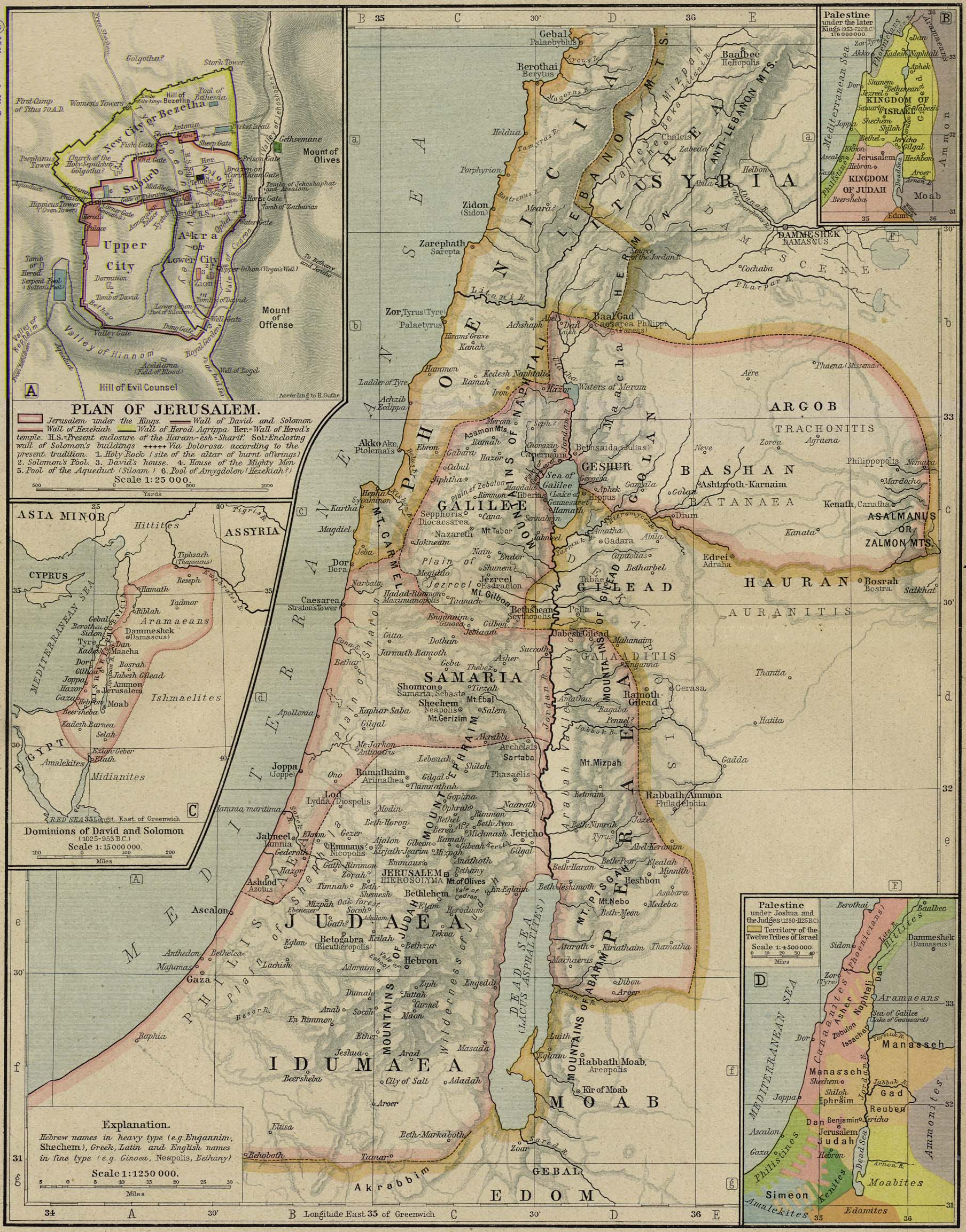
George Adam Smith, Atlas of the Historical Geography of the Holy Land (1915). Public domain.
Summary
The fertile tableland east of the Sea of Galilee, the kingdom of Og and the giant clans, taken by Israel before the Jordan crossing and remembered for its oaks, its bulls and its many-peaked mountain.
- Bashan is a region and not a peak: high basalt country east and northeast of the Sea of Galilee, known in Scripture for pasture, cattle and oaks.
- Og, its king, is called the last of the remnant of the Rephaim, and Israel took his sixty walled cities before crossing the Jordan.
- The country went to Reuben, Gad and the half tribe of Manasseh, and Golan in Bashan was set apart as a city of refuge.
- Psalm 22:12 puts the strong bulls of Bashan around the sufferer at the cross, and Psalm 68 sets its great mountain beside the low hill God chose.
- This page carries no map pin, because the dataset behind it marks Bashan as a region rather than a point.
On this page
In Scripture
- Verses
- 55
- Books
- 15
Where it is
- Region
- East of the Sea of Galilee, north of Gilead
- Kind of place
- Region
Why Bashan matters
What has been found
the evidence, and where it is disputed
Og of Bashan, and the road to Edrei
Numbers 21:33 to 21:35 and Deuteronomy 3:1 to 3:14, in the order it happens
Read Numbers 21:33 to 21:35 and Deuteronomy 3:1 to 3:14, in the order it happens
- Israel turns up the road to BashanNumbers 21:33Then they turned and went up the road to Bashan, and Og king of Bashan and his whole army came out to meet them in battle at Edrei.
- Do not fear himNumbers 21:34But the LORD said to Moses, “Do not fear him, for I have delivered him into your hand, along with all his people and his land. Do to him as you did to Sihon king of the Amorites, who lived in Heshbon.”
- Og and his army struck downNumbers 21:35So they struck down Og, along with his sons and his whole army, until no remnant was left. And they took possession of his land.
- Sixty cities, and the whole region of ArgobDeuteronomy 3:4At that time we captured all sixty of his cities. There was not a single city we failed to take—the entire region of Argob, the kingdom of Og in Bashan.
- High walls, gates and barsDeuteronomy 3:5All these cities were fortified with high walls and gates and bars, and there were many more unwalled villages.
- The country as far as Salecah and EdreiDeuteronomy 3:10all the cities of the plateau, all of Gilead, and all of Bashan as far as the cities of Salecah and Edrei in the kingdom of Og.
- The last of the remnant of the RephaimDeuteronomy 3:11(For only Og king of Bashan had remained of the remnant of the Rephaim. His bed of iron, nine cubits long and four cubits wide, is still in Rabbah of the Ammonites.)
- Bashan given to the half tribe of ManassehDeuteronomy 3:13To the half-tribe of Manasseh I gave the rest of Gilead and all of Bashan, the kingdom of Og. (The entire region of Argob, the whole territory of Bashan, used to be called the land of the Rephaim.)
- Jair renames the region after himselfDeuteronomy 3:14Jair, a descendant of Manasseh, took the whole region of Argob as far as the border of the Geshurites and Maacathites. He renamed Bashan after himself, Havvoth-jair, by which it is called to this day.
Deuteronomy 3:11 measures an object and not a man. The bed of iron is nine cubits long and four wide, and the text places it in Rabbah of the Ammonites, outside Bashan and outside Israel. How it came to be there is not stated.
The conquest and the judgment question: the full studyWhat happened here, in order
in the order the canon tells it
- The Rephaites defeated at Ashteroth-karnaimGenesis 14:5In the fourteenth year, Chedorlaomer and the kings allied with him went out and defeated the Rephaites in Ashteroth-karnaim, the Zuzites in Ham, the Emites in Shaveh-kiriathaim,
- The spies report the Nephilim and the sons of AnakNumbers 13:33We even saw the Nephilim there—the descendants of Anak that come from the Nephilim! We seemed like grasshoppers in our own sight, and we must have seemed the same to them!”
- Og comes out to meet Israel at EdreiNumbers 21:33Then they turned and went up the road to Bashan, and Og king of Bashan and his whole army came out to meet them in battle at Edrei.
- The iron bed kept at Rabbah of the AmmonitesDeuteronomy 3:11(For only Og king of Bashan had remained of the remnant of the Rephaim. His bed of iron, nine cubits long and four cubits wide, is still in Rabbah of the Ammonites.)
- Bashan called the land of the RephaimDeuteronomy 3:13To the half-tribe of Manasseh I gave the rest of Gilead and all of Bashan, the kingdom of Og. (The entire region of Argob, the whole territory of Bashan, used to be called the land of the Rephaim.)
- Golan in Bashan set apart as a city of refugeDeuteronomy 4:43Bezer in the wilderness on the plateau belonging to the Reubenites, Ramoth in Gilead belonging to the Gadites, or Golan in Bashan belonging to the Manassites.
- Dan called a lion’s cub leaping out of BashanDeuteronomy 33:22Concerning Dan he said: “Dan is a lion’s cub, leaping out of Bashan.”
- Anakim survive in Gaza, Gath and AshdodJoshua 11:22No Anakim were left in the land of the Israelites; only in Gaza, Gath, and Ashdod did any survive.
- Og listed among the kings Israel defeatedJoshua 12:4And Og king of Bashan, one of the remnant of the Rephaim, who lived in Ashtaroth and Edrei.
- Sixty cities allotted to ManassehJoshua 13:30The territory from Mahanaim through all Bashan—all the kingdom of Og king of Bashan, including all the towns of Jair that are in Bashan, sixty cities;
- A man of Gath descended from Rapha2 Samuel 21:20And there was still another battle at Gath, where there was a man of great stature with six fingers on each hand and six toes on each foot—twenty-four in all. He too was descended from Rapha,
- Argob and its sixty great cities in Solomon’s districts1 Kings 4:13Ben-geber in Ramoth-gilead (the villages of Jair son of Manasseh in Gilead belonged to him, as well as the region of Argob in Bashan with its sixty great cities with walls and bronze bars);
- Hazael takes the eastern territory as far as Bashan2 Kings 10:33from the Jordan eastward through all the land of Gilead (the region of Gad, Reuben, and Manasseh), and from Aroer by the Arnon Valley through Gilead to Bashan.
- The eastern tribes carried into exile1 Chronicles 5:26So the God of Israel stirred up the spirit of Pul king of Assyria (that is, Tiglath-pileser king of Assyria) to take the Reubenites, the Gadites, and the half-tribe of Manasseh into exile. And he brought them to Halah, Habor, Hara, and the river of Gozan, where they remain to this day.
- Strong bulls of Bashan encircle the suffererPsalms 22:12Many bulls surround me; strong bulls of Bashan encircle me.
- A mountain of many peaksPsalms 68:15A mountain of God is Mount Bashan; a mountain of many peaks is Mount Bashan.
- I will retrieve them from BashanPsalms 68:22The Lord said, “I will retrieve them from Bashan, I will bring them up from the depths of the sea,
- The fattened animals of Bashan at the feastEzekiel 39:18You will eat the flesh of the mighty and drink the blood of the princes of the earth as though they were rams, lambs, goats, and bulls—all the fattened animals of Bashan.
- The cows of Bashan on Mount SamariaAmos 4:1Hear this word, you cows of Bashan on Mount Samaria, you women who oppress the poor and crush the needy, who say to your husbands, “Bring us more to drink.”
- The flock grazing in Bashan and Gilead againMicah 7:14Shepherd with Your staff Your people, the flock of Your inheritance. They live alone in a woodland, surrounded by pastures. Let them graze in Bashan and Gilead, as in the days of old.
Where it points
The voices
each quoted from the work named
And Og the king of Bashan. He was of the race of the giants, but he was routed like a pygmy when he entered the lists with Israel's God. The Lord's people were called upon to fight against him, but it was God who won the victory. The fastnesses of Bashan were no defence against Jehovah. Og was soon ousted from his stronghold when the captain of the Lord's host led the war against him. He had to exchange his bedstead of iron for a bed in the dust, for he fell on the battle field.
Bashan was famous for the best timber (witness the oaks of Bashan), and the best breed of cattle, witness the bulls and kine of Bashan, and the lambs and rams of that country, which are celebrated, Deut. xxxii. Wicked men do their utmost to secure themselves and their possessions against the judgments of God, but all in vain, when their day comes, on which they must fall.
In Rabbath - Where it might now be, either because the Ammonites in some former battle with Og, had taken it as a spoil: or because after Og's death, the Ammonites desired to have this monument of his greatness, and the Israelites permitted them to carry it away to their chief city. Nine cubits - So his bed was four yards and an half long, and two yards broad.
4 more teachers on these versesJamieson, Fausset & Brown · Charles Spurgeon · Adam Clarke
To avoid this, some eminent critics take the Hebrew word rendered "bedstead" to mean "coffin." They think that the king of Bashan having been wounded in battle, fled to Rabbath, where he died and was buried; hence the dimensions of his "coffin" are given [DATHE, ROOS].
"Many bulls have compassed me: strong bulls of Bashan have beset me round." The mighty ones in the crowd are here marked by the tearful eye of their victim. The priests, elders, scribes, Pharisees, rulers, and captains bellowed round the cross like wild cattle, fed in the fat and solitary pastures of Bashan, full of strength and fury; they stamped and foamed around the innocent One, and longed to gore him to death with their cruelties. Conceive of the Lord Jesus as a helpless, unarmed, naked man, cast into the midst of a herd of infuriated wild bulls.
Here the priests on the summit of the chosen hill begin to extol the Lord for his choice of Zion as his dwelling place. The hill of God is as the hill of Bashan, or more accurately, "a hill of God is Bashan, "that is to say, Bashan is an eminent mountain, far exceeding Zion in height. According to the Hebrew custom, every great or remarkable thing is thus designated. Where we talk of the Devil's Dyke, the Devil's Ditch, the Devil's Punch Bowl, etc.
Feed thy people with thy rod - בשבטך beshibtecha, “with thy crook.” The shepherd’s crook is most certainly designed, as the word flock immediately following shows. No rod of correction or affliction is here intended; nor does the word mean such. Solitarily - They have been long without a shepherd or spiritual governor. In the midst of Carmel - Very fruitful in vines. Bashan and Gilead - Proverbially fruitful in pasturages.
Bashan in Scripture
55 verses name it, or one of its other names (Golan, Hauran), in 15 books
Open a book to read its mentions here. Text: Berean Standard Bible.
Old TestamentNew Testamentsegment width = share of mentions
Old Testament15 books · 55 mentions
Numbers2 mentions
- Numbers 21:33Then they turned and went up the road to Bashan, and Og king of Bashan and his whole army came out to meet them in battle at Edrei.
- Numbers 32:33So Moses gave to the Gadites, to the Reubenites, and to the half-tribe of Manasseh son of Joseph the kingdom of Sihon king of the Amorites and the kingdom of Og king of Bashan—the land including its cities and the territory surrounding them.
Deuteronomy13 mentions
- Deuteronomy 1:4This was after he had defeated Sihon king of the Amorites, who lived in Heshbon, and then at Edrei had defeated Og king of Bashan, who lived in Ashtaroth.
- Deuteronomy 3:1Then we turned and went up the road to Bashan, and Og king of Bashan and his whole army came out to meet us in battle at Edrei.
- Deuteronomy 3:3So the LORD our God also delivered Og king of Bashan and his whole army into our hands. We struck them down until no survivor was left.
- Deuteronomy 3:4At that time we captured all sixty of his cities. There was not a single city we failed to take—the entire region of Argob, the kingdom of Og in Bashan.
- Deuteronomy 3:10all the cities of the plateau, all of Gilead, and all of Bashan as far as the cities of Salecah and Edrei in the kingdom of Og.
- Deuteronomy 3:11(For only Og king of Bashan had remained of the remnant of the Rephaim. His bed of iron, nine cubits long and four cubits wide, is still in Rabbah of the Ammonites.)
- Deuteronomy 3:13To the half-tribe of Manasseh I gave the rest of Gilead and all of Bashan, the kingdom of Og. (The entire region of Argob, the whole territory of Bashan, used to be called the land of the Rephaim.)
- Deuteronomy 3:14Jair, a descendant of Manasseh, took the whole region of Argob as far as the border of the Geshurites and Maacathites. He renamed Bashan after himself, Havvoth-jair, by which it is called to this day.
5 further mentions in Deuteronomy, read them in the book.
Joshua13 mentions
- Joshua 9:10and all that He did to the two kings of the Amorites beyond the Jordan—Sihon king of Heshbon and Og king of Bashan, who reigned in Ashtaroth.
- Joshua 12:4And Og king of Bashan, one of the remnant of the Rephaim, who lived in Ashtaroth and Edrei.
- Joshua 12:5He ruled over Mount Hermon, Salecah, all of Bashan up to the border of the Geshurites and Maacathites, and half of Gilead to the border of Sihon king of Heshbon.
- Joshua 13:11also Gilead and the territory of the Geshurites and Maacathites, all of Mount Hermon, and all Bashan as far as Salecah—
- Joshua 13:12the whole kingdom of Og in Bashan, who had reigned in Ashtaroth and Edrei and had remained as a remnant of the Rephaim. Moses had struck them down and dispossessed them,
- Joshua 13:30The territory from Mahanaim through all Bashan—all the kingdom of Og king of Bashan, including all the towns of Jair that are in Bashan, sixty cities;
- Joshua 13:31half of Gilead; and Ashtaroth and Edrei, the royal cities of Og in Bashan. All this was for the clans of the descendants of Machir son of Manasseh, that is, half of the descendants of Machir.
- Joshua 17:1Now this was the allotment for the tribe of Manasseh as Joseph’s firstborn son, namely for Machir the firstborn of Manasseh and father of the Gileadites, who had received Gilead and Bashan because Machir was a man of war.
5 further mentions in Joshua, read them in the book.
1 Kings2 mentions
- 1 Kings 4:13Ben-geber in Ramoth-gilead (the villages of Jair son of Manasseh in Gilead belonged to him, as well as the region of Argob in Bashan with its sixty great cities with walls and bronze bars);
- 1 Kings 4:19Geber son of Uri in the land of Gilead, including the territories of Sihon king of the Amorites and of Og king of Bashan. There was also one governor in the land of Judah.
2 Kings1 mention
1 Chronicles6 mentions
- 1 Chronicles 5:11The descendants of Gad lived next to the Reubenites in the land of Bashan, as far as Salecah:
- 1 Chronicles 5:12Joel was the chief, Shapham the second, then Jaanai and Shaphat, who lived in Bashan.
- 1 Chronicles 5:16They lived in Gilead, in Bashan and its towns, and throughout the pasturelands of Sharon.
- 1 Chronicles 5:23Now the people of the half-tribe of Manasseh were numerous. They settled in the land from Bashan to Baal-hermon (that is, Senir, also known as Mount Hermon).
- 1 Chronicles 6:62The Gershomites, according to their clans, were allotted thirteen cities from the tribes of Issachar, Asher, Naphtali, and Manasseh in Bashan.
- 1 Chronicles 6:71The Gershomites received the following: From the clan of the half-tribe of Manasseh they were given Golan in Bashan and also Ashtaroth, together with their pasturelands.
Nehemiah1 mention
Psalms5 mentions
- Psalms 22:12Many bulls surround me; strong bulls of Bashan encircle me.
- Psalms 68:15A mountain of God is Mount Bashan; a mountain of many peaks is Mount Bashan.
- Psalms 68:22The Lord said, “I will retrieve them from Bashan, I will bring them up from the depths of the sea,
- Psalms 135:11Sihon king of the Amorites, Og king of Bashan, and all the kings of Canaan.
- Psalms 136:20and Og king of Bashan— His loving devotion endures forever.
Isaiah2 mentions
Jeremiah2 mentions
Ezekiel4 mentions
- Ezekiel 27:6Of oaks from Bashan they made your oars; of wood from the coasts of Cyprus they made your deck, inlaid with ivory.
- Ezekiel 39:18You will eat the flesh of the mighty and drink the blood of the princes of the earth as though they were rams, lambs, goats, and bulls—all the fattened animals of Bashan.
- Ezekiel 47:16On the north side it will extend from the Great Sea by way of Hethlon through Lebo-hamath to Zedad, Berothah, and Sibraim (which is on the border between Damascus and Hamath), as far as Hazer-hatticon, which is on the border of Hauran.
- Ezekiel 47:18On the east side the border will run between Hauran and Damascus, along the Jordan between Gilead and the land of Israel, to the Eastern Sea and as far as Tamar. This will be the eastern boundary.
Amos1 mention
Micah1 mention
Nahum1 mention
The account
Read the account as one telling
Before Israel came, the country already had a reputation. Genesis 14:5 records Chedorlaomer defeating the Rephaites at Ashteroth-karnaim, which is generally read as the Ashtaroth that later served as one of Og’s two royal cities. Deuteronomy 2 records the same kind of people east of the Jordan under other names. The Moabites called them Emites and the Ammonites called them Zamzummites, and the text describes both as a people great and many, as tall as the Anakites, and regarded as Rephaim.
At the end of the forty years Israel turned up the road to Bashan. Og came out to meet them in battle at Edrei, and Numbers 21:35 says the army was struck down until no remnant was left. Deuteronomy 3 retells the same day and adds what made the place famous: sixty fortified cities with high walls and gates and bars, the whole region of Argob, and the note that the territory used to be called the land of the Rephaim. Deuteronomy 4:47 groups Og with Sihon as the two Amorite kings across the Jordan, and Deuteronomy 3:11 says he alone remained of the remnant of the Rephaim. The text lets both statements stand together.
The land was handed out before anyone crossed the river. Deuteronomy 3:13 gives Bashan to the half tribe of Manasseh, and Joshua 13:30 to 13:31 names Ashtaroth and Edrei, the royal cities of Og, inside that allotment. Joshua 17:1 says Machir received Gilead and Bashan because he was a man of war. Jair, a descendant of Manasseh, took the Argob district and renamed it Havvoth-jair after himself. Golan in Bashan was set apart as one of the six cities of refuge, the only one in the far northeast, and Joshua 21:27 gives it to the Levite clans of the Gershonites. The country where the last Rephaite king fell holds the refuge a man could run to.
Under the kings the old kingdom ran quietly. 1 Kings 4:13 puts the region of Argob in Bashan, with its sixty great cities with walls and bronze bars, inside Solomon’s administrative districts under one governor. The same count of sixty stands from Moses to Solomon. 1 Chronicles 5:18 counts 44,760 warriors among the eastern tribes, and 1 Chronicles 5:20 says why they held the country as long as they did: they cried out to God in battle and were helped, because they put their trust in Him.
Then it went. 2 Kings 10:32 to 10:33 says the LORD began to reduce the size of Israel, and Hazael took the eastern territory from Aroer by the Arnon Valley through Gilead to Bashan. 1 Chronicles 5:26 records the end. God stirred up Tiglath-pileser of Assyria, and the Reubenites, the Gadites and the half tribe of Manasseh went into exile. The side of the Jordan that Israel took first is the side it lost first.
The prophets kept using the name after the country was gone. Isaiah 2:13 sets the oaks of Bashan beside the cedars of Lebanon among the lofty things brought down. Isaiah 33:9 and Nahum 1:4 have Bashan and Carmel withering. Ezekiel 27:6 has the oars of Tyre cut from the oaks of Bashan. Jeremiah 22:20 tells Jerusalem to raise its voice in Bashan. Amos 4:1 calls the women of Samaria the cows of Bashan, and Ezekiel 39:18 serves the fattened animals of Bashan at the feast after Gog.
The last word the prophets give the place is not judgment. Jeremiah 50:19 promises Israel back to pasture on Carmel and Bashan, and Micah 7:14 asks the Shepherd to let the flock graze in Bashan and Gilead as in the days of old.
No New Testament writer names Bashan. The connection runs through two psalms instead. Psalm 22, whose first line Jesus quotes from the cross, puts the strong bulls of Bashan around the sufferer at verse 12. Psalm 68, which names the many-peaked mountain of Bashan and the low hill God chose instead, moves to an ascent at verse 18, and Ephesians 4:8 quotes that verse of Christ.
Common questions
Where was Bashan, and was it a mountain?
Bashan is a region and not a peak. Scripture bounds it from the Yarmuk country in the south to the foot of Mount Hermon in the north, with Gilead below it and the Geshurites and Maacathites on its western edge. It is high basalt tableland east and northeast of the Sea of Galilee, and its reputation in Scripture is pasture, cattle and oaks.
Psalm 68:15 calls it a mountain of many peaks, which is the psalm speaking of the mass of the upland rather than naming a single summit. This page carries no map pin for the same reason: the dataset behind it marks Bashan as a region rather than a point.
Who was Og, and what does the last of the Rephaim mean?
Og was the king of Bashan who came out to meet Israel in battle at Edrei and lost his whole kingdom in one engagement. He is grouped with Sihon as one of the two Amorite kings east of the Jordan, and Deuteronomy 3:11 adds that he alone remained of the remnant of the Rephaim.
The Rephaim are a people the text describes as unusually tall and names under three sets of neighbours in Deuteronomy 2. Barnes reads the two facts about Og together and holds that he was himself of a different race from the Amorite population he ruled. The text states the relationship and does not explain it.
How tall was Og? Was the iron bed nine cubits his height?
Readers differ; the positions are named
The text measures an object and not a man. Deuteronomy 3:11 says his bed of iron, nine cubits long and four cubits wide, is still in Rabbah of the Ammonites. Adam Clarke worked the arithmetic on the assumption that a bed runs longer than its owner and reached about twelve feet, and noted that readings which lengthen the bed and shorten the man still land near nine feet.
Jamieson, Fausset and Brown record a different reading of the object itself: some critics take the Hebrew word rendered bedstead to mean coffin, in which case the dimensions belong to a burial box after Og died of wounds at Rabbath. Barnes adds that the iron was probably the black basalt of the country, which the people there called iron. This page gives the measurement and the readings with their holders and settles nothing.
Were the Rephaim the same as the Nephilim of Genesis 6?
Readers differ; the positions are named
The text builds a chain and stops short of a mechanism. Numbers 13:33 has the spies seeing the Nephilim and the descendants of Anak who come from the Nephilim. Deuteronomy 2:11 and 2:21 say the Rephaim were as tall as the Anakites. Deuteronomy 3:11 calls Og the last of the remnant of the Rephaim.
This site’s tradition reads that family line back to Genesis 6:4 and the seed war of Genesis 3:15. Albert Barnes held the other position, that the sons of Ha-raphah, or Rephaim, are different from the Nephilim, and his reading is named here beside the site’s tradition rather than left out. Scripture states the relationship and does not explain the mechanism.
Were the sons of God in Genesis 6 angels or the line of Seth?
Readers differ; the positions are named
The reading that they were angelic beings is the older one, and it is what 1 Enoch, Jubilees, Jude 6 and 2 Peter 2:4 assume. Philo, Irenaeus, Tertullian, Eusebius, Ambrose and Jerome all hold it. Irenaeus states it plainly around 202, saying that angels were united with the daughters of the race of mankind and bore sons who for their exceeding greatness were called giants. This site’s tradition follows that reading and teaches it at full strength.
The reading that they were the godly line of Seth marrying into the line of Cain is held by Augustine in City of God 15.23, in his own words about sons of God descended from Seth who abandoned their holiness. It is presented here with respect and in the words of the men who held it. Bashan’s own text says only that Og was the last of the Rephaim, and never explains where the Rephaim came from.
Why did Israel fight Og before crossing the Jordan?
Because Og came out to them. Numbers 21:33 says Israel turned and went up the road to Bashan, and Og and his whole army came out to meet them in battle at Edrei. Matthew Henry read the sequence as a choice Og made, that instead of being warned by the fate of his neighbours to make peace with Israel he was moved by it to make war.
The land taken from Sihon and from Og became the inheritance of Reuben, Gad and the half tribe of Manasseh before anyone crossed the river.
What are the strong bulls of Bashan at the cross?
Psalm 22:12 reads, "Many bulls surround me; strong bulls of Bashan encircle me," and Bashan is where the strongest cattle in the region were fattened. Matthew 27:41 names who was standing at the cross: the chief priests, the scribes and the elders, mocking.
Spurgeon, Clarke and Barnes all read the bulls as those rulers, and Clarke adds that against Christ the chiefs of both Jews and Gentiles were united, which is the reading Acts 4:27 gives. Barnes states the limit of the reading honestly: no one can show that this thought passed through the mind of the Redeemer on the cross, and no one can show that it did not.
What is the mountain of Bashan in Psalm 68, and why does it envy?
Psalm 68:15 calls Mount Bashan a mountain of God and a mountain of many peaks, and the next verse asks the many-peaked mountains why they gaze in envy, because this is the mountain God chose for His dwelling. Spurgeon reads the first phrase as a Hebrew superlative for size, so that Bashan is the greater mountain and Zion is the chosen one.
Six verses later the same psalm says God will retrieve them from Bashan and bring them up from the depths of the sea, and Psalm 68:18 is the verse Paul quotes of Christ in Ephesians 4:8.
Are the dolmen fields in that country the graves of the giants?
Large numbers of dolmens, chambers built of upright stone slabs under a capstone, stand in the uplands east of the Jordan rift, and popular writing often calls them the graves of the Rephaim and ties them to Og. Treat that as folk attribution rather than as evidence.
No biblical text mentions a dolmen, and the size of the stones tells a reader how a community moved stone, not how big the people buried under them were. The one measured object Scripture supplies is the bed in Deuteronomy 3:11, and the text places it in Rabbah of the Ammonites, outside Bashan.
Notable art
4 verified pieces depicting Bashan
Sources cited
- Berean Standard Bible (2023)Every verse quoted on this page, from the site’s own verse store. Public domain.
- Charles H. Spurgeon, The Treasury of David, volumes 1 (1869), 3 (1872) and 7 (1885)Psalm 22:12, Psalm 68:15, Psalm 68:22 and Psalm 136:20. Public domain.
- Matthew Henry, Commentary on the Whole Bible (1710)Numbers 21:26, Numbers 21:33 and 2 Samuel 21:20. Public domain.
- John Wesley, Explanatory Notes upon the Old Testament (1765)Deuteronomy 3:11 and Psalm 22:12. Public domain.
- Jamieson, Fausset & Brown, Commentary Critical and Explanatory on the Whole Bible (1871)Deuteronomy 3:4, Deuteronomy 3:11, Psalm 68:22 and Nahum 1:4. Public domain.
- Albert Barnes, Notes, Explanatory and Practical, on the Old and New Testaments (1832 to 1869)The basalt of the country, the stone doors, Argob and Salecah, Psalm 22:12, Psalm 68:22, Amos 4:1 and 2 Samuel 21:16 to 21:22. Public domain.
- Adam Clarke, Commentary on the Bible (1832)Deuteronomy 3:11 and the cubit arithmetic, Psalm 22:12, Deuteronomy 33:22 and Micah 7:14. Public domain.
- John Gill, Exposition of the Old Testament (1748 to 1763)Deuteronomy 3:5 and 1 Kings 4:13. Public domain.
- Irenaeus, The Demonstration of the Apostolic Preaching, sections 18 to 19The angelic reading of Genesis 6, dated 202 in the site’s pool. Public domain.
- Augustine of Hippo, City of God 15.23The Sethite reading of Genesis 6. Public domain.
- R. H. Charles, translator, The Book of Enoch (London: SPCK, 1917)Held in the site’s apocrypha store as a Second Temple study resource and never as Scripture. Searched in full for Bashan, Og and the Rephaim, and it names none of them.
- Michael S. Heiser, The Unseen Realm (2015) and Reversing Hermon (2017)Named on this page as the holder of the Ugaritic reading of the name Bashan. In copyright, so no quotation is used.
- The site’s own lexicon entries h1316, h7497, h5747, h709, h5303 and h6061The word floor behind the glosses used here.
- George Adam Smith, Atlas of the Historical Geography of the Holy Land (1915)The conquest and settlement map on this page. Public domain.
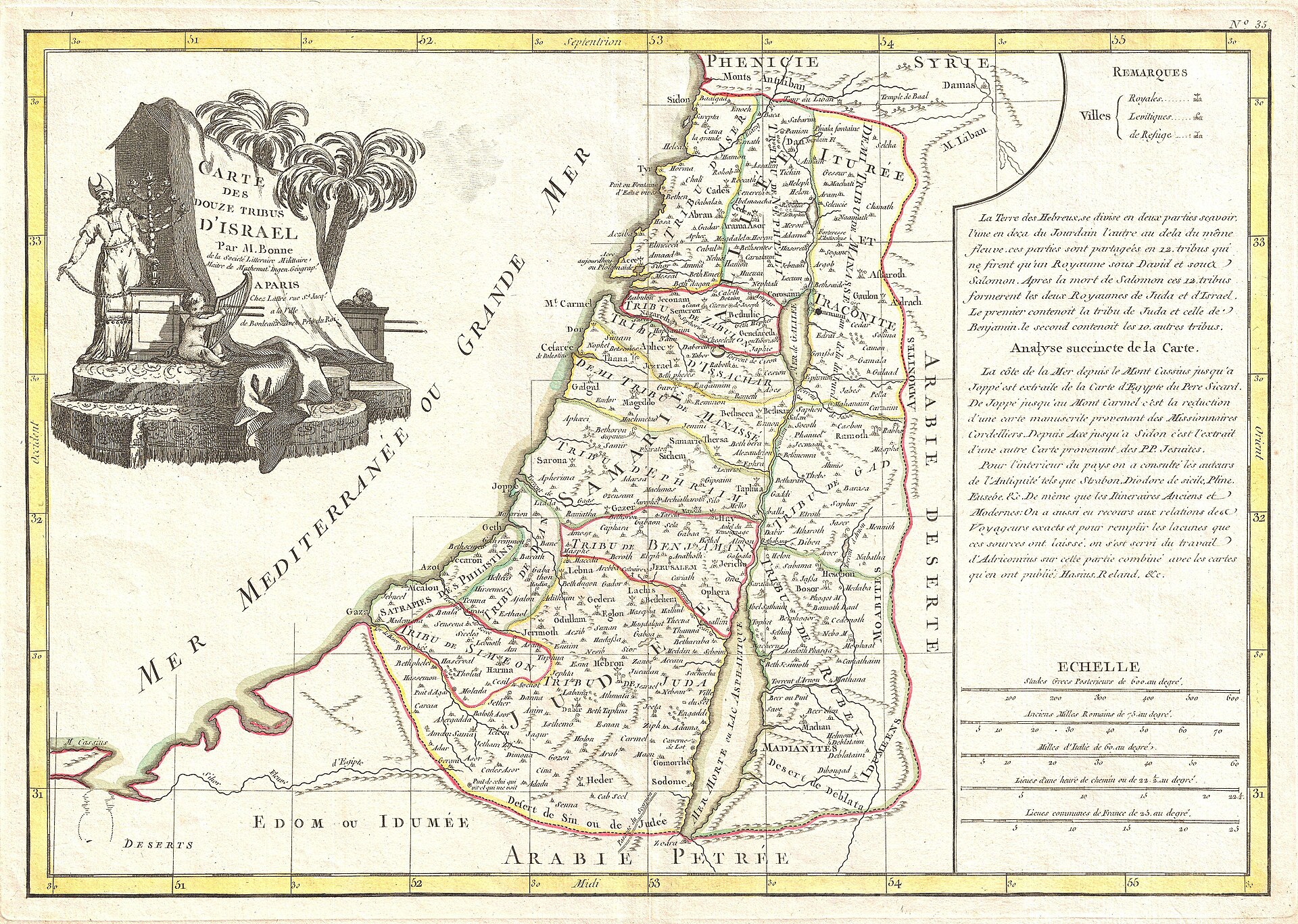
- Rigobert Bonne, map of Israel showing the Twelve Tribes (1770), and the Rand McNally reference map of ancient Palestine (1926)The two other map plates on this page. Public domain, via Wikimedia Commons.
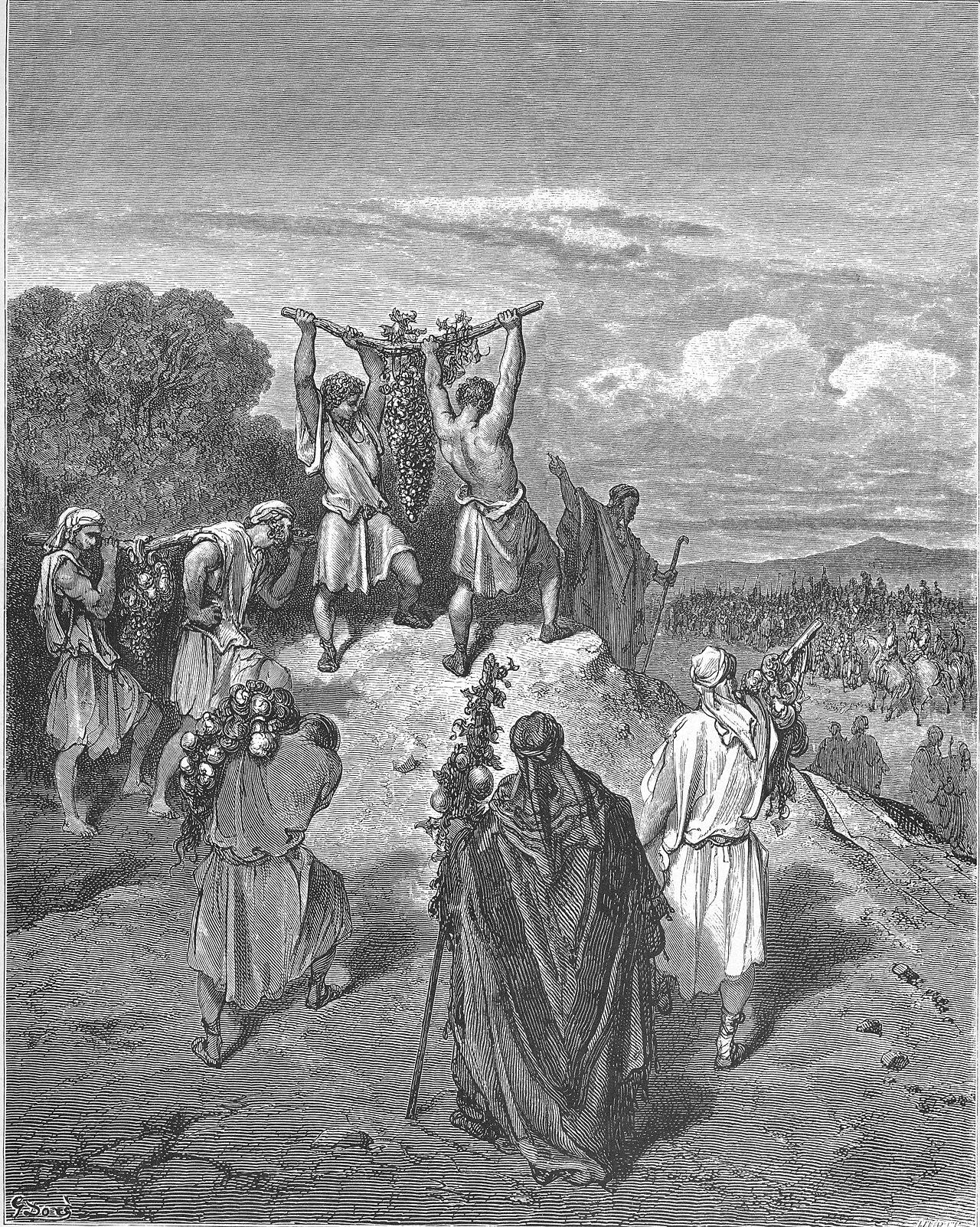
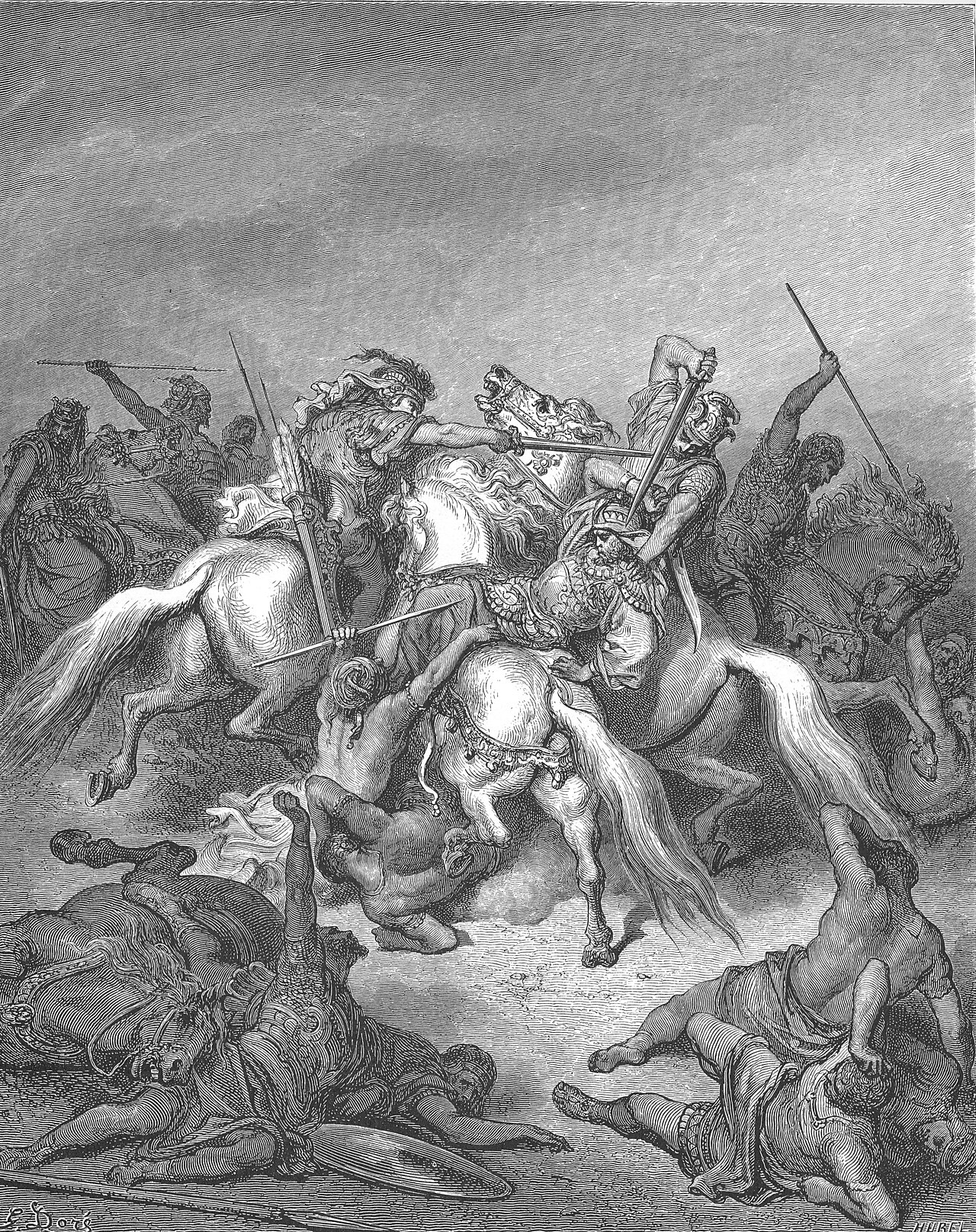
- Gustave Doré, La Sainte Bible (Tours: Alfred Mame et fils, 1866)The two engravings on this page. Public domain.
- Ali Abou Assaf, "Tell 'Ashtara in Suedsyrien. Erste Kampagne 1966" and "Tell 'Ashtara. 2. Kampagne 1967", Annales Archeologiques Arabes Syriennes 18 (1968) and 19 (1969)The two excavation seasons at Tell Ashtara (biblical Ashtaroth), 1966 and 1967, confirmed by web search 2026-09-02. The excavation reports are not freely available online, so the url points to the Wikipedia summary that names them.
Keep studying
On this page
Studies15
Every page that names it1
Doorway2
Keep this page