
Matthew 26:39
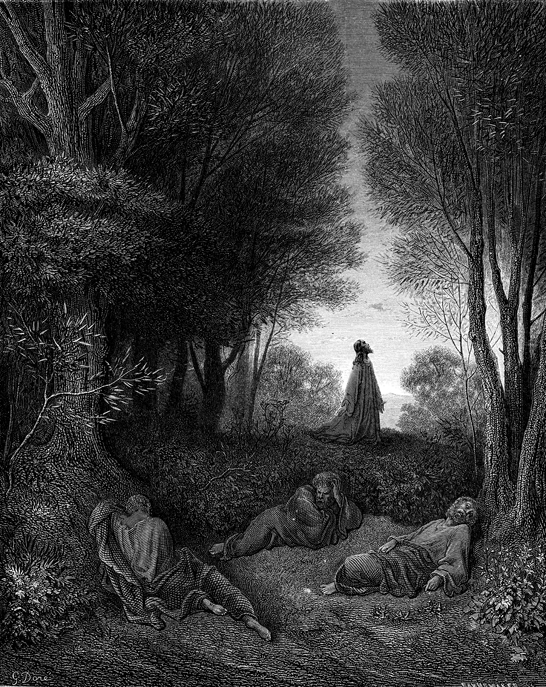
in Matthew 26Going a little farther, He fell facedown and prayed, “My Father, if it is possible, let this cup pass from Me. Yet not as I will, but as You will.”
BSB
The same verse in ASV and KJV ▾
ASV
And he went forward a little, and fell on his face, and prayed, saying, My Father, if it be possible, let this cup pass away from me: nevertheless, not as I will, but as thou wilt.
KJV
And he went a little further, and fell on his face, and prayed, saying, O my Father, if it be possible, let this cup pass from me: nevertheless not as I will, but as thou wilt.
⋯
This verse in Matthew 26
Commentary
22 notes on this verseFell on his face - See the note on Luk 22:44. This was the ordinary posture of the supplicant when the favor was great which was asked, and deep humiliation required. The head was put between the knees, and the forehead brought to touch the earth - this was not only a humiliating, but a very painful posture also. This cup - The word cup is frequently used in the Sacred Writings to point out sorrow, anguish, terror, death. It seems to be an allusion to a very ancient method of punishing criminals.
This site's exposition
let this cup pass from me
Going a little farther, Jesus falls facedown and prays, "let this cup pass from Me," the cup being a familiar Old Testament figure for the wrath of God's judgment. In the same prayer he submits his will to the Father's: "Yet not as I will, but as You will". The honest request and the full submission stand together.
The record, by era
The Church Fathers5 voices
(de Cons. Ev. iii. 4.) And that none might think that He limited His Father's power, He said not, If thou canst do it, but If it may be, or, If it be possible; as much as to say, If thou wilt. For whatever God wills can be done, as Luke expresses more plainly; for he says not, If it be possible, but If thou wilt. (in Ps. 32. enar. 2.) Christ thus as man shows a certain private human will, in which He who is our head figures both His own will and ours when He says, Let it pass from me. For this was His human will choosing something as apart for Himself. But because as man He would be righteous and guide Himself by God's will, He adds, Nevertheless not as I will, but as thou wilt; as much as to say to us, Man, behold thyself in Me, that thou canst will somewhat apart of thyself, and though God's will is other, this is permitted to human frailty. (Quaest. Ev. i. 47.) Nor is that an absurd interpretation which makes Our Lord pray thrice because of the threefold temptation of His Passion. To the temptation of curiosity is opposed the fear of death; for as the one is a yearning for the knowledge of things, so the other is the fear of losing such knowledge. To the desire of honour or applause is opposed the dread of disgrace and insult. To the desire of pleasure is opposed the fear of pain.
(Verse 39) And going forward a little, he fell on his face, praying and saying: My Father, if it is possible, let this cup pass away from me. Nevertheless, not as I will, but as you will. Having given the apostles the command to endure and keep watch with the Lord, he advanced a little and fell on his face, showing the humility of his mind in the appearance of his flesh, and he said in a gentle way: My Father, and he asked that, if possible, the cup of suffering pass from him, about which we have spoken above.
His words "if it be possible" referred not only to God's power but also to his justice. As to God's power, whatever is just or unjust is possible. As to his justice, which is not only powerful but also just, not everything is possible—only that which is just.
He took with Him the self-confident Peter, and the others, that they might see Him falling on His face and praying, and might learn not to think great things, but little things of themselves, and not to be hasty in promising, but careful in prayer. And therefore, He went forward a little, not to go far from them, but that He might be near them in His prayer. Also, He who had said above, Learn of me, for I am meek and lowly in heart, now commendably humbling Himself, falls on His face. But He shows His devotion in His prayer, and as beloved and well-pleasing to His Father, He adds, Not as I will, but as thou wilt, teaching us that we should pray, not that our own will, but that God's will, should be done. And as He began to have fear and sorrow, He prays accordingly that the cup of His Passion may pass from Him, yet not as He wills, but as His Father wills; wills, that is, not according to His Divine and impassible Substance, but according to His human and weak nature. For in taking upon Him the nature of human flesh, He fulfilled all the properties thereof, that it might be seen that He had flesh not in appearance only, but in-reality. The believer indeed must in the first instance be loth to incur pain, seeing it leads to death, and he is a man of flesh; but if it be God's will, he acquiesces because he is a believer. For as we ought not to be too confident that we may not seem to make a boast of our own strength; so neither ought we to be distrustful, lest we should seem to charge God our helper with weakness. It is to be observed that Mark and Luke write the same, but John does not introduce this prayer of Jesus', that this cup may pass from Him, because the first three are rather occupied about Him, according to His human nature, John according to His divine. […]
Otherwise; He says not, Let this cup pass away from Me, for that would be the speech of one who feared it; but He prays that it may pass not so as that He should be passed over, but that when it has passed from Him, it may go to another. His whole fear then is for those who were to suffer, and therefore He prays for those who were to suffer after Him, saying, Let this cup pass from me, i. e. as it is drunk by Me, so let it be drunk by these, without mistrust, without sense of pain, without fear of death. He says, If it be possible, because flesh and blood shrink from these things, and it is hard for human bodies not to sink beneath their infliction. That He says, Not as I will, but as thou wilt, He would fain indeed that they should not suffer, lest their faith should fail in their sufferings, if indeed we might attain to the glory of our joint inheritance with Him without the hardship of sharing in His Passion. He says, Not as I will, but as thou wilt, because it is the Father's will that strength to drink of the cup should pass from Him to them, that the Devil might be vanquished not so much by Christ as by His disciples also.
15 more voices on this verse
The Church Fathers5 voices
And for this reason He puts first "the willing spirit," that, looking to the natures respectively of both the substances, you may see that you have in you the spirit's strength as well as the flesh's weakness; and even from this may learn what to do, and by what means to do it, and what to bring under what,-the weak, namely, under the strong, that you may not, as is now your fashion, make excuses on the ground of the weakness of the flesh, forsooth, but put out of sight the strength of the spirit. He also asked of His Father, that if it might be, the cup of suffering should pass from Him. So ask you the like favour; but as He did, holding your position,-merely offering supplication, and adding, too, the other words: "but not what I will, but what Thou wilt.
The disciples were admonished, and the Lord beseeches the Father that they might confront the force of the present temptation with watchful prayer: "My Father, if it be possible, let this cup pass from me; nevertheless not as I will, but as you will." The first petition arises from weakness, the second from strength: He desired the former based on our nature and chose the latter based on his own. Equal to the Father, the Son knew that all things were possible to God; rather, he descended into this world to take up the cross against his will so that he might suffer through this conflict of emotions with a disquieted mind. But in order to show the distinction between the receiving nature and the received nature, what was proper of humanity desired divine intervention and what was proper of God looked upon the human situation. The lower will yielded to the higher will, and this demonstrated what the fearful person may pray for and what the divine healer should not grant. "For we do not know how to pray as we ought," and it is good for us that what we want, for the most part, is not granted. God, who is good and just, shows mercy toward us by denying us those things we ask for which are harmful.
Whence He says emphatically, This cup, that is, of this people of the Jews, who, if they shall put Me to death, can have no excuse for their ignorance, seeing they have the Law and the Prophets, who speak of Me.
For it is natural for the soul to love to dwell always in the body, and to be vexed at taking leave of life.
A commentator
John ChrysostomHomily on the Gospel of Matthew 83 · Written in the 5th century.
proposed
However, even these He dismisses: "And He went on a little farther, and prayeth, saying, Father, if it be possible, let this cup pass from me; nevertheless not as I will, but as Thou wilt. And He cometh unto them, and findeth them sleeping, and saith unto Peter, What, could ye not watch with me one hour? Watch and pray, that ye enter not into temptation; the spirit indeed is willing, but the flesh is weak." And He prays with earnestness, in order that the thing might not seem to be acting. And sweats flow over him for the same cause again, even that the heretics might not say this, that He acts the agony. Therefore there is a sweat like drops of blood, and an angel appeared strengthening Him, and a thousand sure signs of fear, lest any one should affirm the words to be feigned. For this cause also was this prayer. By saying then, "If it be possible, let it pass from me," He showed His humanity; but by saying, "Nevertheless not as I will, but as Thou wilt," He showed His virtue and self-command, teaching us even when nature pulls us back, to follow God. For since it was not enough for the foolish to show His face only, He uses words also. Again, words sufficed not alone, but deeds likewise were needed; these also He joins with the words, that even they who are in a high degree contentious may believe, that He both became man and died. For if, even when these things are so, this be still disbelieved by some, much more, if these had not been. See by how many things He shows the reality of the incarnation: by what He speaks, by what He suffers. After that He cometh and saith to Peter, as it is said, "What, couldest thou not watch one hour with me?" All were sleeping, and He rebukes Peter, hinting at him, in what He spake. […]
The Medieval Church4 voices
For this reason, too, He did not move away a great distance, but was near the three disciples, that they might hear Him and remember when they themselves fell into temptations, and pray in the same manner. He calls His Passion a cup [as of …
Christ assumed not only human nature, but also defects pertaining to nature. He also assumed spiritual penalties, such as sorrow, grief, and fear; yet he undertook the necessity of suffering in such a way that he could suffer nothing unwillingly, neither according to the will …
Or, The Lord prayed thrice, to teach us to pray for pardon of sins past, defence against present evil, and provision against future perils, and that we should address every prayer to Father, Son, and Holy Spirit, and that our spirit, soul, and body should be kept in safety.
And going a little further, he fell upon his face, praying and saying. Above he touched upon the cause of the sadness; but here he treats of the order of Christ's prayer. And because he prayed three times, this part is divided into three parts …
The Puritans and the Awakening2 voices
And going a little farther - About a stone's cast, Luke xxii, 41 - So that the apostles could both see and hear him still. If it be possible, let this cup pass from me - And it did pass from him quickly. When he cried unto God with strong cries and tears, he was heard in that which he feared.
And he went a little further,....
The Nineteenth Century4 voices
The verses we have now read describe what is commonly called Christ’s agony at Gethsemane. It is a passage which undoubtedly contains deep and mysterious things. We ought to read it with reverence and wonder, for there is much in it which we cannot fully comprehend. Why do we find our Lord so “sorrowful and very heavy,” as he is here described? What are we to make of his words, “My soul is exceeding sorrowful even unto death.”
A commentator
Charles Spurgeon1834–1892
The Metropolitan Tabernacle Pulpit, Sermon No. 2715: “Christian Resignation” (lightly modernized text, CCEL edition) · Written before 1892.
THE Apostle Paul, writing concerning our Lord Jesus Christ, says, "Though He were a Son, yet learned He obedience by the things which He suffered." He who, as God, knew all things, had to learn obedience in the time of His humiliation. He who is, in Himself, Wisdom Incarnate, did, Himself, condescend to enter the school of suffering—there we learn that important lesson of the Christian life—obedience to the will of God. And here, in Gethsemane's Garden, you can see the Divine Scholar going forth to practice His lesson.
The verses we have now read describe what is commonly called Christ’s agony at Gethsemane. It is a passage which undoubtedly contains deep and mysterious things. We ought to read it with reverence and wonder, for there is much in it which we cannot fully comprehend. Why do we find our Lord so “sorrowful and very heavy,” as he is here described? What are we to make of his words, “My soul is exceeding sorrowful even unto death.” Why do we see him going apart from his disciples, and falling on his face, and crying to his Father with strong cries, and thrice repeated prayer? Why is the almighty Son of God, who had worked so many miracles, so heavy and disquieted? Why is Jesus, who came into the world to die, so like one ready to faint at the approach of death? Why is all this? There is but one reasonable answer to these questions: the weight that pressed down our Lord’s soul was not the fear of death and its pains. Thousands have endured the most agonizing sufferings of body, and died without a groan, and so, no doubt, might our Lord. But the real weight that bowed down the heart of Jesus was the weight of the sin of the world, which seems to have now pressed down upon him with peculiar force: it was the burden of our guilt imputed to him, which was now laid on him, as on the head of the scapegoat. How great that burden must have been no human heart can conceive! It is known only to God. Well may the Greek Litany speak of the “unknown sufferings of Christ.” The words of Scott on this subject are probably correct: “Christ at this time endured as much misery of the same kind with that of condemned spirits, as could possibly consist with a pure conscience, perfect love of God and man, and an assured confidence of a glorious event.”
A commentator
Charles Spurgeon1834–1892
The Metropolitan Tabernacle Pulpit, Sermon No. 2715: “Christian Resignation” (lightly modernized text, CCEL edition) · Written before 1892.
proposed
THE Apostle Paul, writing concerning our Lord Jesus Christ, says, "Though He were a Son, yet learned He obedience by the things which He suffered." He who, as God, knew all things, had to learn obedience in the time of His humiliation. He who is, in Himself, Wisdom Incarnate, did, Himself, condescend to enter the school of suffering—there we learn that important lesson of the Christian life—obedience to the will of God. And here, in Gethsemane's Garden, you can see the Divine Scholar going forth to practice His lesson. He had been, all His lifetime, learning it, and now He has to learn it for the last time in His agony and bloody sweat, and in His terrible death upon the Cross. Now is He to discover the utmost depths of suffering and to attain to the height of the knowledge of obedience. See how well He has learned His lesson! Note how complete and ripe a scholar He is! He has attained to the very highest class in that school and, in the immediate prospect of death, can say to His Father, "Not as I will, but as You will." The objective of this discourse is to commend to you the blessed example of our Lord Jesus Christ and, as God the Holy Spirit shall help me, to urge you to be made like unto your glorious Head, and yourselves to learn, by all the daily Providences with which God is pleased to surround you, this lesson of resignation to the will of God, and of making an entire surrender to Him. I have been struck lately, in reading works by some writers who belong to the Romish Church, with the marvelous love which they have towards the Lord Jesus Christ. I did think, at one time, that it could not be possible for any to be saved in that church, but, often, after I have risen from reading the books of those holy men and have felt myself to be quite a dwarf by their side, I have said, "Yes, despite their errors, these men must have been taught of the Holy Spirit.
The words behind it
29 Greek wordsEvery Greek word of this verse in the order it stands, with what it means and the door to its own study. The last column counts the times a word stands in the whole Bible: the rarer the word, the more the places it appears belong together.
| Greek | Sound | Meaning | Word study | In the Bible |
|---|---|---|---|---|
| Καὶ | kai | And | G2532 → | 9120 times |
| προελθὼν | proelthon | having gone forward | G4281 → | |
| μικρὸν | mikron | a little | G3398 → | 46 times |
| ἔπεσεν | epesen | He fell | G4098 → | 90 times |
| ἐπὶ | epi | upon | G1909 → | 883 times |
| πρόσωπον | prosopon | face | G4383 → | 75 times |
| αὐτοῦ | autou | of Him | G846 → | 5565 times |
| προσευχόμενος | proseuchomenos | praying | G4336 → | 85 times |
| καὶ | kai | and | G2532 → | 9120 times |
| λέγων· | legon | saying; | G3004 → | 1325 times |
| πάτερ | pater | Father | G3962 → | 410 times |
| μου, | mou | of Mine, | G3165 → | 1936 times |
| εἰ | ei | if | G1487 → | 508 times |
| δυνατόν | dunaton | possible | G1415 → | 32 times |
| ἐστιν, | estin | it is, | G1510 → | 2333 times |
| παρελθάτω | parelthato | should pass | G3928 → | 29 times |
| ἀπ᾽ | ap᾽ | from | G575 → | 640 times |
| ἐμοῦ | emou | Me | G1473 → | 839 times |
| τὸ | to | <the> | G3588 → | 19766 times |
| ποτήριον | poterion | cup | G4221 → | 31 times |
| τοῦτο· | touto | this; | G3778 → | 1381 times |
| πλὴν | plen | Nevertheless | G4133 → | 31 times |
| οὐχ | ouch | not [it is] | G3756 → | 1664 times |
| ὡς | hos | as | G5613 → | 500 times |
| ἐγὼ | ego | I myself | G1473 → | 839 times |
| θέλω | thelo | wish | G2309 → | 208 times |
| ἀλλ᾽ | all᾽ | but | G235 → | 635 times |
| ὡς | hos | as | G5613 → | 500 times |
| σύ. | su | You. | G4771 → | 2973 times |
ΚαὶAnd
kaiG2532 →9120 times
προελθὼνhaving gone forward
proelthonG4281 →
μικρὸνa little
mikronG3398 →46 times
ἔπεσενHe fell
epesenG4098 →90 times
ἐπὶupon
epiG1909 →883 times
πρόσωπονface
prosoponG4383 →75 times
αὐτοῦof Him
autouG846 →5565 times
προσευχόμενοςpraying
proseuchomenosG4336 →85 times
καὶand
kaiG2532 →9120 times
λέγων·saying;
legonG3004 →1325 times
πάτερFather
paterG3962 →410 times
μου,of Mine,
mouG3165 →1936 times
εἰif
eiG1487 →508 times
δυνατόνpossible
dunatonG1415 →32 times
ἐστιν,it is,
estinG1510 →2333 times
παρελθάτωshould pass
parelthatoG3928 →29 times
ἀπ᾽from
ap᾽G575 →640 times
ἐμοῦMe
emouG1473 →839 times
τὸ<the>
toG3588 →19766 times
ποτήριονcup
poterionG4221 →31 times
τοῦτο·this;
toutoG3778 →1381 times
πλὴνNevertheless
plenG4133 →31 times
οὐχnot [it is]
ouchG3756 →1664 times
ὡςas
hosG5613 →500 times
ἐγὼI myself
egoG1473 →839 times
θέλωwish
theloG2309 →208 times
ἀλλ᾽but
all᾽G235 →635 times
ὡςas
hosG5613 →500 times
σύ.You.
suG4771 →2973 times
A shaded row is a word that stands 400 times or fewer in the Bible.
The walk
8 stopsEach card is a verse this one points to, and under it the verses that one points to in turn. Where several paths arrive at the same place, that place is listed first: the text keeps returning to it.
Through
John 5:30I can do nothing by Myself; I judge only as I hear. And My judgment is just, because I do not seek My own will, but the will of Him who sent Me.
it leads to
- John 4:34
Jesus explained, “My food is to do the will of Him who sent Me and to finish His work.
Reached by 2 separate paths from here.
- John 6:38
For I have come down from heaven, not to do My own will, but to do the will of Him who sent Me.
- John 5:19
So Jesus replied, “Truly, truly, I tell you, the Son can do nothing by Himself, unless He sees the Father doing it. For whatever the Father does, the Son also does.
- John 14:10
Do you not believe that I am in the Father and the Father is in Me? The words I say to you, I do not speak on My own. Instead, it is the Father…
- John 4:34
Through
Philippians 2:8And being found in appearance as a man, He humbled Himself and became obedient to death—even death on a cross.
it leads to
- John 10:18
No one takes it from Me, but I lay it down of My own accord. I have authority to lay it down and authority to take it up again. This charge I have received…
- Hebrews 12:2
Let us fix our eyes on Jesus, the author and perfecter of our faith, who for the joy set before Him endured the cross, scorning its shame, and sat down at the right hand…
- Romans 5:19
For just as through the disobedience of the one man the many were made sinners, so also through the obedience of the one man the many will be made righteous.
- John 10:18
Through
John 6:38For I have come down from heaven, not to do My own will, but to do the will of Him who sent Me.
it leads to
- John 5:30
I can do nothing by Myself; I judge only as I hear. And My judgment is just, because I do not seek My own will, but the will of Him who sent Me.
- John 5:30
Where this verse is studied
By subject
Suffering35 verses
Obedience35 verses
On this page
Studies15
On this verse
About Matthew
This page draws on 21 works. Open the list of works
This page draws on Adam Clarke, Commentary on the Bible; Augustine of Hippo, Catena Aurea by Aquinas; Bonaventure, Breviloquium; Charles Spurgeon, The Metropolitan Tabernacle Pulpit, Sermon No. 2715: “Christian Resignation” (lightly modernized text, CCEL edition); Cosmas Indicopleustes, The Christian Topography, Book 10; Hilary of Poitiers, Catena Aurea by Aquinas; J.C. Ryle, Expository Thoughts on the Gospels: Matthew; Jerome, Commentary on Matthew; Jerome, Catena Aurea by Aquinas; John Calvin, Commentary on a Harmony of the Evangelists; John Chrysostom, Homily on the Gospel of Matthew 83; John Gill, Exposition of the New Testament (1746-1748); John Wesley, Explanatory Notes upon the New Testament; Leo the Great, SERMON 43.2.26; Matthew Henry, Commentary on the Whole Bible; Origen of Alexandria, COMMENTARY ON MATTHEW 95; Origen of Alexandria, Catena Aurea by Aquinas; Rabanus Maurus, Catena Aurea by Aquinas; Tertullian, On Flight in Persecution; Theophylact of Ohrid, Commentary on Matthew and Thomas Aquinas, Commentary on Matthew.