
Matthew 26:9
in Matthew 26This perfume could have been sold at a high price, and the money given to the poor.”
BSB
The same verse in ASV and KJV ▾
ASV
For this ointment might have been sold for much, and given to the poor.
KJV
For this ointment might have been sold for much, and given to the poor.
⋯
This verse in Matthew 26
Commentary
13 notes on this verse(Ver. 8, 9.) But when the disciples saw this, they were indignant and said, "Why this waste? This could have been sold at a high price and the money given to the poor." I know that some criticize this passage, questioning why only one evangelist, Judas, is mentioned as being upset, when it is said that all the apostles were indignant. They do not understand the figure of speech known as synecdoche, by which one person can be used to represent all, or one can be used to represent many.
This site's exposition
home of Simon the Leper
on Matthew 26:6-9
The anointing takes place in the home of Simon the Leper in Bethany. John names the woman Mary and the perfume nard, a perfume from India worth about a year's wages. The disciples object to "this waste" since it "could have been sold at a high price" for the poor.
This site's exposition
sold at a high price
Thomas Aquinas links the objection to 19:21, where Jesus told the rich young man to sell his possessions and give to the poor. The disciples were repeating his own teaching. Adam Clarke warns that charity can serve as a cloak for covetousness.
The record, by era
The Church Fathers3 voices
In this woman is prefigured the people of the Gentiles, who gave glory to God in Christ's passion; for she anointed His head, but the head of Christ is God, and ointment is the fruit of good works. But the disciples, anxious for the salvation of Israel, say that this ought to have been sold for the use of the poor; designating by a prophetic instinct the Jews, who lacked faith, by the name of the poor.
And whence had they this thought? They used to hear their Master saying, "I will have mercy, and not sacrifice," and blaming the Jews, because they omitted the weightier matters, judgment, and mercy, and faith, and discoursing much on the mount concerning almsgiving, and from these things they inferred with themselves, and reasoned, that if He accepts not whole burnt offerings, neither the ancient worship, much more will He not accept the anointing of oil.
(de Cons. Ev. ii. 79.) We may however understand that the other disciples thought or said the same, or that they assented to what Judas said, and thus Matthew and Mark have described their common consent. But Judas said it because he was a thief, the others out of their care for the poor; and John desired to mention it only in the case of him whose thievish propensity he thought ought to be recorded.
The Medieval Church2 voices
Hence they say, to what purpose is this waste? But why did they say this? They had heard the Lord greatly commend mercy; above, 19:21: if thou wilt be perfect, go sell what thou hast, and give to the poor.
Since the disciples had heard much about almsgiving and had given it much consideration, they found fault with the woman, thinking that God desired mercy towards others more than honor for Himself.
5 more voices on this verse
The Puritans and the Awakening2 voices
We must not think that time waste, that is spent in the service of Christ, or that money waste, which is laid out in any work of piety; for, though it seem to be cast upon the waters, to be thrown down the river, we shall find it again, to advantage, after many days, Eccl. xi.
For this ointment might have been sold for much,....
The Nineteenth Century3 voices
And given to the poor - How often does charity serve as a cloak for covetousness! God is sometimes robbed of his right under the pretense of devoting what is withheld to some charitable purpose, to which there was no intention ever to give it.
We now approach the closing scene of our Lord Jesus Christ’s earthly ministry. Hitherto we have read of his sayings and doings: we are now about to read of his sufferings and death. Hitherto we have seen him as the Great Prophet; we are now about to see him as the great High Priest. It is a portion of Scripture which ought to be read with peculiar reverence and attention. The place we on we stand is holy ground.
We now approach the closing scene of our Lord Jesus Christ’s earthly ministry. Hitherto we have read of his sayings and doings: we are now about to read of his sufferings and death. Hitherto we have seen him as the Great Prophet; we are now about to see him as the great High Priest. It is a portion of Scripture which ought to be read with peculiar reverence and attention. The place we on we stand is holy ground. Here we see how the seed of the woman bruised the serpent’s head; here we see the great sacrifice to which all the sacrifices of the Old Testament had long pointed; here we see how the blood was shed which “cleanseth from all sin” ( 1 John 1:8 ), and the Lamb slain who “taketh away the sin of the world” ( John 1:29 ). We see in the death of Christ the great mystery revealed, how God can be just, and yet justify the ungodly. No wonder that all the four Gospels contain a full account of this wonderful event: on other points in our Lord’s history, we often find that when one evangelist speaks the other three are silent; but when we come to the crucifixion, we find it minutely described by all four. In the verses we have now read let us first observe how careful our Lord is to call the attention of his disciples to his own death. He said to them, “Ye know, that after two days is the feast of the passover—and the Son of Man is betrayed to be crucified.” The connection of these words with the preceding chapter is exceedingly striking. Our Lord had just been dwelling on his own second coming in power and glory at the end of the world; he had been describing the last judgment and all its awful accompaniments; he had been speaking of himself as the judge before whose throne all nations would be gathered. Then at once, without pause or interval, he goes on to speak of his crucifixion.
The words behind it
8 Greek wordsEvery Greek word of this verse in the order it stands, with what it means and the door to its own study. The last column counts the times a word stands in the whole Bible: the rarer the word, the more the places it appears belong together.
| Greek | Sound | Meaning | Word study | In the Bible |
|---|---|---|---|---|
| ἐδύνατο | edunato | It was possible | G1410 → | 207 times |
| γὰρ | gar | for | G1063 → | 1039 times |
| τοῦτο | touto | this | G3778 → | 1381 times |
| πραθῆναι | prathenai | to be sold | G4097 → | 9 times |
| πολλοῦ | pollou | for much | G4183 → | 367 times |
| καὶ | kai | and | G2532 → | 9120 times |
| δοθῆναι | dothenai | to be given | G1325 → | 412 times |
| πτωχοῖς. | ptochois | to [the] poor. | G4434 → | 34 times |
ἐδύνατοIt was possible
edunatoG1410 →207 times
γὰρfor
garG1063 →1039 times
τοῦτοthis
toutoG3778 →1381 times
πραθῆναιto be sold
prathenaiG4097 →9 times
πολλοῦfor much
pollouG4183 →367 times
καὶand
kaiG2532 →9120 times
δοθῆναιto be given
dothenaiG1325 →412 times
πτωχοῖς.to [the] poor.
ptochoisG4434 →34 times
A shaded row is a word that stands 400 times or fewer in the Bible.
The walk
8 stopsEach card is a verse this one points to, and under it the verses that one points to in turn. Where several paths arrive at the same place, that place is listed first: the text keeps returning to it.
Through
1 Samuel 15:9Saul and his troops spared Agag, along with the best of the sheep and cattle, the fat calves and lambs, and the best of everything else. They were unwilling to destroy them, but they…
it leads to
- 1 Samuel 15:15
Saul answered, “The troops brought them from the Amalekites; they spared the best sheep and cattle to sacrifice to the LORD your God, but the rest we devoted to destruction.”
Reached by 2 separate paths from here.
- 1 Samuel 15:3
Now go and attack the Amalekites and devote to destruction all that belongs to them. Do not spare them, but put to death men and women, children and infants, oxen and sheep, camels and…
- 1 Samuel 15:19
So why did you not obey the LORD? Why did you rush upon the plunder and do evil in the sight of the LORD?”
- 1 Samuel 15:15
Through
Mark 14:5It could have been sold for over three hundred denarii and the money given to the poor.” And they scolded her.
it leads to
- John 13:29
Since Judas kept the money bag, some thought that Jesus was telling him to buy what was needed for the feast, or to give something to the poor.
- Matthew 20:11
On receiving their pay, they began to grumble against the landowner.
- Ephesians 4:28
He who has been stealing must steal no longer, but must work, doing good with his own hands, that he may have something to share with the one in need.
- Psalms 106:25
They grumbled in their tents and did not listen to the voice of the LORD.
- John 13:29
Through
1 Samuel 15:21The troops took sheep and cattle from the plunder, the best of the things devoted to destruction, in order to sacrifice them to the LORD your God at Gilgal.”
it leads to
- Exodus 32:22–23
“Do not be enraged, my lord,” Aaron replied. “You yourself know that the people are intent on evil.
- Exodus 32:22–23
Where this verse is studied
On this page
Studies31
On this verse
On this chapter
- Angelology
- Forgiveness
- The Words Nasa, Salach and Aphiemi
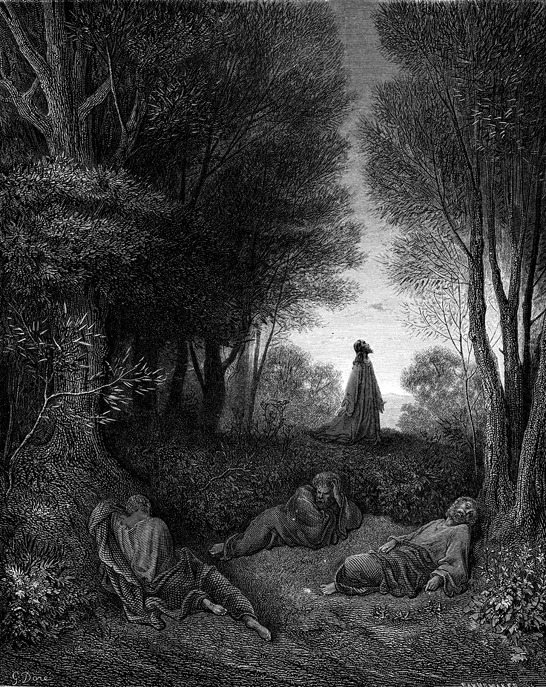
- Gethsemane (The Garden Called the Oil Press)
- The Words Todah, Yadah and Eucharisteo
- Hell and the Final State of the Lost
Show the next 6 titles
About Matthew
This page draws on 11 works. Open the list of works
This page draws on Adam Clarke, Commentary on the Bible; Augustine of Hippo, Catena Aurea by Aquinas; Hilary of Poitiers, Catena Aurea by Aquinas; J.C. Ryle, Expository Thoughts on the Gospels: Matthew; Jerome, Commentary on Matthew; John Chrysostom, Homily on the Gospel of Matthew 80; John Gill, Exposition of the New Testament; John Gill, Exposition of the New Testament (1746-1748); Matthew Henry, Commentary on the Whole Bible; Theophylact of Ohrid, Commentary on Matthew and Thomas Aquinas, Commentary on Matthew.