
Matthew 26:19
in Matthew 26So the disciples did as Jesus had directed them and prepared the Passover.
BSB
The same verse in ASV and KJV ▾
ASV
And the disciples did as Jesus appointed them; and they made ready the passover.
KJV
And the disciples did as Jesus had appointed them; and they made ready the passover.
⋯
This verse in Matthew 26
Commentary
9 notes on this verse(Verse 19.) And the disciples did as Jesus had appointed them, and they prepared the Passover. In another Gospel it is written (Luke 22) that they found a large upper room furnished and prepared, and there they made ready for him.
This site's exposition
prepare for You to eat
on Matthew 26:17-19
On the first day of the Feast of Unleavened Bread the disciples ask where to prepare the Passover, the season Jesus named at verse 2. He sends them to "a certain man" with the message "My time is near," a host arranged in advance.
This site's exposition
prepared the Passover
Luke 22:8 names the two who were sent as Peter and John. Adam Clarke notes that Josephus calls the Passover a sacrifice, so the meal these two made ready centered on a sacrificial lamb. Jerome adds from Luke that they found a large upper room already furnished.
The record, by era
The Medieval Church1 voice
Then follows the execution: and the disciples did as Jesus appointed to them etc. Similarly we read in Exodus 24:3: all the words which the Lord hath spoken, we will do.
The Puritans and the Awakening2 voices
And the disciples did as Jesus had appointed them,....
They did as Jesus had appointed. Note, Those who would have Christ's presence with them in the gospel passover, must strictly observe his instructions, and do as he directs;
The Nineteenth Century2 voices
And the disciples did - The disciples that were sent on this errand were Peter and John. See Luk 22:8. They made ready the passover - That is, they provided the lamb, etc., which were appointed by the law for this solemnity. Mr. Wakefield justly observes, “that the Jews considered the passover as a sacrificial rite; Josephus calls it θυσιαν, A Sacrifice; and Trypho, in Justin Martyr, speaks of προβατον του πασχα θυειν, Sacrificing the paschal lamb.
We read, in the beginning of this passage, how our Lord Jesus Christ was betrayed into the hands of his deadly enemies. The priests and scribes, anxious to put him to death, were at a loss how to effect their purpose, for fear of an uproar among the people. At this juncture a fitting instrument for carrying out their designs offered himself to them in the person of Judas Iscariot. That false apostle undertook to deliver his Master into their hands for thirty pieces of silver.
1 more voice on this verse
The Nineteenth Century1 voice
We read, in the beginning of this passage, how our Lord Jesus Christ was betrayed into the hands of his deadly enemies. The priests and scribes, anxious to put him to death, were at a loss how to effect their purpose, for fear of an uproar among the people. At this juncture a fitting instrument for carrying out their designs offered himself to them in the person of Judas Iscariot. That false apostle undertook to deliver his Master into their hands for thirty pieces of silver. There are few blacker pages in all history than the character and conduct of Judas Iscariot: there is no more awful evidence of the wickedness of man. A poet of our own has said that “sharper than a serpent’s tooth is a thankless child”; but what shall we say of a disciple who would betray his own Master: an apostle who could sell Christ? Surely this was not the least bitter part of the cup of suffering which our Lord drank. Let us learn in the first place from these verses that a man may enjoy great privileges, and make a great religious profession, and yet his heart all the time may not be right before God. Judas Iscariot had the highest possible religious privileges. He was a chosen apostle and companion of Christ; he was an eyewitness of our Lord’s miracles and a hearer of his sermons; he saw what Abraham and Moses never saw, and heard what David and Isaiah never heard; he lived in the society of the eleven apostles; he was a fellow-laborer with Peter, James and John: but for all this his heart was never changed. He clung to one darling sin. Judas Iscariot made a reputable profession of religion: there was nothing but what was right and proper and becoming in his outward conduct. Like the other apostles, he appeared to believe and to give up all for Christ’s sake: like them, he was sent forth to preach and work miracles. No one of the eleven seems to have suspected him of hypocrisy.
How the passage was read
On Matthew 26:17-30On Matthew 26:17-30
The meal on the table
“The first day of Unleavened Bread” places this meal at Passover (Pesach), the spring feast remembering the exodus, kept then as a lamb eaten with unleavened flatbread (matzah) and wine after the day's Temple sacrifice. The bread Jesus broke and the cup He blessed were the feast's own elements; the hymn they sang going out (26:30) would by long custom have been from the Hallel, Psalms 113–118, the psalms sung at Passover. The Last Supper is not a new ceremony dropped into history; it is the exodus meal, taken up and given its fulfillment.
This section is reception history: how the passage was read and kept in the Jewish tradition. Where a reading parts from an essential of the Christian faith, the section says so at that point.
Sources: Mishnah Pesachim 10:5–7 (the cups and the Hallel) · The Lord's Supper (this site's study)
The words behind it
13 Greek wordsEvery Greek word of this verse in the order it stands, with what it means and the door to its own study. The last column counts the times a word stands in the whole Bible: the rarer the word, the more the places it appears belong together.
| Greek | Sound | Meaning | Word study | In the Bible |
|---|---|---|---|---|
| καὶ | kai | And | G2532 → | 9120 times |
| ἐποίησαν | epoiesan | did | G4160 → | 569 times |
| οἱ | hoi | the | G3588 → | 19766 times |
| μαθηταὶ | mathetai | disciples | G3101 → | 260 times |
| ὡς | hos | as | G5613 → | 500 times |
| συνέταξεν | sunetaxen | directed | G4929 → | 3 times |
| αὐτοῖς | autois | them | G846 → | 5565 times |
| ὁ | ho | <the> | G3588 → | 19766 times |
| Ἰησοῦς, | iesous | Jesus, | G2424 → | 908 times |
| καὶ | kai | and | G2532 → | 9120 times |
| ἡτοίμασαν | hetoimasan | prepared | G2090 → | 40 times |
| τὸ | to | the | G3588 → | 19766 times |
| πάσχα.¶ | pascha | Passover. | G3957 → | 29 times |
καὶAnd
kaiG2532 →9120 times
ἐποίησανdid
epoiesanG4160 →569 times
οἱthe
hoiG3588 →19766 times
μαθηταὶdisciples
mathetaiG3101 →260 times
ὡςas
hosG5613 →500 times
συνέταξενdirected
sunetaxenG4929 →3 times
αὐτοῖςthem
autoisG846 →5565 times
ὁ<the>
hoG3588 →19766 times
Ἰησοῦς,Jesus,
iesousG2424 →908 times
καὶand
kaiG2532 →9120 times
ἡτοίμασανprepared
hetoimasanG2090 →40 times
τὸthe
toG3588 →19766 times
πάσχα.¶Passover.
paschaG3957 →29 times
A shaded row is a word that stands 400 times or fewer in the Bible.
The walk
8 stopsEach card is a verse this one points to, and under it the verses that one points to in turn. Where several paths arrive at the same place, that place is listed first: the text keeps returning to it.
Through
John 2:5His mother said to the servants, “Do whatever He tells you.”
it leads to
- Genesis 6:22
So Noah did everything precisely as God had commanded him.
Reached by 2 separate paths from here.
- John 15:14
You are My friends if you do what I command you.
- Hebrews 11:8
By faith Abraham, when called to go to a place he would later receive as his inheritance, obeyed and went, without knowing where he was going.
- Luke 5:5–6
“Master,” Simon replied, “we have worked hard all night without catching anything. But because You say so, I will let down the nets.”
- Hebrews 5:9
And having been made perfect, He became the source of eternal salvation to all who obey Him
- Genesis 6:22
Through
John 15:14You are My friends if you do what I command you.
it leads to
- Matthew 12:50
For whoever does the will of My Father in heaven is My brother and sister and mother.”
- 1 John 5:3
For this is the love of God, that we keep His commandments. And His commandments are not burdensome,
- James 2:23
And the Scripture was fulfilled that says, “Abraham believed God, and it was credited to him as righteousness,” and he was called a friend of God.
- Matthew 12:50
Where this verse is studied
On this page
Studies31
On this verse
On this chapter
- Angelology
- Forgiveness
- The Words Nasa, Salach and Aphiemi
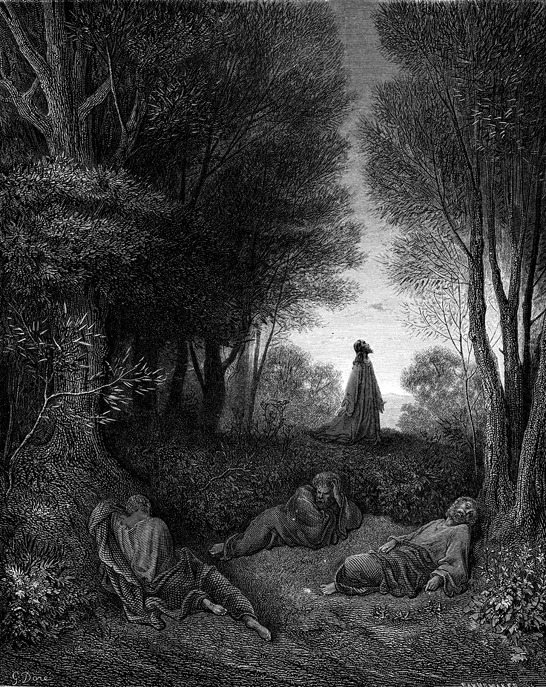
- Gethsemane (The Garden Called the Oil Press)
- The Words Todah, Yadah and Eucharisteo
- Hell and the Final State of the Lost
Show the next 6 titles
About Matthew
This page draws on Adam Clarke, Commentary on the Bible; J.C. Ryle, Expository Thoughts on the Gospels: Matthew; Jerome, Commentary on Matthew; John Gill, Exposition of the New Testament; John Gill, Exposition of the New Testament (1746-1748); Matthew Henry, Commentary on the Whole Bible and Thomas Aquinas, Commentary on Matthew.