
Place
Canaan
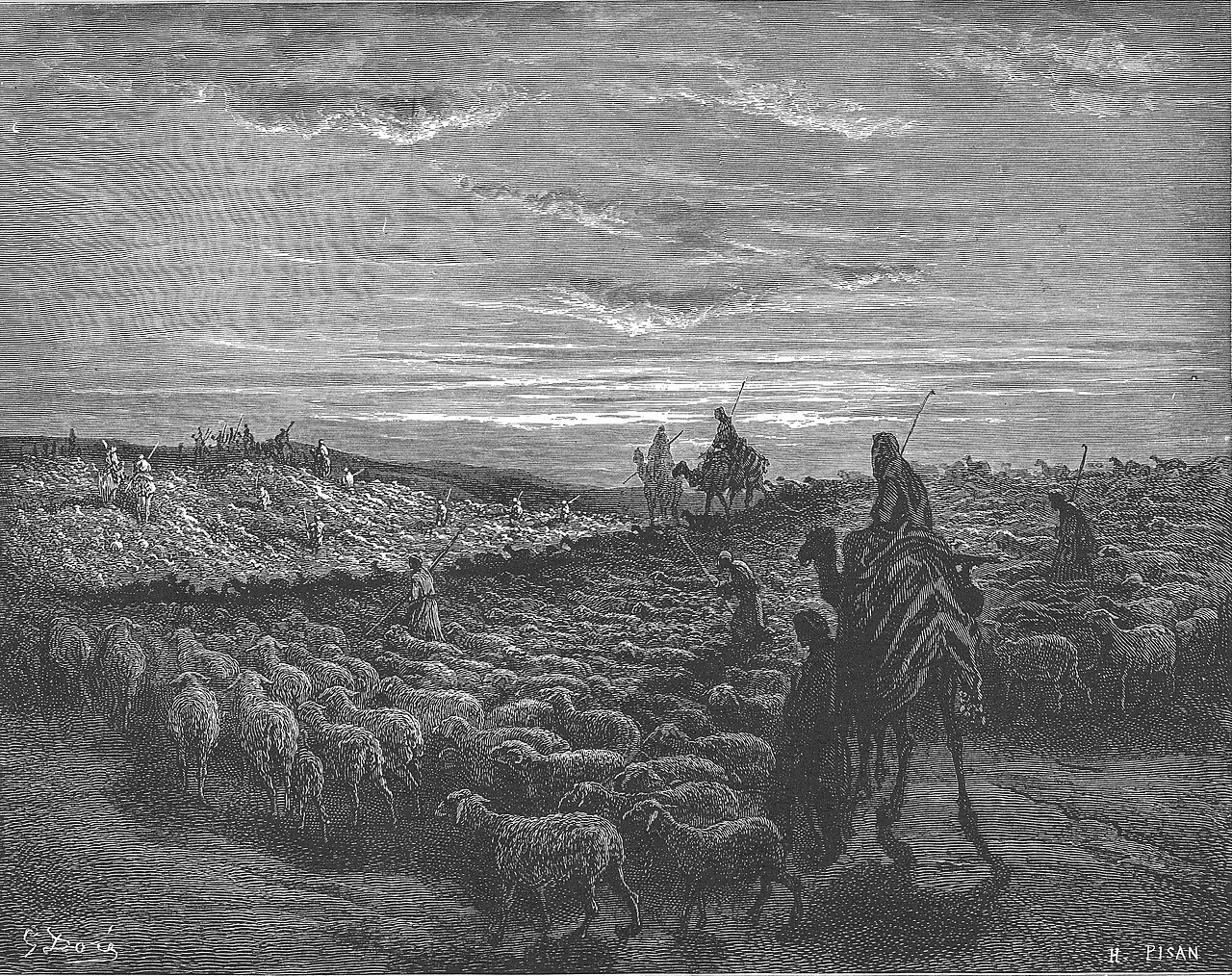
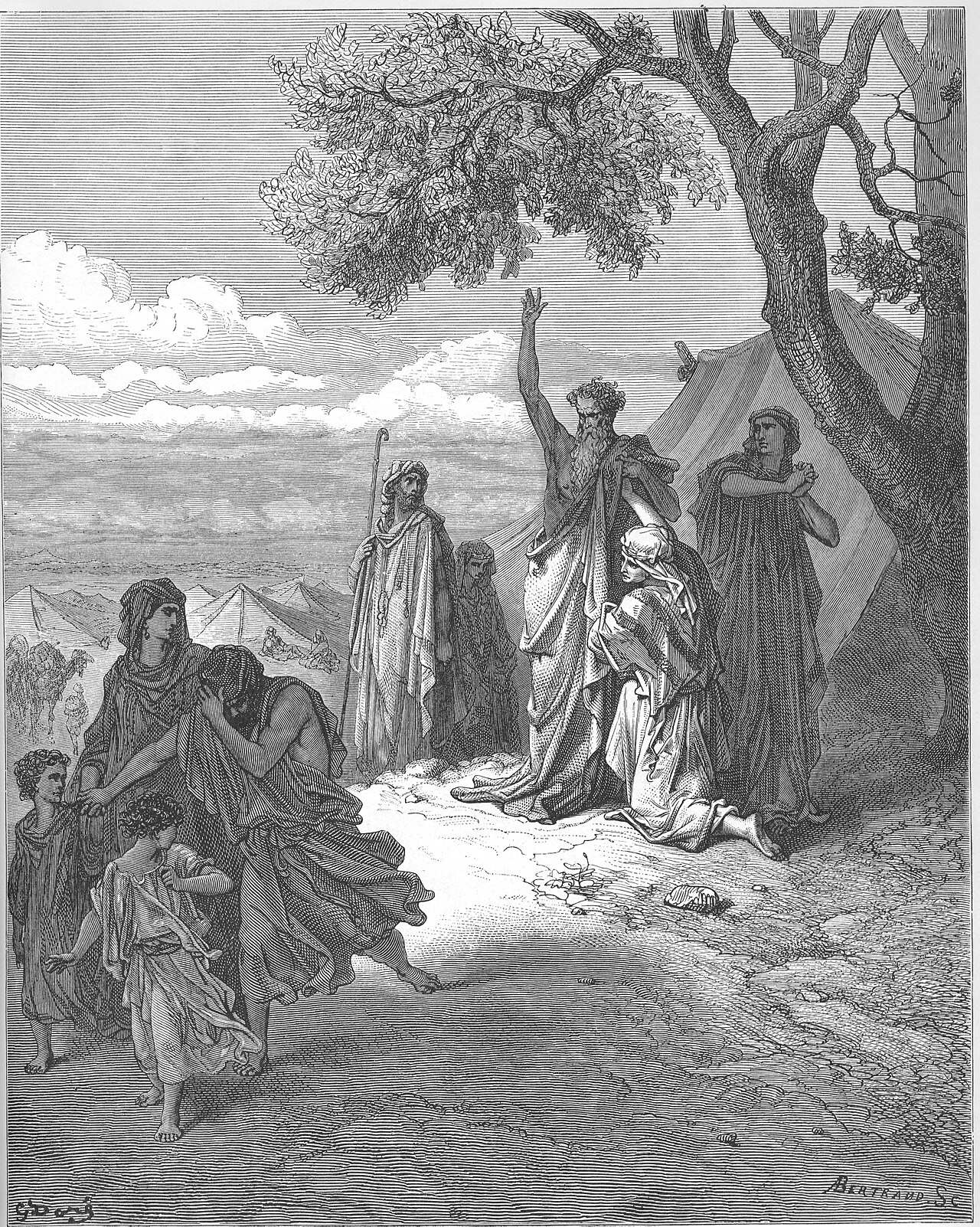
Gustave Doré, La Sainte Bible (Tours: Alfred Mame et fils, 1866). Public domain.
Summary
The land God promised to Abraham's seed, walked and marked with altars by the patriarchs and possessed under Joshua four centuries later.
- Canaan was the land God promised to Abraham and his descendants, stretching from the Mediterranean coast into the Jordan valley.
- Genesis 9:25-27 curses Canaan the son, not Ham and not any race of people; that reading has no basis in the text.
- God repeats and widens the promise across Genesis: a bare word to Abram, then a bounded covenant naming ten peoples, then an everlasting possession.
- The twelve spies of Numbers 13 found the land rich but its cities strong, and only Caleb urged Israel to go up and take it.
- Joshua's conquest fulfills the promise; its ground is moral, not ethnic, told in full on a page of its own.
On this page
In Scripture
- Verses
- 86
- Books
- 12
Where it is
- Region
- The Levant
Why Canaan matters
Abram enters Canaan, and God promises the land
Genesis 12:5-7, widened through Genesis 13, 15 and 17
Read Genesis 12:5-7, widened through Genesis 13, 15 and 17
- Abram sets out for CanaanGenesis 12:5And Abram took his wife Sarai, his nephew Lot, and all the possessions and people they had acquired in Haran, and set out for the land of Canaan. When they came to the land of Canaan,
- The Canaanites were in the landGenesis 12:6Abram traveled through the land as far as the site of the Oak of Moreh at Shechem. And at that time the Canaanites were in the land.
- The LORD promises the landGenesis 12:7Then the LORD appeared to Abram and said, “I will give this land to your offspring.” So Abram built an altar there to the LORD, who had appeared to him.
- Look in every directionGenesis 13:14After Lot had departed, the LORD said to Abram, “Now lift up your eyes from the place where you are, and look to the north and south and east and west,
- Given foreverGenesis 13:15for all the land that you see, I will give to you and your offspring forever.
- The covenant, ten peoples namedGenesis 15:18On that day the LORD made a covenant with Abram, saying, “To your descendants I have given this land—from the river of Egypt to the great River Euphrates—
- An everlasting possessionGenesis 17:8And to you and your descendants I will give the land where you are residing—all the land of Canaan—as an eternal possession; and I will be their God.”
What happened here, in order
in the order the canon tells it
- The curse: Canaan, not HamGenesis 9:25he said, “Cursed be Canaan! A servant of servants shall he be to his brothers.”
- Blessed be the LORD, the God of ShemGenesis 9:26He also declared: “Blessed be the LORD, the God of Shem! May Canaan be the servant of Shem.
- The land promised to Abram's offspringGenesis 12:7Then the LORD appeared to Abram and said, “I will give this land to your offspring.” So Abram built an altar there to the LORD, who had appeared to him.
- Walk the land's length and breadthGenesis 13:17Get up and walk around the land, through its length and breadth, for I will give it to you.”
- The peoples named in the covenantGenesis 15:21Amorites, Canaanites, Girgashites, and Jebusites.”
- An everlasting possessionGenesis 17:8And to you and your descendants I will give the land where you are residing—all the land of Canaan—as an eternal possession; and I will be their God.”
- A land flowing with milk and honeyExodus 3:8I have come down to rescue them from the hand of the Egyptians and to bring them up out of that land to a good and spacious land, a land flowing with milk and honey—the home of the Canaanites, Hittites, Amorites, Perizzites, Hivites, and Jebusites.
- The promise repeated to the eldersExodus 3:17And I have promised to bring you up out of your affliction in Egypt, into the land of the Canaanites, Hittites, Amorites, Perizzites, Hivites, and Jebusites—a land flowing with milk and honey.’
- The spies report: it flows with milk and honeyNumbers 13:27And they gave this account to Moses: “We went into the land to which you sent us, and indeed, it is flowing with milk and honey. Here is some of its fruit!
- Caleb: we can certainly conquer itNumbers 13:30Then Caleb quieted the people before Moses and said, “We must go up and take possession of the land, for we can certainly conquer it!”
- The Anakim, come of the NephilimNumbers 13:33We even saw the Nephilim there—the descendants of Anak that come from the Nephilim! We seemed like grasshoppers in our own sight, and we must have seemed the same to them!”
- Seven nations, larger and strongerDeuteronomy 7:1When the LORD your God brings you into the land that you are entering to possess, and He drives out before you many nations—the Hittites, Girgashites, Amorites, Canaanites, Perizzites, Hivites, and Jebusites, seven nations larger and stronger than you—
- The land of Canaan, the portion of your inheritancePsalms 105:11“I will give you the land of Canaan as the portion of your inheritance.”
- By faith he dwelt in the promised land as a strangerHebrews 11:9By faith he dwelt in the promised land as a stranger in a foreign country. He lived in tents, as did Isaac and Jacob, who were heirs with him of the same promise.
Canaan in Scripture
86 verses name it, in 12 books
Open a book to read its mentions here. Text: Berean Standard Bible.
Old TestamentNew Testamentsegment width = share of mentions
Old Testament11 books · 84 mentions
Genesis43 mentions
- Genesis 9:18The sons of Noah who came out of the ark were Shem, Ham, and Japheth. And Ham was the father of Canaan.
- Genesis 9:22And Ham, the father of Canaan, saw his father’s nakedness and told his two brothers outside.
- Genesis 9:25he said, “Cursed be Canaan! A servant of servants shall he be to his brothers.”
- Genesis 9:26He also declared: “Blessed be the LORD, the God of Shem! May Canaan be the servant of Shem.
- Genesis 9:27May God expand the territory of Japheth; may he dwell in the tents of Shem, and may Canaan be his servant.”
- Genesis 10:6The sons of Ham: Cush, Mizraim, Put, and Canaan.
- Genesis 10:15And Canaan was the father of Sidon his firstborn, and of the Hittites,
- Genesis 10:19and the borders of Canaan extended from Sidon toward Gerar as far as Gaza, and then toward Sodom, Gomorrah, Admah, and Zeboiim, as far as Lasha.
35 further mentions in Genesis, read them in the book.
Exodus3 mentions
- Exodus 6:4I also established My covenant with them to give them the land of Canaan, the land where they lived as foreigners.
- Exodus 15:15Then the chiefs of Edom will be dismayed; trembling will seize the leaders of Moab; those who dwell in Canaan will melt away,
- Exodus 16:35The Israelites ate manna forty years, until they came to a land where they could settle; they ate manna until they reached the border of Canaan.
Leviticus3 mentions
- Leviticus 14:34“When you enter the land of Canaan, which I am giving you as your possession, and I put a contamination of mildew into a house in that land,
- Leviticus 18:3You must not follow the practices of the land of Egypt, where you used to live, and you must not follow the practices of the land of Canaan, into which I am bringing you. You must not walk in their customs.
- Leviticus 25:38I am the LORD your God, who brought you out of the land of Egypt to give you the land of Canaan and to be your God.
Numbers11 mentions
- Numbers 13:2“Send out for yourself men to spy out the land of Canaan, which I am giving to the Israelites. From each of their fathers’ tribes send one man who is a leader among them.”
- Numbers 13:17When Moses sent them to spy out the land of Canaan, he told them, “Go up through the Negev and into the hill country.
- Numbers 26:19The sons of Judah were Er and Onan, but they died in the land of Canaan.
- Numbers 32:30But if they do not arm themselves and go across with you, then they must accept their possession among you in the land of Canaan.”
- Numbers 32:32We will cross over into the land of Canaan armed before the LORD, that we may have our inheritance on this side of the Jordan.”
- Numbers 33:40Now the Canaanite king of Arad, who lived in the Negev in the land of Canaan, heard that the Israelites were coming.
- Numbers 33:51“Speak to the Israelites and tell them: When you cross the Jordan into the land of Canaan,
- Numbers 34:2“Command the Israelites and say to them: When you enter the land of Canaan, it will be allotted to you as an inheritance with these boundaries:
3 further mentions in Numbers, read them in the book.
Deuteronomy1 mention
Joshua8 mentions
- Joshua 5:12And the day after they had eaten from the produce of the land, the manna ceased. There was no more manna for the Israelites, so that year they began to eat the crops of the land of Canaan.
- Joshua 14:1Now these are the portions that the Israelites inherited in the land of Canaan, as distributed by Eleazar the priest, Joshua son of Nun, and the heads of the families of the tribes of Israel.
- Joshua 21:2at Shiloh in the land of Canaan and said to them, “The LORD commanded through Moses that we be given cities in which to live, together with pasturelands for our livestock.”
- Joshua 22:9So the Reubenites, the Gadites, and the half-tribe of Manasseh left the Israelites at Shiloh in the land of Canaan to return to their own land of Gilead, which they had acquired according to the command of the LORD through Moses.
- Joshua 22:10And when they came to Geliloth near the Jordan in the land of Canaan, the Reubenites, the Gadites, and the half-tribe of Manasseh built an imposing altar there by the Jordan.
- Joshua 22:11Then the Israelites received the report: “Behold, the Reubenites, the Gadites, and the half-tribe of Manasseh have built an altar on the border of the land of Canaan, at Geliloth near the Jordan on the Israelite side.”
- Joshua 22:32Then Phinehas son of Eleazar the priest, together with the other leaders, returned to the Israelites in the land of Canaan and brought back a report regarding the Reubenites and Gadites in the land of Gilead.
- Joshua 24:3But I took your father Abraham from beyond the Euphrates and led him through all the land of Canaan, and I multiplied his descendants. I gave him Isaac,
Judges6 mentions
- Judges 3:1These are the nations that the LORD left to test all the Israelites who had not known any of the wars in Canaan,
- Judges 4:2So the LORD sold them into the hand of Jabin king of Canaan, who reigned in Hazor. The commander of his forces was Sisera, who lived in Harosheth-hagoyim.
- Judges 4:23On that day God subdued Jabin king of Canaan before the Israelites.
- Judges 4:24And the hand of the Israelites grew stronger and stronger against Jabin king of Canaan until they destroyed him.
- Judges 5:19Kings came and fought; then the kings of Canaan fought at Taanach by the waters of Megiddo, but they took no plunder of silver.
- Judges 21:12So they found among the inhabitants of Jabesh-gilead four hundred young women who had not had relations with a man, and they brought them to the camp at Shiloh in the land of Canaan.
1 Chronicles3 mentions
Psalms3 mentions
- Psalms 105:11“I will give you the land of Canaan as the portion of your inheritance.”
- Psalms 106:38They shed innocent blood— the blood of their sons and daughters, whom they sacrificed to the idols of Canaan, and the land was polluted with blood.
- Psalms 135:11Sihon king of the Amorites, Og king of Bashan, and all the kings of Canaan.
Isaiah2 mentions
- Isaiah 19:18In that day five cities in the land of Egypt will speak the language of Canaan and swear allegiance to the LORD of Hosts. One of them will be called the City of the Sun.
- Isaiah 23:11The LORD has stretched out His hand over the sea; He has made kingdoms tremble. He has given a command that the strongholds of Canaan be destroyed.
The account
Read the account as one telling
Common questions
Who was cursed at Genesis 9:25-27, and does the curse apply to any race of people today?
The text names Canaan, Noah's grandson through Ham, not Ham himself and not any race of people. The words speak of one man's line and its place among his uncles, Shem and Japheth. Reading this curse as marking a whole race of people has no basis in the text itself.
Why does Genesis 15:19-21 name so many different peoples living in one land?
Canaan before Israel's arrival held a mix of clans and small kingdoms rather than one nation. Genesis names them individually, Hittites, Amorites, Perizzites, Hivites, Jebusites, and Canaanites among others, because the patriarchs and later Israel dealt with each of them by name.
How does the promise of the land change from Genesis 12 to Genesis 15 to Genesis 17?
At Genesis 12:7 the promise is a bare word, that the land will belong to Abram's offspring. At Genesis 15:18-21 it becomes a covenant with a named boundary and ten peoples listed. At Genesis 17:8 it becomes an everlasting possession, tied to God being their God.
Why did the ten spies discourage Israel at Numbers 13, and what set Caleb apart?
Ten of the twelve spies saw the fortified cities and the descendants of Anak in the land and told Israel the people were too strong to overcome. Caleb alone told the people they should go up and take the land, because he trusted the promise God had already made.
Was the conquest of Canaan about ethnicity?
No. Scripture gives a moral ground for the conquest, the iniquity of the peoples in the land coming to its full measure after centuries of patience, and the ban falls on that ground rather than on ancestry. Rahab and the Gibeonites both survive the conquest, one by confession and one by covenant. The full argument, with its sources, is told on its own page.
Notable art
1 verified piece depicting Canaan
Sources cited
- Berean Standard BiblePublic domain since 2023. All Scripture text on this page.
- Gustave Doré, La Sainte Bible (Tours: Alfred Mame et fils, 1866)The two engravings on this page. Public domain.
- MannaFest, The Canaanite ConquestThe moral, not ethnic, ground of the conquest, and its sources, cited from this page rather than repeated here.
Keep studying
On this page
Studies8
Doorway2
Keep this page