
On this page, 6 sections
The one drawing
Across the canon
Old Testament
New Testament
The other 58 books of the canon carry none.
12 passages
Where Scripture speaks
The passages this subject stands on, in canon order.
Then the LORD God took the man and placed him in the Garden of Eden to cultivate and keep it.By the sweat of your brow you will eat your bread, until you return to the ground—because out of it were you taken. For dust you are, and to dust you shall return.”Six days you shall labor and do all your work,Walk in the manner of the ant, O slacker; observe its ways and become wise.There is profit in all labor, but mere talk leads only to poverty.Commit your works to the LORD and your plans will be achieved.Whatever you find to do with your hands, do it with all your might, for in Sheol, where you are going, there is no work or planning or knowledge or wisdom.About the eleventh hour he went out and found still others standing around. ‘Why have you been standing here all day long doing nothing?’ he asked.But Jesus answered them, “To this very day My Father is at His work, and I too am working.”While it is daytime, we must do the works of Him who sent Me. Night is coming, when no one can work.Whatever you do, work at it with your whole being, for the Lord and not for men,For even while we were with you, we gave you this command: “If anyone is unwilling to work, he shall not eat.”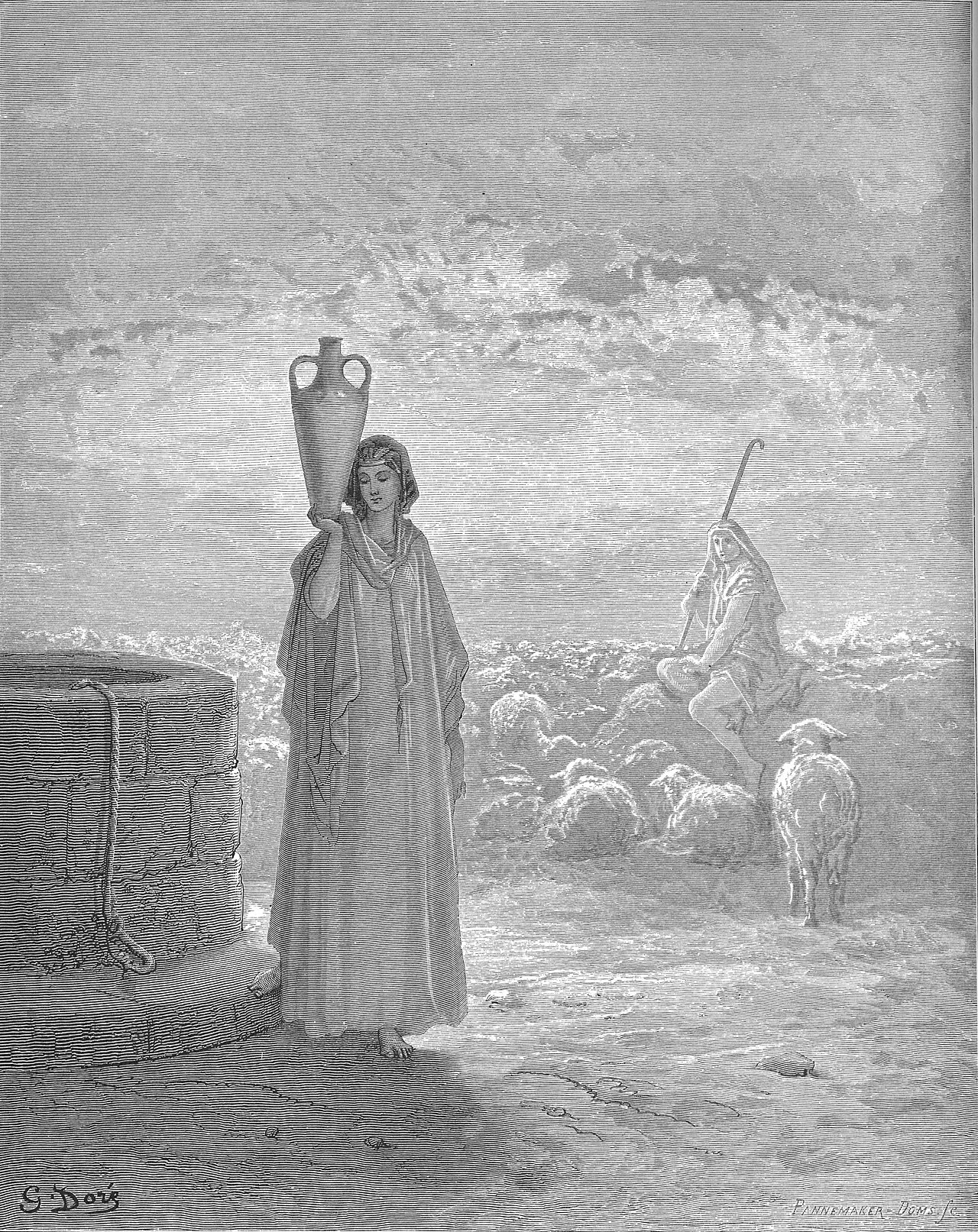
Work in Scripture, in full
Work begins in the garden, before anything went wrong. God placed the man in Eden "to dress it and to keep it" (Genesis 2:15), and gave Adam and Eve the task of filling the earth and caring for it (Genesis 1:28). Work is not a punishment. It is part of what it means to be made in God's image.
Sin changes how work feels. After the fall, the ground is cursed, and Adam is told he will eat bread "in the sweat of thy face" (Genesis 3:19). Work becomes hard, frustrating, sometimes fruitless. But the task itself was never the curse. The thorns and the sweat are.
The rest of the Old Testament treats ordinary work as a place where faith is lived out. The Ten Commandments assume six days of labor as the normal shape of a life, with the seventh day set apart for rest (Exodus 20:9-10). Proverbs sends the lazy man to watch an ant, which works hard with no one standing over it, and warns that laziness leads to poverty while diligent hands bring plenty (Proverbs 6:6; 14:23). The book ends by praising a woman who works with willing hands, trades wisely, and is never idle (Proverbs 31:13, 27).
Ecclesiastes is honest about the frustration of labor "under the sun," the sense that toil can feel like chasing the wind. Yet even there, the Preacher concludes that enjoying the fruit of one's work is itself a gift from God, not something to feel guilty about (Ecclesiastes 9:10; 5:18-19).
Jesus himself worked with his hands before he began his public ministry, known in his hometown as "the carpenter" (Mark 6:3). When he began to teach, he described his own mission in the same terms: "My Father worketh hitherto, and I work" (John 5:17). He told a blind man's questioners that he "must work the works of him that sent me, while it is day" (John 9:4), treating his healing and teaching as work with a deadline, work that mattered.
Jesus also told a story about laborers hired at different hours of the day, all paid the same generous wage by a master who owed them nothing extra and gave it anyway, a picture of grace that unsettles anyone measuring worth by hours logged (Matthew 20:1-16).
The early church carried this same respect for ordinary labor forward. Paul, a tentmaker by trade, worked with his hands so he would not be a burden to the churches he served (Acts 18:3; 1 Thessalonians 2:9). He told the Colossians that whatever they did, they should work at it heartily, "as to the Lord, and not unto men," because it is Christ they are ultimately serving (Colossians 3:23-24). To a church tempted toward idleness, he was blunt: if a man will not work, he should not eat either (2 Thessalonians 3:10).
Scripture never treats work as beneath the spiritual life. It treats it as one of the ordinary places faith gets lived out, in a shop, a field, a kitchen, an office, offered up to Christ, who himself labored among us and now works still.
4 voices
What teachers have said
So what I have seen to be good is that it is suitable to eat and drink and enjoy pleasure with all one's labour that he toils beneath the sun during the brief span of his life that God has given him, for that is his lot.
Jerome · Commentary on Ecclesiastes
Written before 420.
For it is infinite folly to labour painfully, and pant after the breath of applause, to apply one's self to the heavenly precepts with hard toil, but to aim at the reward of an earthly kind of recompense.
Gregory the Dialogist · Morals on the Book of Job, Book VIII
Written before 604.
The narrow gate also represents the toils and sufferings of the saints. For as a victory in battle bears witness to the strength of the soldiers, so a courageous endurance of labours and temptations will make a man strong.
Cyril of Alexandria · Catena Aurea by Aquinas
Written before 444.
Thus diligent must we be in the use of the means of knowledge, following on to know the Lord. What success we may hope for in the use of these means. Our labour shall not be in vain
Matthew Henry · Commentary on the Whole Bible, 1710
The words underneath
Each card is one Hebrew or Greek word behind work. It gives the sense, the count across the canon, and the number in Strong's 1890 concordance.
abad: to serve
Hebrew · H5647Strong's entry: to work (in any sense); by implication, to serve, till, (causatively) enslave, etc.
labor as service rendered to God
288 times in the Old Testament · abad, in full →
melakah: work
Hebrew · H4399Strong's entry: properly, deputyship, i.e. ministry; generally, employment (never servile) or work (abstractly or concretely); also property (as the result of labor)
the ordinary employment of a life
167 times in the Old Testament · melakah, in full →
maaseh: deed: work
Hebrew · H4639Strong's entry: an action (good or bad); generally, a transaction; abstractly, activity; by implication, a product (specifically, a poem) or (generally) property
work as something that leaves a trace
236 times in the Old Testament · maaseh, in full →
ergon: work
Greek · G2041Strong's entry: toil (as an effort or occupation); by implication, an act
the New Testament's word for labor done
168 times in the New Testament · ergon, in full →
Life questions