
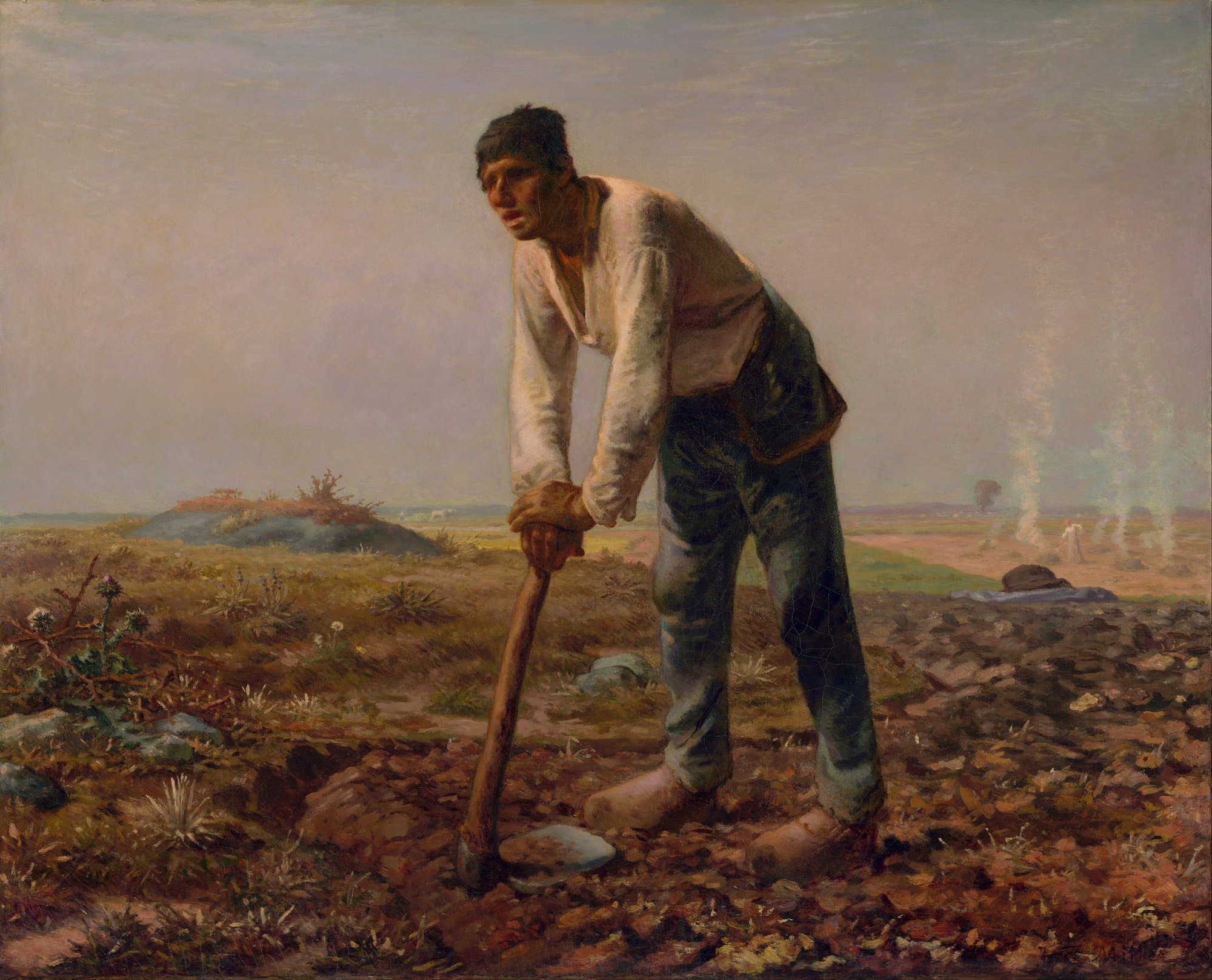
Exodus 18 · Trial 3 of 21 · Featured Study
Stress and Weariness
Stress and weariness are the strain of more work, care or sorrow than one person can bear, and Scripture names God's help under it.
Moses sat to judge the people while “they stood around him from morning until evening” (Exodus 18:13).
Therefore we do not lose heart. Though our outer self is wasting away, yet our inner self is being renewed day by day.
- Anchor text
- Exodus 18:18 “Surely you and these people with you will…”
- The lament
- Psalm 55:4 to 8 “My heart murmurs within me, and the…”
- Hold in memory
- 2 Corinthians 4:16, Isaiah 40:29
Summary
Scripture speaks of the weary with compassion. Moses, Elijah, David and Paul each came to the end of their strength, and God met them with food, sleep, other workers and His own presence. The help Scripture gives joins the casting of the burden on God with ordinary means: rest, sleep, the seventh day and work shared with others.
- Jethro counselled Moses to choose capable, God-fearing men to judge the minor cases, and Moses did what his father-in-law said (Exodus 18:21 to 24).
- Paul set his care for the churches beside his beatings, shipwrecks and sleepless nights as a weight he carried every day (2 Corinthians 11:28).
- Scripture names more than one source of weariness: the curse on Adam's work, a creation that groans and sin kept hidden (Genesis 3:17, Romans 8:22, Psalm 32:3 to 4).
What Scripture Says to the One Weighed Down
Five Hebrew and Greek words name the heavy load, the weary body, toil, the weighed-down heart and labor to the point of fatigue.
Stress is a modern word, but the experience it names fills the Bible. Its writers speak of weary bodies, sleepless nights and hearts weighed down by care. This study asks where that weight comes from, what God says to the person under it and what He gives that person to do. It gathers the words for the trial and its ground in the fall. It sets out Christ who was weary and carried our sorrows, the laments, the people and stories of the trial, the voices of the church and the practices Scripture commands.
Kaved, heavy
41 uses in the canon
The Hebrew adjective kaved (H3515) means heavy. Exodus uses it of Moses at the battle with Amalek: “When Moses’ hands grew heavy, they took a stone and put it under him.”
Yaga, to grow weary
26 uses in the canon
The Hebrew verb yaga (H3021) means to toil until one is weary. Isaiah uses it of the strongest: “Even youths grow tired and weary.”
Amal, toil and trouble
55 uses in the canon
The Hebrew noun amal (H5999) names wearing effort and the trouble it brings. The prayer of Moses says of human years that “their pride is but labor and sorrow.”
Bareo, to weigh down
6 uses in the canon
The Greek verb bareo (G916) means to weigh down or burden. Jesus warned, “watch yourselves, or your hearts will be weighed down by dissipation, drunkenness, and the worries of life.”
Kopiao, to labor until tired
22 uses in the canon
The Greek verb kopiao (G2872) means to feel fatigue from labor. Simon Peter used it after a night of fishing: “we have worked hard all night without catching anything.”
Kaved, heavy, Yaga, to grow weary, Amal, toil and trouble, Bareo, to weigh down, Kopiao, to labor until tired, The Words Kaved and Bareo, the study in brief
The Key Texts on Weariness
Three laments voice the weariness, and three promises answer it with God's strength.
Laments
I am weary from groaning; all night I flood my bed with weeping and drench my couch with tears.
David's prayer stands first because it gives the worn-out sufferer words for nights of weeping.
Psalm 6:6BSB
Laments
I am weary from my crying; my throat is parched. My eyes fail, looking for my God.
The psalm shows that a believer may be exhausted from crying out while still looking to God.
Psalm 69:3BSB
Laments
You have said, ‘Woe is me because the LORD has added sorrow to my pain! I am worn out with groaning and have found no rest.’”
Baruch's complaint shows weariness in a faithful servant of God's word, and the LORD answers it in the next verses.
Promises
Blessed be the Lord, who daily bears our burden, the God of our salvation. Selah
The psalm names God as the One who carries His people's load day by day.
Psalm 68:19BSB
Promises
He gives power to the faint and increases the strength of the weak.
Isaiah promises strength to those who have none left, which makes weakness the place where God gives.
Isaiah 40:29BSB
Psalm 69:3, Jeremiah 45:3, Psalm 68:19, Isaiah 40:29
Where Weariness Comes From, and Christ Who Bore It
Genesis, Ecclesiastes, Romans and the Psalms each add a cause of weariness, Isaiah sets it under God's rule, and the Gospels, Isaiah and Hebrews show Christ bearing it.
Scripture first ties hard labor to the fall of Adam, when God cursed the ground.
And to Adam He said: “Because you have listened to the voice of your wife and have eaten from the tree of which I commanded you not to eat, cursed is the ground because of you; through toil you will eat of it all the days of your life.The verse stands first because every later weariness in Scripture is lived under this sentence on Adam's work.
For what does a man get for all the toil and striving with which he labors under the sun? Indeed, all his days are filled with grief, and his task is sorrowful; even at night, his mind does not rest. This too is futile.The verse stands here because it shows weariness reaching the mind as well as the body.
We know that the whole creation has been groaning together in the pains of childbirth until the present time.Paul widens the weariness to the whole creation, which groans while it waits for its freedom.
Some weight comes from the sufferer's own sin. David traced his wasting strength to sin he had kept hidden.
When I kept silent, my bones became brittle from my groaning all day long. For day and night Your hand was heavy upon me; my strength was drained as in the summer heat. SelahThe psalm shows that unconfessed sin can weigh on the body as well as the conscience.
Over every cause of weariness stands the God who made all things.
Do you not know? Have you not heard? The LORD is the everlasting God, the Creator of the ends of the earth. He will not grow tired or weary; His understanding is beyond searching out.The verse sets every weary person under a God whose strength does not run out.
Christ Himself bore weariness, as the Saviour who carried it for His people and as the High Priest who knows it from within.
He sat down weary at the wellJohn 4
At Jacob's well in Samaria, “When a Samaritan woman came to draw water, Jesus said to her, ‘Give Me a drink’” (John 4:7).
Since Jacob’s well was there, Jesus, weary from His journey, sat down by the well. It was about the sixth hour.
John 4:6BSB John records the Son of God tired from walking, so His weariness was as real as ours.
He slept in the stormMark 4
At evening He told His disciples, “Let us cross to the other side” (Mark 4:35), and a storm broke over the boat on the way.
But Jesus was in the stern, sleeping on the cushion. So they woke Him and said, “Teacher, don’t You care that we are perishing?”
Mark 4:38BSB Jesus slept through the storm after a day of teaching, which shows His body needing sleep.
He called the weary to HimselfMatthew 11
Jesus first praised His Father for revealing these things “to little children” (Matthew 11:25), and then He turned to the burdened.
Come to Me, all you who are weary and burdened, and I will give you rest.
Matthew 11:28BSB The invitation names the weary and burdened as the very people Jesus calls.
Read the study of Come to Me, and I Will Give You Rest 8 sections, 6 verses set out
He took His apostles aside to restMark 6
The apostles came back from their mission and brought Him news “of all they had done and taught” (Mark 6:30).
And He said to them, “Come with Me privately to a solitary place, and let us rest for a while.” For many people were coming and going, and they did not even have time to eat.
Mark 6:31BSB The verse stands here because Jesus gives rest to those who work for Him as well as to the crowds who come to Him.
Read the study of Come Away and Rest a While 7 sections, 0 verses set out
He carried our sorrowsIsaiah 53
Matthew saw this word fulfilled on the evening Jesus “healed all the sick” who were brought to Him (Matthew 8:16 to 17).
Surely He took on our infirmities and carried our sorrows; yet we considered Him stricken by God, struck down and afflicted.
Isaiah 53:4BSB The Servant carries the sorrows of His people as their Saviour, which is more than an example of endurance.
Read the page on Jesus 33 sections, 35 verses set out
He sympathizes as High PriestHebrews 4
Hebrews calls Jesus “a great high priest who has passed through the heavens” (Hebrews 4:14).
For we do not have a high priest who is unable to sympathize with our weaknesses, but we have one who was tempted in every way that we are, yet was without sin.
Hebrews 4:15BSB The verse tells the weary that their High Priest knows human weakness from within.
He slept in the storm (Mark 4), He called the weary to Himself (Matthew 11), He took His apostles aside to rest (Mark 6), He carried our sorrows (Isaiah 53), He sympathizes as High Priest (Hebrews 4)
Romans 8:22, Psalm 32:3 to 4, Isaiah 40:28, John 4:6, Mark 4:38, Matthew 11:28, Mark 6:31, Isaiah 53:4 and 1 more
The Fall & the Protoevangelium, the study in brief, Ecclesiastes 2:22 to 23, Romans 8:22, Psalm 32:3 to 4, Isaiah 40:28, Providence, the study in brief, a paragraph, He sat down weary at the well (John 4) and 5 more
People Worn Out by the Load
Five people of the Bible came to the end of their strength through labor, war, flight, service and persecution.
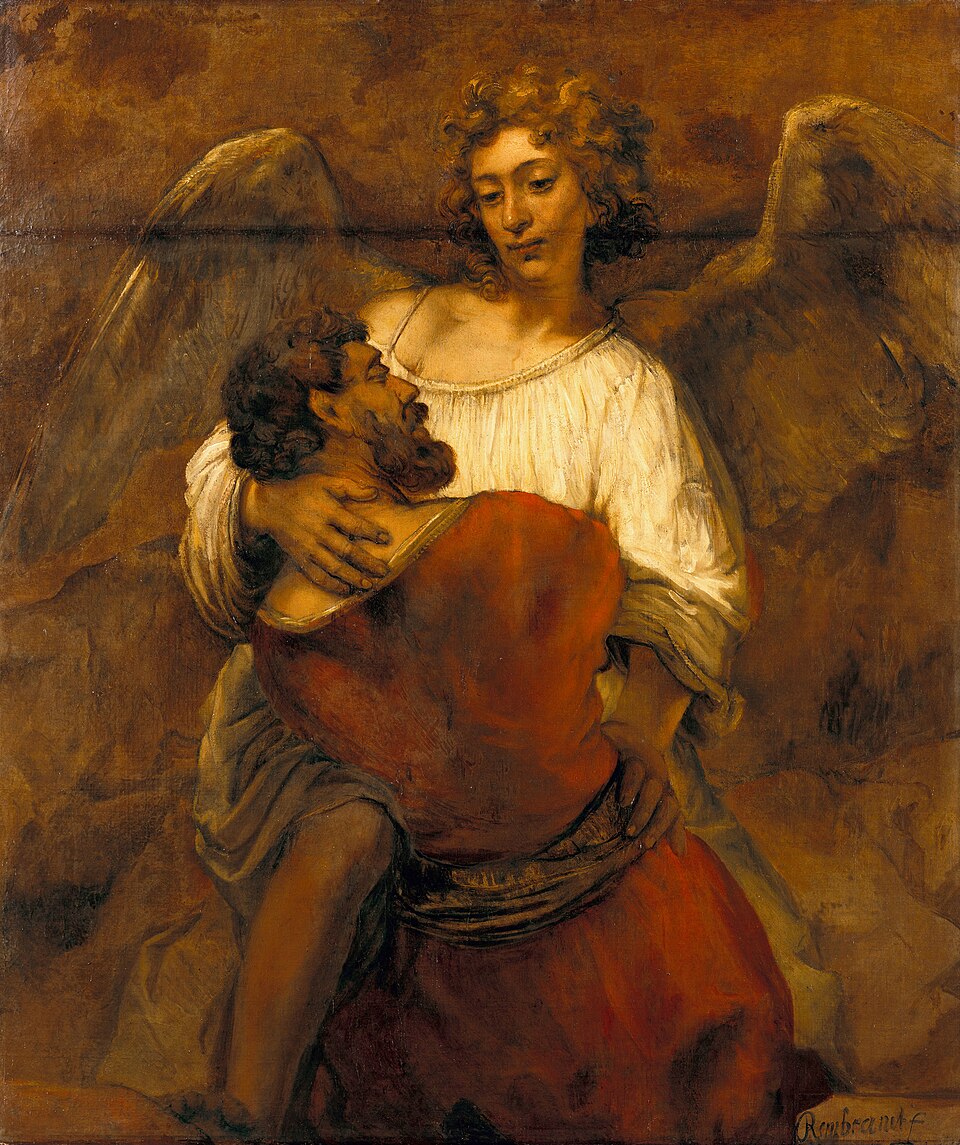
He told Laban of his years as a shepherd: “the heat consumed me by day and the frost by night, and sleep fled from my eyes.”
Genesis 31:40
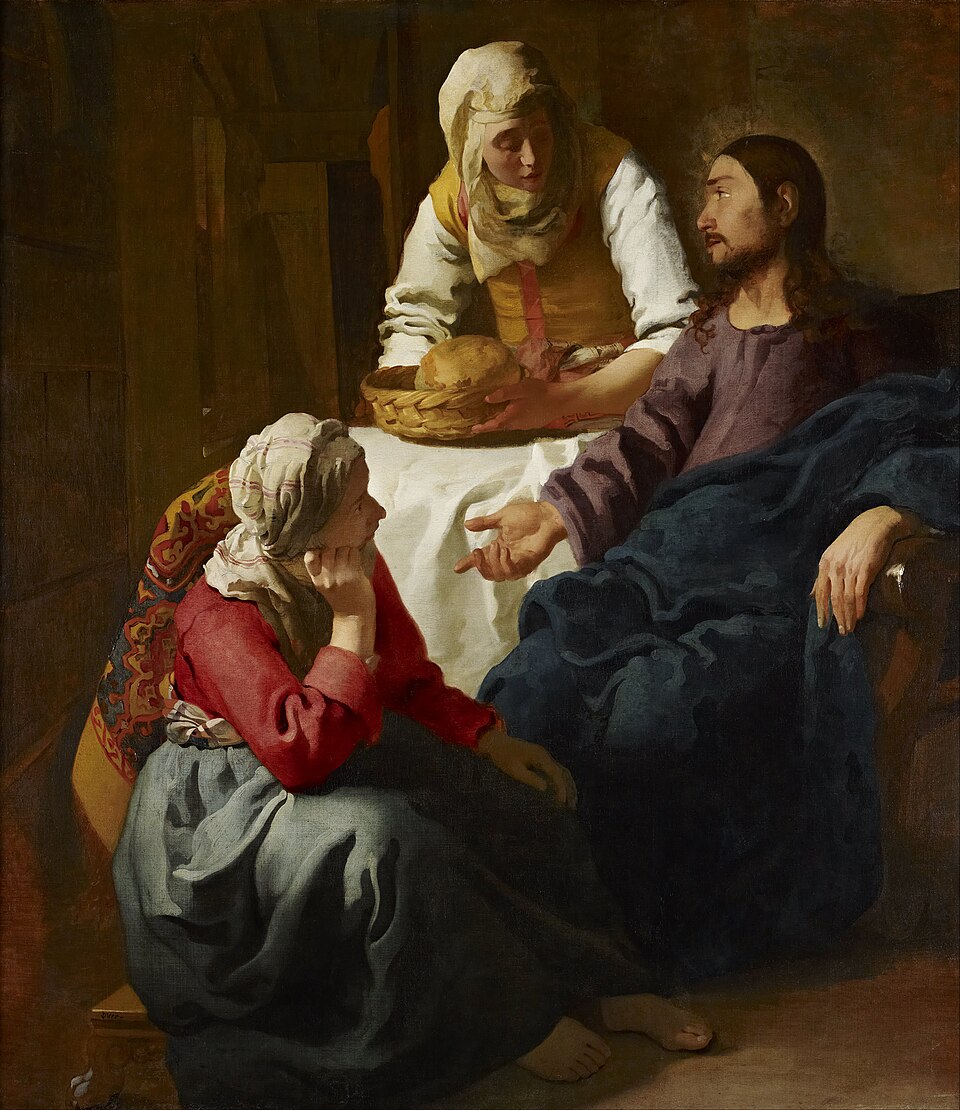
She “was distracted by all the preparations to be made” while her sister sat listening to Jesus.
Luke 10:40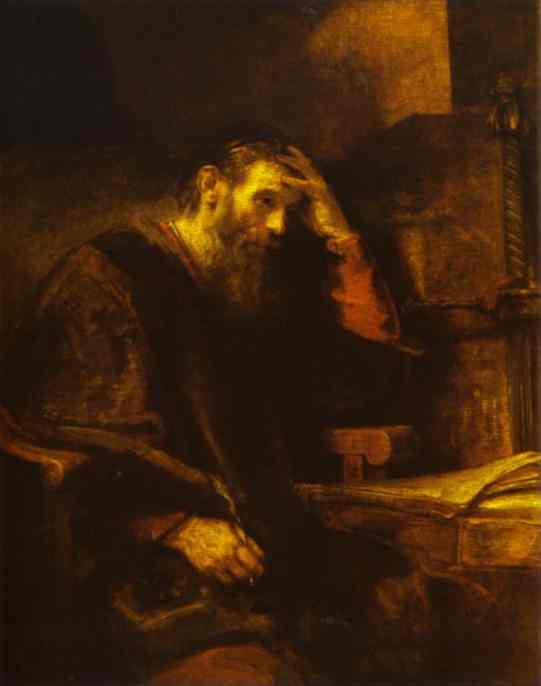
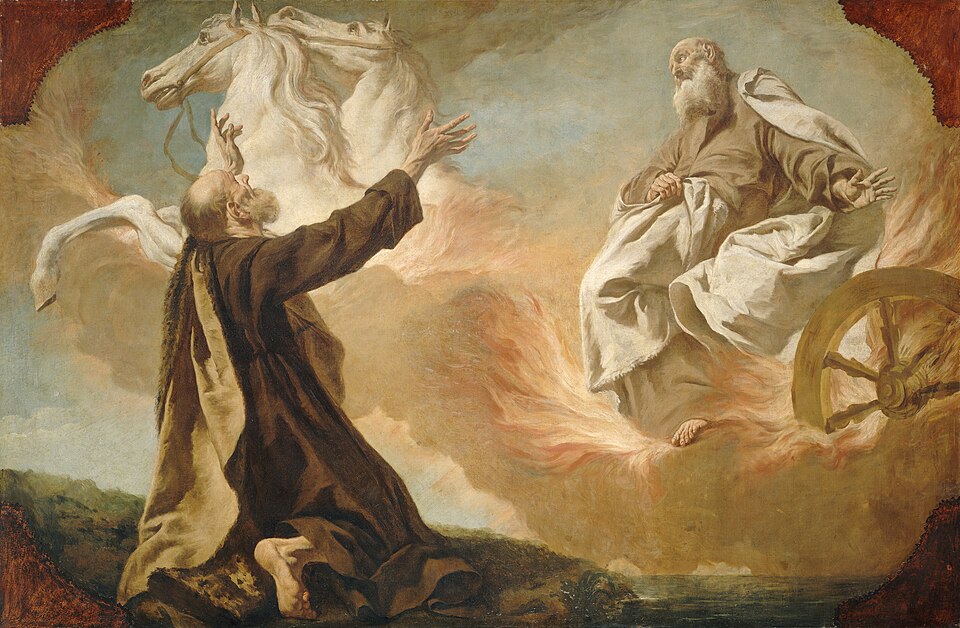
Elijah, Martha, Paul
What Scripture Gives the Weary to Do
Scripture names seven things to do under the load, each in the words of the verse that gives it.
- 1Share the load“Carry one another’s burdens, and in this way you will fulfill the law of Christ.”Galatians 6:2
- 2Cast your burden on the LORD“Cast your burden upon the LORD and He will sustain you.”Psalm 55:22
- 3Confess what weighs on you“I said, ‘I will confess my transgressions to the LORD,’ and You forgave the guilt of my sin.”Psalm 32:5
- 4Sleep in God's keeping“I will lie down and sleep in peace, for You alone, O LORD, make me dwell in safety.”Psalm 4:8
- 5Stop work on the seventh day“on the seventh day you must cease, so that your ox and your donkey may rest and the son of your maidservant may be refreshed.”Exodus 23:12
- 6Wait for new strength“But those who wait upon the LORD will renew their strength.”Isaiah 40:31
- 7Keep doing good“Let us not grow weary in well-doing, for in due time we will reap a harvest if we do not give up.”Galatians 6:9
Cast your burden on the LORD, Confess what weighs on you, Sleep in God's keeping, Stop work on the seventh day, Wait for new strength, Keep doing good
These practices stand beside medical care for body and mind, and Paul sent greetings from his companion Luke, “the beloved physician” (Colossians 4:14).
The Lament of the Overwhelmed
Two passages of Psalm 55 voice terror and the longing to escape, and the psalm turns to God at its end.
The one who prays Psalm 55 has been betrayed by “my companion and close friend” (Psalm 55:13).
My heart murmurs within me, and the terrors of death assail me. Fear and trembling grip me, and horror has overwhelmed me.The verses stand first in the lament because they give the overwhelmed honest words for fear before any answer comes.
I said, “Oh, that I had wings like a dove! I would fly away and find rest. How far away I would flee! In the wilderness I would remain. Selah I would hurry to my shelter, far from this raging tempest.”The wish for the wings of a dove is the prayer of someone who has reached the end of his strength.
Psalm 55:4 to 5, Psalm 55:6 to 8, The Lament Form in the Psalter, the study in brief
Weariness in the Stories of the Bible
Three stories tell of a leader worn down by complaint, builders whose strength failed and disciples asleep from sorrow.
Moses and the seventy eldersNumbers 11
In the wilderness the people wept for meat, and Moses asked the LORD why He had laid the burden of all of them on him. God told him to bring seventy elders to the Tent of Meeting, and He put on them some of the Spirit that was on Moses (Numbers 11:16 to 17).
I cannot carry all these people by myself; it is too burdensome for me.
Numbers 11:14BSB Moses' cry stands for the leader who can no longer carry the people alone.
Read the study of the Seventy Elders 9 sections, 18 verses set out
The builders of the wallNehemiah 4
While the wall of Jerusalem rose under threat of attack, half of Nehemiah's men held spears “from the break of dawn until the stars came out” (Nehemiah 4:21). Nehemiah and the men with him did not change out of their clothes (Nehemiah 4:23).
Meanwhile, the people of Judah said: “The strength of the laborer fails, and there is so much rubble that we will never be able to rebuild the wall.”
Nehemiah 4:10BSB The verse shows workers on God's own project close to giving up from exhaustion.
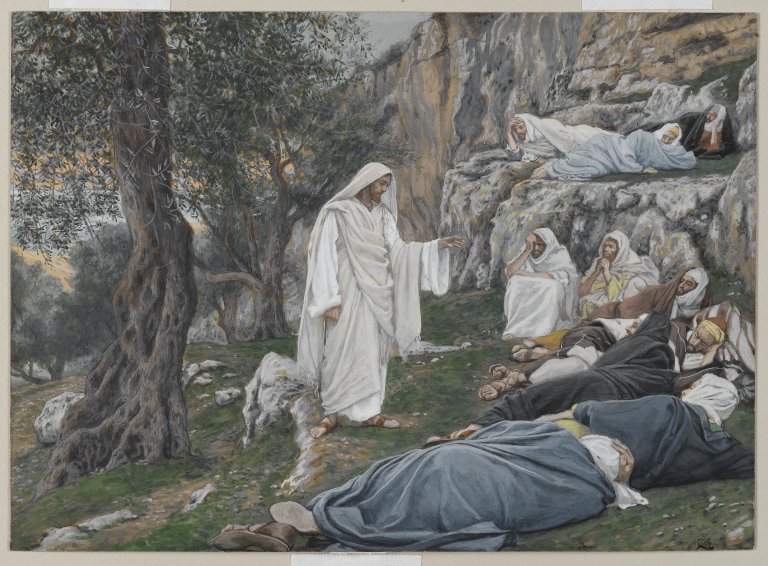
The disciples asleep in GethsemaneLuke 22
Jesus asked three of His disciples to keep watch while He prayed, and He came back and found them sleeping. Matthew 26:40 records His question to Peter, “Were you not able to keep watch with Me for one hour?”
When Jesus rose from prayer and returned to the disciples, He found them asleep, exhausted from sorrow.
Luke 22:45BSB Luke gives the cause of their sleep as sorrow, which joins grief and weariness in one body.
The builders of the wall (Nehemiah 4), The disciples asleep in Gethsemane (Luke 22)
Weariness in the Church's History
Two accounts tell of a bishop preaching on the weary Christ and a pope's book for overburdened pastors.
Augustine on the weary ChristBefore 430
Augustine of Hippo preached through the Gospel of John, and his fifteenth tractate takes up John 4:6. In the translation of John Gibb (1888) he told his hearers, “It was for thee that Jesus was wearied with His journey.” He went on to say that the same Jesus is strong as the Word through whom all things were made.
Gregory the Great's Pastoral Rule813
Gregory the Great wrote the Pastoral Rule at the start of his time as bishop of Rome, in answer to John, bishop of Ravenna, who had rebuked him for trying to flee “the burdens of pastoral care.” James Barmby's preface (1895) records that councils held by command of Charlemagne in 813 required every bishop to study it.
Voices on Weariness, by Century
Four quotations from the third century to the eighteenth, dated by the year each voice died, each under the line it teaches.
died 215 · Clement of Alexandria
The Instructor Book 1
The quotation1 quotation
“Such is our Instructor, righteously good. ‘I came not,’ He says, ‘to be ministered unto, but to minister.’ Wherefore He is introduced in the Gospel ‘wearied,’ because toiling for us, and promising ‘to give His life a ransom for many.’ For him alone who does so He owns to be the good shepherd.”
Clement of Alexandria · The Instructor Book 1 · on John 4:6Patristic
died 397 · Ambrose of Milan
Exposition of the Christian Faith 5.4.53
The quotation1 quotation
“Many things we read and believe, in the light of the sacrament of the incarnation. Even in the very affections of our human nature we behold the divine majesty. Jesus is wearied with his journey, that he may refresh the weary. He desires to drink when about to give spiritual drink to the thirsty; he was hungry, when about to supply the food of salvation to the hungry.”
Ambrose of Milan · Exposition of the Christian Faith 5.4.53 · on John 4:6Patristic
died 420 · Jerome
Against the Pelagians 2.21
The quotation1 quotation
“Elijah, whom John the Baptist followed in spirit and virtue and who caused fire to fall from heaven and the waters of the Jordan to part by his prayers, was afraid of Jezebel and fled, and exhausted, he sat down in the wilderness under a tree, and, wearied from walking, he prayed for death, saying, ‘It is enough for me, Lord, take away my soul, for I am no better than my ancestors.’ Who can deny that he was a just man?”
Jerome · Against the Pelagians 2.21 · on 1 Kings 19:4Patristic
1662 to 1714 · Matthew Henry
Commentary on the Whole Bible
The quotation1 quotation
“He mentions this last, as if this lay the heaviest upon him, and as if he could better bear all the persecutions of his enemies than the scandals that were to be found in the churches he had the oversight of. Who is weak, and I am not weak? Who is offended, and I burn not?”
Matthew Henry · Commentary on the Whole Bible · on 2 Corinthians 11:28Puritan
Jerome, Matthew Henry
How Weariness Has Been Taught
John Gill in the eighteenth century and Charles Spurgeon in the nineteenth taught on overwork and rest.
Gill taught that Jethro feared for Moses' health.1 paragraph
John Gill read Jethro's warning on Exodus 18:18 as a word about Moses' “natural strength and animal spirits, and so his flesh”. In his Exposition of the Old Testament he wrote that Jethro “feared his constant application and attendance to business would impair his health, break his constitution, and bring him into a consumption.”
Spurgeon taught that diligence is a duty and anxious toil a vanity.1 paragraph
Charles Spurgeon commented on Psalm 127:2 in The Treasury of David. He wrote, “We are bound to be diligent, for this the Lord blesses; we ought not to be anxious, for that dishonours the Lord.” He added that “Some deny themselves needful rest”.
Where the Science Speaks
Medical research has measured what chronic stress and lost sleep do to the body and mind.
McEwen and Stellar (1993, Archives of Internal Medicine) gave the name allostatic load to the wear that repeated or prolonged stress leaves on the body. In the laboratory study of Van Dongen and his colleagues (2003, Sleep), the cost of nights cut short built up day after day while the sleepers rated themselves only a little sleepier. Cheng, Lee and Djita (2023, Journal of Religion and Health) found less burnout among teachers in Christian schools who kept a Sabbath. These findings agree with the rest that Scripture commands.
Stress, Sleep and the Sabbath, the study in brief
The Studies of Stress and Weariness
Each study takes one text, word or body of research on weariness into more depth.
The texts
4 studies
- Passages and psalms · 0 verses set outCome Away and Rest a While
Mark 6:30 to 32 follows the mission of the Twelve and comes just before the feeding of the five thousand.
- Passages and psalms · 2 verses set outHe Gives Sleep to His Beloved
Psalm 127 is a Song of Ascents of five verses on the house, the city and the household.
- Passages and psalms · 2 verses set outThe Daily Pressure
2 Corinthians 11:23 to 30 stands in the part of the letter that Paul calls the boasting of a fool.
- Passages and psalms · 2 verses set outYou Cannot Handle It Alone
Exodus 18:13 to 26 stands between the battle with Amalek in Exodus 17 and Israel's arrival at Sinai in Exodus 19.
- Passages and psalms · 0 verses set outCome Away and Rest a While
The stories
1 study
- Doctrines · 18 verses set outThe seventy elders and the Spirit given to them
Numbers 11:10 to 30 records the gathering at the Tent of Meeting where the LORD shared the burden of leading Israel among seventy men.
- Doctrines · 18 verses set outThe seventy elders and the Spirit given to them
The words
1 study
- Symbols and words · 4 verses set outThe Words Kaved and Bareo
Hebrew kaved and Greek bareo both mean to be heavy, and Scripture uses them for a load too great to carry.
- Symbols and words · 4 verses set outThe Words Kaved and Bareo
The science
1 study
- Doctrines · 5 verses set outStress, Sleep and the Sabbath
Eight peer-reviewed studies of chronic stress, lost sleep and Sabbath keeping stand beside the command to rest on the seventh day.
- Doctrines · 5 verses set outStress, Sleep and the Sabbath
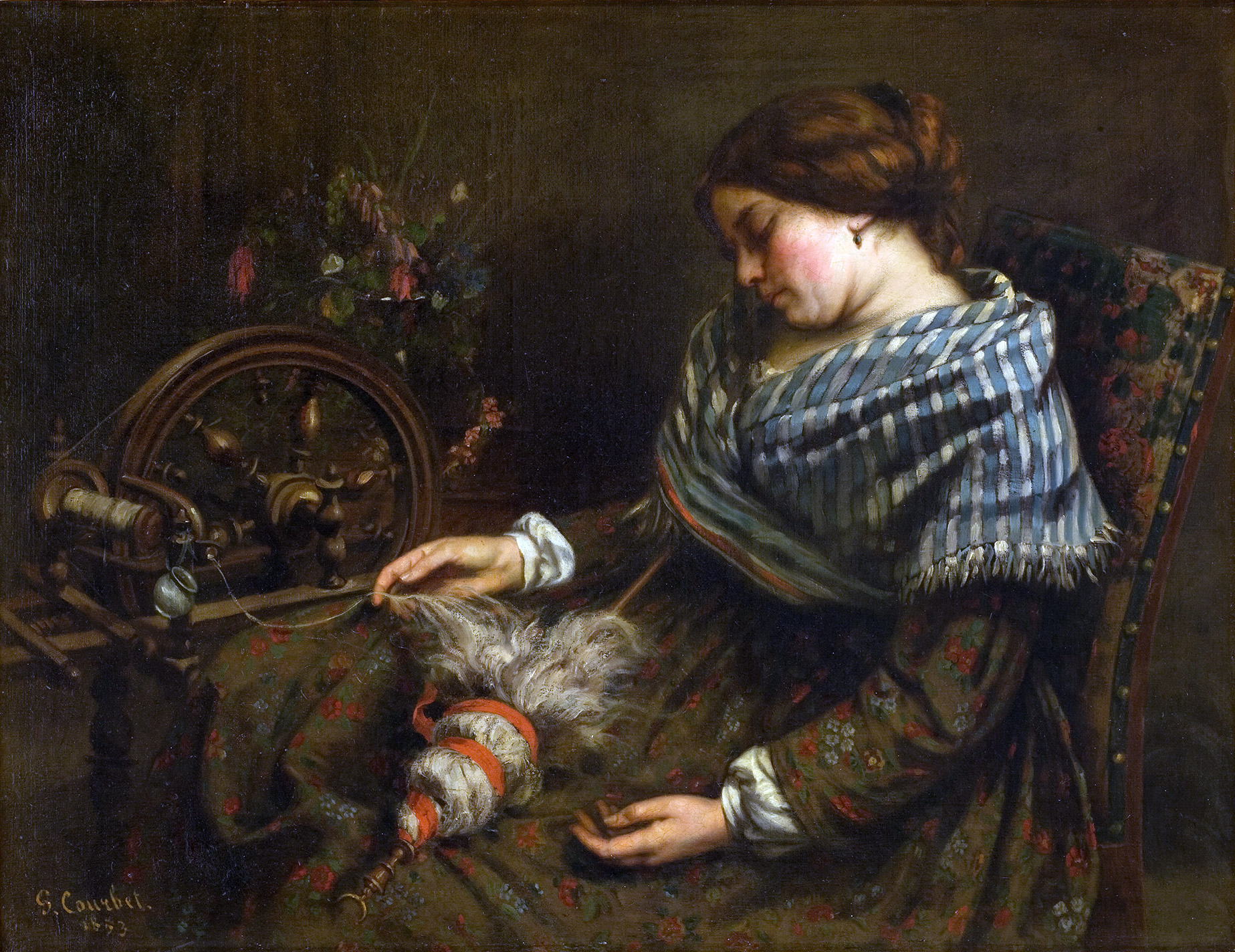
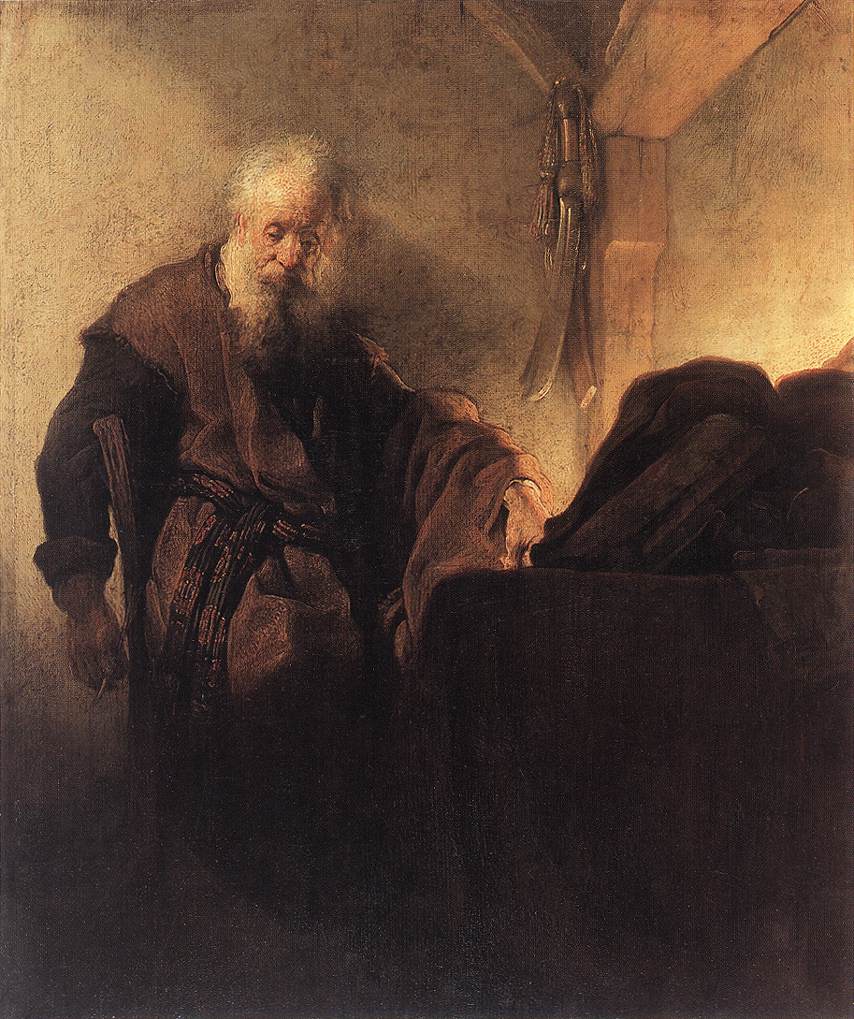
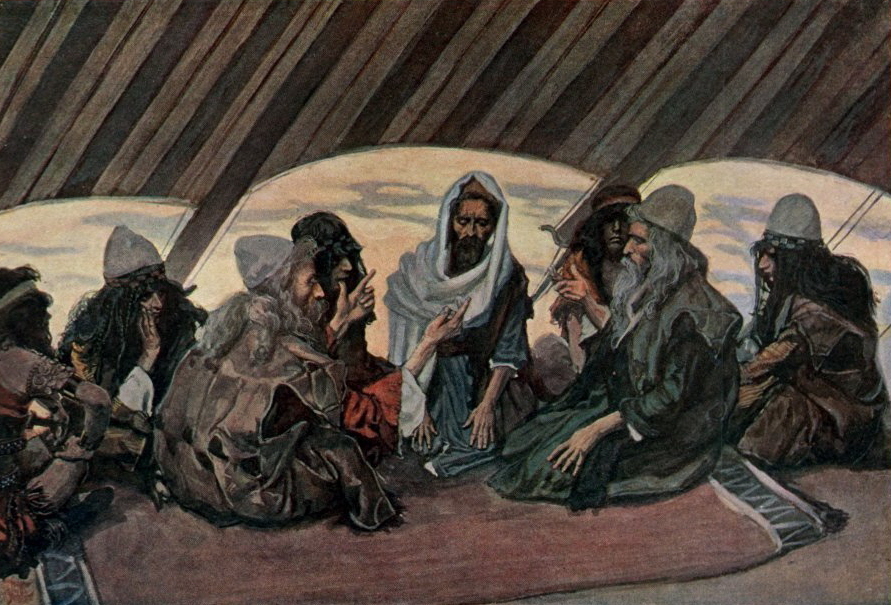
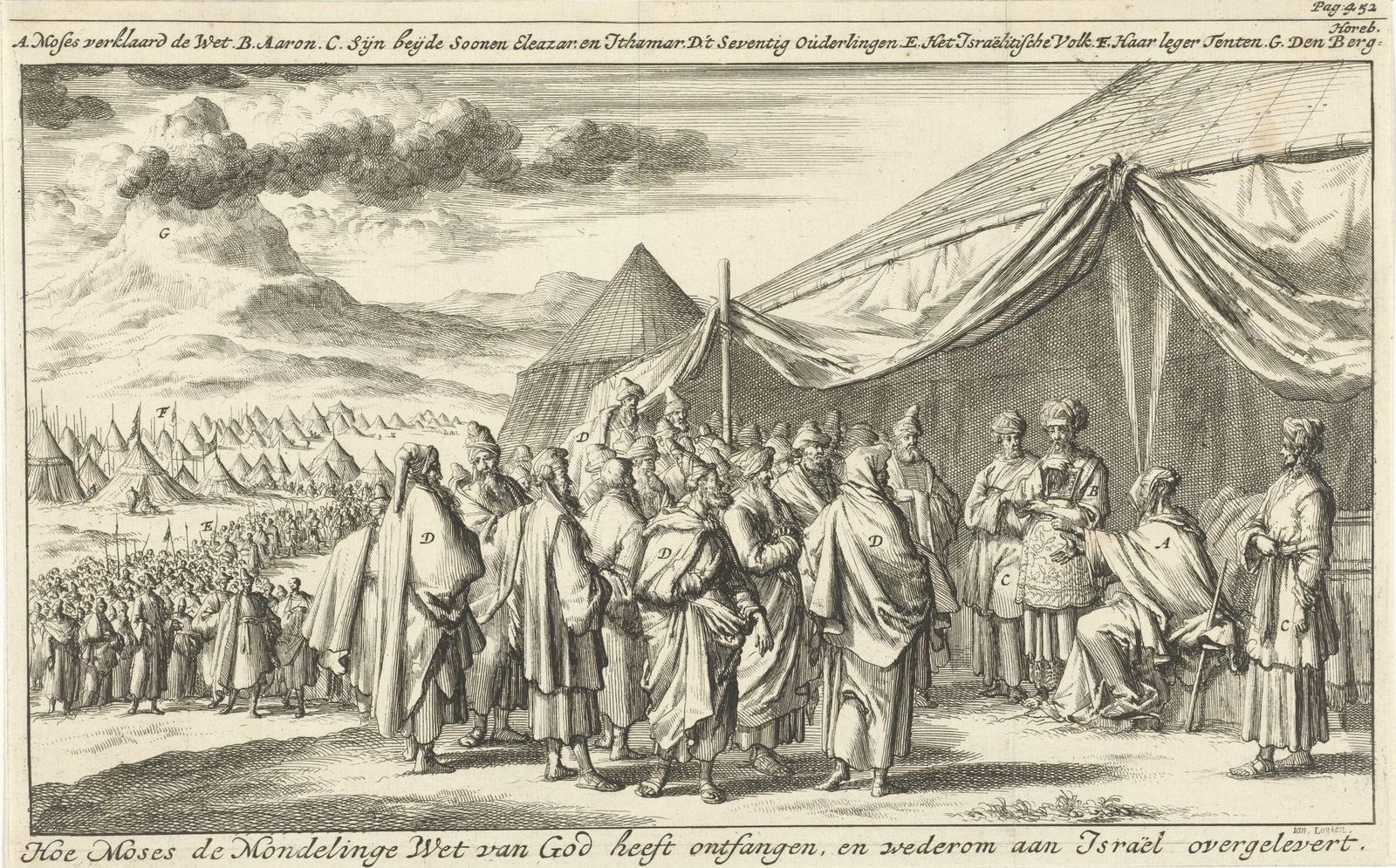
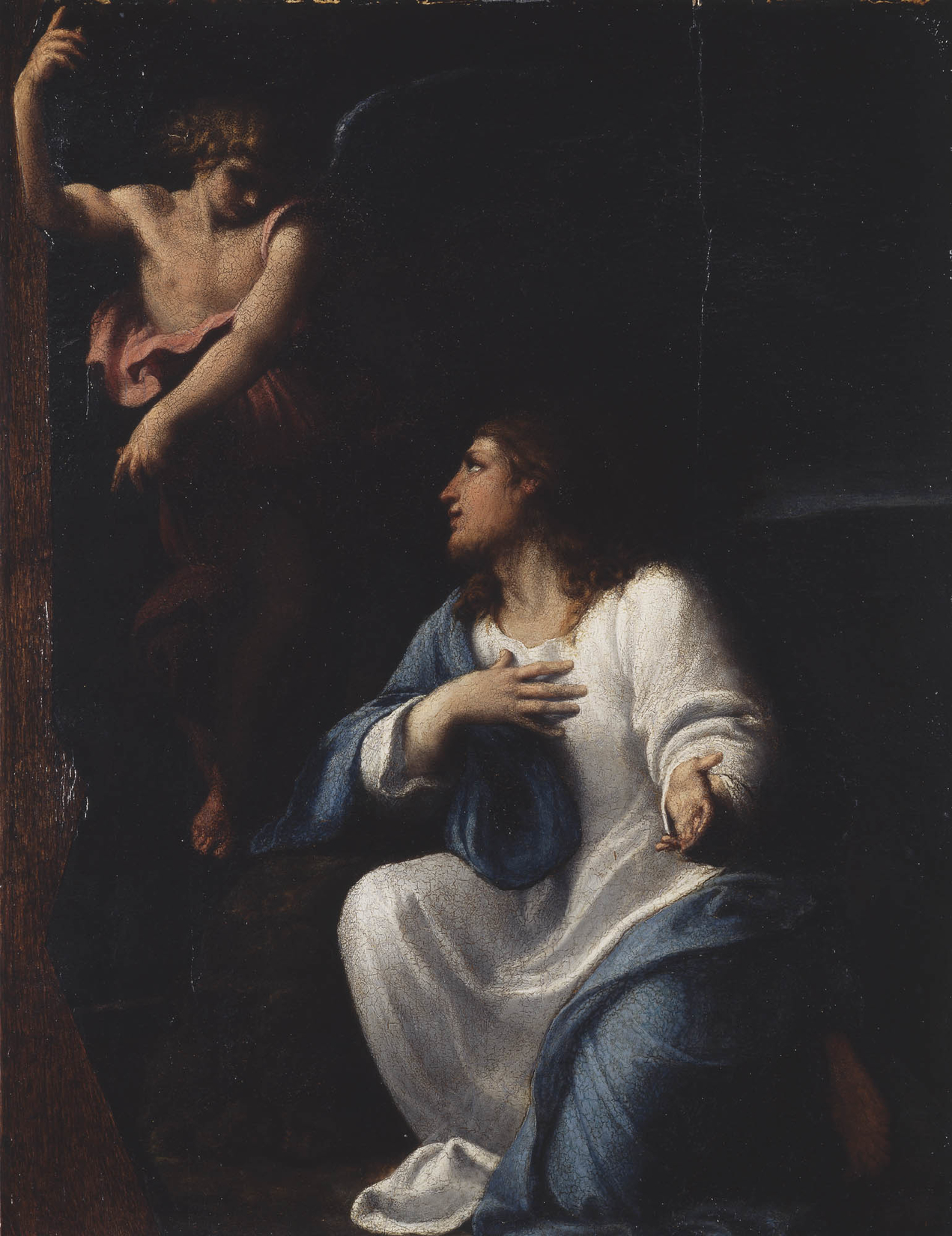

He Gives Sleep to His Beloved, The Daily Pressure, You Cannot Handle It Alone, The seventy elders and the Spirit given to them, The Words Kaved and Bareo, Stress, Sleep and the Sabbath
Where Readers Disagree
Six readings answer three questions, each with its holders, the work that argues it and the objection raised against it.
What was not good in Moses' work (Exodus 18:17)
Read the study of You Cannot Handle It Alone 6 sections, 2 verses set out
| Reading | Held by | Work | Objection |
|---|---|---|---|
| It drew him away from his higher task of learning God's will for the people | Gregory the Great (Latin patristic writing) | Gregory the Great, The Book of Pastoral Rule, part 2, chapter 7, translated by James Barmby (1895) | Jethro names the wearing out of Moses and of the people first: “Surely you and these people with you will wear yourselves out” (Exodus 18:18). |
| It was wearing out Moses' body and the patience of the people who waited | John Gill; Adam Clarke (English Baptist; Methodist) | John Gill, Exposition of the Old Testament (1748 to 1763), on Exodus 18:18; Adam Clarke, Commentary on the Bible (1832), on Exodus 18:18 | Jethro's remedy begins with Moses' calling before God: “You must be the people’s representative before God” (Exodus 18:19). |
Whether a servant of God sins in crying that he can bear no more
Read the study of the Seventy Elders 9 sections, 18 verses set out
| Reading | Held by | Work | Objection |
|---|---|---|---|
| Moses deserves sympathy in Numbers 11, but his words to God cannot be justified | Jamieson, Fausset and Brown; Matthew Henry (Scottish Presbyterian commentary; English Nonconformist) | Jamieson, Fausset and Brown, Commentary Critical and Explanatory (1871), on Numbers 11:11; Matthew Henry, Commentary on the Whole Bible (1710), on Numbers 11:14 | God answered the complaint with help and gave seventy elders to “help you bear the burden of the people” (Numbers 11:17). |
| A just servant of God may be worn out and pray for death and still be just, as Elijah was | Jerome (Latin patristic writing) | Jerome, Against the Pelagians, book 2, section 21, on 1 Kings 19:4 | God did not grant Elijah's prayer and sent him back to his work: “Go back by the way you came” (1 Kings 19:15). |
How God gives sleep to His beloved (Psalm 127:2)
Read the study of He Gives Sleep to His Beloved 6 sections, 2 verses set out
| Reading | Held by | Work | Objection |
|---|---|---|---|
| His providence gives the sleep that no effort can procure | Jamieson, Fausset and Brown (Scottish Presbyterian commentary) | Jamieson, Fausset and Brown, Commentary Critical and Explanatory (1871), on Psalm 127:2 | The verse sets the gift against rising early and staying up late, so it speaks of trust in labor as well as of sleep. |
| The verse alludes to the watches by which Nehemiah's workers rested in turn | Adam Clarke (Methodist) | Adam Clarke, Commentary on the Bible (1832), on Psalm 127:2 | The psalm names no watches and gives the sleep as the LORD's gift to those He loves. |
Sources
Scripture is the Berean Standard Bible.
- STEP Bible brief lexicons of Extended Strongs for Hebrew and for Greek (Tyndale House, Cambridge), CC BY 4.0, with the Strong's glosses.
- Augustine of Hippo, Tractates on the Gospel of John, tractate 15, section 6, translated by John Gibb, Nicene and Post-Nicene Fathers, first series, volume 7 (Buffalo: Christian Literature Publishing, 1888)
- Gregory the Great, The Book of Pastoral Rule, translated by James Barmby, NPNF series 2 volume 12 (Buffalo: Christian Literature Publishing, 1895), the translator's preface, the introduction and part 2, chapter 7.
- John Gill, Exposition of the Old Testament (1748 to 1763), on Exodus 18:18.
- Charles Spurgeon, The Treasury of David, volume 7 (1885), on Psalm 127:2.
- Clement of Alexandria, The Instructor, book 1 (Ante-Nicene Fathers, volume 2)
- Ambrose of Milan, Exposition of the Christian Faith, book 5, chapter 4, section 53 (NPNF series 2 volume 10)
- Jerome, Against the Pelagians, book 2, section 21.
- Matthew Henry, Commentary on the Whole Bible (1710), on 2 Corinthians 11:28 and Numbers 11:14.
- Adam Clarke, Commentary on the Bible (1832), on Exodus 18:18 and Psalm 127:2.
- Robert Jamieson, A. R. Fausset and David Brown, Commentary Critical and Explanatory on the Whole Bible (1871), on Numbers 11:11 and Psalm 127:2.
- Bruce S. McEwen and Eliot Stellar, Stress and the individual: mechanisms leading to disease, Archives of Internal Medicine 153, no. 18 (1993): 2093 to 2101.
- Hans P. A. Van Dongen, Greg Maislin, Janet M. Mullington and David F. Dinges, The cumulative cost of additional wakefulness: dose-response effects on neurobehavioral functions and sleep physiology from chronic sleep restriction and total sleep deprivation, Sleep 26, no. 2 (2003): 117 to 126.
- Albert Cheng, Matthew H. Lee and Rian Djita, A cross-sectional analysis of the relationship between Sabbath practices and US, Canadian, Indonesian, and Paraguayan teachers' burnout, Journal of Religion and Health 62, no. 2 (2023): 1090 to 1113.
Keep Studying
Studies7
People and groups18
In this trial7
Trials of life1