
Psalms 90:1
in Psalms 90Lord, You have been our dwelling place through all generations.
BSB
The same verse in ASV and KJV ▾
ASV
Lord, thou hast been our dwelling-place In all generations.
KJV
Lord, thou hast been our dwelling place in all generations.
⋯
This verse in Psalms 90
Commentary
17 notes on this verseLord, thou hast been our dwelling place in all generations. We must consider the whole Psalm as written for the tribes in the desert, and then we shall see the primary meaning of each verse. Moses, in effect, says—wanderers though we be in the howling wilderness, yet we find a home in thee, even as our forefathers did when they came out of Ur of the Chaldees and dwelt in tents among the Canaanites. To the saints the Lord Jehovah, the self existent God, stands instead of mansion and rooftree; he shelters, comforts, protects, preserves, and cherishes all his own.
This site's exposition
You have been our dwelling place
on Psalms 90:1-2
God is the dwelling place, and He has been that through all generations. Verse 2 sets Him before the mountains were born and before the earth was brought forth. From everlasting to everlasting runs in both directions at once.
The record, by era
The Church Fathers5 voices
The resurrection of the Lord is our hope, the Lord's ascension our glorification. Today, you see, we are celebrating the feast of the ascension. So if we are to celebrate the Lord's ascension in the right way, with faith, with devotion, with reverence as God-fearing people, we must ascend with him and lift up our hearts. In ascending, however, we must not get above ourselves. Yes, we should lift up our hearts, but to the Lord. As you know, not lifting up hearts to the Lord is due to pride; lifting up hearts to the Lord is called "taking refuge." After all, we say to the one who has ascended, "Lord, you have become a refuge for us."He rose again, you see, to give us hope, because what rises again is what first dies. So it [Christ's resurrection] was to save us from despair at dying and from thinking that our whole life ends with death. We were anxious, I mean, about the soul, and he by rising again gave us an assurance even about the flesh. So he ascended—who did? The one who descended. He descended in order to heal you; he ascended in order to lift you up. You will fall if you have lifted yourself up; you remain standing if you have been lifted up by him. So, lift up your hearts, but to the Lord—that is taking refuge. Lifting up your heart, but not to the Lord, that is pride. So let us say to him as he rises again, "Since you, O Lord, are my hope"; and as he ascends, "You have placed your refuge very high." How, I mean, can we possibly be proud, if we lift up our hearts to him, seeing that he humbled himself for our sakes, so that we should not remain proud?
A prayer of Moses, the man of God. There are four psalms that are headed with the title "prayer": the sixteenth, and the one that follows it, and the eighty-ninth, and the hundred and first. In the hundred and first it says: "A prayer of the poor man, when he is downcast, and pours out his prayer in the sight of God." This one: A prayer of Moses, the man of God. We read the song of Moses in Exodus, at that time when the people crossed the Red Sea, and when Pharaoh and all his army had been drowned, Miriam and Moses sang. Then we read one in Deuteronomy also, since he had written that song in Deuteronomy. If therefore these psalms and these songs belong to Moses, why are they not found in his own books? So we have already explained how the hundred and first psalm is inscribed, A prayer of the poor man: and it is another who wrote about him, and that poor man who intercedes for us is the Lord, "who, though he was rich, became poor for our sake," and the rest. So too here is Moses, since from the very beginning of the human race he himself wrote the history: for he himself wrote how heaven and earth were made, how man too was made, about the creation of man; and this psalm speaks about the creation of man, what man is, and why he was born. He therefore who in Genesis wrote about the creation of men, is now himself also brought in by the Holy Spirit to discourse on what man is.
Lord, you have been made a refuge for us from generation to generation. He who seeks a refuge, seeks it either from excessive heat and scorching, or because a beast is pursuing him, or because enemies are pursuing him, to kill him. We too, then, are in the heat of this world; and a beast pursues us too, of which we say, "Do not hand over to the beasts a soul that confesses to you"; and enemies pursue us too; and therefore we flee for refuge under your wings. From generation to generation: both in the past, and in the present, and in the future. In another sense, From generation to generation: both in the old people of the Jews, and in our own people of Christians.
The eighty-ninth psalm has been read, whose title is this: A Prayer of Moses, the man of God. It is the beginning of the fourth book, for we ought to know that the psalter is divided into five books. From the first up to the fortieth is the first book; from the fortieth up to the seventy-first is the second book; from the seventy-first up to the eighty-eighth is the third book; from the eighty-eighth up to the hundred and fifth is the fourth book; from the hundred and fifth to the end is the fifth book. And therefore this is the opening of the fourth book: A Prayer of Moses, the man of God. The Hebrews think that not only this psalm, but also the other ten that follow, since they bear no title, were composed by Moses. And for that reason they think that those which are without a title belong to the same author as the one that has a title, because they seem to lie adjacent to the one that is inscribed with a title.
A Prayer of Moses, the man of God. If all men were men of God, it would never have been added, A Prayer of Moses, the man of God. Do you wish to know that not all men are men of God? "Man, when he was in honor, did not understand: he was compared to the senseless beasts of burden, and was made like unto them." It is a great thing, therefore, to be called men of God or servants of God. For when this is said of someone, it is a token not of lowliness but of dignity; nor is the condition of servitude shown, but the dignity of one who serves well is displayed. A Prayer of Moses, the man of God. By Moses the law was written down, by Moses the nature of the world is shown, by Moses it was told how man was fashioned in the image of God. What, then, is this that he says, A Prayer of Moses, the man of God? Moses indeed writes how man was made; he himself also writes how man fell. Now, therefore, he prays that the one who fell into death may be lifted up to life, and that the one who fell through sin by the devil's doing may again rise through Christ to glory. For this reason, then, Moses makes a prayer to God, and says:
10 more voices on this verse
The Church Fathers3 voices
Lord, you have become a refuge for us. A refuge is never spoken of unless there has been persecution: for unless someone else persecutes us, we have no need to flee to another for refuge. Lord, you have become a refuge for us. Since a great swelter of tribulations and heat wearies us, we take refuge under the shadow of your wings. Lord, you have become a refuge for us. Therefore we flee to your help, because a great beast persecutes us; and since we have many adversaries and enemies, be you at least our one refuge.
Therefore, "God is our refuge and strength." To him who is able to say, "I can do all things in him," Christ, "who strengthens me," God is strength. Now, it is the privilege of many to say, "God is our refuge," and "Lord, you have been our refuge." But to say it with the same feelings as the prophet is the privilege of few. For there are few who do not admire human interests but depend wholly on God and breathe him and have all hope and trust in him. And our actions convict us whenever in our afflictions we run to everything else rather than to God. Is a child sick? You look around for an enchanter or one who puts superstitious marks on the necks of the innocent children; or finally, you go to a doctor and to medicines, having neglected him who is able to save. If a dream troubles you, you run to the interpreter of dreams. And, if you fear an enemy, you cunningly secure some man as a patron. In short, in every need you contradict yourself in word, naming God as your refuge; in act, drawing on aid from useless and vain things. God is the true aid for the righteous person. Just as a certain general, equipped with a noble heavy-armed force, is always ready to give help to an oppressed district, so God is our helper and an ally to everyone who is waging war against the wiliness of the devil, and he sends out ministering spirits for the safety of those who are in need.
"Lord," he saith, "Thou hast been our refuge from one generation to another" [Psalm 90:1]: either in every generation, or in two generations, the old and new: because, as I said, he was the Minister of the Testament that related to the old generation, and the Prophet of the Testament which appertained to the new. Jesus Himself, the Surety of that covenant, and the Bridegroom in the marriage which He entered into in that generation, saith, "Had ye believed Moses, ye would have believed Me: for he wrote of Me." [John 5:46] Now it is not to be believed that this Psalm was entirely the composition of that Moses, as it is not distinguished by any of those of his expressions which are used in his songs: but the name of the great servant of God is used for the sake of some intimation, which should direct the attention of the reader or listener. "Lord," he saith, "Thou hast been our refuge from one generation to the other."
The Puritans and the Awakening2 voices
Note, True believers are at home in God, and that is their comfort in reference to all the toils and tribulations they meet with in this world. In him we may repose and shelter ourselves as in our dwelling-place. To give God the glory of his eternity (
quarantine:debris (2026-07-29) — unbalanced-parens
Lord, thou hast been our dwelling place in all generations,....
The Nineteenth Century5 voices
Lord, thou hast been our dwelling place in all generations. We must consider the whole Psalm as written for the tribes in the desert, and then we shall see the primary meaning of each verse. Moses, in effect, says—wanderers though we be in the howling wilderness, yet we find a home in thee, even as our forefathers did when they came out of Ur of the Chaldees and dwelt in tents among the Canaanites. To the saints the Lord Jehovah, the self existent God, stands instead of mansion and rooftree; he shelters, comforts, protects, preserves, and cherishes all his own. Foxes have holes and the birds of the air have nests, but the saints dwell in their God, and have always done so in all ages. Not in the tabernacle or the temple do we dwell, but in God himself; and this we have always done since there was a church in the world. We have not shifted our abode. Kings' palaces have vanished beneath the crumbling hand of time—they have been burned with fire and buried beneath mountains of ruins, but the imperial race of heaven has never lost its regal habitation. Go to the Palatine and see how the Caesars are forgotten of the halls which echoed to their despotic mandates, and resounded with the plaudits of the nations over which they ruled, and then look upward and see in the ever living Jehovah the divine home of the faithful, untouched by so much as the finger of decay. Where dwelt our fathers a hundred generations since, there dwell we still. It is of New Testament saints that the Holy Ghost has said, "He that keepeth his commandments dwelleth in God and God in him!" It was a divine mouth which said, "Abide in me", and then added, "he that abideth in me and I in him the same bringeth forth much fruit."
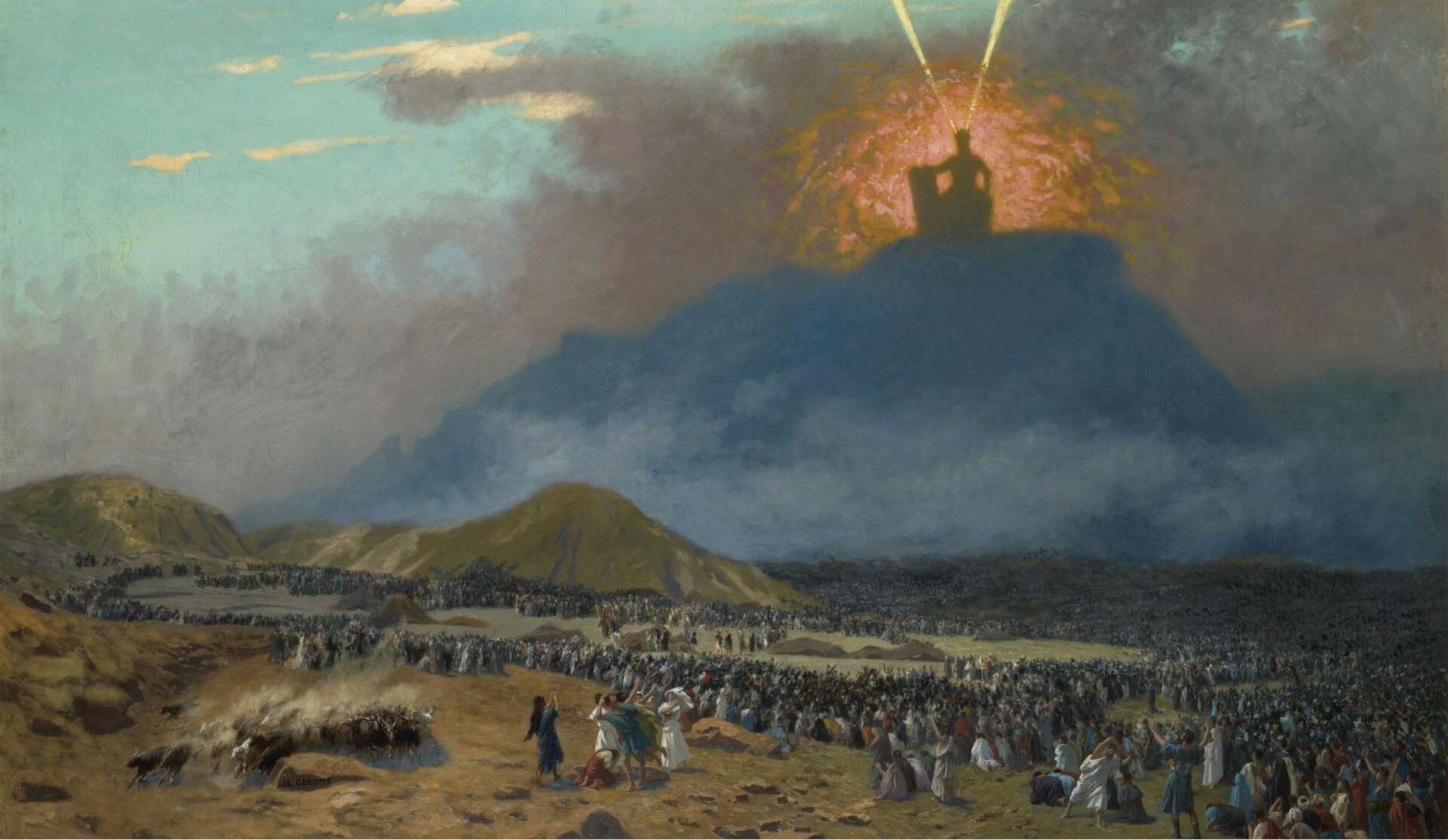
Moses was the inspired author of three devotional compositions. We first of all find him as Moses the poet, singing the song which is aptly joined with that of Jesus, in the Revelation, where it says, “The song of Moses and of the Lamb.” He was a poet on the occasion when Pharaoh and his hosts were cast into the Red Sea, “his chosen captains also were drowned in the Red Sea.” Further on in his life we discover him in the character of a preacher; and then his doctrine distilled as the dew, and his speech dropped like the rain, in those chapters which are full of glorious imagery, and rich with poetry, which you will find in the book of Deuteronomy. And now in the Psalms, we find him the author of a prayer: “A prayer of Moses, the man of God.” Happy combination of the poet, the preacher, and the man of prayer! Where three such things are found together, the man becomes a very giant above his fellows. It often happens that the man who preaches has but little poetry; and the man who is the poet would not be able to preach and utter his poems before immense assemblies, but would be only fit to write them by himself. It is a rare combination when true devotion and the spirit of poetry and eloquence meet in the same man. You will see in this Psalm a wondrous depth of spirituality; you will mark how the poet subsides into the man of God; and how, lost in himself, he sings his own frailty, declared the glory of God, and asks that he may have the blessing of his heavenly Father always resting on his head. This first verse will derive peculiar interest if you remember the place where Moses was when he thus prayed. He was in the wilderness; not in some of the halls of Pharaoh, nor yet in a habitation in the land of Goshen; but in a wilderness.
Moses was the inspired author of three devotional compositions. We first of all find him as Moses the poet, singing the song which is aptly joined with that of Jesus, in the Revelation, where it says, “The song of Moses and of the Lamb.” He was a poet on the occasion when Pharaoh and his hosts were cast into the Red Sea, “his chosen captains also were drowned in the Red Sea.”
Lord, thou hast been our dwellingplace - מעון maon; but instead of this several MSS. have מעוז maoz, “place of defense,” or “refuge,” which is the reading of the Vulgate, Septuagint, Arabic, and Anglo-Saxon. Ever since thy covenant with Abraham thou hast been the Resting-place, Refuge, and Defence of thy people Israel. Thy mercy has been lengthened out from generation to generation.
A commentator
Albert Barnes1798–1870
Notes, Explanatory and Practical, on the Old and New Testaments (1832-1869)
proposed
Lord - Not יהוה Yahweh here, but אדני 'Adonāy. The word is properly rendered “Lord,” but it is a term which is often applied to God. It indicates, however, nothing in regard to his character or attributes except that he is a “Ruler or Governor.” Thou hast been our dwelling-place - The Septuagint renders this, “refuge” - καταφυγἡ kataphugē. So the Latin Vulgate, “refugium;” and Luther, “Zuflucht.” The Hebrew word - מעון mâ‛ôn - means properly a habitation, a dwelling, as of God in his temple, Psa 26:8; heaven, Psa 68:5; Deu 26:15. It also means a den or lair for wild beasts, Nah 2:12; Jer 9:11. But here the idea seems to be, as in the Septuagint, Vulgate, and Luther, “a refuge”; a place to which one may come as to his home, as one does from a journey; from wandering; from toil; from danger: a place to which such a one naturally resorts, which he loves, and where he feels that he may rest secure. The idea is, that a friend of God has that feeling in respect to Him, which one has toward his own home - his abode - the place which he loves and calls his own. In all generations - Margin, “generation and generation.” That is, A succeeding generation has found him to be the same as the previous generation had. He was unchanged, though the successive generations of men passed away.
How the passage was read
What the Jewish commentators add
A prayer of Moses Moses recited all the eleven psalms from here to (ch. 101) “Of David, a song.” Corresponding to them, he [Moses] blessed eleven tribes with eleven blessings, in (Deut. 33): “And this is the blessing.”
This section is reception history: how the passage was read and kept in the Jewish tradition. Where a reading parts from an essential of the Christian faith, the section says so at that point.
Texts and citation data: Sefaria; each excerpt follows its version’s licence. 3 further sources are cited on this chapter that carry no English text this site may quote or only restate the verse.
The words behind it
7 Hebrew wordsEvery Hebrew word of this verse in the order it stands, with what it means and the door to its own study. The last column counts the times a word stands in the whole Bible: the rarer the word, the more the places it appears belong together.
| Hebrew | Sound | Meaning | Word study | In the Bible |
|---|---|---|---|---|
| אֲֽדֹנָ֗י | ʾadonai | O Lord | H136 → | 440 times |
| מָע֣וֹן | maon | a dwelling place | H4583 → | 18 times |
| אַ֭תָּה | ʾatah | you | H859 → | 1094 times |
| הָיִ֥יתָ | hayita | you have been | H1961 → | 3559 times |
| לָּ֗נוּ | lanu | of us | ||
| בְּדֹ֣ר | bedor | in a generation | H1755 → | 167 times |
| וָדֹֽר׃ | vador | and a generation | H1755 → | 167 times |
אֲֽדֹנָ֗יO Lord
ʾadonaiH136 →440 times
מָע֣וֹןa dwelling place
maonH4583 →18 times
אַ֭תָּהyou
ʾatahH859 →1094 times
הָיִ֥יתָyou have been
hayitaH1961 →3559 times
לָּ֗נוּof us
lanu
בְּדֹ֣רin a generation
bedorH1755 →167 times
וָדֹֽר׃and a generation
vadorH1755 →167 times
A shaded row is a word that stands 400 times or fewer in the Bible.
The walk
8 stopsEach card is a verse this one points to, and under it the verses that one points to in turn. Where several paths arrive at the same place, that place is listed first: the text keeps returning to it.
Through
Psalms 91:1He who dwells in the shelter of the Most High will abide in the shadow of the Almighty.
it leads to
- Psalms 32:7
You are my hiding place. You protect me from trouble; You surround me with songs of deliverance. Selah
- Psalms 27:5
For in the day of trouble He will hide me in His shelter; He will conceal me under the cover of His tent; He will set me high upon a rock.
- Psalms 36:7
How precious is Your loving devotion, O God, that the children of men take refuge in the shadow of Your wings!
- Psalms 17:8
Keep me as the apple of Your eye; hide me in the shadow of Your wings
- 1 John 4:15–16
If anyone confesses that Jesus is the Son of God, God abides in him, and he in God.
- Psalms 32:7
Through
Deuteronomy 33:27The eternal God is your dwelling place, and underneath are the everlasting arms. He drives out the enemy before you, giving the command, ‘Destroy him!’
it leads to
- Psalms 18:2
The LORD is my rock, my fortress, and my deliverer. My God is my rock, in whom I take refuge, my shield, and the horn of my salvation, my stronghold.
Reached by 2 separate paths from here.
- Psalms 18:2
Through
1 John 4:16And we have come to know and believe the love that God has for us. God is love; whoever abides in love abides in God, and God in him.
it leads to
- 1 John 3:24
Whoever keeps His commandments remains in God, and God in him. And by this we know that He remains in us: by the Spirit He has given us.
- Psalms 36:7–9
How precious is Your loving devotion, O God, that the children of men take refuge in the shadow of Your wings!
- 1 John 3:24
About Psalms
This page draws on 13 works. Open the list of works
This page draws on Adam Clarke, Commentary on the Bible; Albert Barnes, Notes on the Book of Psalms; Albert Barnes, Notes, Explanatory and Practical, on the Old and New Testaments (1832-1869); Augustine of Hippo, SERMON 261:1; Augustine of Hippo, On the Psalms; Basil of Caesarea, HOMILIES ON THE PSALMS 18:2; Charles Spurgeon, The Treasury of David, Vol. 4; Charles Spurgeon, The New Park Street Pulpit, Sermon No. 46: “The Glorious Habitation” (lightly modernized text, CCEL edition); Franz Delitzsch, Biblical Commentary on the Psalms; Jerome, Homily 19, on Psalm 89; Jerome, Homily 67, on Psalm 89 (Alternate Series); John Gill, Exposition of the Old Testament (1748-1763) and Matthew Henry, Commentary on the Whole Bible.