
Also called: bereavement, taken away, what was lost, ruin, stripped, gone
This subject covers what is taken from a person and what cannot be taken. The sorrow that follows belongs to Grief. What God rebuilds afterwards belongs to Restoration.
What Loss covers, and where it stops
This subject covers what is taken from a person and what cannot be taken. The sorrow that follows belongs to Grief. What God rebuilds afterwards belongs to Restoration.
On this page, 6 sections
The one drawing
Across the canon
Old Testament
New Testament
The other 56 books of the canon carry none.
11 passages
Where Scripture speaks
The passages this subject stands on, in canon order.
All his sons and daughters tried to comfort him, but he refused to be comforted. “No,” he said. “I will go down to Sheol mourning for my son.” So his father wept for him.“Do not call me Naomi,” she replied. “Call me Mara, because the Almighty has dealt quite bitterly with me.But now that he is dead, why should I fast? Can I bring him back again? I will go to him, but he will not return to me.”The king was shaken and went up to the gate chamber and wept. And as he walked, he cried out, “O my son Absalom! My son, my son Absalom! If only I had died instead of you, O Absalom, my son, my son!”saying: “Naked I came from my mother’s womb, and naked I will return. The LORD gave, and the LORD has taken away. Blessed be the name of the LORD.”My tears have been my food both day and night, while men ask me all day long, “Where is your God?”a time to weep and a time to laugh, a time to mourn and a time to dance,He was despised and rejected by men, a man of sorrows, acquainted with grief. Like one from whom men hide their faces, He was despised, and we esteemed Him not.Jesus wept.Brothers, we do not want you to be uninformed about those who sleep in death, so that you will not grieve like the rest, who are without hope.‘He will wipe away every tear from their eyes,’ and there will be no more death or mourning or crying or pain, for the former things have passed away.”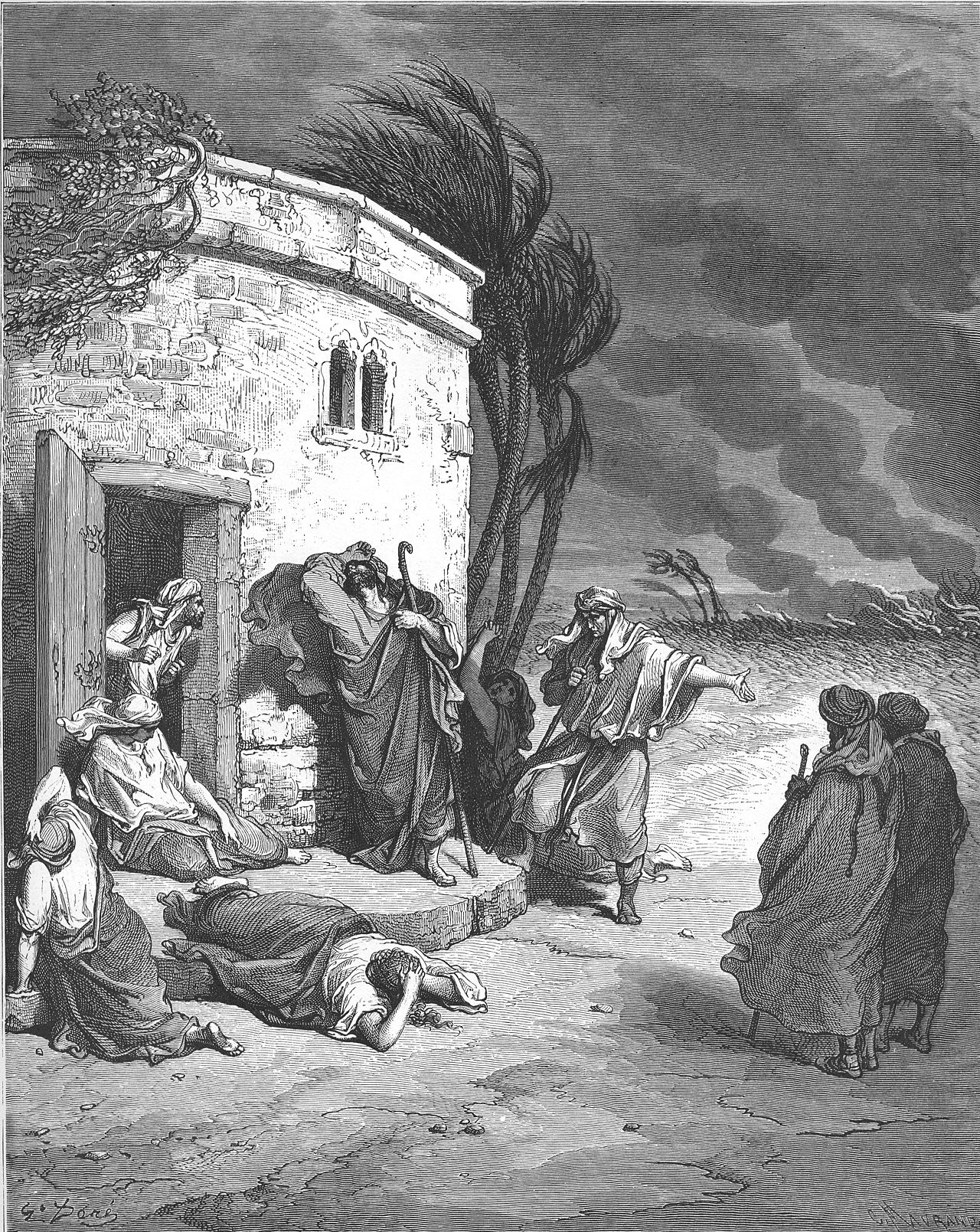
Loss in Scripture, in full
Loss enters the Bible early and never really leaves it. Death, separation, and grief run through nearly every book, because Scripture does not look away from what it costs to lose someone or something that mattered. It treats loss as real, not as a problem to be explained away.
Jacob loses his son Joseph and refuses every attempt at comfort, saying he will go down to the grave mourning him (Genesis 37:35). He does not know, of course, that Joseph is alive. But his grief is not written as foolish or excessive. It is simply what a father's loss looks like, left on the page without correction.
Job loses everything in a single day (his children, his wealth, his health) and his first response becomes one of the most quoted lines in Scripture: the LORD gave, and the LORD has taken away, blessed be the name of the LORD (Job 1:21). That is not a man pretending the loss does not hurt. It is a man choosing, in the middle of the worst day of his life, to keep trusting the character of God even when he cannot see the reason for what happened.
Naomi loses her husband and both her sons in a foreign land, and comes home changed enough that she asks people to stop calling her by her old name. Call her Mara, she says, because the Almighty has dealt bitterly with her (Ruth 1:20). Scripture lets her say this. It does not rush her past her grief toward the happier ending that is actually coming for her.
David loses a child born from his sin with Bathsheba and grieves hard while the boy is still alive, fasting and praying. But once the child dies, David gets up, washes, and eats, explaining that he cannot bring his son back, but one day he will go to him (2 Samuel 12:23). Later, David loses his son Absalom under far worse circumstances, a son who had rebelled against him and tried to take his throne, and his grief is just as raw (2 Samuel 18:33). Loss in Scripture is not measured out according to whether the person deserved to be mourned.
Even Jesus grieved. Standing at the tomb of his friend Lazarus, knowing full well that he was about to raise him from the dead within minutes, he wept anyway (John 11:35). Knowing the ending did not stop him from feeling the loss in the moment. That single, short verse says something enormous: grief is not a failure of faith. God himself, in the flesh, grieved.
Paul later told believers not to grieve the way people grieve who have no hope (1 Thessalonians 4:13). He does not tell them not to grieve at all. Hope changes the shape of grief; it does not erase it.
And Scripture ends with a promise aimed directly at loss itself. A day is coming when God will wipe every tear from every eye, and death, sorrow, and crying will be no more (Revelation 21:4). Until then, loss is treated honestly, named for what it costs, and never dismissed, because the God who allowed Jesus to weep at a grave is not a God who asks anyone to pretend that loss does not hurt.
4 voices
What teachers have said
Thus the gain of life brings death, the loss of life brings salvation; for by the sacrifice of this short life we gain the reward of immortality.
Hilary of Poitiers · Catena Aurea by Aquinas
Written before 367.
Who can grieve because a security especially dear to him has been taken away, when for our comfort the Father delivered his only Son to death for us?
Ambrose of Milan · On the Death of Satyrus 1.4
Written before 397.
What if you come to feel that what we have called a loss is a gain?
Tertullian · On Exhortation to Chastity
Written before 220.
Call me not Naomi - That is, beautiful or pleasant. Call me Mara - That is, bitter; one whose life is grievous to her.
Adam Clarke · Commentary on the Bible
Written before 1832.
The words underneath
Each card is one Hebrew or Greek word behind loss. It gives the sense, the count across the canon, and the number in Strong's 1890 concordance.
shakol: be bereaved
Hebrew · H7921Strong's entry: properly, to miscarry, i.e. suffer abortion; by analogy, to bereave (literally or figuratively)
grief named at its rawest
23 times in the Old Testament · shakol, in full →
yathom: orphan
Hebrew · H3490Strong's entry: a bereaved person
loss given a name
42 times in the Old Testament · yathom, in full →
zemia: damage/loss
Greek · G2209Strong's entry: detriment
Paul's word for counting all things loss for Christ
4 times in the New Testament · zemia, in full →
apoleia: destruction
Greek · G684Strong's entry: ruin or loss (physical, spiritual or eternal)
the New Testament's word for what perishes
18 times in the New Testament · apoleia, in full →
Life questions