
1873 · Story · Grief and Loss
It Is Well with My Soul
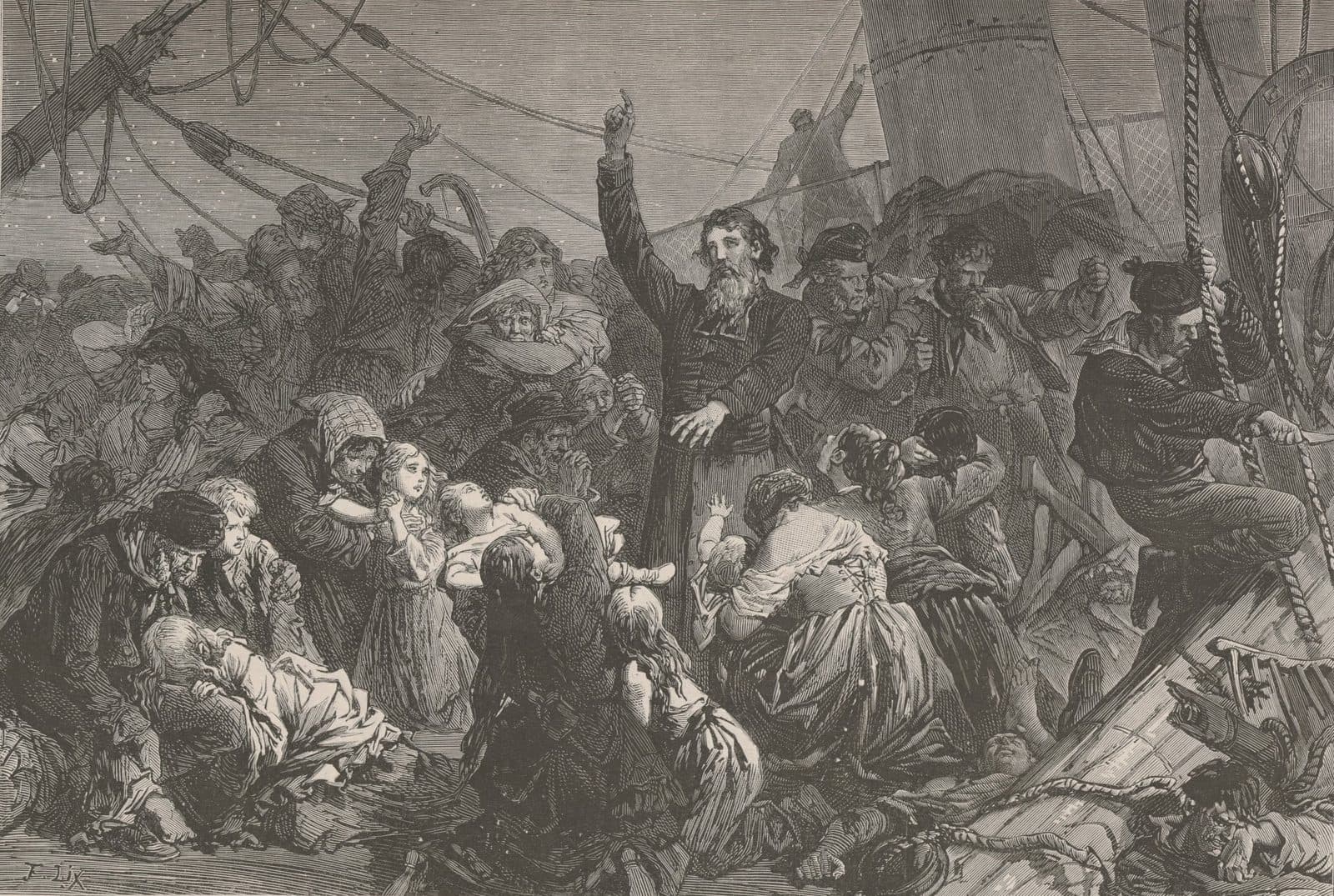
Philip Bliss named the tune of It Is Well with My Soul Ville du Havre, after the ship on which Horatio Spafford's daughters died.
Anna Spafford, taken from the sea after the wreck, told a fellow survivor that God had given her four daughters and that one day she would understand why they had been taken from her.
He redeems my soul in peace from the battle waged against me, even though many oppose me.
- Where
- Jerusalem
- When
- 1871 to 1881 AD
Summary
Horatio Spafford was a Chicago lawyer and Presbyterian elder who wrote a hymn in the weeks after his loss at sea. Its words set sorrows that roll like the sea beside the peace of a soul whose sin Christ has borne, and they end with the Lord's return. The record of his loss rests on his family's papers, now at the Library of Congress, and on a hymnal handbook, and the two agree on all but small details.
- The Great Chicago Fire of October 1871 destroyed the land north of the city in which Spafford had invested that spring.
- In November 1873 the British ship Lochearn rammed the steamer carrying Anna Spafford and her daughters, and the four girls drowned.
- The Spaffords later settled in Jerusalem, where Horatio died in 1888.
The Hymn as First Printed
The hymnal of 1876 heads the hymn with a line of Psalm 55.
The question here is what happened to Horatio and Anna Spafford in 1871 and 1873, and how the hymn written after their loss speaks of sorrow. Their story belongs to the trial of grief and loss, because the hymn is still sung after tragic events, the use the Psalter Hymnal Handbook names for it.
The page gives the hymn as it was first printed, the family's loss as their papers record it, and the Scripture the hymn draws on. It also names the points where the sources differ, so that a reader can tell what is well attested from what rests on one telling.
Philip Bliss and Ira Sankey compiled Gospel Hymns No. 2 for the meetings that Dwight Moody and other evangelists conducted, as its preface says, and it was copyrighted in 1876. The hymnal's number 76 credits the words to H. G. Spafford and the music to P. P. Bliss. Above the music it prints the King James words of Psalm 55:18, "He hath delivered my soul in peace," as a motto. The chorus answers the opening line, "When peace, like a river, attendeth my way," with the words "It is well, it is well with my soul."
The Spaffords in Dates
The events span sixty years, from 1828 to 1888.
Ten years passed between the Chicago fire and the family's departure for Jerusalem, and the hymn was printed three years after the wreck.
To scale: 12 of 12 stops dated; a mark that would lie on another stands in a lane under the axis.
- Horatio Spafford born at North Troy, New York1828 ADThe Psalter Hymnal Handbook
- He moves to Chicago and practises law1856 ADThe Psalter Hymnal Handbook
- He marries Anna Larssen of Stavanger1861 ADThe Library of Congress note on Horatio and Anna
- He invests in land north of ChicagoSpring 1871 ADThe Library's note on the cottage at Lake View
- The Great Chicago Fire destroys the investmentOctober 1871 ADThe same note, which names the month of the fire
- The Ville du Havre sinks and the four daughters drownNovember 1873 ADBoth sources, which differ on the day
- Anna's cable from Cardiff1 December 1873 ADThe cable itself, in the Library of Congress
- The hymn appears in print with Bliss's tune1876 ADThe copyright line of Gospel Hymns No. 2
- Philip Bliss dies1876 ADThe catalogue record of the hymnal on archive.org
- The Spaffords' young son dies of scarlet fever1880 ADThe family's papers and the hymnal note
- The Spaffords leave Chicago for Jerusalem1881 AD, after AugustThe Library's section On to Jerusalem
- Horatio Spafford dies in Jerusalem1888 ADThe Psalter Hymnal Handbook
A timeline of twelve dated events, each row naming the source that fixes its date.
Anna's cable from Cardiff, The hymn appears in print with Bliss's tune, Philip Bliss dies, The Spaffords' young son dies of scarlet fever, The Spaffords leave Chicago for Jerusalem, Horatio Spafford dies in Jerusalem
The Loss at Sea
The family's papers record the voyage, the rescue, the cable and Horatio's crossing.
In 1873 Spafford planned a long stay in Europe for the sake of his wife's health. At the last moment he was held in Chicago by his real estate business, and Anna sailed ahead with Annie, Maggie, Bessie and Tanetta. In mid-Atlantic the British iron sailing ship Lochearn rammed their steamer.
The crew of the Lochearn picked Anna up unconscious on a floating spar, and their own ship was in danger of sinking until the sailing vessel Trimountain took off the survivors. Nine days after the wreck she reached Cardiff in Wales and sent Horatio a cable that began "Saved alone" and asked what she should do.
Horatio left Chicago at once. On the crossing he wrote to Rachel, his wife's half-sister, "On Thursday last we passed over the spot where she went down, in mid-ocean, the waters three miles deep. But I do not think of our dear ones there. They are safe, folded, the dear lambs." The cable is held in the Manuscript Division of the Library of Congress.
The Words and Their Scripture
The handbook ties three of the four stanzas to verses of the Bible.
The first stanza sets peace like a river beside sorrows like the sea, and the Psalter Hymnal Handbook ties it to Paul's promise of the peace of God.
And the peace of God, which surpasses all understanding, will guard your hearts and your minds in Christ Jesus.The verse names a peace that guards the heart and the mind, which is the peace the first stanza claims in the face of sorrow.
The second stanza rests the soul's peace on Christ, who "hath shed His own blood for my soul" in its last line. The third says of the singer's sin that it "Is nailed to His cross and I bear it no more" before the chorus.
having canceled the debt ascribed to us in the decrees that stood against us. He took it away, nailing it to the cross!Paul writes that God took away the debt that stood against us, and the hymn's line rests on that act of God.
The fourth stanza opens "And, Lord, haste the day when the faith shall be sight" and looks to the Lord's return. Its picture of the clouds rolled back draws on Isaiah 34:4, "The skies will be rolled up like a scroll." Its trumpet draws on 1 Corinthians 15:52, "For the trumpet will sound."
The words of 1876 and the words sung nowGospel Hymns No. 2, number 76
The Psalter Hymnal text on hymnary.org differs in a few words from the first printing. It reads "is nailed to the cross" where the hymnal of 1876 reads "His cross". In the fourth stanza the later text has "O Lord, haste the day when my faith shall be sight", and the first printing has "And, Lord, haste the day when the faith shall be sight".
The Chicago Years
Lind University, where Spafford taught medical jurisprudence, later became the Chicago Medical College.
Spafford came to Chicago in 1856, set up a law practice and became a professor at Lind University. He taught a Sunday school class, where he met Anna Larssen, born in Stavanger in Norway in 1842, and they married in 1861.
Their cottage at Lake View, a north side suburb, was a meeting place for reformers such as Frances Willard and evangelists such as Moody, and Horatio had been active in the cause of abolition. He was a senior partner in a thriving law firm in 1871.
After the Wreck
A daughter, Bertha, was born in Chicago, and a son died there before the family left for Jerusalem.
Back in Chicago the Spaffords had more children. A son born to them after the wreck died in an epidemic of scarlet fever, and rumours went round their church asking what the Spaffords had done that God should send such misfortunes. Horatio left the Fullerton Presbyterian Church, which he had helped to build.
After the birth of their daughter Grace in August 1881 the Spaffords set out for Jerusalem with thirteen adults and three children. The community they formed there became known as the American Colony, and their daughter Bertha Spafford Vester later told the family's story in Our Jerusalem.
Where the Record Differs
The two main sources part on three small points.
The day of the sinking21 or 22 November 1873
The Library of Congress exhibition dates the wreck to 21 November 1873, and the Psalter Hymnal Handbook says the ship sank on November 22.
Where the hymn was writtenAt sea, December 1873
The handbook says Spafford wrote the text near the scene of the wreck, and the exhibition says he wrote it as he passed over his daughters' grave. The exhibition's caption for the manuscript hymn gives the year 1871, two years before the voyage its own text describes, so the caption's year stands unexplained.
What Spafford said to MoodyReported by one source
The handbook reports that Moody went to England to comfort the Spaffords and heard Horatio say, "It is well; the will of God be done." The Library of Congress exhibition does not record the saying.
A Hymn Sung by Mourners
The hymn names sorrow in its first stanza and the Lord's coming in its last.
The hymn gives no reason for the loss. In the printing of 1876 the chorus follows every stanza, repeating the claim that it is well with the soul.
Sources
Scripture is the Berean Standard Bible.
- Psalter Hymnal Handbook, the note on Horatio G. Spafford's text When peace, like a river, with its Scripture references and the Psalter Hymnal text.
- P. P. Bliss and Ira D. Sankey, Gospel Hymns No. 2 (New York: Biglow and Main; Cincinnati: John Church and Co., copyright 1876), number 76, page 77.
- Library of Congress, The American Colony in Jerusalem (exhibition), section Family Tragedy.
- Library of Congress, The American Colony in Jerusalem (exhibition), section On to Jerusalem.
- Library of Congress, The American Colony in Jerusalem (exhibition), the home page.
Keep Studying
Places1
Doctrines2
Symbols1
In this trial6
Trials of life1