
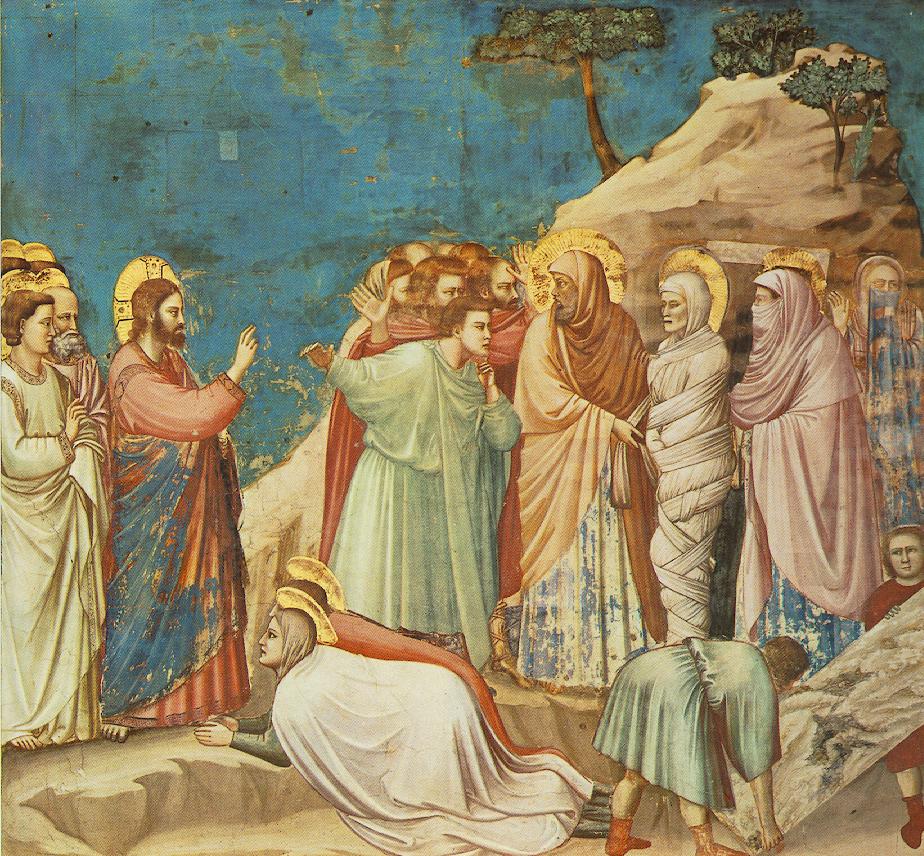
John 11:35 · Luke 19:41-44 · Hebrews 5:7 · Featured Study
Jesus Wept
Scripture records Jesus weeping three times, and each time for a different reason. At a grave, over a city, and in a garden, the same tears carry three different griefs. This page holds each of the three texts up to the light: what moved him, what the words behind the tears actually say, and what they show of God’s own heart toward loss, toward a lost city, and toward a cup he did not want to drink.
Summary
Scripture records Jesus weeping three times: at Lazarus's tomb, with the raising of Lazarus only verses away; over Jerusalem, a city that would not know its day; and in Gethsemane, with strong crying and tears before the cross. Each weeping carries its own grief, and together they show the real heart of God toward loss, toward a lost city, and toward the cup he was about to drink.
- John 11:35, "Jesus wept," is the shortest verse in the Bible, and it stands a few verses before he raises Lazarus from the dead.
- The Greek behind "groaned in the spirit" (John 11:33, 38) is a strong word the commentators read as suppressed grief, indignation at death, or both together.
- Luke 19:41-44 records a different grief entirely: weeping over a city about to reject the very peace it was being offered.
- Hebrews 5:7 puts the Gethsemane scene in one sentence: prayers, supplications, strong crying, and tears, offered to the one who could save him from death.
- Together the three weepings sit inside the wider truth this site's own humanity-of-Christ study carries: he felt what he felt without ceasing, for one moment, to be God.
The Shortest Verse
John 11:35: two words, and a resurrection a few verses away
“Jesus wept.” Two words in English, three in the Greek, and the shortest verse in the whole Bible. It sits inside a scene where Jesus already knows exactly what he is about to do. He told his disciples days earlier that Lazarus’s sickness would not end in death (John 11:4). He waited two more days on purpose (John 11:6). He tells Martha plainly, before he ever reaches the tomb, “I am the resurrection, and the life” (John 11:25). And then, just before he calls Lazarus out of the grave, he weeps.
“Jesus wept - It has been remarked that this is the shortest verse in the Bible; but it is exceedingly important and tender. It shows the Lord Jesus as a friend, a tender friend, and evinces his character as a man. And from this we learn: 1. That the most tender personal friendship is not inconsistent with the most pure religion. Piety binds stronger the ties of friendship, makes more tender the emotions of love, and seals and sanctifies the affections of friends.”
Albert Barnes · Notes, Explanatory and Practical, on the Old and New Testaments, 1870Evangelical
John 11:35
At Lazarus's Tomb
John 11:32-38: grief with friends, before the grave that would not hold
Martha said to Jesus, “Lord, if You had been here, my brother would not have died. But even now I know that God will give You whatever You ask of Him.” “Your brother will rise again,” Jesus told her. Martha replied, “I know that he will rise again in the resurrection at the last day.” Jesus said to her, “I am the resurrection and the life. Whoever believes in Me will live, even though he dies. And everyone who lives and believes in Me will never die. Do you believe this?” “Yes, Lord,” she answered, “I believe that You are the Christ, the Son of God, who was to come into the world.”Both sisters greet him with the same words: Lord, if thou hadst been here. He answers Martha with who he is, not only what he will do.
When Mary came to Jesus and saw Him, she fell at His feet and said, “Lord, if You had been here, my brother would not have died.” When Jesus saw her weeping, and the Jews who had come with her also weeping, He was deeply moved in spirit and troubled. “Where have you put him?” He asked. “Come and see, Lord,” they answered. Jesus wept. Then the Jews said, “See how He loved him!”He sees Mary weeping, and the Jews with her weeping. He groans in the spirit, is troubled, and weeps himself.
John chooses two different words for the weeping in this scene. Mary and the Jews around her klaiō, the loud weeping of mourners. Jesus dakryō, the quieter word for shedding tears. Before that, John says he “groaned in the spirit,” a strong Greek verb, embrimaomai, used elsewhere in the Gospels for a stern, forceful charge. The commentators read it different ways: grief so deep it had to be held in check, or something nearer indignation, at death itself and what sin had done to the world he made. Both readings are given here, because the word itself carries both.
The words underneath
dakryo: to weep
Greek · G1145Strong's entry: to shed tears
The word behind "Jesus wept" (11:35): dakryo, to shed tears. A quieter word than the loud mourning (klaio) John uses for Mary and the Jews around her in the same scene.
1 times in the New Testament · dakryo, in full →
embrimaomai: be agitated
Greek · G1690Strong's entry: to have indignation on, i.e. (transitively) to blame, (intransitively) to sigh with chagrin, (specially) to sternly enjoin
"Groaned in the spirit" (11:33, 38): embrimaomai, a strong word elsewhere rendered "sternly charge" or "be moved with indignation." The commentators divide over whether it names suppressed grief, indignation at death, or both.
5 times in the New Testament · embrimaomai, in full →
“He groaned in the spirit - The word rendered ‘groaned,’ here, commonly denotes to be angry or indignant, or to reprove severely, denoting violent agitation of mind. Here it also evidently denotes violent agitation - not from anger, but from grief. He saw the sorrow of others, and he was also moved with sympathy and love. The word ‘groan’ usually, with us, denotes an expression of internal sorrow by a special sound. The word here, however, does not mean that utterance was given to the internal emotion, but that it was deep and agitating, though internal.”
Albert Barnes · Notes, Explanatory and Practical, on the Old and New Testaments, 1870Evangelical
John 11:33
“The word here rendered ‘groaned’ does not mean ‘sighed’ or ‘grieved,’ but rather ‘powerfully checked his emotion’--made a visible effort to restrain those tears which were ready to gush from His eyes.”
Jamieson, Fausset & Brown · Commentary Critical and Explanatory on the Whole Bible, 1871Reformed
John 11:33
“A GREAT storm was stirring the mind of Jesus. We find, on looking at the original, that He was indignant and troubled. We have a very literal translation in the margin of the Revised Version. And instead of reading, ‘He groaned in the spirit and was troubled,’ we find it, ‘He was moved with indignation in the spirit and troubled Himself.’ What was this indignation? We cannot think that it was caused by the unbelief of His friends, or even by the pretended sympathy of those malicious Jews who hastened to accuse Him to the Pharisees.”
Charles Spurgeon · "Jesus Wept," The Metropolitan Tabernacle Pulpit, 1889Reformed Baptist
John 11:33
“Jesus wept. As he was going along to the grave, see Joh 11:28; as he was meditating upon the state of his friend Lazarus, the distress his two sisters were in, and the greater damnation that would befall the Jews then present, who, notwithstanding the miracle, would not believe in him. This shows him to be truly and really man, subject to like passions, only without sin.”
John Gill · Exposition of the New Testament, 1771Particular Baptist
John 11:35
“Not many passages in the New Testament are more wonderful than the simple narrative contained in these eight verses. It brings out, in a most beautiful light, the sympathizing character of our Lord Jesus Christ. It shows us Him who is ‘able to save to the uttermost all who come to God by Him,’ as able to feel as He is to save. It shows us Him who is One with the Father, and the Maker of all things, entering into human sorrows, and shedding human tears.”
J.C. Ryle · Expository Thoughts on the Gospels: John, 1869Anglican Evangelical
John 11:33
“Jesus wept - Out of sympathy with those who were in tears all around him, as well as from a deep sense of the misery sin had brought upon human nature.”
John Wesley · Explanatory Notes upon the New Testament, 1755Wesleyan
John 11:35
Why he weeps at a grave he is about to emptyThe text does not explain itself, and this page does not fill the gap
Scripture never states, in so many words, why Jesus weeps at a grave he is about to empty. The commentators quoted above offer readings, not a settled answer: sympathy with those grieving around him, sorrow at what death has done to a world he made, or both together. The raising itself comes only a few verses later.
After Jesus had said this, He called out in a loud voice, “Lazarus, come out!” The man who had been dead came out with his hands and feet bound in strips of linen, and his face wrapped in a cloth. “Unwrap him and let him go,” Jesus told them.Lazarus, come forth. The grief and the power stand in the same scene, a few verses apart.
Over Jerusalem
Luke 19:41-44: weeping over a city that would not know its day
As Jesus approached Jerusalem and saw the city, He wept over it and said, “If only you had known on this day what would bring you peace! But now it is hidden from your eyes.He sees the city and weeps over it, in the same week the crowds are shouting his praise.
For the days will come upon you when your enemies will barricade you and surround you and hem you in on every side. They will level you to the ground—you and the children within your walls. They will not leave one stone on another, because you did not recognize the time of your visitation from God.”What is coming, named plainly: siege, ruin, and a reason given for it, that the city did not know the time of its visitation.
This weeping happens in the middle of the crowd’s own celebration, on the descent from the Mount of Olives, with the whole city spread out below him. It is not grief for a friend already dead. It is grief in advance, for a judgment he can already see coming and the city itself cannot. The reason he gives is not that Jerusalem sinned in some general way. It is that Jerusalem “knewest not the time of thy visitation,” the exact hour it was being offered peace, and missed it.
“Probably, it was when he was coming down the descent of the hill from the mount of Olives, where he had a full view of the city, the large extent of it, and the many stately structures in it, and his eye affected his heart, and his heart his eye again. What a tender spirit Christ was of; we never read that he laughed, but we often find him in tears.”
Matthew Henry · Commentary on the Whole Bible, 1710Nonconformist
Luke 19:41
“ON three occasions we are told that Jesus wept. You know them well, but it may be worth while to refresh your memories. The first was when our Lord was about to raise Lazarus from the dead. He saw the sorrow of the sisters and He meditated upon the fruit of sin in the death and corruption of the body and He groaned in spirit and it is written that ‘Jesus wept.’ Those who divided the chapters did well to make a separate verse of that simple sentence.”
Charles Spurgeon · "The Lamentations of Jesus," The Metropolitan Tabernacle Pulpit, 1880Reformed Baptist
Luke 19:41
In Gethsemane
Hebrews 5:7: strong crying and tears, before the cup

During the days of Jesus’ earthly life, He offered up prayers and petitions with loud cries and tears to the One who could save Him from death, and He was heard because of His reverence.Prayers and supplications, strong crying and tears, offered to the one who was able to save him from death.
The Gospels themselves never use the word “weep” for Gethsemane. Hebrews does the work instead, from the outside, describing what the Gospel writers only showed: an agony strong enough to produce “strong crying and tears” before a cup he asked, three times, to have removed. This is the third and final weeping this page carries, closer to the cross than either of the other two, and the one where the grief is entirely his own.
“This all shows that ‘Christ glorified not Himself to be made an High Priest’ (Heb 5:5), but was appointed thereto by the Father. prayers and supplications--Greek, ‘both prayers and supplications.’ In Gethsemane, where He prayed thrice, and on the cross, where He cried, My God, my God . . . probably repeating inwardly all the twenty-second Psalm.”
Jamieson, Fausset & Brown · Commentary Critical and Explanatory on the Whole Bible, 1871Reformed
Hebrews 5:7
What the Tears Teach
three griefs, one heart
Three scenes, three different reasons, and the same person weeping in each. At a grave, it is grief with the people he loves, over what death has done to a world he made, even with the power to undo it standing right there in his own hands. Over a city, it is grief in advance, for a judgment freely offered peace could have turned aside. In a garden, it is the cost of the cup itself, named honestly rather than hidden. None of the three tears diminish him. They show, as plainly as anything in Scripture can, the real heart of God toward loss, toward the lost, and toward what it cost to save them. The wider doctrine these three scenes belong to, the full humanity of Christ held together with his full deity, is argued in full at the door below.
The Voices
with the work named
"The Lamentations of Jesus," The Metropolitan Tabernacle Pulpit (1880), and "'Jesus Wept'" (1889) · public domain
Names all three weepings in a single sermon, and in the second reads the storm behind the shortest verse as indignation as much as sorrow.
Commentary on the Whole Bible (1710) · public domain
On Luke 19:41: "we never read that he laughed, but we often find him in tears."
Expository Thoughts on the Gospels: John (1869) · public domain
Opens the Lazarus narrative by naming its subject plainly: the sympathizing character of Christ.
Notes, Explanatory and Practical, on the Old and New Testaments (1832-1869) · public domain
Reads John 11:33's "groaned in the spirit" as grief rather than anger, and John 11:35 as the shortest, tenderest verse in Scripture.
Commentary Critical and Explanatory on the Whole Bible (1871) · public domain
Reads the same word as a visible effort to hold back tears, and ties Hebrews 5:7's tears to both Gethsemane and the cross.
Exposition of the New Testament (1746-1748) · public domain
States plainly that the weeping "shows him to be truly and really man, subject to like passions, only without sin."
Marcus Brown's own commentary leads above all; within a tier, all voices are equal.
Keep Studying
On this page
People and groups1