
Psalm 42 · Trial 7 of 21 · Featured Study
Despair and Depression
Despair is the loss of hope, and the psalms carry it to God in prayer.
Proverbs sets a sick body beside a broken spirit and asks, “who can survive a broken spirit?” (Proverbs 18:14).
Why are you downcast, O my soul? Why the unease within me? Put your hope in God, for I will yet praise Him for the salvation of His presence.
- Anchor text
- Psalm 42:5 “Why are you downcast, O my soul? Why…”
- The lament
- Psalm 88:1 to 18 “O LORD, the God of my salvation, day…”
- Hold in memory
- Psalm 42:5, Psalm 147:3
Summary
Scripture records the despair of believers openly, in the psalms, the prophets, the stories of Israel and the letters of Paul. The psalms give a soul bowed down the words to bring its trouble to God, and the stories show God answering the despairing through His presence, His promises and the care of His people.
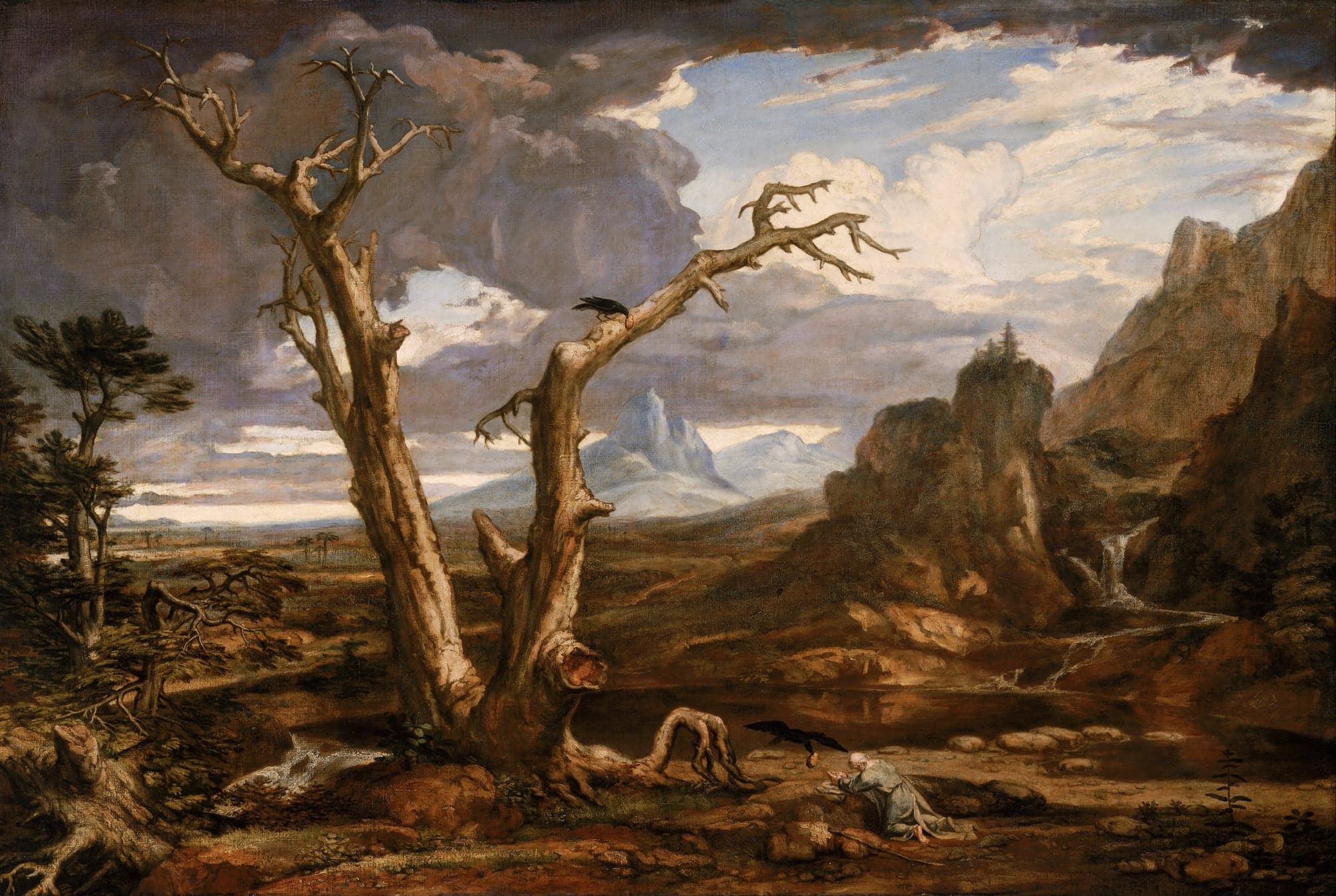
- Faithful servants of God reached the end of their strength: Moses, Elijah and Jonah each asked God to take his life, and Jeremiah cursed the day of his birth.
- Scripture traces despair to several roots, among them a world under the curse, the wrongs of others, a person's own unconfessed sin and the attacks of the enemy.
- Jesus knew this trial from within, in the garden before His arrest and in His cry from the cross.
- A lament that ends in the dark is still a prayer addressed to God, and the Psalter keeps one such psalm for His people to pray.
- Depression can be an illness of the body and the mind as well as a trouble of the soul.
What Despair Is
Two Hebrew verbs and one Greek verb name despair in the verses on these three cards.
This study asks what Scripture says to a believer who is downcast or in despair, where that despair comes from, and what God gives a person to do in it. It sets out the Hebrew and Greek words for despair and the key texts in their Berean words. It shows Christ's own sorrow, the people and stories of the Bible who reached the end of hope, and the lament of Psalm 88. It also gives the practices Scripture names, the voices of the church by century, a measured word from research, and the three questions on which readers disagree.
Shachach, to bow down
21 uses in the canon
Psalm 107 uses shachach (H7817) of people brought low by hardship: “When they are decreased and humbled by oppression, evil, and sorrow.”
Ya'ash, to give up
6 uses in the canon
The Teacher uses ya'ash (H2976) of his life's work: “So my heart began to despair over all the labor that I had done under the sun.”
Exaporeomai, to be utterly at a loss
2 uses in the canon
Paul uses exaporeomai (G1820) of the hardships in the province of Asia: “We were under a burden far beyond our ability to endure, so that we despaired even of life.”
The lexicon in full
Shachach, to bow down, Ya'ash, to give up, Exaporeomai, to be utterly at a loss, The Words Shachach and Exaporeomai, the study in brief
The Key Texts for the Downcast
The laments, the psalms of rescue, the prophets and Paul each speak to a soul in despair.
Laments
How long, O LORD? Will You forget me forever? How long will You hide Your face from me? How long must I wrestle in my soul, with sorrow in my heart each day? How long will my enemy dominate me?
David's four questions of how long give the downcast the words of a prayer that keeps waiting on God.
“Will the Lord spurn us forever and never show His favor again? Is His loving devotion gone forever? Has His promise failed for all time? Has God forgotten to be gracious? Has His anger shut off His compassion?” Selah
Asaph asks whether God's love has ended, and the psalm that holds his questions goes on to remember God's works.
Wisdom
The LORD is near to the brokenhearted; He saves the contrite in spirit.
It stands here as a promise a downcast reader can hold while he is still crushed in spirit.
Psalm 34:18BSB
I waited patiently for the LORD; He inclined to me and heard my cry. He lifted me up from the pit of despair, out of the miry clay; He set my feet upon a rock, and made my footsteps firm.
It stands here because it shows a rescue that came after patient waiting, the order a despairing reader is asked to trust.
Prophets
to console the mourners in Zion—to give them a crown of beauty for ashes, the oil of joy for mourning, and a garment of praise for a spirit of despair. So they will be called oaks of righteousness, the planting of the LORD, that He may be glorified.
It stands here because its promise names the trial itself, “a spirit of despair”, among the griefs God comes to console.
Isaiah 61:3BSB
Yet I call this to mind, and therefore I have hope: Because of the loving devotion of the LORD we are not consumed, for His mercies never fail. They are new every morning; great is Your faithfulness!
The poet of Lamentations finds hope in the middle of ruin by calling God's mercies to mind.
Do not gloat over me, my enemy! Though I have fallen, I will arise; though I sit in darkness, the LORD will be my light.
It stands here because it gives a reader in darkness a word of hope spoken from inside that darkness.
Micah 7:8BSB
Letters
Therefore we do not lose heart. Though our outer self is wasting away, yet our inner self is being renewed day by day.
It stands here because Paul wrote it in the same letter in which he told of his despair in Asia.
Psalm 34:18, Psalm 40:1 to 2, Isaiah 61:3, Lamentations 3:21 to 23, Micah 7:8, 2 Corinthians 4:16
Where Despair Comes From and Where Christ Bore It
Six texts trace despair to its causes and set each cause under God's rule, and four show Christ bearing this trial for His people.
The causes of despair often lie together in one life.
And to Adam He said: “Because you have listened to the voice of your wife and have eaten from the tree of which I commanded you not to eat, cursed is the ground because of you; through toil you will eat of it all the days of your life.The curse on the ground after Adam's sin brings toil and frustration into every human life.
For the creation was subjected to futility, not by its own will, but because of the One who subjected it, in hope that the creation itself will be set free from its bondage to decay and brought into the glorious freedom of the children of God. We know that the whole creation has been groaning together in the pains of childbirth until the present time.Paul sets every human trouble inside a world that waits, with the believer, for its release.
Be sober-minded and alert. Your adversary the devil prowls around like a roaring lion, seeking someone to devour.Peter names the devil as an adversary who seeks to devour, so the enemy can stand behind a believer's darkness.
Insults have broken my heart, and I am in despair. I looked for sympathy, but there was none, for comforters, but I found no one.David traces his despair to the wrongs of others, to insults and to friends who gave no comfort.
When I kept silent, my bones became brittle from my groaning all day long. For day and night Your hand was heavy upon me; my strength was drained as in the summer heat. SelahDavid's strength drained away while he kept silent about his sin, so unconfessed sin can lie behind despair.
Over every one of these causes stands the rule of God, who sets limits to affliction and shows compassion in it.
For the Lord will not cast us off forever. Even if He causes grief, He will show compassion according to His abundant loving devotion. For He does not willingly afflict or grieve the sons of men.The poet of Lamentations sets every grief under a God who will not cast His people off forever.
Isaiah, the Gospels and Hebrews show Christ as the man of sorrows who bore this trial for His people and sympathizes with them in it.
He was a man of sorrowsIsaiah 53
Isaiah's fourth song of the Servant (Isaiah 52:13 to 53:12) tells of a Servant who suffers for the sins of others.
He was despised and rejected by men, a man of sorrows, acquainted with grief. Like one from whom men hide their faces, He was despised, and we esteemed Him not.
Isaiah 53:3BSB The prophecy names the Messiah as one who would know grief from the inside.
He was distressed in GethsemaneMatthew 26
On the night of His arrest, Jesus went with His disciples to a place called Gethsemane to pray (Matthew 26:36).
He took with Him Peter and the two sons of Zebedee and began to be sorrowful and deeply distressed. Then He said to them, “My soul is consumed with sorrow to the point of death. Stay here and keep watch with Me.”
Matthew 26:37 to 38BSB The verses show the Son of God bearing a sorrow heavy enough to bring Him near death, and asking His friends to stay with Him.
He cried out from the crossMatthew 27
On the cross, after three hours of darkness over the land, Jesus prayed the opening line of Psalm 22 (Matthew 27:45).
About the ninth hour Jesus cried out in a loud voice, “Eli, Eli, lema sabachthani?” which means, “My God, My God, why have You forsaken Me?”
Matthew 27:46BSB The cry shows Christ bearing abandonment in the place of His people and still calling God His own.
Read the study of the Crucifixion 12 sections, 17 verses set out
He sympathizes as our high priestHebrews 4
Hebrews says that He “had to be made like His brothers in every way, so that He might become a merciful and faithful high priest” (Hebrews 2:17).
For we do not have a high priest who is unable to sympathize with our weaknesses, but we have one who was tempted in every way that we are, yet was without sin.
Hebrews 4:15BSB The verse gives the despairing a high priest who has felt human weakness and is able to sympathize.
Read the page on Jesus 33 sections, 41 verses set out
He was distressed in Gethsemane (Matthew 26), He cried out from the cross (Matthew 27), He sympathizes as our high priest (Hebrews 4)
1 Peter 5:8, Psalm 69:20, Psalm 32:3 to 4, Lamentations 3:31 to 33, Isaiah 53:3, Matthew 26:37 to 38, Matthew 27:46, Hebrews 4:15
The Fall & the Protoevangelium, the study in brief, 1 Peter 5:8, Psalm 69:20, Psalm 32:3 to 4, Lamentations 3:31 to 33, Providence, the study in brief, a paragraph, He was a man of sorrows (Isaiah 53) and 3 more
Who Despaired
Four people of the Bible each spoke his despair aloud, and each line gives his own words.
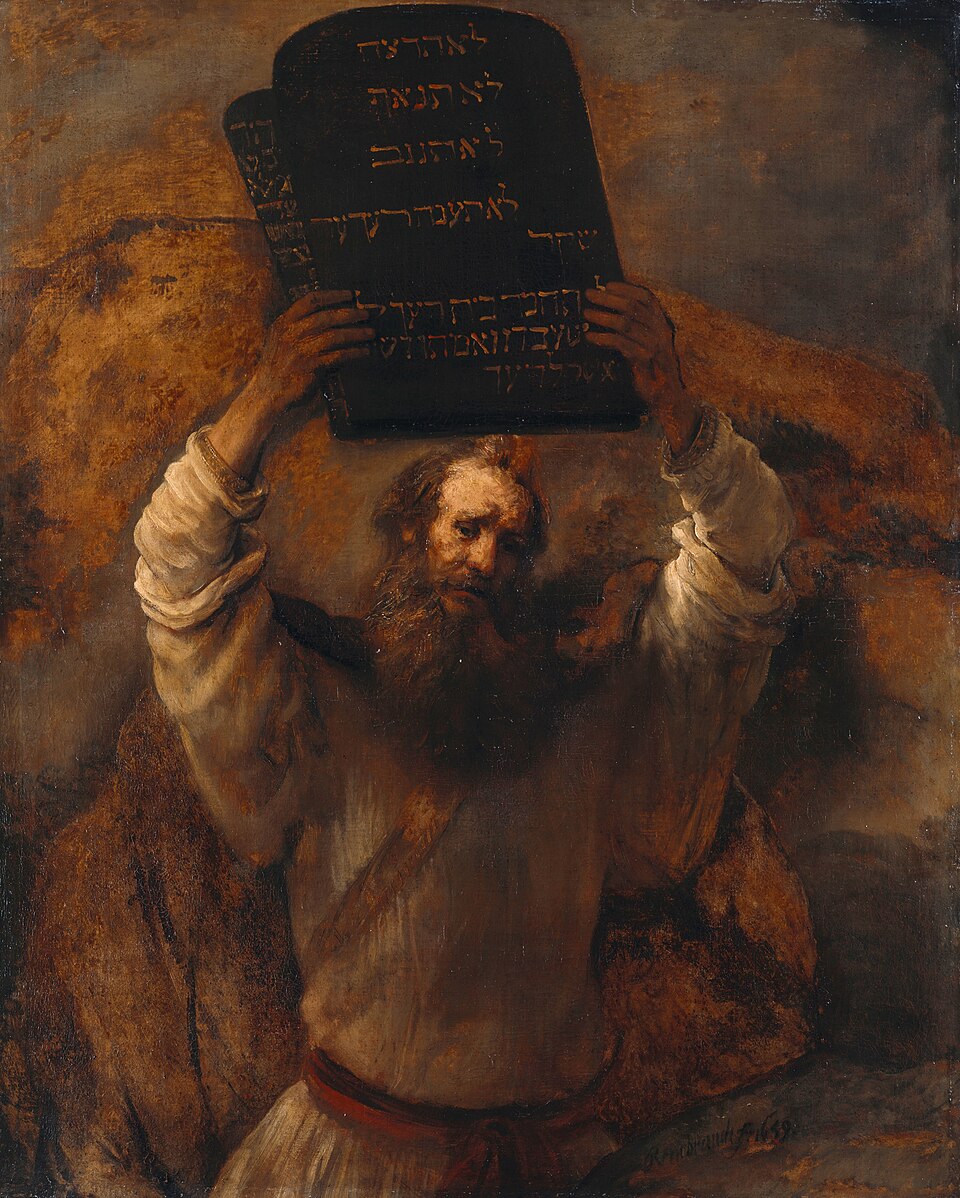

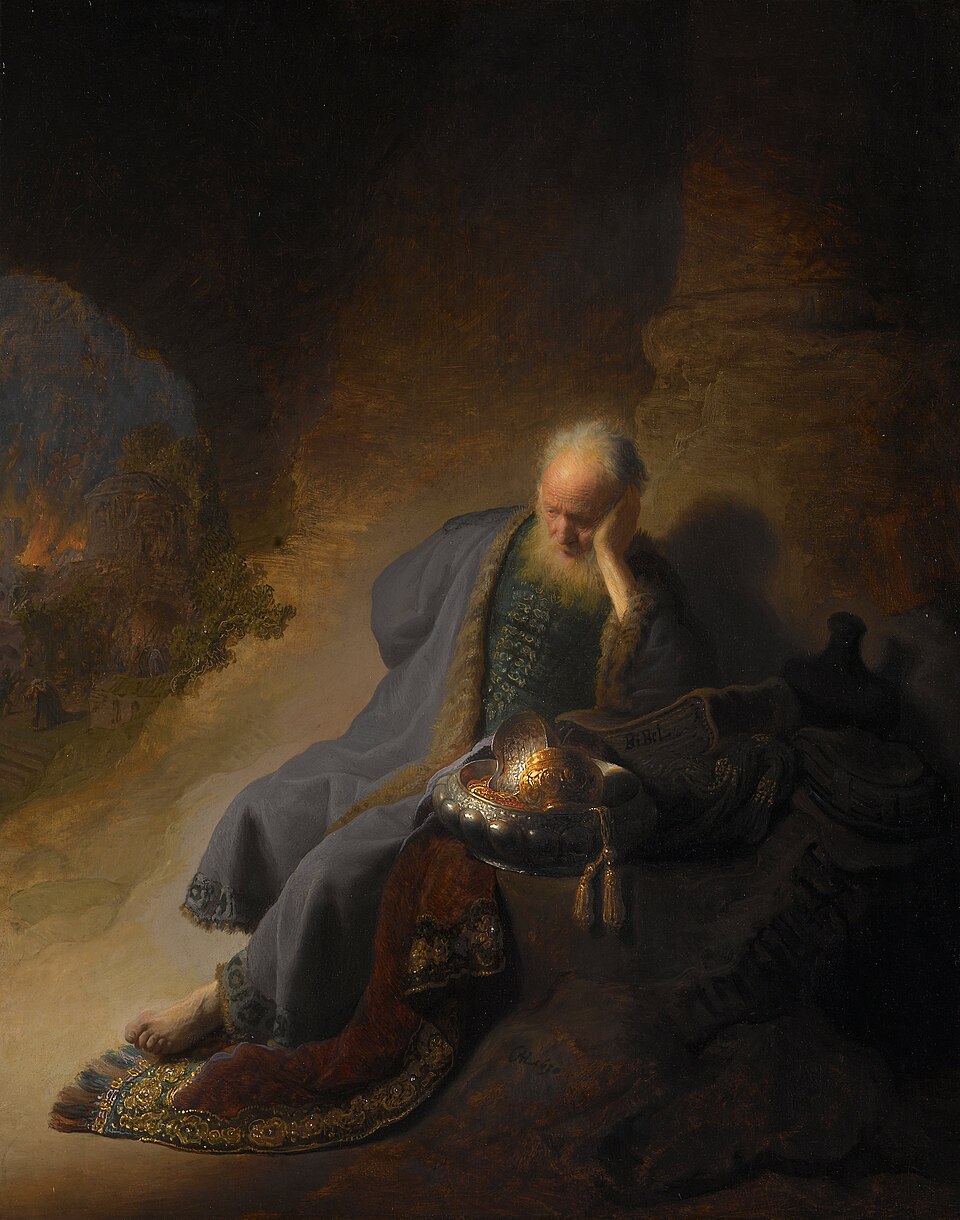
After he was beaten and put in the stocks, he cried, “Cursed be the day I was born!”
Jeremiah 20:14
Jeremiah, Jonah
What to Do in Despair
Scripture gives seven things to do in despair, each in the words of the verse that gives it.
- 1Pour out your heart to God“Trust in Him at all times, O people; pour out your hearts before Him. God is our refuge.”Psalm 62:8
- 2Remember what God has done“I will remember the works of the LORD; yes, I will remember Your wonders of old.”Psalm 77:11
- 3Confess the sin that weighs on you“I will confess my transgressions to the LORD,” and You forgave the guilt of my sin.Psalm 32:5
- 4Hand your cares to Him“Cast all your anxiety on Him, because He cares for you.”1 Peter 5:7
- 5Eat and rest“Get up and eat, or the journey will be too much for you.”1 Kings 19:7
- 6Wait quietly for the LORD“It is good to wait quietly for the salvation of the LORD.”Lamentations 3:26
- 7Let others carry the load with you“Carry one another’s burdens, and in this way you will fulfill the law of Christ.”Galatians 6:2
Remember what God has done, Confess the sin that weighs on you, Hand your cares to Him, Eat and rest, Wait quietly for the LORD, Let others carry the load with you
Prayer and these practices go together with the care of a doctor and never replace it. Anyone who is thinking of ending their life should call their local emergency number or a crisis line now and tell someone nearby.
The Lament of Psalm 88
Four of the psalm's eighteen verses stand here as cards, from its first complaint to its hardest question.
Every line of Psalm 88 is addressed to God.
For my soul is full of troubles, and my life draws near to Sheol.It stands first because it is the psalm's opening complaint, after the cry for a hearing.
My eyes grow dim with grief. I call to You daily, O LORD; I spread out my hands to You.It stands here because it joins grief that wears on the body to prayer in one line.
But to You, O LORD, I cry for help; in the morning my prayer comes before You.It stands here because it shows the lament keeping faith with the God it questions.
Why, O LORD, do You reject me? Why do You hide Your face from me?It stands last because it puts the despairing believer's hardest question to God in His hearing.
Psalm 88:13, Psalm 88:14
Psalm 88:13, Psalm 88:14, The Darkest Psalm, the study in brief
Despair in the Stories of the Bible
Four stories tell of a childless wife at Shiloh, a prophet in the wilderness, a man on the ash heap and an apostle in Asia.
Hannah at Shiloh1 Samuel 1
The LORD had closed Hannah's womb, and her rival taunted her year after year until she wept and would not eat (1 Samuel 1:6 to 7). At the house of the LORD in Shiloh she prayed so silently that the priest Eli thought she was drunk. She answered that she was “a woman oppressed in spirit” who had poured out her soul before the LORD (1 Samuel 1:15).
In her bitter distress, Hannah prayed to the LORD and wept with many tears.
1 Samuel 1:10BSB The verse shows bitter distress carried into prayer.
Elijah in the wilderness1 Kings 19
After the prophets of Baal were killed, Jezebel swore to take Elijah's life, and he fled past Beersheba into the wilderness (1 Kings 19:1 to 4). An angel brought him bread and water twice, and in the strength of that food he walked to Horeb. There the LORD spoke to him in “a still, small voice” (1 Kings 19:12).
Then he lay down under the broom tree and fell asleep. Suddenly an angel touched him and said, “Get up and eat.”
1 Kings 19:5BSB The verse shows that God's first gift to the prophet in his despair was sleep and food.
Read the page on Elijah the Tishbite 12 sections, 16 verses set out
Job on the ash heapJob 2 to 3
In one day Job lost his flocks, his servants and his sons and daughters, and then Satan struck him with boils from head to foot (Job 1:13 to 19; Job 2:7). He sat among the ashes, and his three friends sat with him for seven days without a word (Job 2:13). Then Job opened his mouth and cursed the day of his birth (Job 3:1).
“May the day of my birth perish, and the night it was said, ‘A boy is conceived.’
Job 3:3BSB Job's first words after the silence show despair spoken aloud by a man God called blameless.
Read the study of the Patience of Job 10 sections, 19 verses set out
Paul in the province of Asia2 Corinthians 1
Paul opened his second letter to Corinth by blessing “the God of all comfort” (2 Corinthians 1:3). He wrote that in Asia “we felt we were under the sentence of death, in order that we would not trust in ourselves, but in God, who raises the dead” (2 Corinthians 1:9). He asked the church to help by their prayers, so that “many will give thanks on our behalf” (2 Corinthians 1:11). What the peril in Asia was is one of the questions on which readers disagree.
He has delivered us from such a deadly peril, and He will deliver us. In Him we have placed our hope that He will yet again deliver us,
2 Corinthians 1:10BSB The verse turns Paul's past rescue into hope for every rescue still to come.
Read the study of We Despaired Even of Life 8 sections, 5 verses set out
Elijah in the wilderness (1 Kings 19), Job on the ash heap (Job 2 to 3), Paul in the province of Asia (2 Corinthians 1)
Job 3:3, 2 Corinthians 1:10
Despair in the Church's History
Three accounts from the seventeenth century to the nineteenth tell of a dungeon in an allegory, a poet's melancholy and a preacher's fits of depression.
John Bunyan's Doubting Castle1678
In John Bunyan's The Pilgrim's Progress, Christian and Hopeful leave the road for an easier meadow and fall asleep on the grounds of Giant Despair. He locks them in the dungeon of Doubting Castle, where they lie “from Wednesday morning till Saturday night”. After a night of prayer Christian remembers “a Key in my bosom called Promise”, and it opens every lock in the castle. Bunyan set Psalm 88:18 in the margin beside the dungeon.
William Cowper's melancholy1731 to 1800
In 1763 William Cowper fell into melancholy, tried to take his life and became convinced that he was damned, and he stayed in Nathaniel Cotton's house at St Albans until June 1765. At Olney, where John Newton was curate, the two men published the Olney Hymns in 1779, sixty-seven of the hymns by Cowper. One of them opens “God moves in a mysterious way”. From 1773 he believed himself doomed, and the belief never fully left him.
Read the story of William Cowper and the Mysterious Way 7 sections
Charles Spurgeon's lecture on fainting fits1875
Charles Spurgeon gave “The Minister's Fainting Fits” as the eleventh lecture of the first series of Lectures to My Students, published in 1875 for the students of the Pastors' College. He told them he knew deep depression of spirit from painful experience. He named causes in the body, in the work, in the hour of success and before great labour, and he recalled the accident at the Surrey Gardens Music Hall in 1856, where seven people died.
Read the story of Spurgeon's Fainting Fits 7 sections, 1 verse set out
William Cowper's melancholy (1731 to 1800), Charles Spurgeon's lecture on fainting fits (1875)
Voices on Despair, by Century
Four quotations from the fifth century to the eighteenth, each under the line it teaches.
died 407 · John Chrysostom
Homily 2 on 2 Corinthians
A fifth-century reading: God's rescue of a man given up for dead is a kind of resurrection.
The quotation1 quotation
“‘Who delivered us out of so great deaths.’ He said not, ‘from so great dangers,’ at once showing the insupportable severity of the trials, and confirming the doctrine I have mentioned. For whereas the Resurrection was a thing future, he showeth that it happeneth every day: for when [God] lifteth up again a man who is despaired of and hath been brought to the very gates of Hades, He showeth none other thing than a resurrection, snatching out of the very jaws of death him that had fallen into them: whence in the case of those despaired of and then restored either out of grievous sickness or insupportable trials, it is an ordinary way of speaking to say, We have seen a resurrection of the dead in his case.”
John Chrysostom · Homily 2 on 2 Corinthians · on 2 Corinthians 1:10Patristic
died 420 · Jerome
Homily 65, on Psalm 87 (Alternate Series)
A fifth-century reading: the friends taken away in Psalm 88 are the apostles who left Christ in His passion.
The quotation1 quotation
“‘Thou hast put far from me friend and neighbor, and my acquaintances because of misery.’ Because of the confusion of the passion, even the apostles themselves were put far from him.”
Jerome · Homily 65, on Psalm 87 (Alternate Series) · on Psalm 88:18Patristic
1509 to 1564 · John Calvin
Commentaries
A sixteenth-century reading: the remedy in despair is to go straight to God, weigh one's sins and look to His mercy.
The quotation1 quotation
“Jeremiah, then, does not here plead his own private cause, but shews to his own nation what remedy there was for them in such a state of despair, even to have an immediate recourse to God, and on the one hand to consider their sins, and on the other to look to the mercy of God, so that they might entertain hope, and exercise themselves in prayer.”
John Calvin · Commentaries · on Lamentations 3:1Reformed
1662 to 1714 · Matthew Henry
Commentary on the Whole Bible
An eighteenth-century reading: the psalms were written to fit every sufferer's case, as Jonah prayed David's words.
The quotation1 quotation
“God knows what he does, and so shall they shortly. Jonah, in the whale's belly, made use of these words of David, Jonah ii. 3 (they are exactly the same in the original), and of him they were literally true, All thy waves and thy billows have gone over me; for the book of psalms is contrived so as to reach every one's case.”
Matthew Henry · Commentary on the Whole Bible · on Psalm 42:7Puritan
John Calvin, Matthew Henry
How Despair Has Been Taught
John Cassian in the fifth century and Thomas Aquinas in the thirteenth taught where dejection comes from and what eases it.
Cassian taught that dejection crushes the feelings and overwhelms them with despair.1 paragraph
John Cassian wrote in his Institutes (book 9, translated by C. S. Gibson, 1894) of a spirit of dejection that “crushes and overwhelms” the feelings “with penal despair”. He traced it at times to anger or to a hope that has failed, and at times, “without any apparent reason”, to “the instigation of our crafty enemy”. He held that such disturbances come less from other people's faults than from “the seeds of faults” stored up in ourselves.
Aquinas held that a sorrowing person is helped by tears, by friends and by thinking on the truth.1 paragraph
Thomas Aquinas asked in the Summa Theologiae (first part of the second part, question 38, English Dominican translation, 1920) which remedies assuage sorrow. He answered that weeping, the sympathy of friends, the contemplation of truth, and sleep and baths each ease it. Of the bodily remedies he wrote that “whatever restores the bodily nature to its due state of vital movement, is opposed to sorrow and assuages it.”
Where the Science Speaks
Published research has measured how religious faith and religious coping relate to depressive symptoms.
T. B. Smith, M. E. McCullough and J. Poll combined 147 studies of 98,975 people in Psychological Bulletin in 2003. Greater religiousness went with mildly fewer depressive symptoms, a correlation of minus 0.096, and the link was stronger among people under recent stress. Coping that blamed God or used religious activity to avoid difficulties went with more symptoms.
The review measures an association and cannot show what causes it, and the comfort Scripture gives rests on God's promises whatever such studies find.
The Studies of Despair
Each study takes one text, word, question or life of this trial into more depth.
The texts
3 studies
- Passages and psalms · 14 verses set outThe Darkest Psalm
Psalm 88, a maskil of Heman the Ezrahite, is a prayer from the edge of death.
- Passages and psalms · 5 verses set outWe Despaired Even of Life
Paul's second letter to Corinth opens its story with a danger in the province of Asia.
- Passages and psalms · 9 verses set outWhy Are You Downcast, O My Soul?
Psalms 42 and 43 repeat one refrain three times in sixteen verses of lament.
- Passages and psalms · 14 verses set outThe Darkest Psalm
The stories
2 studies
- Stories · 1 verse set outSpurgeon's Fainting Fits
Charles Spurgeon told the students of his college that ministers are subject to fits of depression and that he knew them himself.
- Stories · 7 sectionsWilliam Cowper and the Mysterious Way
William Cowper, an English poet, wrote the hymn that begins God moves in a mysterious way.
- Stories · 1 verse set outSpurgeon's Fainting Fits
The words
1 study
- Symbols and words · 10 verses set outThe Words Shachach and Exaporeomai
The English words downcast and despair translate five verbs of the Old and New Testaments.
- Symbols and words · 10 verses set outThe Words Shachach and Exaporeomai
The practice
1 study, 1 linked page
- Debates · 16 verses set outCan a Christian Be Depressed?
Elijah, Jeremiah, Job and the psalmist of Psalm 42 each voiced a sorrow that wished for death or questioned God.
- Subjects · 15 verses set outThe Dark Night of the Soul
John of the Cross wrote his two books on the night after he escaped from prison at Toledo in 1578.
- Debates · 16 verses set outCan a Christian Be Depressed?







We Despaired Even of Life, Why Are You Downcast, O My Soul?, Spurgeon's Fainting Fits, William Cowper and the Mysterious Way, The Words Shachach and Exaporeomai, Can a Christian Be Depressed?, The Dark Night of the Soul
Where Readers Disagree
Seven readings answer three questions, each with its holders, the work that argues it and the objection raised against it.
What lies behind a believer's despair
Read the debate Can a Christian Be Depressed? 9 sections, 16 verses set out
| Reading | Held by | Work | Objection |
|---|---|---|---|
| Chiefly the seeds of faults stored up in the sufferer, more than the faults of others | John Cassian (Latin monastic writing) | John Cassian, Institutes, book 9, chapters 4 and 5 (translated by C. S. Gibson, 1894) | Job's friends traced his suffering to his sin (Job 22:5), and the LORD said that they had not spoken about Him accurately (Job 42:7). |
| A long despair may go with a bodily illness that distracts the mind | Charles Spurgeon (English Baptist) | Charles Spurgeon, The Treasury of David, volume 4 (1874), on Psalm 88:15 | David traces the sickness of his own body to his sin (Psalm 38:3), so sin can lie behind what looks like an illness of the body. |
| Sorrow of soul is eased by remedies for the body, such as sleep and baths | Thomas Aquinas (Dominican scholastic theology) | Thomas Aquinas, Summa Theologiae, I-II question 38, article 5 | Aquinas records the objection himself: sorrow is in the soul, while sleep and baths regard the body. |
A long despair may go with a bodily illness that distracts the mind, Sorrow of soul is eased by remedies for the body, such as sleep and baths
Whether Psalm 88 speaks in the voice of Christ
Read the study of The Darkest Psalm 8 sections, 14 verses set out
| Reading | Held by | Work | Objection |
|---|---|---|---|
| The psalm is Christ singing in prophecy, and His people answer Him | Augustine of Hippo (Latin patristic writing) | Augustine of Hippo, Exposition on Psalm 88, on Psalm 88:1 | Heman says he was afflicted from his youth (Psalm 88:15), which the Gospels never say of Jesus. |
| The psalm voices Heman's own long affliction, perhaps a disease that cut him off from others | Adam Clarke (Methodist) | Adam Clarke, Commentary on the Bible (1832), on Psalm 88:8 | Hebrews says that Christ prayed with loud cries and tears to the One who could save Him from death (Hebrews 5:7), words close to Heman's cry. |
What the deadly peril in Asia was
Read the study of We Despaired Even of Life 8 sections, 5 verses set out
| Reading | Held by | Work | Objection |
|---|---|---|---|
| The riot raised by Demetrius at Ephesus | Robert Jamieson, A. R. Fausset and David Brown (British evangelical commentary) | Robert Jamieson, A. R. Fausset and David Brown, Commentary Critical and Explanatory on the Whole Bible (1871), on 2 Corinthians 1:8 | Acts says that the disciples would not let Paul go before the assembly during the riot (Acts 19:30). |
| The wild beasts Paul fought at Ephesus | Tertullian (Latin patristic writing) | Tertullian, On the Resurrection of the Flesh, on 2 Corinthians 1:8 | Paul names the beasts at Ephesus as a past event in his first letter (1 Corinthians 15:32), while he writes of the peril in Asia as news the Corinthians did not yet know (2 Corinthians 1:8). |
Sources
Scripture is the Berean Standard Bible.
- STEP Bible brief lexicons of Extended Strongs for Hebrew and for Greek (Tyndale House, Cambridge), CC BY 4.0, with the Strong's glosses.
- John Cassian, Institutes, book 9, chapters 1, 4 and 5, translated by C. S. Gibson, Nicene and Post-Nicene Fathers, second series, volume 11 (Buffalo: Christian Literature Publishing, 1894)
- Thomas Aquinas, Summa Theologiae, I-II question 38, articles 1 to 5, translated by the Fathers of the English Dominican Province, second and revised edition (1920)
- John Bunyan, The Pilgrim's Progress from this world to that which is to come (1678), first part, Doubting Castle, sections 283 to 292.
- T. B. Smith, M. E. McCullough and J. Poll, Religiousness and depression: evidence for a main effect and the moderating influence of stressful life events, Psychological Bulletin 129, no. 4 (2003): 614 to 636.
- John Chrysostom, Homilies on Second Corinthians, Homily 2, on 2 Corinthians 1:10.
- Jerome, Homily 65, on Psalm 87 (Alternate Series), on Psalm 88:18.
- John Calvin, Commentaries, on Lamentations 3:1.
- Matthew Henry, Commentary on the Whole Bible (1710), on Psalm 42:7.
- Charles Spurgeon, The Treasury of David, volume 4 (1874), on Psalm 88:3 and Psalm 88:15.
- Augustine of Hippo, Exposition on Psalm 88, on Psalm 88:1.
- Leslie Stephen, Cowper, William (1731-1800), Dictionary of National Biography, volume 12 (1887)
- Charles Spurgeon, Lectures to My Students, first series (New York: Sheldon, 1875), lecture 11, The Minister's Fainting Fits, pages 249 to 267.
- A. R. Buckland, Spurgeon, Charles Haddon, Dictionary of National Biography, volume 53 (1898)
- John Newton and William Cowper, Olney Hymns, in Three Books (London: W. Oliver, 1779), book 3, hymn 15, Light shining out of darkness.
- Robert Jamieson, A. R. Fausset and David Brown, Commentary Critical and Explanatory on the Whole Bible (1871), on 2 Corinthians 1:8, reporting Henry Alford.
- Tertullian, On the Resurrection of the Flesh, on 2 Corinthians 1:8.
Keep Studying
In this trial7
People and groups24