
Ruth 1:20
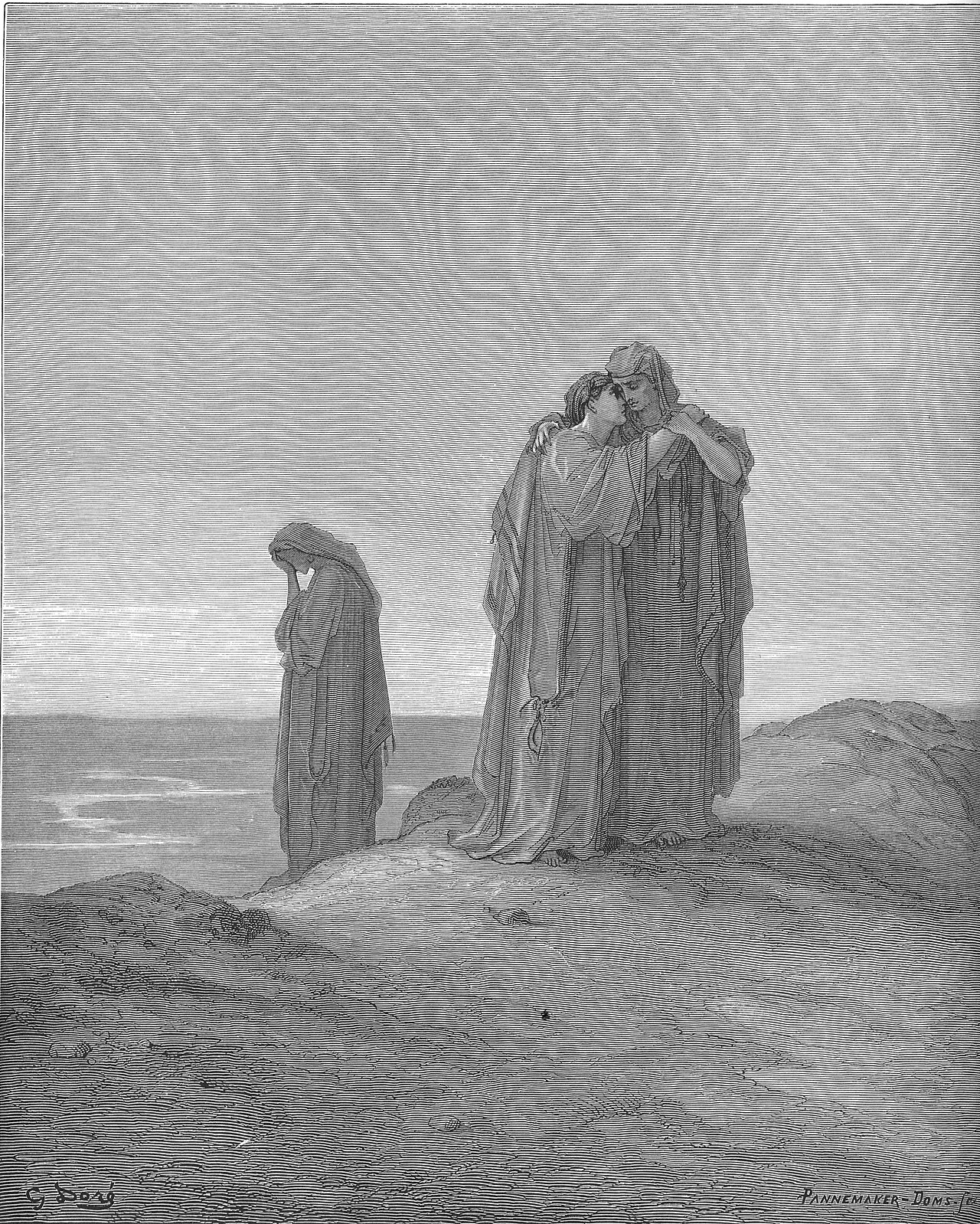
in Ruth 1“Do not call me Naomi,” she replied. “Call me Mara, because the Almighty has dealt quite bitterly with me.
BSB
The same verse in ASV and KJV ▾
ASV
And she said unto them, Call me not Naomi, call me Mara; for the Almighty hath dealt very bitterly with me.
KJV
And she said unto them, Call me not Naomi, call me Mara: for the Almighty hath dealt very bitterly with me.
⋯
This verse in Ruth 1
Commentary
9 notes on this verseCall me not Naomi - That is, beautiful or pleasant. Call me Mara - That is, bitter; one whose life is grievous to her. The Almighty - שדי Shaddai, He who is self-sufficient, has taken away the props and supports of my life.
This site's exposition
So Naomi and Ruth traveled until they came to Bethlehem
on Ruth 1:19-21
The town asks "Can this be Naomi?", which shows how much ten years and three graves had changed her. She renames herself Mara, bitter, against Naomi, pleasant, and twice calls God the Almighty, which is Shaddai, the name God used of himself to Abram at Genesis 17:1. Her summary, "I went away full, but the LORD has brought me back empty", is overturned at 4:14-17 by the same women.
This site's exposition
Call me Mara
Naomi means pleasant and Mara means bitter, so she asks the women of the city to call her by her grief. The Almighty is Shaddai, the name God gave when He made His covenant with Abraham. Naomi brings her bitter complaint to that God.
The record, by era
The Medieval Church1 voice
A commentator
Gregory the DialogistRegister of Epistles, Book 1, Epistle VI · Written before 604.
proposed
In describing loftily the sweetness of contemplation, you have renewed the groans of my fallen state, since I hear what I have lost inwardly while mounting outwardly, though undeserving, to the topmost height of rule. Know then that I am stricken with so great sorrow that I can scarcely speak; for the dark shades of grief block up the eyes of my soul. Whatever is beheld is sad, whatever is thought delightful appears to my heart lamentable. For I reflect to what a dejected height of external advancement I have mounted in falling from the lofty height of my rest.
The Puritans and the Awakening3 voices
It is the Lord, 1 Sam. iii. Especially to consider that he who afflicts us is Shaddai, the Almighty, with whom it is folly to contend and to whom it is our duty and interest to submit. It is that name of God by which he enters into covenant with his people: I am God Almighty, God All-sufficient, Gen. xvii.
3 And Elimelech Naomi's husband died; and she was left, and her two sons. 4 And they took them wives of the women of Moab; the name of the one was Orpah, and the name of the other Ruth: and they dwelled there about ten years. 5 And Mahlon and Chilion died also both of them; and the woman was left of her two sons and her husband.
quarantine:scripture (2026-07-29) — verbatim-scripture
And she said, call me not Naomi, call me Mara,....
The Nineteenth Century1 voice
A commentator
Jamieson, Fausset & Brown1802–1910
Commentary Critical and Explanatory on the Whole Bible (1871)
proposed
all the city was moved about them--The present condition of Naomi, a forlorn and desolate widow, presented so painful a contrast to the flourishing state of prosperity and domestic bliss in which she had been at her departure.
quarantine:debris (2026-07-29) — starts-lowercase
1 more voice on this verse
The Nineteenth Century1 voice
A commentator
Albert Barnes1798–1870
Notes, Explanatory and Practical, on the Old and New Testaments (1832-1869)
proposed
See the margin. Similar allusions to the meaning of names are seen in Gen 27:36; Jer 20:3. The Almighty - שׁדי shadday (see the Gen 17:1 note). The name “Almighty” is almost unique to the Pentateuch and to the Book of Job. It occurs twice in the Psalms, and four times in the Prophets.
The words behind it
14 Hebrew wordsEvery Hebrew word of this verse in the order it stands, with what it means and the door to its own study. The last column counts the times a word stands in the whole Bible: the rarer the word, the more the places it appears belong together.
| Hebrew | Sound | Meaning | Word study | In the Bible |
|---|---|---|---|---|
| וַתֹּ֣אמֶר | vatomer | and she said | H559 → | 5305 times |
| אֲלֵיהֶ֔ן | ʾaleihen | to them | H413 → | 5510 times |
| אַל־ | ʾal- | may not | H408 → | 724 times |
| תִּקְרֶ֥אנָה | tikrenah | you call | H7121 → | 733 times |
| לִ֖י | li | <to> <the> me | ||
| נָעֳמִ֑י | noomi | Naomi | H5281 → | 21 times |
| קְרֶ֤אןָ | kerena | call | H7121 → | 733 times |
| לִי֙ | li | <to> <the> me | ||
| מָרָ֔א | mara' | Mara | H4755 → | |
| כִּי־ | ki- | for | H3588 → | 4482 times |
| הֵמַ֥ר | hemar | he has caused bitterness | H4843 → | |
| שַׁדַּ֛י | shadai | [the] Almighty | H7706 → | |
| לִ֖י | li | to <the> me | ||
| מְאֹֽד׃ | meod | exceedingly | H3966 → |
וַתֹּ֣אמֶרand she said
vatomerH559 →5305 times
אֲלֵיהֶ֔ןto them
ʾaleihenH413 →5510 times
אַל־may not
ʾal-H408 →724 times
תִּקְרֶ֥אנָהyou call
tikrenahH7121 →733 times
לִ֖י<to> <the> me
li
נָעֳמִ֑יNaomi
noomiH5281 →21 times
קְרֶ֤אןָcall
kerenaH7121 →733 times
לִי֙<to> <the> me
li
מָרָ֔אMara
mara'H4755 →
כִּי־for
ki-H3588 →4482 times
הֵמַ֥רhe has caused bitterness
hemarH4843 →
שַׁדַּ֛י[the] Almighty
shadaiH7706 →
לִ֖יto <the> me
li
מְאֹֽד׃exceedingly
meodH3966 →
A shaded row is a word that stands 400 times or fewer in the Bible.
The walk
8 stopsEach card is a verse this one points to, and under it the verses that one points to in turn. Where several paths arrive at the same place, that place is listed first: the text keeps returning to it.
Through
Hebrews 12:11No discipline seems enjoyable at the time, but painful. Later on, however, it yields a harvest of righteousness and peace to those who have been trained by it.
it leads to
- Romans 5:3–5
Not only that, but we also rejoice in our sufferings, because we know that suffering produces perseverance;
- 2 Corinthians 4:17
For our light and momentary affliction is producing for us an eternal weight of glory that is far beyond comparison.
- Hebrews 12:5–6
And you have forgotten the exhortation that addresses you as sons: “My son, do not take lightly the discipline of the Lord, and do not lose heart when He rebukes you.
- 1 Peter 1:6
In this you greatly rejoice, though now for a little while you may have had to suffer grief in various trials
- Hebrews 12:10
Our fathers disciplined us for a short time as they thought best, but God disciplines us for our good, so that we may share in His holiness.
- Romans 5:3–5
Through
Job 6:4For the arrows of the Almighty have pierced me; my spirit drinks in their poison; the terrors of God are arrayed against me.
it leads to
- Psalms 38:2
For Your arrows have pierced me deeply, and Your hand has pressed down on me.
- Job 30:15
Terrors are turned loose against me; they drive away my dignity as by the wind, and my prosperity has passed like a cloud.
- Psalms 38:2
Through
Psalms 88:15From my youth I was afflicted and near death. I have borne Your terrors; I am in despair.
it leads to
- Job 6:4
For the arrows of the Almighty have pierced me; my spirit drinks in their poison; the terrors of God are arrayed against me.
- Job 6:4
Where this verse is studied
On this page
Studies3
On this verse
On this chapter
About Ruth
Who and where
1 name in this verse with a page on the site.
This page draws on Adam Clarke, Commentary on the Bible; Albert Barnes, Notes, Explanatory and Practical, on the Old and New Testaments (1832-1869); Gregory the Dialogist, Register of Epistles, Book 1, Epistle VI; Jamieson, Fausset & Brown, Commentary Critical and Explanatory on the Whole Bible; John Gill, Exposition of the Old Testament (1748-1763); Keil and Delitzsch, Biblical Commentary on the Old Testament: Joshua, Judges, Ruth and Matthew Henry, Commentary on the Whole Bible.