
Mark 14:2
in Mark 14“But not during the feast,” they said, “or there may be a riot among the people.”
BSB
The same verse in ASV and KJV ▾
ASV
for they said, Not during the feast, lest haply there shall be a tumult of the people.
KJV
But they said, Not on the feast day, lest there be an uproar of the people.
⋯
This verse in Mark 14
Commentary
11 notes on this verseA commentator
J.C. Ryle1816–1900
Expository Thoughts on the Gospels: Mark (lightly modernized text, Grace Gems edition) (1857)
This chapter begins that part of Mark's Gospel, which describes our Lord's sufferings and death. Hitherto we have chiefly seen our Savior as our prophet and teacher. We have now to see Him as our High Priest. Hitherto we have had to consider His miracles and sayings. We have now to consider His vicarious sacrifice on the cross. Let us first observe in these verses, how God can disappoint the designs of wicked men, and over-rule them to His own glory .
This site's exposition
looking for a covert way to arrest Jesus
on Mark 14:1-2
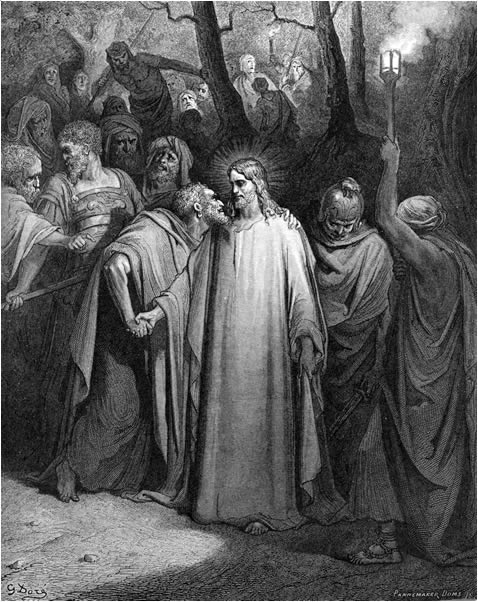
Two days before the Passover, the chief priests and scribes wanted a covert arrest, fearing a riot among the people at the feast. Their caution shows the standing Jesus held with the ordinary people, so the arrest comes privately at night.
This site's exposition
a riot among the people
Gill explains the fear: the Passover drew crowds from every part of the land, and many might rise to rescue Jesus. Jamieson, Fausset and Brown add that the rulers seem to have had no workable plan for a quiet arrest. Judas's offer in verse 10 gave them one.
The record, by era
The Medieval Church4 voices
Nevertheless, Christ Himself had determined for Himself the day of His Passion; for He wished to be crucified on the Passover, because He was the true Passover.
The council against Christ was assembled on Wednesday. And this is the reason why we fast on Wednesdays. The enemies wanted to wait until after the feast time, but this was not permitted to them. The Lord, appointing the sufferings for Himself, willed to deliver …
(in Marc. iv. 43) Pascha which in Hebrew is phase, is not called from Passion, as many think, but from passing over, because the destroyer, seeing the blood on the doors of the Israelites, passed by them, and did not smite them; or the Lord Himself, bringing aid unto His people, walked above them. (ubi sup.) The difference according to the Old Testament between the Passover and the feast of unleavened bread was, that the day alone on which the lamb was slain in the evening, that is, the fourteenth moon of the first month, was called Passover. But on the fifteenth moon, when they came out of Egypt, the feast of unleavened bread came on, which solemn time was appointed for seven days, that is, up to the twenty-first day of the same month in the evening. But the Evangelists indifferently use the day of unleavened bread for the Passover, and the Passover for the days of unleavened bread. Wherefore Mark also here says, After two days was the feast of the Passover, and of unleavened bread, because the day of the Passover was also ordered to be celebrated on the days of unleavened bread, and we also, as it were, keeping a continual passover, ought always to be passing out of this world. (ubi sup.) Not indeed, as the words seem to imply, that they feared the uproar, but they were afraid lest He should be taken out of their hands by the aid of the people.
Let us now sprinkle our book, and our thresholds with blood, and put the scarlet thread around the house of our prayers, and bind scarlet on our hand, as was done to Zarah, (Gen. 38:30) that we may be able to say that the red heifer is slain in the valley. (Num. 19:2, Deut. 21:4) For the Evangelist, being about to speak of the slaying of Christ, premises, After two days was the feast of the Passover, and of unleavened bread. Or else phase is interpreted a passing over, but Pascha means sacrifice.
The Puritans and the Awakening1 voice
(2.) That the Anti-type might answer to the type. Christ, our Passover, was sacrificed for us, and brought us out of the house of bondage, at the same time that the paschal lamb was sacrificed, and Israel's deliverance out of Egypt was commemorated.
3 more voices on this verse
The Puritans and the Awakening1 voice
But they said not on the feast day,.... The feast of the passover, and of unleavened bread, which was nigh at hand, and would be two days hence, when there would be a great concourse of people from all parts to keep it: and therefore they did not choose to seize him, and put him to death at that time, lest there should be an uproar of the people; or among them, lest they should rise in his favour, and rescue him out of their hands; See Gill on Mat 26:5.
The Nineteenth Century2 voices
A commentator
Jamieson, Fausset & Brown1802–1910
Commentary Critical and Explanatory on the Whole Bible (1871)
What plan, if any, these ecclesiastics fixed upon for seizing our Lord, does not appear. But the proposal of Judas being at once and eagerly gone into, it is probable they were till then at some loss for a plan sufficiently quiet and yet effectual.
A commentator
J.C. Ryle1816–1900
Expository Thoughts on the Gospels: Mark (lightly modernized text, Grace Gems edition) (1857)
proposed
This chapter begins that part of Mark's Gospel, which describes our Lord's sufferings and death. Hitherto we have chiefly seen our Savior as our prophet and teacher. We have now to see Him as our High Priest. Hitherto we have had to consider His miracles and sayings. We have now to consider His vicarious sacrifice on the cross. Let us first observe in these verses, how God can disappoint the designs of wicked men, and over-rule them to His own glory . It is plain from Mark's words, and the parallel passage in Matthew, that our Lord's enemies did not intend to make His death a public transaction. "They sought to take Him secretly." "They said, not on the feast day, lest there be an uproar of the people." In short, it would appear that their original plan was to do nothing until the feast of the passover was over, and the Passover-worshipers had returned to their own homes. The overruling providence of God completely defeated this political design. The betrayal of our Lord took place at an earlier time than the chief priests had expected. The death of our Lord took place on the very day when Jerusalem was most full of people, and the Passover feast was at its height. In every way the counsel of these wicked men was turned to foolishness. They thought they were going to put an end forever to Christ's spiritual kingdom; and in reality they were helping to establish it. They thought to have made Him vile and contemptible by the crucifixion; and in reality they made Him glorious. They thought to have put Him to death secretly and without observation; and instead, they were compelled to crucify Him publicly, and before the whole nation of the Jews. They thought to have silenced His disciples, and stopped their teaching — and instead, they supplied them with a text and a subject for evermore. So easy is it for God to cause the wrath of man to praise Him. (Psalm 76:10.)
The words behind it
11 Greek wordsEvery Greek word of this verse in the order it stands, with what it means and the door to its own study. The last column counts the times a word stands in the whole Bible: the rarer the word, the more the places it appears belong together.
| Greek | Sound | Meaning | Word study | In the Bible |
|---|---|---|---|---|
| ἔλεγον | elegon | They were saying | G3004 → | 1325 times |
| γάρ· | gar | for; | G1063 → | 1039 times |
| μὴ | me | Not [take Him] | G3361 → | 1066 times |
| ἐν | en | during | G1722 → | 2738 times |
| τῇ | tea | the | G3588 → | 19766 times |
| ἑορτῇ | he'ortea | feast | G1859 → | |
| μήποτε | mepote | otherwise | G3361 →G4218 → | 1066 times |
| ἔσται | estai | there will be | G1510 → | 2333 times |
| θόρυβος | thorubos | an uproar | G2351 → | |
| τοῦ | tou | of the | G3588 → | 19766 times |
| λαοῦ.¶ | laou | people. | G2992 → |
ἔλεγονThey were saying
elegonG3004 →1325 times
γάρ·for;
garG1063 →1039 times
μὴNot [take Him]
meG3361 →1066 times
ἐνduring
enG1722 →2738 times
τῇthe
teaG3588 →19766 times
ἑορτῇfeast
he'orteaG1859 →
μήποτεotherwise
ἔσταιthere will be
estaiG1510 →2333 times
θόρυβοςan uproar
thorubosG2351 →
τοῦof the
touG3588 →19766 times
λαοῦ.¶people.
laouG2992 →
A shaded row is a word that stands 400 times or fewer in the Bible.
The walk
8 stopsEach card is a verse this one points to, and under it the verses that one points to in turn. Where several paths arrive at the same place, that place is listed first: the text keeps returning to it.
Through
Lamentations 3:27It is good for a man to bear the yoke while he is still young.
it leads to
- Ecclesiastes 12:1
Remember your Creator in the days of your youth, before the days of adversity come and the years approach of which you will say, “I find no pleasure in them,”
- Matthew 11:29–30
Take My yoke upon you and learn from Me; for I am gentle and humble in heart, and you will find rest for your souls.
- Psalms 119:71
It was good for me to be afflicted, that I might learn Your statutes.
- Psalms 94:12
Blessed is the man You discipline, O LORD, and teach from Your law,
- Hebrews 12:5–12
And you have forgotten the exhortation that addresses you as sons: “My son, do not take lightly the discipline of the Lord, and do not lose heart when He rebukes you.
- Ecclesiastes 12:1
Through
Matthew 26:5“But not during the feast,” they said, “or there may be a riot among the people.”
it leads to
- Matthew 21:26
But if we say, ‘From men,’ we are afraid of the people, for they all regard John as a prophet.”
Reached by 2 separate paths from here.
- Matthew 21:26
Through
Mark 11:18When the chief priests and scribes heard this, they looked for a way to kill Him. For they were afraid of Him, because the whole crowd was astonished at His teaching.
it leads to
- Matthew 7:28
When Jesus had finished saying these things, the crowds were astonished at His teaching,
- Matthew 7:28
Through
John 12:19Then the Pharisees said to one another, “You can see that this is doing you no good. Look how the whole world has gone after Him!”
it leads to
- Acts 17:6
But when they could not find them, they dragged Jason and some other brothers before the city officials, shouting, “These men who have turned the world upside down have now come here,
- Acts 17:6
Where this verse is studied
On this page
Studies23
- The Son of Man in 1 Enoch
- Abba, Father
- The Major Prophets
- Daniel the Prophet
- Gethsemane (The Garden Called the Oil Press)
- Jesus on Himself
Show the next 6 titles
About Mark
This page draws on 9 works. Open the list of works
This page draws on Bede, Catena Aurea by Aquinas; J.C. Ryle, Expository Thoughts on the Gospels: Mark (lightly modernized text, Grace Gems edition); Jamieson, Fausset & Brown, Commentary Critical and Explanatory on the Whole Bible; John Gill, Exposition of the New Testament; John Gill, Exposition of the New Testament (1746-1748); Matthew Henry, Commentary on the Whole Bible; Pseudo-Jerome, Catena Aurea by Aquinas; Theophylact of Ohrid, Catena Aurea by Aquinas and Theophylact of Ohrid, Commentary on Mark.