
Study trail
Creation to New Creation
The Bible's grand narrative arc: from the first creation to the restoration of all things.
Where this trail goes
The Bible is one story with one arc, and this walk traces it end to end. It opens with God creating the heavens and the earth and pronouncing everything very good, then watches the ground fall under a curse because of sin. From there the tension drives the whole of Scripture forward: creation groaning for release, a prophet carrying God's promise of new heavens and a new earth, a Redeemer in whom the new creation has already begun, and finally a voice from the throne declaring, "Behold, I make all things new." Ten stops, Genesis to Revelation. Walk them in order and you will see that the Bible's last chapters answer its first ones, and that at every hinge of the story, the answer is Christ.
The route
The stops are not in the Bible's order. Each one builds on the stop before it.
The route: 10 stops, Genesis 1:1 to Revelation 21:5
10 stops, in order
Stop 1 of 10: Genesis 1:1
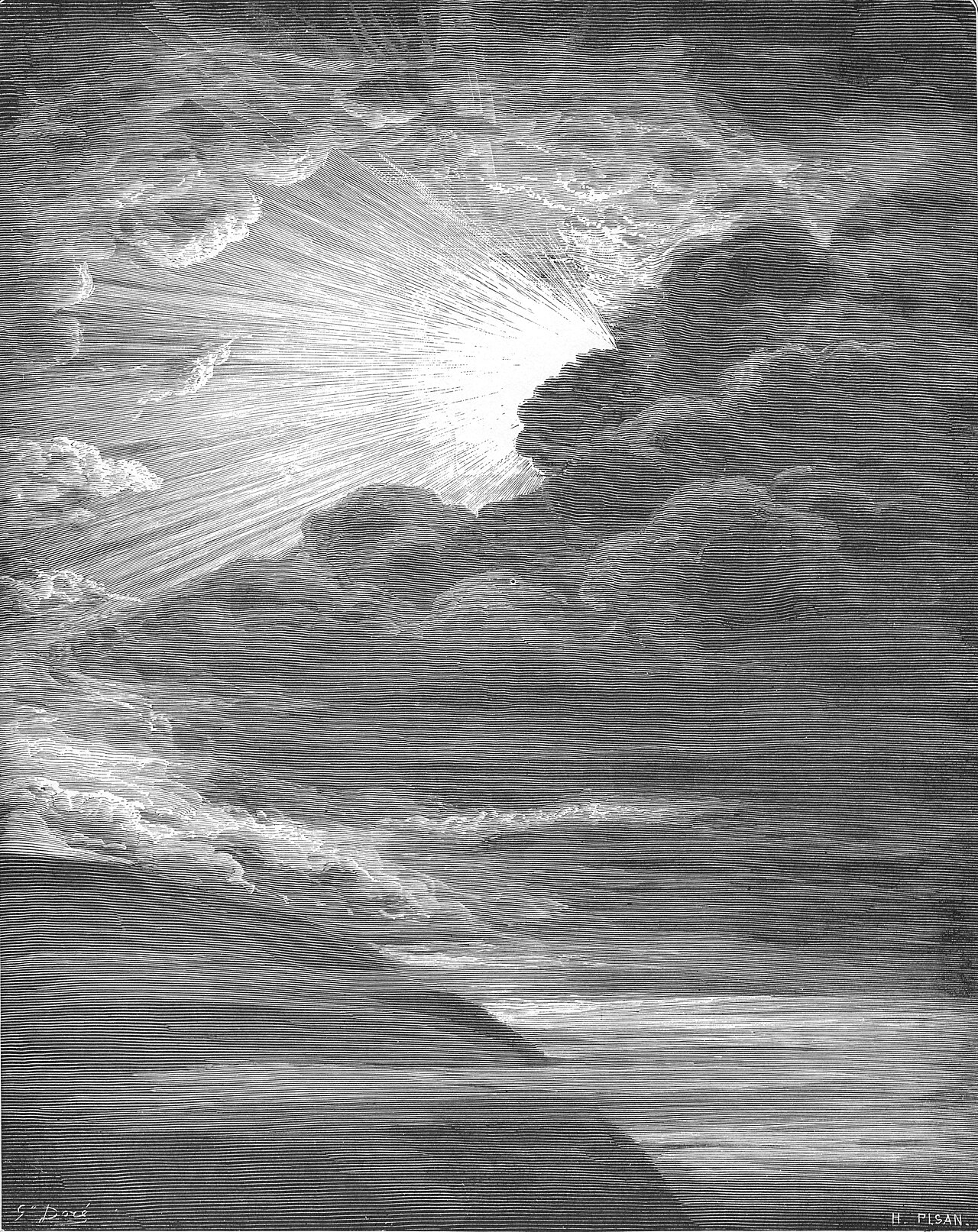
In the beginning God created the heavens and the earth.The arc's first word: everything that follows is the story of what God made.
Seven Hebrew words open the Bible and settle time, space and matter in one line. The verb translated created is used only of God in Scripture; no craftsman ever performs it. The subject arrives with no introduction and no defense offered for His existence.
Show more on this stopthe exposition
The exposition on this verse
In the beginning: Time itself starts in this sentence. Scripture opens with no argument for God, only the report that when anything began, God was already there. John 1:1 takes these same three words and sets the Word inside them, and John 1:3 says all things were made through Him.
God created: The verb translated created is bara, and its only subject in the Old Testament is God. The name Elohim is plural and the verb is singular, which Wesley read as a first hint of the Father, the Son and the Spirit. God alone made the heavens and the earth.
the heavens and the earth: The two words together are the Hebrew way of saying everything there is. JFB press the point that nothing existed for God to work with, and the heavens and the earth came out of nothing. Colossians 1:16 says all things were created through Christ, in heaven and on earth.
This exposition draws on Jamieson, Fausset & Brown, Commentary Critical and Explanatory on the Whole Bible; John Calvin, Commentary on Genesis; John Gill, Exposition of the Old Testament; John Wesley, Explanatory Notes upon the Old Testament and Matthew Henry, Commentary on the Whole Bible.
Stop 2 of 10: Genesis 1:31
And God looked upon all that He had made, and indeed, it was very good. And there was evening, and there was morning—the sixth day."Very good" sets the baseline every later stop measures loss and restoration against.
Six times the work is called good; on the sixth day, with man in it, "very good." The verdict is on the whole, and it becomes the baseline every later chapter is measured against: death, thorns and futility are intrusions into a finished thing, not features of it.
Show more on this stopthe exposition
The exposition on this verse
very good: God saw that it was good six times over in this chapter. Here He looked at all He has made, and the word changes to very good, tov meod. Everything God made stands under that word, and what went wrong came in at chapter 3.
the sixth day: Six times the chapter has counted evening and morning, and the sixth is the last. The sixth day holds the livestock and the beasts of the earth, the man and woman, and the food given to every creature. The making is finished, and the seventh day comes in chapter 2.
This exposition draws on Basil of Caesarea, The Hexaemeron; Chuck Missler, The Book of Genesis; Jamieson, Fausset & Brown, Commentary Critical and Explanatory on the Whole Bible and Matthew Henry, Commentary on the Whole Bible.
Stop 3 of 10: Genesis 3:17
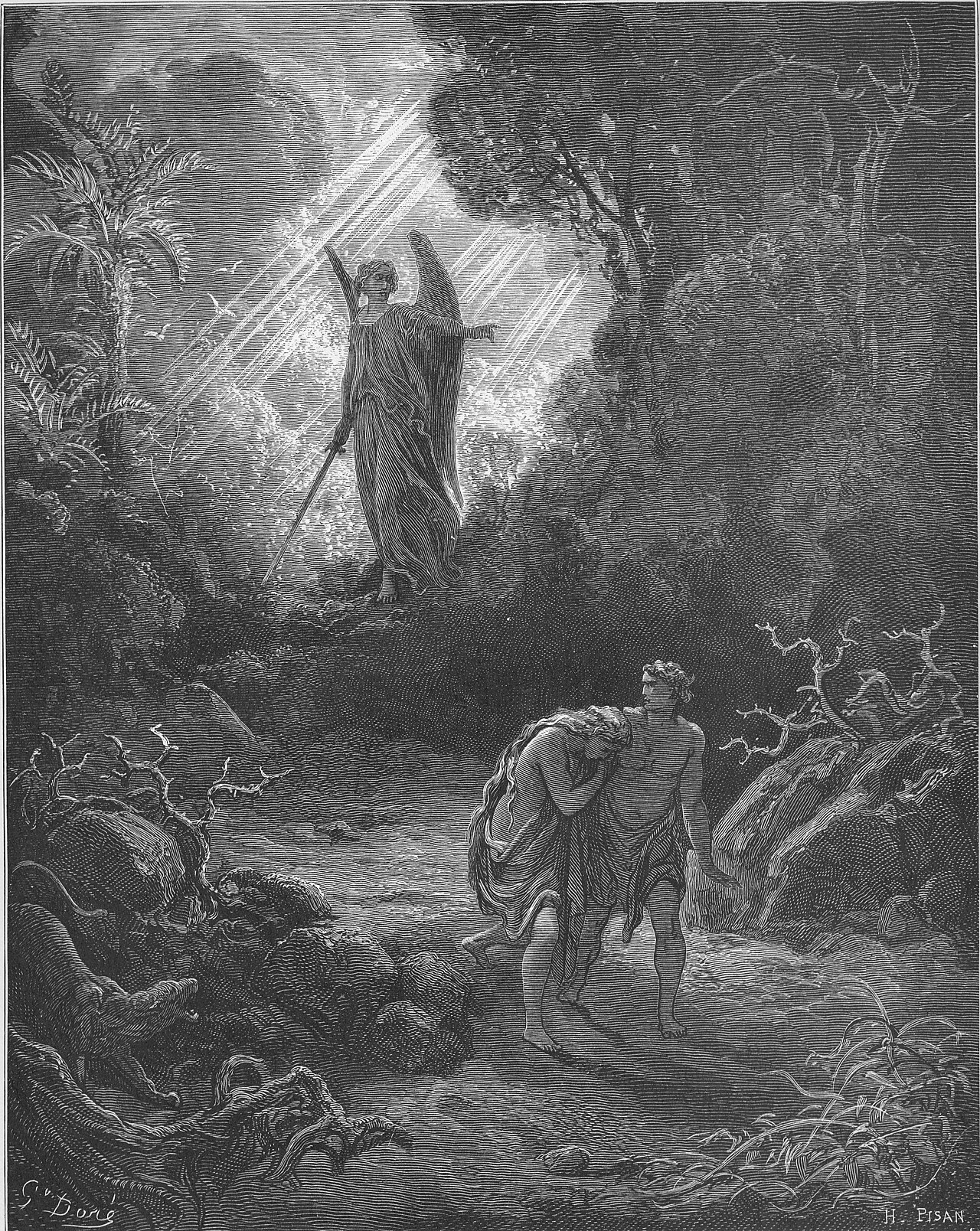
And to Adam He said: “Because you have listened to the voice of your wife and have eaten from the tree of which I commanded you not to eat, cursed is the ground because of you; through toil you will eat of it all the days of your life.The break: the cursed ground is why creation must be remade, not merely repaired.
The curse falls on the ground rather than directly on Adam:
"cursed is the ground for thy sake."
Creation was tied to the man given dominion over it, so his fall pulls it down with him. Romans 8:20 says it was subjected
"not willingly,"
Show more on this stopthe rest of the note and the exposition
More from the trail's own note
which is why the ground is also where the reversal begins.
The exposition on this verse
cursed is the ground because of you: The curse falls on the ground the man stands on. Spurgeon's sermon on this verse traces it there, glancing off the man onto the soil under his feet. Work stood before this at Genesis 2:15; what is added here is resistance, thorns and thistles, and toil for every meal.
This exposition draws on Charles Spurgeon, The Metropolitan Tabernacle Pulpit, Sermon No. 2299: Thorns and Thistles and Matthew Henry, Commentary on the Whole Bible.
Stop 4 of 10: Romans 8:19
The creation waits in eager expectation for the revelation of the sons of God.Creation itself becomes a waiting character, straining in earnest expectation toward redemption.
Paul pictures creation craning its neck toward the revealing of the sons of God and groaning with the pains of childbirth: a metaphor with a delivery date in it, not despair. Redemption in Scripture is never the rescue of souls out of matter; matter is on the list.
Show more on this stopthe exposition
The exposition on this verse
our present sufferings: Paul weighs the present sufferings against the glory to come and calls them no comparison. Verse 19 pictures creation with its head craned forward, watching for the sons of God to be revealed. The Greek word is apokaradokia, eager expectation.
The creation waits in eager expectation: Who the creation is decides the passage. Wesley takes the creation that waits as everything God made, subjected to futility and groaning, apart from the sons of God. Clarke reads it as the Gentile world, and Augustine denies that stones and trees groan.
This exposition draws on Adam Clarke, Commentary on the Bible; Augustine of Hippo, AUGUSTINE ON ROMANS 53; Frederic Godet, Commentary on St. Paul's Epistle to the Romans; John Wesley, Explanatory Notes upon the New Testament and Matthew Henry, Commentary on the Whole Bible.
Stop 5 of 10: Isaiah 65:17
For behold, I will create new heavens and a new earth. The former things will not be remembered, nor will they come to mind.God answers the curse in His own voice: "Behold, I create new heavens and a new earth."
"Behold, I create new heavens and a new earth"
uses the Genesis 1 verb again, the one reserved for God alone. What is promised is not the repair of a ruin but a fresh act of creation, and
"the former shall not be remembered, nor come into mind."
Show more on this stopthe exposition
The exposition on this verse
For behold, I will create new heavens and a new earth: “For behold, I will create new heavens and a new earth” stands behind 2 Peter 3:13 and Revelation 21:1. “The former things will not be remembered”. The promise that “The sounds of weeping and crying will no longer be heard” answers the weeping in Zion, as at 22:4.
This exposition draws on Albert Barnes, Notes on the Book of Isaiah and Franz Delitzsch, Biblical Commentary on the Prophecies of Isaiah.
Stop 6 of 10: 2 Corinthians 5:17
Therefore if anyone is in Christ, he is a new creation. The old has passed away. Behold, the new has come!The new creation starts now: in anyone joined to Christ, the old already passing.
New creation is announced of a person:
"old things are passed away; behold, all things are become new."
The cosmic renewal has a beachhead in individual believers now, which is Paul's warrant for saying the age to come has already started.
Show more on this stopthe exposition
The exposition on this verse
he is a new creation: If anyone is in Christ, he is a new creation, kaine ktisis, echoing Isaiah’s new heavens and new earth. The power that made the first world remakes the man in Christ, and the old has passed away as an accomplished fact.
This exposition draws on Charles Hodge, An Exposition of the Second Epistle to the Corinthians and Charles Spurgeon, My Grace Is Sufficient (and the 2 Corinthians sermons).
Stop 7 of 10: Colossians 1:15
The Son is the image of the invisible God, the firstborn over all creation.To redeem is to buy someone back out of a place he cannot leave on his own.
Anchors the whole arc in Christ: the image of God, firstborn over all creation.
"Firstborn of every creature"
is a word for rank, not origin, and the next verse rules out any other reading: all things were created by Him and for Him. The Creator of Genesis 1 and the Redeemer of the cross are one Person, which is why the same hands do both jobs.
Show more on this stopthe exposition
The exposition on this verse
the image of the invisible God: The title the firstborn over all creation names rank. Psalm 89:27 makes the firstborn the highest of the kings of the earth, and Exodus 4:22 calls Israel God's firstborn.
This exposition draws on J. B. Lightfoot, Saint Paul's Epistles to the Colossians and to Philemon and John Chrysostom, Homilies on Colossians.
Stop 8 of 10: 2 Peter 3:13
But in keeping with God’s promise, we are looking forward to a new heaven and a new earth, where righteousness dwells.Righteous means right with God and in the right in what he does.
Turns Isaiah's promise into the church's posture: looking for the home of righteousness.
"We, according to his promise, look for new heavens and a new earth, wherein dwelleth righteousness."
Peter grounds the expectation in Isaiah's promise rather than in optimism, and the defining feature of the place is moral: righteousness lives there permanently.
Show more on this stopthe exposition
The exposition on this verse
we are looking forward to a new heaven and a new earth: Believers look for a new heaven and a new earth, where righteousness dwells, katoikei, at home. Some read the fire as ending the old creation and others as purifying it, with Ecclesiastes 1:4 and Romans 8:21.
This exposition draws on Adam Clarke, Commentary on the Bible and John Calvin, Commentary on 2 Peter.
Stop 9 of 10: Revelation 21:1
Then I saw a new heaven and a new earth, for the first heaven and earth had passed away, and the sea was no more.The promise seen: John watches the first heaven and earth give way to the new.
John sees what Isaiah promised and adds one detail:
"there was no more sea,"
the ancient image of chaos and separation, gone.
"The first things are passed away"
is the same verb Paul used of the individual believer in 2 Corinthians 5:17.
Show more on this stopthe exposition
The exposition on this verse
a new heaven and a new earth: The sea was no more, the sea Daniel's four beasts rose from (Daniel 7:2-3) and the sea before the throne at 4:6. The holy city comes down prepared as a bride adorned for her husband, the wedding announced at 19:7.
This exposition draws on John Gill, Exposition of the New Testament and Matthew Henry, Commentary on the Whole Bible.
Stop 10 of 10: Revelation 21:5
And the One seated on the throne said, “Behold, I make all things new.” Then He said, “Write this down, for these words are faithful and true.”The throne speaks the story's last word: all things new, faithful and true.
"Behold, I make all things new"
: not all new things. The One on the throne speaks directly only twice in Revelation, and this is one of them; He orders it written down
"for these words are true and faithful."
The book that opened in a garden closes in a city with the garden inside it.
Show more on this stopthe exposition
The exposition on this verse
I make all things new: The One seated on the throne says, Behold, I make all things new. He calls these words faithful and true and names Himself the Alpha and the Omega, the Beginning and the End, as at 1:8. He gives freely from the spring of the water of life (Isaiah 55:1; 22:17).
This exposition draws on John Gill, Exposition of the New Testament and Matthew Henry, Commentary on the Whole Bible.
What this trail means
Scripture opens and closes with the same act: God making heavens and earth. Between those bookends run three movements: goodness, ruin, remaking. Genesis 1:31 declares creation very good; Genesis 3:17 puts the ground under a curse; from that moment the arc bends toward restoration. And the striking thing is that creation itself is a character in the drama: Romans 8 shows it waiting in earnest expectation, not discarded but destined. Isaiah 65:17 turns that destiny into God's own spoken promise: "Behold, I create new heavens and a new earth."
The New Testament names where the promise lands. Colossians 1:15 identifies Christ as the image of the invisible God, the firstborn of all creation: the arc runs through Him. And 2 Corinthians 5:17 says the new creation is not only future: anyone in Christ is a new creature now; the old things are already passing away. Peter looks for what Isaiah promised; John sees it arrive. The first heaven and earth pass away, and the One on the throne, the same Creator of Genesis 1:1, speaks the story's last word: "Behold, I make all things new... these words are faithful and true." God does not abandon what sin ruined. He remakes it, and in Christ, the remaking has already begun.
Show the verses this closing names6 verses
In the beginning God created the heavens and the earth.And God looked upon all that He had made, and indeed, it was very good. And there was evening, and there was morning—the sixth day.And to Adam He said: “Because you have listened to the voice of your wife and have eaten from the tree of which I commanded you not to eat, cursed is the ground because of you; through toil you will eat of it all the days of your life.For behold, I will create new heavens and a new earth. The former things will not be remembered, nor will they come to mind.Therefore if anyone is in Christ, he is a new creation. The old has passed away. Behold, the new has come!The Son is the image of the invisible God, the firstborn over all creation.Show what you now know
- The Bible's story runs from a finished creation called very good to a renewed one: the fall is an intrusion, not the design.
- The curse fell on the ground because the ground was tied to the man; the redemption reaches the ground for the same reason.
- The renewal has already started in people: anyone in Christ is a new creation now, ahead of the new heavens and new earth.
- The last word is "I make all things new" (not all new things) and John was told to write it down because it is true and faithful.