
Exodus 12:30
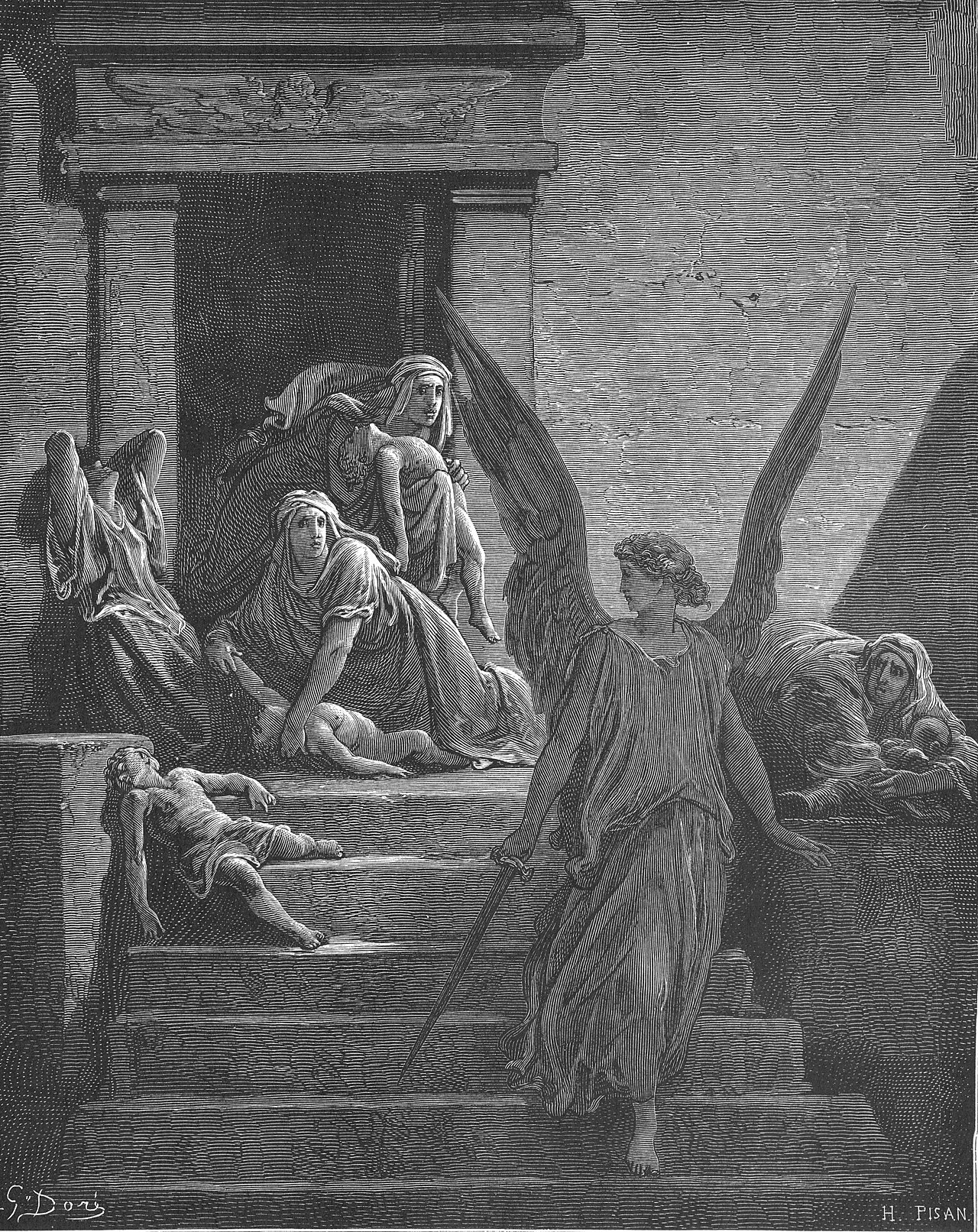
in Exodus 12During the night Pharaoh got up—he and all his officials and all the Egyptians—and there was loud wailing in Egypt; for there was no house without someone dead.
BSB
The same verse in ASV and KJV ▾
ASV
And Pharaoh rose up in the night, he, and all his servants, and all the Egyptians; and there was a great cry in Egypt; for there was not a house where there was not one dead.
KJV
And Pharaoh rose up in the night, he, and all his servants, and all the Egyptians; and there was a great cry in Egypt; for there was not a house where there was not one dead.
⋯
This verse in Exodus 12
Commentary
6 notes on this verseThere was a great cry - No people in the universe were more remarkable for their mournings than the Egyptians, especially in matters of religion; they whipped, beat, tore themselves, and howled in all the excess of grief. When a relative died, the people left the house, ran into the streets, and howled in the most lamentable and frantic manner. See Diod. Sicul., lib. i., and Herod., lib. ii., c. 85, 86. And this latter author happening to be in Egypt on one of their solemnities, saw myriads of people whipping and beating themselves in this manner, lib. ii., c.
This site's exposition
at midnight the LORD smote all the firstborn
on Exodus 12:29-30
The stroke reaches from the throne to the dungeon, so it falls on the household of the man who ordered Hebrew boys drowned and on the household of a prisoner who ordered nothing. It answers the words of Exodus 4:22 and 4:23, where God called Israel his firstborn son and told Pharaoh what refusal would cost. There was not a house where there was not one dead, and Israel's houses are the exception the blood made.
This site's exposition
there was loud wailing in Egypt
Egyptian mourning was loud and public. Adam Clarke cites Herodotus and Diodorus on households that ran into the street when a relative died, beating themselves and crying aloud. On this night that custom broke out in every house at once.
The record, by era
The Puritans and the Awakening2 voices
And Pharaoh rose up in the night,....
Let us learn hence, (1.) To tremble before God, and to be afraid of his judgments, Ps. cxix. Who is able to stand before him, or dares resist him? (2.) To be thankful to God for the daily preservation of ourselves and our families: lying so much exposed, we have reason to say, "It is of the Lord's mercies that we are not consumed." II.
The Nineteenth Century1 voice
A commentator
Jamieson, Fausset & Brown1802–1910
Commentary Critical and Explanatory on the Whole Bible (1871)
proposed
there was not a house where there was not one dead--Perhaps this statement is not to be taken absolutely. The Scriptures frequently use the words "all," "none," in a comparative sense--and so in this case.
quarantine:debris (2026-07-29) — starts-lowercase
How the passage was read
On Exodus 12:1-51On Exodus 12:1-51
The night Israel still keeps
This chapter founds Passover, in Hebrew Pesach, the spring feast that remembers the night God struck Egypt's firstborn and passed over the blood-marked houses. Jewish families keep it to this day with a ceremonial meal called the seder (Hebrew for “order”): unleavened flatbread (matzah), bitter herbs, cups of wine, and the retelling of this chapter's story, with the children asking the questions.
Honesty about the timeline helps the reader: in the Bible's own period the center of the feast was the lamb, slain and eaten as this chapter commands. The seder as now practiced took its shape after the Temple fell in AD 70 and the lamb could no longer be offered; its oldest written outline is in the Mishnah, the first code of Jewish oral law (about AD 200), which already includes the four cups and the rule that “in every generation a person must see himself as if he personally came out of Egypt.”
This section is reception history: how the passage was read and kept in the Jewish tradition. Where a reading parts from an essential of the Christian faith, the section says so at that point.
Sources: Mishnah Pesachim 10 (the seder's oldest outline) · Mishnah Pesachim 10:5 (“in every generation”) · The Feasts of the LORD (this site's study)
The words behind it
19 Hebrew wordsEvery Hebrew word of this verse in the order it stands, with what it means and the door to its own study. The last column counts the times a word stands in the whole Bible: the rarer the word, the more the places it appears belong together.
| Hebrew | Sound | Meaning | Word study | In the Bible |
|---|---|---|---|---|
| וַיָּ֨קָם | vaiyakom | and he arose | H6965 → | 628 times |
| פַּרְעֹ֜ה | paroh | Pharaoh | H6547 → | 274 times |
| לַ֗יְלָה | laylah | night | H3915 → | 233 times |
| ה֤וּא | hu' | he | H1931 → | 1879 times |
| וְכָל־ | vekhol | and all | H3605 → | 5413 times |
| עֲבָדָיו֙ | ʾavadav | servants his | H5650 → | 799 times |
| וְכָל־ | vekhol | and all | H3605 → | 5413 times |
| מִצְרַ֔יִם | mitzrayim | Egypt | H4714 → | 641 times |
| וַתְּהִ֛י | vatehi | and it was | H1961 → | 3559 times |
| צְעָקָ֥ה | tzeakah | a cry | H6818 → | 21 times |
| גְדֹלָ֖ה | gedolah | great | H1419 → | 526 times |
| בְּמִצְרָ֑יִם | bemitzrayim | in Egypt | H4714 → | 641 times |
| כִּֽי־ | ki- | for | H3588 → | 4482 times |
| אֵ֣ין | ʾein | there not | H369 → | 789 times |
| בַּ֔יִת | bayit | [was] a house | H1004 → | 2046 times |
| אֲשֶׁ֥ר | ʾasher | where | H834 → | 5497 times |
| אֵֽין־ | ʾein- | there not | H369 → | 789 times |
| שָׁ֖ם | sham | there | H8033 → | 834 times |
| מֵֽת׃ | met | [was] a dead [person] | H4191 → | 839 times |
וַיָּ֨קָםand he arose
vaiyakomH6965 →628 times
פַּרְעֹ֜הPharaoh
parohH6547 →274 times
לַ֗יְלָהnight
laylahH3915 →233 times
ה֤וּאhe
hu'H1931 →1879 times
וְכָל־and all
vekholH3605 →5413 times
עֲבָדָיו֙servants his
ʾavadavH5650 →799 times
וְכָל־and all
vekholH3605 →5413 times
מִצְרַ֔יִםEgypt
mitzrayimH4714 →641 times
וַתְּהִ֛יand it was
vatehiH1961 →3559 times
צְעָקָ֥הa cry
tzeakahH6818 →21 times
גְדֹלָ֖הgreat
gedolahH1419 →526 times
בְּמִצְרָ֑יִםin Egypt
bemitzrayimH4714 →641 times
כִּֽי־for
ki-H3588 →4482 times
אֵ֣יןthere not
ʾeinH369 →789 times
בַּ֔יִת[was] a house
bayitH1004 →2046 times
אֲשֶׁ֥רwhere
ʾasherH834 →5497 times
אֵֽין־there not
ʾein-H369 →789 times
שָׁ֖םthere
shamH8033 →834 times
מֵֽת׃[was] a dead [person]
metH4191 →839 times
A shaded row is a word that stands 400 times or fewer in the Bible.
The walk
8 stopsEach card is a verse this one points to, and under it the verses that one points to in turn. Where several paths arrive at the same place, that place is listed first: the text keeps returning to it.
Through
James 2:13For judgment without mercy will be shown to anyone who has not been merciful. Mercy triumphs over judgment.
it leads to
- Matthew 5:7
Blessed are the merciful, for they will be shown mercy.
- Proverbs 21:13
Whoever shuts his ears to the cry of the poor, he too shall cry out and receive no answer.
- Matthew 6:15
But if you do not forgive men their trespasses, neither will your Father forgive yours.
- Luke 6:37
Do not judge, and you will not be judged. Do not condemn, and you will not be condemned. Forgive, and you will be forgiven.
- Ephesians 2:4–7
But because of His great love for us, God, who is rich in mercy,
- Matthew 5:7
Through
Proverbs 21:13Whoever shuts his ears to the cry of the poor, he too shall cry out and receive no answer.
it leads to
- Proverbs 28:27
Whoever gives to the poor will not be in need, but he who hides his eyes will receive many curses.
- Matthew 6:14
For if you forgive men their trespasses, your heavenly Father will also forgive you.
- Proverbs 28:27
Through
Matthew 25:6At midnight the cry rang out: ‘Here is the bridegroom! Come out to meet him!’
it leads to
- 2 Peter 3:10
But the Day of the Lord will come like a thief. The heavens will disappear with a roar, the elements will be destroyed by fire, and the earth and its works will be laid…
- 2 Peter 3:10
Where this verse is studied
On this page
Studies10
About Exodus
Who and where
1 name in this verse with a page on the site.
This page draws on Adam Clarke, Commentary on the Bible; Jamieson, Fausset & Brown, Commentary Critical and Explanatory on the Whole Bible; John Gill, Exposition of the Old Testament; John Gill, Exposition of the Old Testament (1748-1763) and Matthew Henry, Commentary on the Whole Bible.