
Exodus 12:27
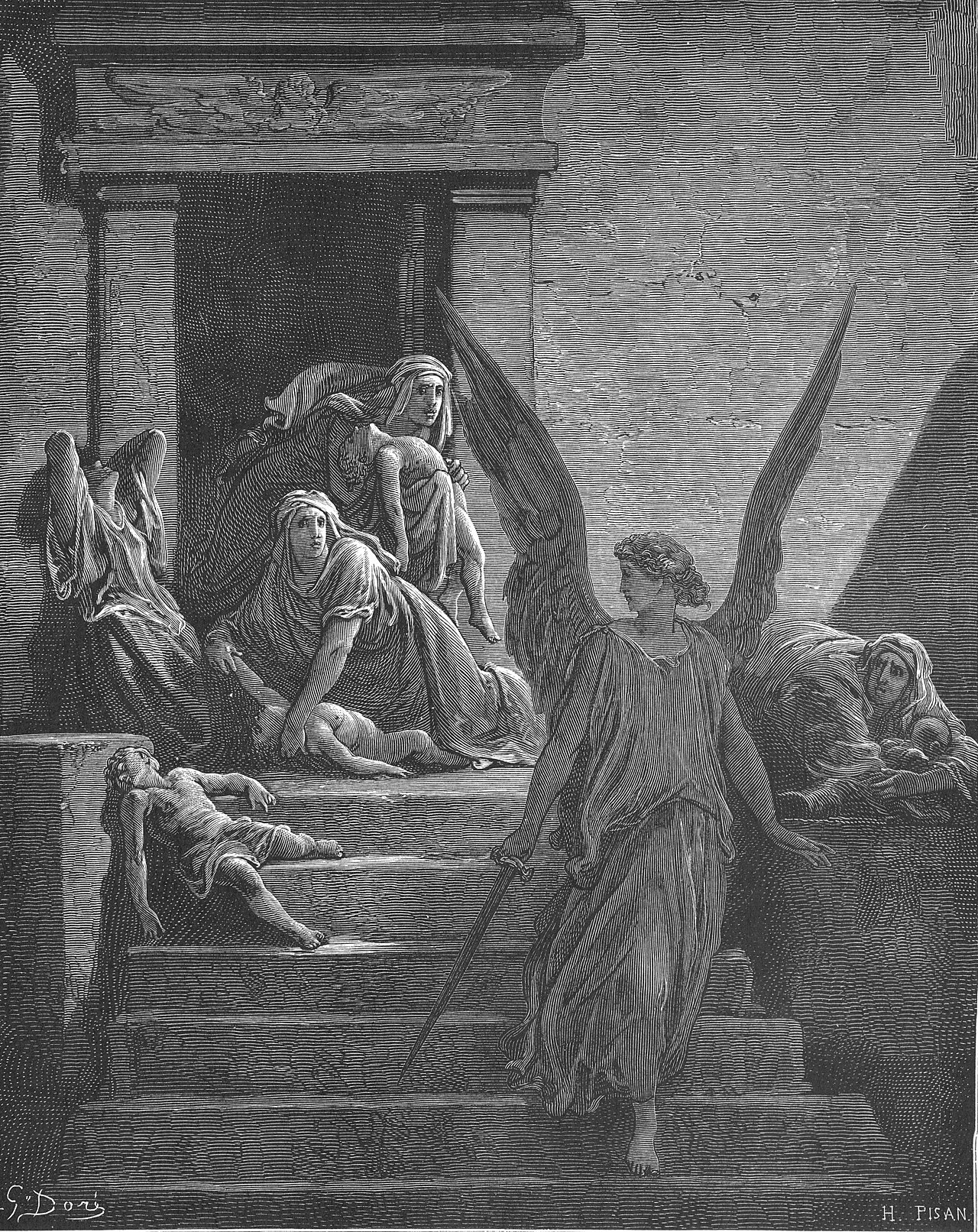
in Exodus 12you are to reply, ‘It is the Passover sacrifice to the LORD, who passed over the houses of the Israelites in Egypt when He struck down the Egyptians and spared our homes.’” Then the people bowed down and worshiped.
BSB
The same verse in ASV and KJV ▾
ASV
that ye shall say, It is the sacrifice of Jehovah’s passover, who passed over the houses of the children of Israel in Egypt, when he smote the Egyptians, and delivered our houses. And the people bowed the head and worshipped.
KJV
That ye shall say, It is the sacrifice of the Lord’s passover, who passed over the houses of the children of Israel in Egypt, when he smote the Egyptians, and delivered our houses. And the people bowed the head and worshipped.
⋯
This verse in Exodus 12
Commentary
11 notes on this verseA commentator
Albert Barnes1798–1870
Notes, Explanatory and Practical, on the Old and New Testaments (1832-1869)
It is the sacrifice of the Lord’s passover - or This is the sacrifice of the Passover to Yahweh. The most formal and exact designation of the festival is thus given: but “the Passover” may mean either the act of God’s mercy in sparing the Israelites, or the lamb which is offered in sacrifice: more probably the latter, as in Exo 12:21. This gives a clear sense to the expression “to Yahweh;” the Passover lamb was a sacrifice offered to Yahweh by His ordinance.
This site's exposition
What does this service mean
on Exodus 12:26-27
The rite is built to provoke a question from a child, and the answer given back is a piece of history. Israel's children learn who God is by being told what he did on one night to particular houses.
This site's exposition
It is the Passover sacrifice to the LORD
Albert Barnes calls this the feast's most formal name. He takes Passover here as the lamb itself, as at verse 21. That makes the meal a sacrifice offered to the LORD by his own ordinance.
The record, by era
The Puritans and the Awakening5 voices
We were obnoxious to the sword of the destroying angel, but Christ our passover was sacrificed for us, his death was our life, and thus he was the Lamb slain from the foundation of the world, from the foundation of the Jewish church: Moses kept the passover by faith in Christ, for Christ was the end of the law for righteousness.
None of all the providences of God concerning the Jewish church was more illustrious, than the deliverance of the children of Israel out of Egypt. The first-born of the Egyptians are slain, ver. 29, 30. Orders are given immediately for their discharge, ver. 31-33.
quarantine:anchor (2026-07-29) — cites-ver-31-anchored-24-27
): they hereby signified their submission to this institution as a law, and their thankfulness for it as a favour and privilege. Note, When God gives law to us, we must give honour to him; when he speaks, we must bow our heads and worship.
quarantine:debris (2026-07-29) — leading-punctuation+unbalanced-parens
That ye shall say, it is the sacrifice of the Lord's passover,....
Christ himself, when a child, heard and asked questions, Luke ii. 46 . [2.] It concerns us all rightly to understand the meaning of those holy ordinances wherein we worship God, what is the nature and what the end of them, what is signified and what intended, what is the duty expected from us in them and what are the advantages to be expected by us.
3 more voices on this verse
The Nineteenth Century3 voices
I WANTED, dear Friends, earnestly wanted, to continue the subject of last Lord's-Day morning, for I felt it important that we should bear again and again our witness to the doctrine of the vicarious Sacrifice of Jesus Christ our Lord. But, at the same time, I promised that I would endeavor to keep "the feast of the children" and have a sermon which should be specially addressed to Sunday school teachers.
I WANTED, dear Friends, earnestly wanted, to continue the subject of last Lord's-Day morning, for I felt it important that we should bear again and again our witness to the doctrine of the vicarious Sacrifice of Jesus Christ our Lord. But, at the same time, I promised that I would endeavor to keep "the feast of the children" and have a sermon which should be specially addressed to Sunday school teachers. I could not preach a school sermon at the appointed time, so as to open your children's week, but thought a discourse might come in, none the less suitably, if I brought up the rear by closing your meetings. How am I to fulfill both my purposes? I think the subject before us will enable me to do so. We shall preach of the sprinkled blood and of Jesus, the great Sacrifice for sin—and then we shall press upon all who know the value of the great Redemption that they teach the young in their earliest days what is meant by the death of Jesus and salvation through His blood. The Paschal lamb was a special type of our Lord Jesus Christ. We are not left to gather this from the general fact that all the ancient sacrifices were shadows of the one true and real Substance—we are assured in the New Testament that "Christ our Passover is sacrificed for us" (1 Cor 5:7). As the Paschal lamb must be without blemish, so was our Lord, and its killing and roasting with fire were typical of His death and sufferings. Even as to time our Lord fulfilled the type, for the time of His Crucifixion was the Passover. As the impression answers to the seal, so does the Sacrifice of our Lord correspond with all the items of the ceremonial Passover. We see Him "drawn out" from among men and led as a lamb to the slaughter. We see His blood shed and sprinkled. We see Him roasted in the fire of anguish. By faith we eat of Him and flavor the feast with the bitter herbs of penitence.
It is the sacrifice of the Lord’s passover - We have already intimated that the paschal lamb was an illustrious type of Christ; and we shall find that every thing in this account is typical or representative. The bondage and affliction of the people of Israel may be considered as emblems of the hard slavery and wretchedness consequent on a state of sinfulness. Satan reigns over both body and soul, bringing the whole into subjection to the law of sin and death; while various evil tempers, passions, lusts, and irregular appetites, act as subordinate tormentors, making the lives of the vassals of sin bitter, because of the rigour by which they are obliged to serve. Reader, is this thy case? The mercy of God projects the redemption of man from this cruel bondage and oppression; and a sacrifice is appointed for the occasion by God himself, to be offered with particular and significant rites and ceremonies, all of which represent the passion and death of our blessed Lord, and the great end for which he became a sacrifice, viz., the redemption of a lost world from the power, the guilt, and the pollution of sin, etc. And it is worthy of remark, 1. That the anniversary or annual commemoration of the passover was strictly and religiously kept by the Jews on the day, and hour of the day, on which the original transaction took place, throughout all their succeeding generations. 2. That on one of these anniversaries, and, as many suppose, on the very day and hour on which the paschal lamb was originally offered, our blessed Lord expired on the cross for the salvation of the world. 3. […]
How the passage was read
On Exodus 12:1-51On Exodus 12:1-51
The night Israel still keeps
This chapter founds Passover, in Hebrew Pesach, the spring feast that remembers the night God struck Egypt's firstborn and passed over the blood-marked houses. Jewish families keep it to this day with a ceremonial meal called the seder (Hebrew for “order”): unleavened flatbread (matzah), bitter herbs, cups of wine, and the retelling of this chapter's story, with the children asking the questions.
Honesty about the timeline helps the reader: in the Bible's own period the center of the feast was the lamb, slain and eaten as this chapter commands. The seder as now practiced took its shape after the Temple fell in AD 70 and the lamb could no longer be offered; its oldest written outline is in the Mishnah, the first code of Jewish oral law (about AD 200), which already includes the four cups and the rule that “in every generation a person must see himself as if he personally came out of Egypt.”
This section is reception history: how the passage was read and kept in the Jewish tradition. Where a reading parts from an essential of the Christian faith, the section says so at that point.
Sources: Mishnah Pesachim 10 (the seder's oldest outline) · Mishnah Pesachim 10:5 (“in every generation”) · The Feasts of the LORD (this site's study)
The words behind it
21 Hebrew wordsEvery Hebrew word of this verse in the order it stands, with what it means and the door to its own study. The last column counts the times a word stands in the whole Bible: the rarer the word, the more the places it appears belong together.
| Hebrew | Sound | Meaning | Word study | In the Bible |
|---|---|---|---|---|
| וַאֲמַרְתֶּ֡ם | vaamartem | and you will say | H559 → | 5305 times |
| זֶֽבַח־ | zevach- | [is] a sacrifice of | H2077 → | 162 times |
| פֶּ֨סַח | pesach | passover | H6453 → | 49 times |
| ה֜וּא | hu' | it | H1931 → | 1879 times |
| לַֽיהוָ֗ה | layahweh | to Yahweh | H3068 → | 6520 times |
| אֲשֶׁ֣ר | ʾasher | who | H834 → | 5497 times |
| פָּ֠סַח | pasach | he passed over | H6452 → | 7 times |
| עַל־ | ʾal- | over | H5921 → | 5755 times |
| בָּתֵּ֤י | batei | [the] houses of | H1004 → | 2046 times |
| בְנֵֽי־ | venei- | [the] people of | H1121 → | 4930 times |
| יִשְׂרָאֵל֙ | yisrael | Israel | H3478 → | 2507 times |
| בְּמִצְרַ֔יִם | bemitzrayim | in Egypt | H4714 → | 641 times |
| בְּנָגְפּ֥וֹ | benagepo | when struck he | H5062 → | 49 times |
| אֶת־ | ʾet- | <obj.> | H853 → | 10935 times |
| מִצְרַ֖יִם | mitzrayim | Egypt | H4714 → | 641 times |
| וְאֶת־ | veet | and <obj.> | H853 → | 10935 times |
| בָּתֵּ֣ינוּ | bateinu | houses our | H1004 → | 2046 times |
| הִצִּ֑יל | hitzil | he delivered | H5337 → | 212 times |
| וַיִּקֹּ֥ד | vaiyikod | and it bowed low | H6915 → | 15 times |
| הָעָ֖ם | haam | the people | H5971 → | 1873 times |
| וַיִּֽשְׁתַּחֲוּֽוּ׃ | vaiyishtachavu | and they bowed down | H7812 → | 172 times |
וַאֲמַרְתֶּ֡םand you will say
vaamartemH559 →5305 times
זֶֽבַח־[is] a sacrifice of
zevach-H2077 →162 times
פֶּ֨סַחpassover
pesachH6453 →49 times
ה֜וּאit
hu'H1931 →1879 times
לַֽיהוָ֗הto Yahweh
layahwehH3068 →6520 times
אֲשֶׁ֣רwho
ʾasherH834 →5497 times
פָּ֠סַחhe passed over
pasachH6452 →7 times
עַל־over
ʾal-H5921 →5755 times
בָּתֵּ֤י[the] houses of
bateiH1004 →2046 times
בְנֵֽי־[the] people of
venei-H1121 →4930 times
יִשְׂרָאֵל֙Israel
yisraelH3478 →2507 times
בְּמִצְרַ֔יִםin Egypt
bemitzrayimH4714 →641 times
בְּנָגְפּ֥וֹwhen struck he
benagepoH5062 →49 times
אֶת־<obj.>
ʾet-H853 →10935 times
מִצְרַ֖יִםEgypt
mitzrayimH4714 →641 times
וְאֶת־and <obj.>
veetH853 →10935 times
בָּתֵּ֣ינוּhouses our
bateinuH1004 →2046 times
הִצִּ֑ילhe delivered
hitzilH5337 →212 times
וַיִּקֹּ֥דand it bowed low
vaiyikodH6915 →15 times
הָעָ֖םthe people
haamH5971 →1873 times
וַיִּֽשְׁתַּחֲוּֽוּ׃and they bowed down
vaiyishtachavuH7812 →172 times
A shaded row is a word that stands 400 times or fewer in the Bible.
The walk
8 stopsEach card is a verse this one points to, and under it the verses that one points to in turn. Where several paths arrive at the same place, that place is listed first: the text keeps returning to it.
Through
1 Corinthians 5:7Get rid of the old leaven, that you may be a new unleavened batch, as you really are. For Christ, our Passover lamb, has been sacrificed.
it leads to
- 1 Peter 1:19–20
but with the precious blood of Christ, a lamb without blemish or spot.
- Ephesians 4:22
to put off your former way of life, your old self, which is being corrupted by its deceitful desires;
- Colossians 3:5–9
Put to death, therefore, the components of your earthly nature: sexual immorality, impurity, lust, evil desires, and greed, which is idolatry.
- Exodus 13:6–7
For seven days you are to eat unleavened bread, and on the seventh day there shall be a feast to the LORD.
- Exodus 12:5–6
Your lamb must be an unblemished year-old male, and you may take it from the sheep or the goats.
- 1 Peter 1:19–20
Through
Exodus 12:23When the LORD passes through to strike down the Egyptians, He will see the blood on the top and sides of the doorframe and will pass over that doorway; so He will not allow…
it leads to
- Revelation 7:3
“Do not harm the land or sea or trees until we have sealed the foreheads of the servants of our God.”
- Revelation 9:4
They were told not to harm the grass of the earth or any plant or tree, but only those who did not have the seal of God on their foreheads.
- Hebrews 11:28
By faith he kept the Passover and the sprinkling of blood, so that the destroyer of the firstborn would not touch Israel’s own firstborn.
- Revelation 7:3
Where this verse is studied
On this page
Studies30
On this verse
On this chapter
- The Words Philoxenia and Ger
- The Words Tom and Tamim
- Jesus: Titles & Roles
- Pharaoh
- Rahab and the Scarlet Cord
- The Scarlet Thread
Show the next 6 titles
About Exodus
Who and where
1 name in this verse with a page on the site.
This page draws on Adam Clarke, Commentary on the Bible; Albert Barnes, Notes, Explanatory and Practical, on the Old and New Testaments (1832-1869); Albert Barnes, Notes, Explanatory and Practical, on the Old and New Testaments; Charles Spurgeon, The Metropolitan Tabernacle Pulpit, Sermon No. 1988: “The Blood of Sprinkling and the Children” (lightly modernized text, CCEL edition); John Gill, Exposition of the Old Testament (1748-1763); John Wesley, Explanatory Notes upon the Old Testament and Matthew Henry, Commentary on the Whole Bible.