
Exodus 12:7
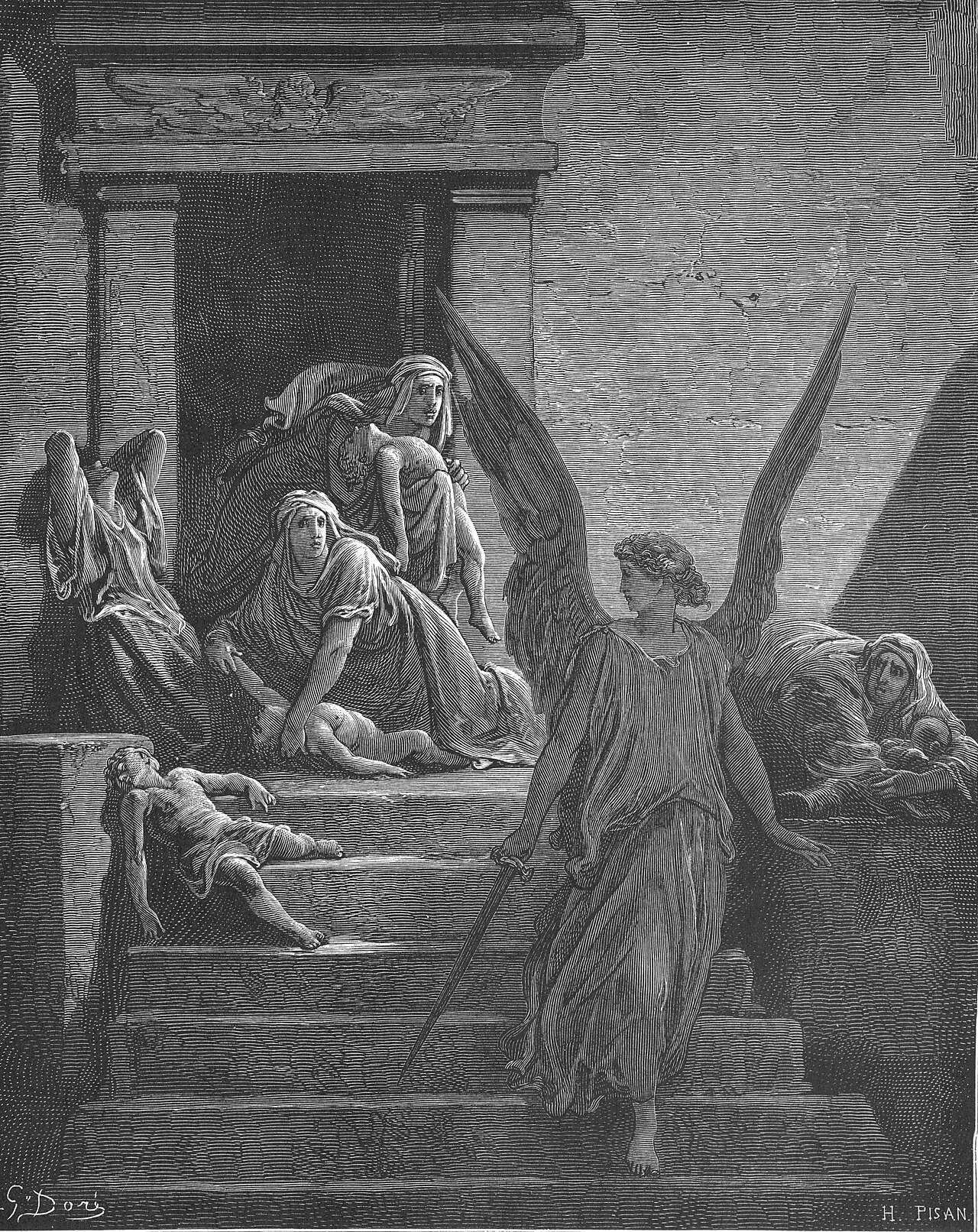
in Exodus 12They are to take some of the blood and put it on the sides and tops of the doorframes of the houses where they eat the lambs.
BSB
The same verse in ASV and KJV ▾
ASV
And they shall take of the blood, and put it on the two side-posts and on the lintel, upon the houses wherein they shall eat it.
KJV
And they shall take of the blood, and strike it on the two side posts and on the upper door post of the houses, wherein they shall eat it.
⋯
This verse in Exodus 12
Commentary
14 notes on this verseMoses caused the doorposts of the Israelites to be signed with the blood of a lamb; but you have given us a sign, the blood itself of a Lamb without blemish, slain for the sin of the world. Ezekiel says that a sign was given on the foreheads of the persons.
This site's exposition
keep it until the fourteenth day
on Exodus 12:6-7
The whole assembly of the congregation kills the lamb, so the act belongs to the nation, and there is no priesthood yet. The blood goes on the sides and tops of the doorframes, where the household passes in and out.
This site's exposition
put it on the sides and tops of the doorframes
Albert Barnes records that Israel kept the doorframe rule for the first Passover alone. Barnes reads the blood as a life given for the firstborn. John Wesley marks that the blood had to be applied to the house as well as shed.
The record, by era
The Church Fathers3 voices
This blood cleansed the secret place, and the Holy of Holies. And if the type of it had such great power in the temple of the Hebrews, and in the midst of Egypt, when smeared on the door-posts, much more the reality. This blood sanctified the golden altar; without it the high priest dared not enter into the secret place. This blood consecrated priests, this in types cleansed sins. But if it had such power in the types, if death so shuddered at the shadow, tell me how would it not have dreaded the very reality?
For why would the Lord instruct them to kill a sheep on this very feast day except that it was he about whom it was prophesied: "As a sheep is led to the slaughter." The doorposts of the Jews were marked with the blood of a slaughtered animal. Our foreheads are marked with the blood of Christ. And that sign, because it was a sign, was said to keep the destroyer away from the houses marked with the sign. The sign of Christ drives the destroyer away from us insofar as our heart receives the Savior.
The sacrifice of this lamb was so great that even the shadow of its truth was sufficient for salvation in freeing the Jews from the slavery of Pharaoh, as though already the liberation of the creature from the slavery of corruption was prefigured, the image …
The Medieval Church1 voice
For Moses says: "They shall take of the blood of the lamb and put it on both doorposts and on the lintels of the houses in which they shall eat it." All of which things indeed bring forth great edification for us, if they are examined through mystical interpretation. For who the blood of the lamb is, you have learned not now by hearing, but by drinking. This blood is placed on both doorposts when it is received not only by the mouth of the body but also by the mouth of the heart. For the blood of the lamb is placed on both posts when the sacrament of His passion is received by the mouth for Redemption, and is also contemplated with attentive mind for imitation. For he who receives the blood of his Redeemer in such a way that he does not yet wish to imitate His passion has placed the blood on only one post; it must also be placed above on the lintels of the houses. For what do we understand spiritually by houses except our minds, in which we dwell through thought? The lintel of this house is the very intention that presides over action. Therefore, whoever directs the intention of his thought toward the imitation of the Lord's passion places the blood of the lamb on the lintel of the house. Or certainly our houses are the bodies themselves, in which we dwell as long as we live. And we place the blood of the lamb on the lintel of the house because we bear the cross of His passion on our forehead.
The Puritans and the Awakening1 voice
(2.) The sprinkling of the blood was typical. 1st, It was not enough that the blood of the lamb was shed, but it must be sprinkled, noting the application of the merits of Christ's death to our souls; 2ndly, It was to be sprinkled upon the door-posts, noting the open profession we are to make of faith in Christ, and obedience to him.
6 more voices on this verse
The Puritans and the Awakening3 voices
), which cautions us to take heed of trampling under foot the blood of the covenant, Heb. x. It is precious blood, and must be precious to us. (5.) The blood, thus sprinkled, was a means of the preservation of the Israelites from the destroying angel, who had nothing to do where the blood was.
quarantine:debris (2026-07-29) — leading-punctuation+unbalanced-parens
The wrath of God is as fire, and Christ was made a curse for us. (6.) It was to be killed by the whole congregation between the two evenings, that is, between three o'clock and six. Christ suffered in the end of the world ( Heb. ix.
quarantine:debris (2026-07-29) — unbalanced-parens
And they shall take of the blood,....
The Nineteenth Century3 voices
A commentator
Albert Barnes1798–1870
Notes, Explanatory and Practical, on the Old and New Testaments (1832-1869)
The upper door post - Or lintel, Exo 12:23. This direction was understood by the Hebrews to apply only to the first Passover: it was certainly not adopted in Palestine. The meaning of the sprinkling of blood is hardly open to question. It was a representation of the offering of the life, substituted for that of the firstborn in each house, as an expiatory and vicarious sacrifice.
A commentator
Jamieson, Fausset & Brown1802–1910
Commentary Critical and Explanatory on the Whole Bible (1871)
proposed
Though the Israelites were sinners as well as the Egyptians, God was pleased to accept the substitution of a lamb--the blood of which, being seen sprinkled on the doorposts, procured them mercy. It was to be on the sideposts and upper doorposts, where it might be looked to, not on the threshold, where it might be trodden under foot. This was an emblem of the blood of sprinkling (Heb 12:24;
quarantine:debris (2026-07-29) — unbalanced-parens
Take of the blood, and strike it on the two side posts - This was to be done by dipping a bunch of hyssop into the blood, and thus sprinkling it upon the posts, etc.; see Exo 12:22. That this sprinkling of the blood of the paschal lamb was an emblem of the sacrifice and atonement made by the death of Jesus Christ, is most clearly intimated in the sacred writings, 1Pe 1:2; Heb 9:13, Heb 9:14; Heb 8:10. It is remarkable that no blood was to be sprinkled on the threshold, to teach, as Mr. Ainsworth properly observes, a reverent regard for the blood of Christ, that men should not tread under foot the Son of God, nor count the blood of the covenant wherewith they were sanctified an unholy thing; Heb 10:29.
How the passage was read
On Exodus 12:1-51On Exodus 12:1-51
The night Israel still keeps
This chapter founds Passover, in Hebrew Pesach, the spring feast that remembers the night God struck Egypt's firstborn and passed over the blood-marked houses. Jewish families keep it to this day with a ceremonial meal called the seder (Hebrew for “order”): unleavened flatbread (matzah), bitter herbs, cups of wine, and the retelling of this chapter's story, with the children asking the questions.
Honesty about the timeline helps the reader: in the Bible's own period the center of the feast was the lamb, slain and eaten as this chapter commands. The seder as now practiced took its shape after the Temple fell in AD 70 and the lamb could no longer be offered; its oldest written outline is in the Mishnah, the first code of Jewish oral law (about AD 200), which already includes the four cups and the rule that “in every generation a person must see himself as if he personally came out of Egypt.”
This section is reception history: how the passage was read and kept in the Jewish tradition. Where a reading parts from an essential of the Christian faith, the section says so at that point.
Sources: Mishnah Pesachim 10 (the seder's oldest outline) · Mishnah Pesachim 10:5 (“in every generation”) · The Feasts of the LORD (this site's study)
The words behind it
15 Hebrew wordsEvery Hebrew word of this verse in the order it stands, with what it means and the door to its own study. The last column counts the times a word stands in the whole Bible: the rarer the word, the more the places it appears belong together.
| Hebrew | Sound | Meaning | Word study | In the Bible |
|---|---|---|---|---|
| וְלָֽקְחוּ֙ | velakechu | and they will take | H3947 → | 966 times |
| מִן־ | min- | some of | H4480 → | 1188 times |
| הַדָּ֔ם | hadam | the blood | H1818 → | 360 times |
| וְנָֽתְנ֛וּ | venatenu | and they will put [it] | H5414 → | 2011 times |
| עַל־ | ʾal- | on | H5921 → | 5755 times |
| שְׁתֵּ֥י | shetei | [the] two | H8147 → | 768 times |
| הַמְּזוּזֹ֖ת | hamezuzot | the doorposts | H4201 → | 19 times |
| וְעַל־ | veal- | and on | H5921 → | 5755 times |
| הַמַּשְׁק֑וֹף | hamashkof | the lintels | H4947 → | 3 times |
| עַ֚ל | ʾal | on | H5921 → | 5755 times |
| הַבָּ֣תִּ֔ים | habatim | the houses | H1004 → | 2046 times |
| אֲשֶׁר־ | ʾasher- | which | H834 → | 5497 times |
| יֹאכְל֥וּ | yokhelu | they will eat | H398 → | 810 times |
| אֹת֖וֹ | ʾoto | <obj.> it | H853 → | 10935 times |
| בָּהֶֽם׃ | bahem | in <the> them |
וְלָֽקְחוּ֙and they will take
velakechuH3947 →966 times
מִן־some of
min-H4480 →1188 times
הַדָּ֔םthe blood
hadamH1818 →360 times
וְנָֽתְנ֛וּand they will put [it]
venatenuH5414 →2011 times
עַל־on
ʾal-H5921 →5755 times
שְׁתֵּ֥י[the] two
sheteiH8147 →768 times
הַמְּזוּזֹ֖תthe doorposts
hamezuzotH4201 →19 times
וְעַל־and on
veal-H5921 →5755 times
הַמַּשְׁק֑וֹףthe lintels
hamashkofH4947 →3 times
עַ֚לon
ʾalH5921 →5755 times
הַבָּ֣תִּ֔יםthe houses
habatimH1004 →2046 times
אֲשֶׁר־which
ʾasher-H834 →5497 times
יֹאכְל֥וּthey will eat
yokheluH398 →810 times
אֹת֖וֹ<obj.> it
ʾotoH853 →10935 times
בָּהֶֽם׃in <the> them
bahem
A shaded row is a word that stands 400 times or fewer in the Bible.
The walk
8 stopsEach card is a verse this one points to, and under it the verses that one points to in turn. Where several paths arrive at the same place, that place is listed first: the text keeps returning to it.
Through
Ephesians 1:7In Him we have redemption through His blood, the forgiveness of our trespasses, according to the riches of His grace
it leads to
- 1 Peter 2:24
He Himself bore our sins in His body on the tree, so that we might die to sin and live to righteousness. “By His stripes you are healed.”
- Romans 3:24
and are justified freely by His grace through the redemption that is in Christ Jesus.
- Colossians 1:14
in whom we have redemption, the forgiveness of sins.
- 1 John 1:7–9
But if we walk in the light as He is in the light, we have fellowship with one another, and the blood of Jesus His Son cleanses us from all sin.
- 1 Peter 1:18–19
For you know that it was not with perishable things such as silver or gold that you were redeemed from the empty way of life you inherited from your forefathers,
- 1 Peter 2:24
Through
Hebrews 9:22According to the law, in fact, nearly everything must be purified with blood, and without the shedding of blood there is no forgiveness.
it leads to
- Leviticus 17:11
For the life of the flesh is in the blood, and I have given it to you to make atonement for your souls upon the altar; for it is the blood that makes atonement…
- Leviticus 6:7
In this way the priest will make atonement for him before the LORD, and he will be forgiven for anything he may have done to incur guilt.”
- Leviticus 17:11
Through
1 Peter 1:2according to the foreknowledge of God the Father and sanctified by the Spirit for obedience to Jesus Christ and sprinkling by His blood: Grace and peace be yours in abundance.
it leads to
- 2 Thessalonians 2:13
But we should always thank God for you, brothers who are loved by the Lord, because God has chosen you from the beginning to be saved by the sanctification of the Spirit and by…
- 2 Thessalonians 2:13
Where this verse is studied
On this page
Studies30
On this chapter
- The Words Philoxenia and Ger
- The Words Tom and Tamim
- Jesus: Titles & Roles
- Pharaoh
- Rahab and the Scarlet Cord
- The Ark and Dagon: 1 Samuel 4-6
Show the next 6 titles
About Exodus
This page draws on 13 works. Open the list of works
This page draws on Adam Clarke, Commentary on the Bible; Albert Barnes, Notes, Explanatory and Practical, on the Old and New Testaments; Albert Barnes, Notes, Explanatory and Practical, on the Old and New Testaments (1832-1869); Augustine of Hippo, TRACTATE ON THE GOSPEL OF JOHN 50.3; Basil of Caesarea, EXEGETIC HOMILIES 20.3; Gregory the Dialogist, Forty Gospel Homilies, Homily 22; Jamieson, Fausset & Brown, Commentary Critical and Explanatory on the Whole Bible; John Chrysostom, HOMILIES ON THE GOSPEL OF JOHN 46; John Gill, Exposition of the Old Testament (1748-1763); John Wesley, Explanatory Notes upon the Old Testament; Keil and Delitzsch, Biblical Commentary on the Old Testament: The Pentateuch; Martin of Braga, ON THE PASCHA 2 and Matthew Henry, Commentary on the Whole Bible.