
Exodus 12:33
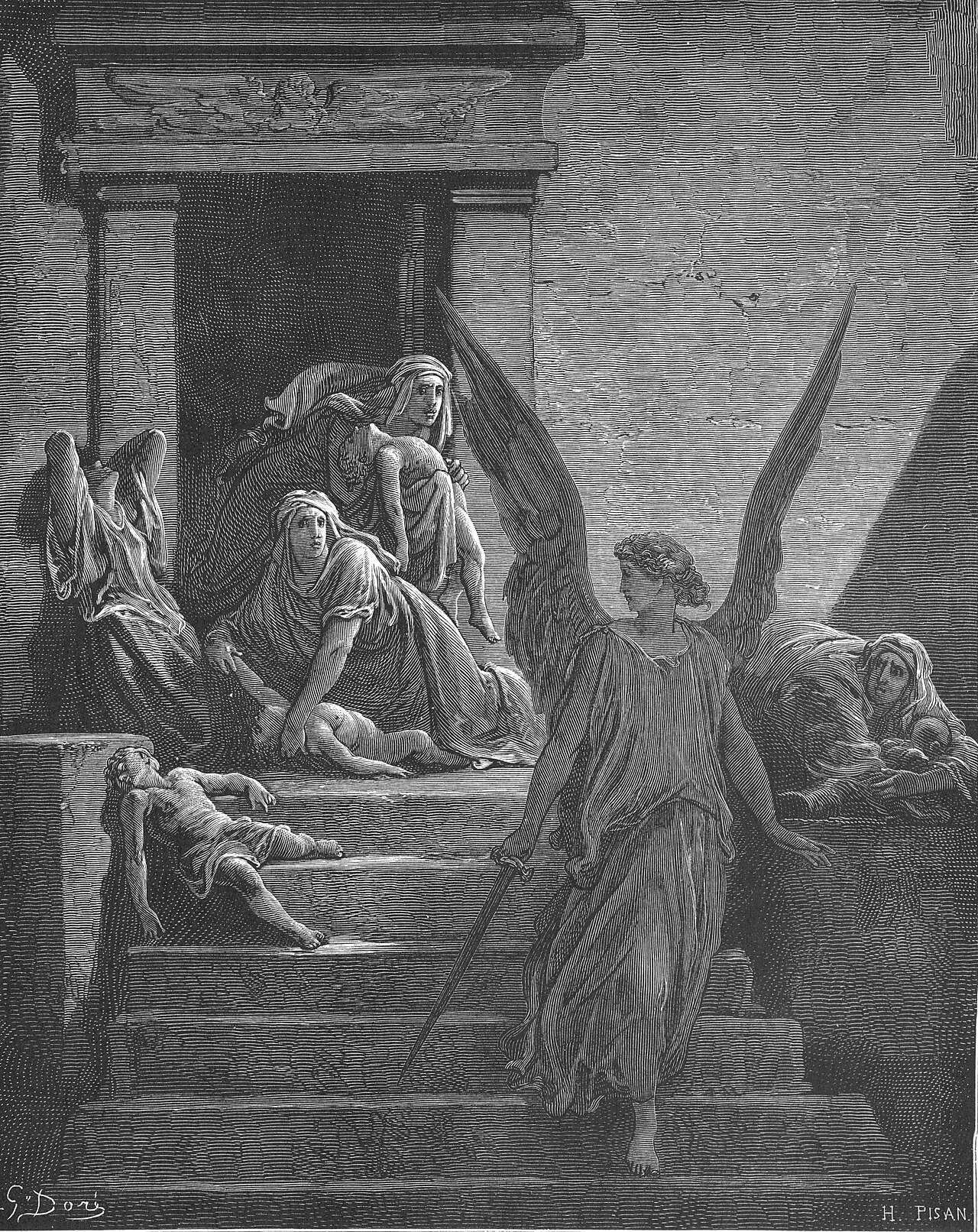
in Exodus 12And in order to send them out of the land quickly, the Egyptians urged the people on. “For otherwise,” they said, “we are all going to die!”
BSB
The same verse in ASV and KJV ▾
ASV
And the Egyptians were urgent upon the people, to send them out of the land in haste; for they said, We are all dead men.
KJV
And the Egyptians were urgent upon the people, that they might send them out of the land in haste; for they said, We be all dead men.
⋯
This verse in Exodus 12
Commentary
4 notes on this verseThis site's exposition
the Egyptians urged the people
on Exodus 12:33-34
The dough goes onto their shoulders unleavened because there is no time. The seven-day feast commanded at verse 15 rests on a practical fact of that same morning.
The record, by era
The Puritans and the Awakening2 voices
And the Egyptians were urgent upon the people,....
Note, When death comes into our houses, it is seasonable for us to think of our own mortality. It is easy to infer thence that we are dying, and, in effect, already dead men.
The Nineteenth Century1 voice
The Egyptians were urgent upon the people - They felt much, they feared more; and therefore wished to get immediately rid of a people on whose account they found they were smitten with so many and such dreadful plagues.
How the passage was read
On Exodus 12:1-51On Exodus 12:1-51
The night Israel still keeps
This chapter founds Passover, in Hebrew Pesach, the spring feast that remembers the night God struck Egypt's firstborn and passed over the blood-marked houses. Jewish families keep it to this day with a ceremonial meal called the seder (Hebrew for “order”): unleavened flatbread (matzah), bitter herbs, cups of wine, and the retelling of this chapter's story, with the children asking the questions.
Honesty about the timeline helps the reader: in the Bible's own period the center of the feast was the lamb, slain and eaten as this chapter commands. The seder as now practiced took its shape after the Temple fell in AD 70 and the lamb could no longer be offered; its oldest written outline is in the Mishnah, the first code of Jewish oral law (about AD 200), which already includes the four cups and the rule that “in every generation a person must see himself as if he personally came out of Egypt.”
This section is reception history: how the passage was read and kept in the Jewish tradition. Where a reading parts from an essential of the Christian faith, the section says so at that point.
Sources: Mishnah Pesachim 10 (the seder's oldest outline) · Mishnah Pesachim 10:5 (“in every generation”) · The Feasts of the LORD (this site's study)
The words behind it
12 Hebrew wordsEvery Hebrew word of this verse in the order it stands, with what it means and the door to its own study. The last column counts the times a word stands in the whole Bible: the rarer the word, the more the places it appears belong together.
| Hebrew | Sound | Meaning | Word study | In the Bible |
|---|---|---|---|---|
| וַתֶּחֱזַ֤ק | vatechezak | and it urged | H2388 → | 291 times |
| מִצְרַ֙יִם֙ | mitzrayim | Egypt | H4714 → | 641 times |
| עַל־ | ʾal- | on | H5921 → | 5755 times |
| הָעָ֔ם | haam | the people | H5971 → | 1873 times |
| לְמַהֵ֖ר | lemaher | to hurry | H4116 → | 68 times |
| לְשַׁלְּחָ֣ם | leshalecham | to send away them | H7971 → | 845 times |
| מִן־ | min- | from | H4480 → | 1188 times |
| הָאָ֑רֶץ | haaretz | the land | H776 → | 2504 times |
| כִּ֥י | ki | for | H3588 → | 4482 times |
| אָמְר֖וּ | ʾameru | they said | H559 → | 5305 times |
| כֻּלָּ֥נוּ | kulanu | all of us | H3605 → | 5413 times |
| מֵתִֽים׃ | metim | [are] about to die | H4191 → | 839 times |
וַתֶּחֱזַ֤קand it urged
vatechezakH2388 →291 times
מִצְרַ֙יִם֙Egypt
mitzrayimH4714 →641 times
עַל־on
ʾal-H5921 →5755 times
הָעָ֔םthe people
haamH5971 →1873 times
לְמַהֵ֖רto hurry
lemaherH4116 →68 times
לְשַׁלְּחָ֣םto send away them
leshalechamH7971 →845 times
מִן־from
min-H4480 →1188 times
הָאָ֑רֶץthe land
haaretzH776 →2504 times
כִּ֥יfor
kiH3588 →4482 times
אָמְר֖וּthey said
ʾameruH559 →5305 times
כֻּלָּ֥נוּall of us
kulanuH3605 →5413 times
מֵתִֽים׃[are] about to die
metimH4191 →839 times
A shaded row is a word that stands 400 times or fewer in the Bible.
The walk
8 stopsEach card is a verse this one points to, and under it the verses that one points to in turn. Where several paths arrive at the same place, that place is listed first: the text keeps returning to it.
Through
Genesis 20:3One night, however, God came to Abimelech in a dream and told him, “You are as good as dead because of the woman you have taken, for she is a married woman.”
it leads to
- Genesis 20:7
Now return the man’s wife, for he is a prophet; he will pray for you and you will live. But if you do not restore her, be aware that you will surely die—you and…
- Matthew 27:19
While Pilate was sitting on the judgment seat, his wife sent him this message: “Have nothing to do with that innocent man, for I have suffered terribly in a dream today because of Him.”
- Job 33:15
In a dream, in a vision in the night, when deep sleep falls upon men as they slumber on their beds,
- Psalms 105:14
He let no man oppress them; He rebuked kings on their behalf:
- Matthew 1:20
But after he had pondered these things, an angel of the Lord appeared to him in a dream and said, “Joseph, son of David, do not be afraid to embrace Mary as your wife,…
- Genesis 20:7
Through
Exodus 11:1Then the LORD said to Moses, “I will bring upon Pharaoh and Egypt one more plague. After that, he will allow you to leave this place. And when he lets you go, he will…
it leads to
- Genesis 15:14
But I will judge the nation they serve as slaves, and afterward they will depart with many possessions.
- Leviticus 26:21
If you walk in hostility toward Me and refuse to obey Me, I will multiply your plagues seven times, according to your sins.
- Genesis 15:14
Through
Psalms 105:38Egypt was glad when they departed, for the dread of Israel had fallen on them.
it leads to
- Exodus 15:16
and terror and dread will fall on them. By the power of Your arm they will be as still as a stone until Your people pass by, O LORD, until the people You have…
- Exodus 15:16
Where this verse is studied
On this page
Studies30
On this verse
On this chapter
- The Words Philoxenia and Ger
- The Words Tom and Tamim
- Jesus: Titles & Roles
- Passover
- Pharaoh
- Rahab and the Scarlet Cord
Show the next 6 titles
- The Scarlet Thread
- Taw: The Mark of God
- The Ark and Dagon: 1 Samuel 4-6
- The Brickfields of Egypt
- The Calendar of the Flood
- The Crossing of the Jordan
Show the next 6 titles
About Exodus
This page draws on Adam Clarke, Commentary on the Bible; John Gill, Exposition of the Old Testament; John Gill, Exposition of the Old Testament (1748-1763); Keil and Delitzsch, Biblical Commentary on the Old Testament: The Pentateuch and Matthew Henry, Commentary on the Whole Bible.