
Genesis 41:46
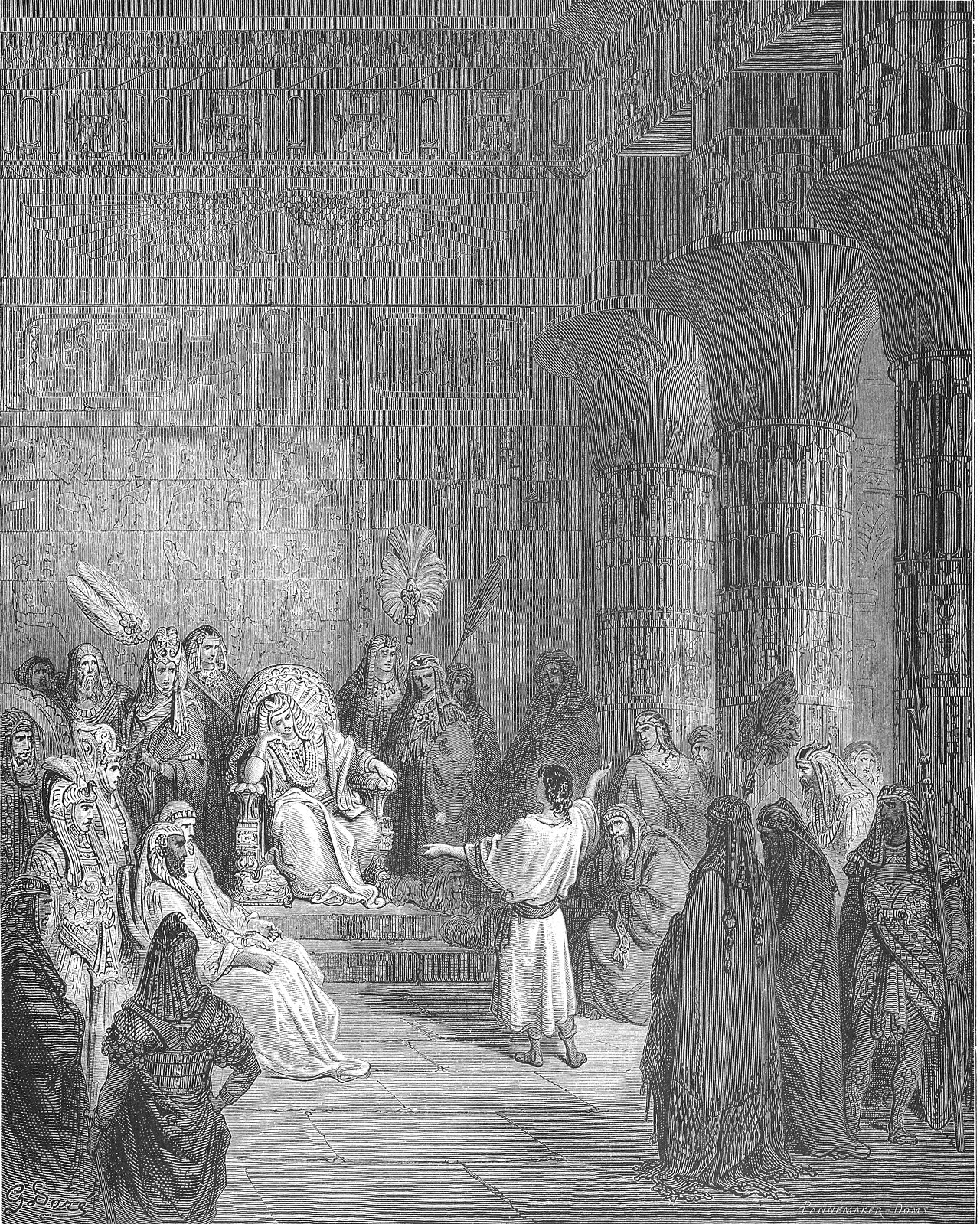
in Genesis 41Now Joseph was thirty years old when he entered the service of Pharaoh king of Egypt. And Joseph left Pharaoh’s presence and traveled throughout the land of Egypt.
BSB
The same verse in ASV and KJV ▾
ASV
And Joseph was thirty years old when he stood before Pharaoh king of Egypt. And Joseph went out from the presence of Pharaoh, and went throughout all the land of Egypt.
KJV
And Joseph was thirty years old when he stood before Pharaoh king of Egypt. And Joseph went out from the presence of Pharaoh, and went throughout all the land of Egypt.
⋯
This verse in Genesis 41
Commentary
5 notes on this verseJoseph was thirty years old - As he was seventeen years old when he was sold into Egypt, Gen 37:2, and was now thirty, he must have been thirteen years in slavery. Stood before Pharaoh - This phrase always means admission to the immediate presence of the sovereign, and having the honor of his most unlimited confidence. Among the Asiatic princes, the privilege of coming even to their seat, of standing before them, etc., was granted only to the highest favorites.
The record, by era
The Church Fathers1 voice
Far from idly considering that there is merely reference here to his age, let us learn that there is no excuse for anyone to neglect virtue or any grounds for claiming the pretext of youth when virtue needs to be demonstrated. See, after all, this man: he was not only young but also charming in appearance and handsome to behold. It is possible, you see, for a young man not to be blessed with bodily charm. But in addition to his youth this man was also charming in appearance and good looking. Joseph was near the bloom of youth when he was captured and became a slave. He was in fact, the text says, seventeen when he was carried off into Egypt. Then he was in the burning heat of youth when the wanton Egyptian, who happened to be his employer, set upon him without overcoming the good man's resistance. Then came prison and his hardship there for such a long period of time; he remained firm as iron, not only not becoming less resistant but even gaining greater strength. Joseph had grace from on high, you see, to strengthen him. Since he had previously given evidence of every virtue from his own resources, accordingly he was summoned from prison to take charge of all of Egypt.After hearing this, let us never despair in the midst of distress or become frustrated by following our own reasoning. Rather, let us give evidence of sound endurance and be buoyed up by hope, secure in the knowledge of our Lord's resourcefulness and the fact that instead of ignoring us and abandoning us to the experience of troubles, he wants to crown us with a resplendent garland for our struggles. It is for this that all holy people have been distinguished.
The Puritans and the Awakening2 voices
7 And the seven thin ears devoured the seven rank and full ears. And Pharaoh awoke, and, behold, it was a dream. 8 And it came to pass in the morning that his spirit was troubled; and he sent and called for all the magicians of Egypt, and all the wise men thereof: and Pharaoh told them his dreams; but there was none that could interpret them unto Pharaoh.
quarantine:scripture (2026-07-29) — scripture-overlap:99%@v7-8
And Joseph was thirty years old when he stood before Pharaoh king of Egypt,....
The Nineteenth Century1 voice
A commentator
Jamieson, Fausset & Brown1802–1910
Commentary Critical and Explanatory on the Whole Bible (1871)
proposed
Joseph was thirty years old when he stood before Pharaoh--seventeen when brought into Egypt, probably three in prison, and thirteen in the service of Potiphar. went out . . . all the land--made an immediate survey to determine the site and size of the storehouses required for the different quarters of the country.
The words behind it
17 Hebrew wordsEvery Hebrew word of this verse in the order it stands, with what it means and the door to its own study. The last column counts the times a word stands in the whole Bible: the rarer the word, the more the places it appears belong together.
| Hebrew | Sound | Meaning | Word study | In the Bible |
|---|---|---|---|---|
| וְיוֹסֵף֙ | veyosef | and Joseph | H3130 → | 213 times |
| בֶּן־ | ben- | [was] a son of | H1121 → | 4930 times |
| שְׁלֹשִׁ֣ים | sheloshim | thirty | H7970 → | 172 times |
| שָׁנָ֔ה | shanah | year[s] | H8141 → | 877 times |
| בְּעָמְד֕וֹ | beamedo | when stood he | H5975 → | 521 times |
| לִפְנֵ֖י | lifnei | <to> before | H6440 → | 2123 times |
| פַּרְעֹ֣ה | paroh | Pharaoh | H6547 → | 274 times |
| מֶֽלֶךְ־ | melekh- | [the] king of | H4428 → | 2525 times |
| מִצְרָ֑יִם | mitzrayim | Egypt | H4714 → | 641 times |
| וַיֵּצֵ֤א | vaiyetze' | and he went out | H3318 → | 1067 times |
| יוֹסֵף֙ | yosef | Joseph | H3130 → | 213 times |
| מִלִּפְנֵ֣י | milifnei | from to before | H6440 → | 2123 times |
| פַרְעֹ֔ה | faroh | Pharaoh | H6547 → | 274 times |
| וַֽיַּעְבֹ֖ר | vaiya'vor | and he passed | H5674 → | 556 times |
| בְּכָל־ | bekhol | in all | H3605 → | 5413 times |
| אֶ֥רֶץ | ʾeretz | [the] land of | H776 → | 2504 times |
| מִצְרָֽיִם׃ | mitzrayim | Egypt | H4714 → | 641 times |
וְיוֹסֵף֙and Joseph
veyosefH3130 →213 times
בֶּן־[was] a son of
ben-H1121 →4930 times
שְׁלֹשִׁ֣יםthirty
sheloshimH7970 →172 times
שָׁנָ֔הyear[s]
shanahH8141 →877 times
בְּעָמְד֕וֹwhen stood he
beamedoH5975 →521 times
לִפְנֵ֖י<to> before
lifneiH6440 →2123 times
פַּרְעֹ֣הPharaoh
parohH6547 →274 times
מֶֽלֶךְ־[the] king of
melekh-H4428 →2525 times
מִצְרָ֑יִםEgypt
mitzrayimH4714 →641 times
וַיֵּצֵ֤אand he went out
vaiyetze'H3318 →1067 times
יוֹסֵף֙Joseph
yosefH3130 →213 times
מִלִּפְנֵ֣יfrom to before
milifneiH6440 →2123 times
פַרְעֹ֔הPharaoh
farohH6547 →274 times
וַֽיַּעְבֹ֖רand he passed
vaiya'vorH5674 →556 times
בְּכָל־in all
bekholH3605 →5413 times
אֶ֥רֶץ[the] land of
ʾeretzH776 →2504 times
מִצְרָֽיִם׃Egypt
mitzrayimH4714 →641 times
A shaded row is a word that stands 400 times or fewer in the Bible.
The walk
8 stopsEach card is a verse this one points to, and under it the verses that one points to in turn. Where several paths arrive at the same place, that place is listed first: the text keeps returning to it.
Through
1 Samuel 16:21When David came to Saul and entered his service, Saul admired him greatly, and David became his armor-bearer.
it leads to
- Proverbs 22:29
Do you see a man skilled in his work? He will be stationed in the presence of kings; he will not stand before obscure men.
Reached by 2 separate paths from here.
- Psalms 146:3
Put not your trust in princes, in mortal man, who cannot save.
- Proverbs 22:29
Through
Genesis 37:2This is the account of Jacob. When Joseph was seventeen years old, he was tending the flock with his brothers, the sons of his father’s wives Bilhah and Zilpah, and he brought their father…
it leads to
- Genesis 35:25–26
The sons of Rachel’s maidservant Bilhah were Dan and Naphtali.
- 1 Corinthians 11:18
First of all, I hear that when you come together as a church, there are divisions among you, and in part I believe it.
- 1 Samuel 2:22–24
Now Eli was very old, and he heard about everything his sons were doing to all Israel and how they were sleeping with the women who served at the entrance to the Tent of…
- Genesis 35:25–26
Through
2 Samuel 5:4David was thirty years old when he became king, and he reigned forty years.
it leads to
- 1 Chronicles 29:27
The length of David’s reign over Israel was forty years—seven years in Hebron and thirty-three years in Jerusalem.
- 1 Kings 2:11
The length of David’s reign over Israel was forty years—seven years in Hebron and thirty-three years in Jerusalem.
- 1 Chronicles 26:31
As for the Hebronites, Jerijah was the chief of the Hebronites, according to the genealogies of his ancestors. In the fortieth year of David’s reign the records were searched, and strong, capable men were…
- 1 Chronicles 29:27
Where this verse is studied
On this page
Studies1
About Genesis
Who and where
2 names in this verse with a page on the site.
This page draws on Adam Clarke, Commentary on the Bible; Jamieson, Fausset & Brown, Commentary Critical and Explanatory on the Whole Bible; John Chrysostom, HOMILIES ON GENESIS 63.19-21; John Gill, Exposition of the Old Testament (1748-1763) and Matthew Henry, Commentary on the Whole Bible.