
Genesis 41:26
in Genesis 41The seven good cows are seven years, and the seven ripe heads of grain are seven years. The dreams have the same meaning.
BSB
The same verse in ASV and KJV ▾
ASV
The seven good kine are seven years; and the seven good ears are seven years: the dream is one.
KJV
The seven good kine are seven years; and the seven good ears are seven years: the dream is one.
⋯
This verse in Genesis 41
Commentary
4 notes on this verseThis site's exposition
The dreams of Pharaoh are one and the same
on Genesis 41:25-27
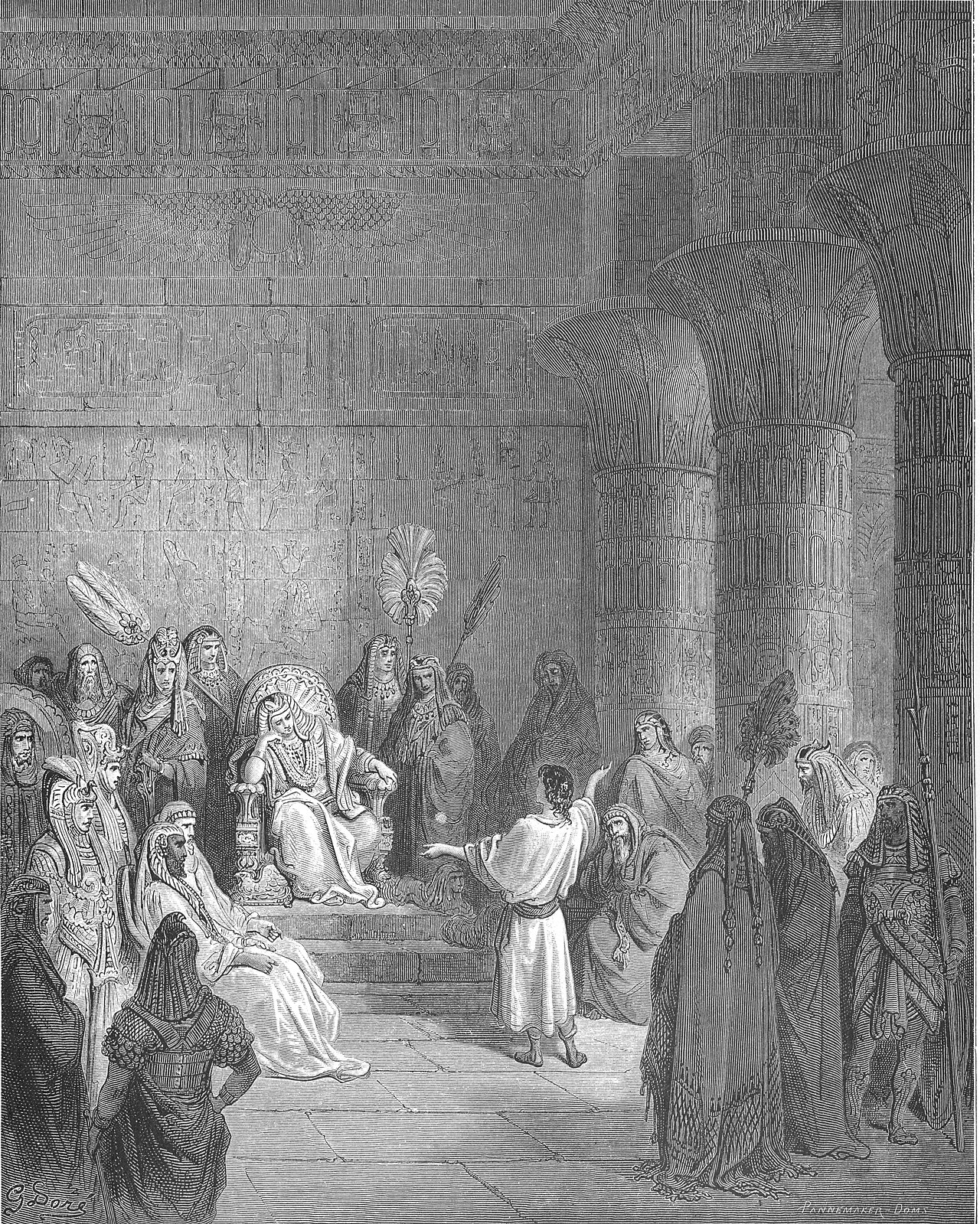
Joseph says that the two dreams are one, and that God has told Pharaoh what He is about to do. He says that to a pagan king's face. Clarke notes that Egypt credited the Nile with the abundance and the famine, and Joseph puts the river under God's hand.
This site's exposition
The seven good cows are seven years
Seven marks a full measure, and Genesis has counted two spans of seven years in Jacob's service for Leah and Rachel at 29:20 and 27. Here each cow and each head of grain stands for one year. Joseph turns a picture into a calendar.
The record, by era
The Church Fathers1 voice
However, I do not think that this dream is demonstrated to one or two, but to all; because the seven fat years of this world, rich with secular abundance, are absorbed by those ages which are yet to come, in which there will be perpetual rest and observance of the spiritual law, which Ephraem holds dear to God and fruitful for the three patriarchs. A good cow, not one with a distended body but abundant in spiritual milk and grace, on whose beauty God says He will sit, as it is written: Ephraem, the learned cow, loves victory.
The Puritans and the Awakening1 voice
The seven good kine are seven years,.... Signify seven years, and these years of plenty, as appears from the antithesis in Gen 41:26, and the seven good ears are seven years; signify the same: the dream is one; for though the seven good kine were seen in one dream, the seven good ears in another, yet both dreams were one as to signification.
The words behind it
15 Hebrew wordsEvery Hebrew word of this verse in the order it stands, with what it means and the door to its own study. The last column counts the times a word stands in the whole Bible: the rarer the word, the more the places it appears belong together.
| Hebrew | Sound | Meaning | Word study | In the Bible |
|---|---|---|---|---|
| שֶׁ֧בַע | sheva' | seven | H7651 → | 394 times |
| פָּרֹ֣ת | parot | cows | H6510 → | 26 times |
| הַטֹּבֹ֗ת | hatovot | <the> good | H2896 → | 538 times |
| שֶׁ֤בַע | sheva' | [are] seven | H7651 → | 394 times |
| שָׁנִים֙ | shanim | years | H8141 → | 877 times |
| הֵ֔נָּה | henah | they | H2007 → | 30 times |
| וְשֶׁ֤בַע | vesheva' | and seven | H7651 → | 394 times |
| הַֽשִּׁבֳּלִים֙ | hashibolim | the ears of grain | H7641 → | 19 times |
| הַטֹּבֹ֔ת | hatovot | <the> good | H2896 → | 538 times |
| שֶׁ֥בַע | sheva' | [are] seven | H7651 → | 394 times |
| שָׁנִ֖ים | shanim | years | H8141 → | 877 times |
| הֵ֑נָּה | henah | they | H2007 → | 30 times |
| חֲל֖וֹם | chalom | [is] dream | H2472 → | 65 times |
| אֶחָ֥ד | ʾechad | one | H259 → | 971 times |
| הֽוּא׃ | hu' | it | H1931 → | 1879 times |
שֶׁ֧בַעseven
sheva'H7651 →394 times
פָּרֹ֣תcows
parotH6510 →26 times
הַטֹּבֹ֗ת<the> good
hatovotH2896 →538 times
שֶׁ֤בַע[are] seven
sheva'H7651 →394 times
שָׁנִים֙years
shanimH8141 →877 times
הֵ֔נָּהthey
henahH2007 →30 times
וְשֶׁ֤בַעand seven
vesheva'H7651 →394 times
הַֽשִּׁבֳּלִים֙the ears of grain
hashibolimH7641 →19 times
הַטֹּבֹ֔ת<the> good
hatovotH2896 →538 times
שֶׁ֥בַע[are] seven
sheva'H7651 →394 times
שָׁנִ֖יםyears
shanimH8141 →877 times
הֵ֑נָּהthey
henahH2007 →30 times
חֲל֖וֹם[is] dream
chalomH2472 →65 times
אֶחָ֥דone
ʾechadH259 →971 times
הֽוּא׃it
hu'H1931 →1879 times
A shaded row is a word that stands 400 times or fewer in the Bible.
The walk
8 stopsEach card is a verse this one points to, and under it the verses that one points to in turn. Where several paths arrive at the same place, that place is listed first: the text keeps returning to it.
Through
Genesis 41:47During the seven years of abundance, the land brought forth bountifully.
it leads to
- Genesis 26:12
Now Isaac sowed seed in the land, and that very year he reaped a hundredfold. And the LORD blessed him,
- Psalms 72:16
May there be an abundance of grain in the land; may it sway atop the hills. May its fruit trees flourish like the forests of Lebanon, and its people like the grass of the…
- Genesis 26:12
Through
Genesis 41:29Behold, seven years of great abundance are coming throughout the land of Egypt,
it leads to
- Genesis 41:46–47
Now Joseph was thirty years old when he entered the service of Pharaoh king of Egypt. And Joseph left Pharaoh’s presence and traveled throughout the land of Egypt.
- Genesis 41:46–47
Through
Genesis 41:5but he fell back asleep and dreamed a second time: Seven heads of grain, plump and ripe, came up on one stalk.
it leads to
- Deuteronomy 32:14
with curds from the herd and milk from the flock, with the fat of lambs, with rams from Bashan, and goats, with the choicest grains of wheat. From the juice of the finest grapes…
- Deuteronomy 32:14
Through
Genesis 41:53When the seven years of abundance in the land of Egypt came to an end,
it leads to
- Genesis 41:29–31
Behold, seven years of great abundance are coming throughout the land of Egypt,
- Luke 16:25
But Abraham answered, ‘Child, remember that during your lifetime you received your good things, while Lazarus received bad things. But now he is comforted here, while you are in agony.
- Psalms 73:20
Like one waking from a dream, so You, O Lord, awaken and despise their form.
- Genesis 41:29–31
Through
Genesis 41:2when seven cows, sleek and well-fed, came up from the river and began to graze among the reeds.
it leads to
- Isaiah 19:6
The canals will stink; the streams of Egypt will trickle and dry up; the reeds and rushes will wither.
- Isaiah 19:6
Where this verse is studied
On this page
Studies12
About Genesis
This page draws on Adam Clarke, Commentary on the Bible; Ambrose of Milan, On Joseph the Patriarch; John Gill, Exposition of the Old Testament (1748-1763) and Matthew Henry, Commentary on the Whole Bible.