
Genesis 41:10
in Genesis 41Pharaoh was once angry with his servants, and he put me and the chief baker in the custody of the captain of the guard.
BSB
The same verse in ASV and KJV ▾
ASV
Pharaoh was wroth with his servants, and put me in ward in the house of the captain of the guard, me and the chief baker:
KJV
Pharaoh was wroth with his servants, and put me in ward in the captain of the guard’s house, both me and the chief baker:
⋯
This verse in Genesis 41
Commentary
4 notes on this verseThis site's exposition
Today I recall my failures
on Genesis 41:9-13
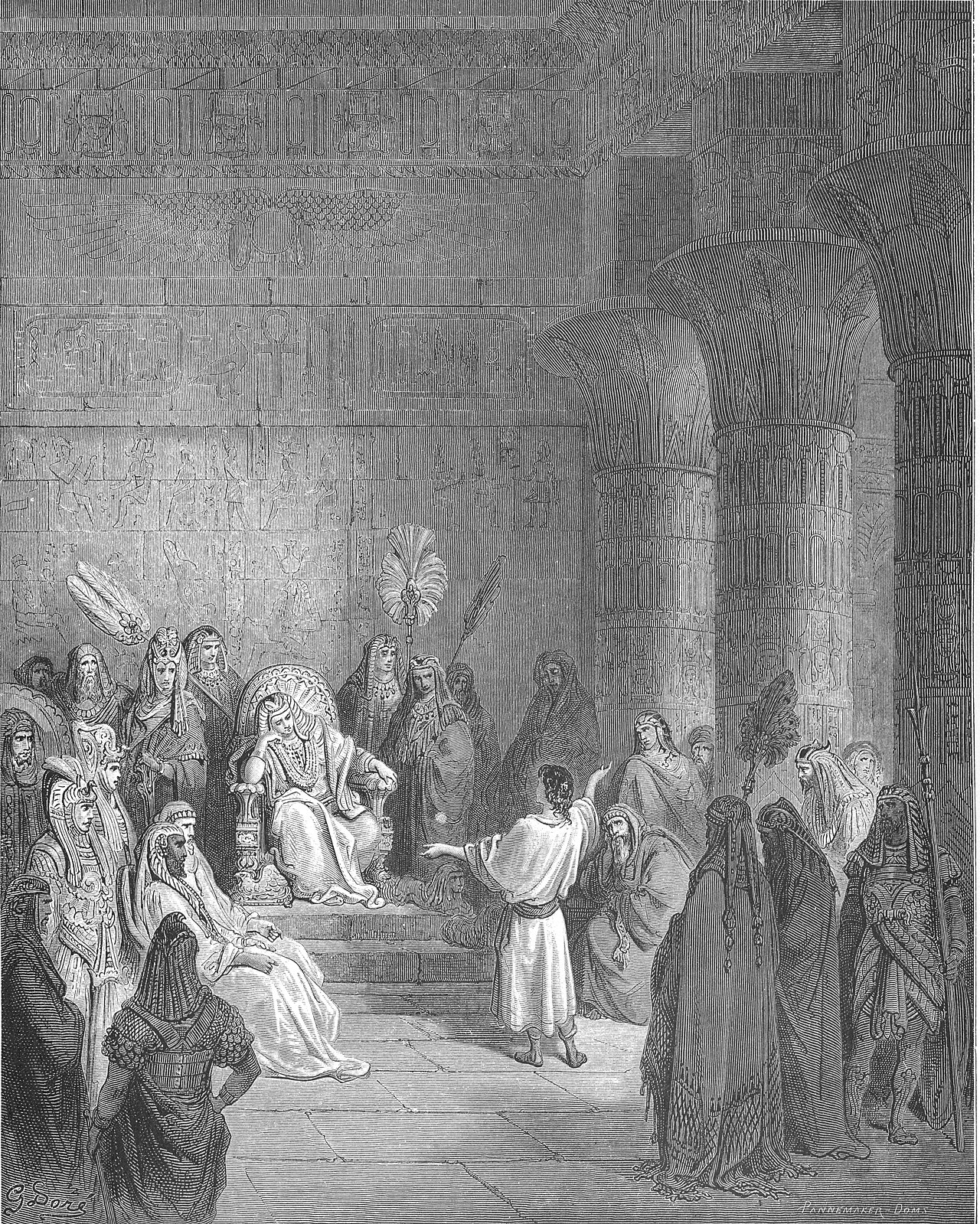
The cupbearer speaks at last, and his first words are about himself. He describes Joseph as a young Hebrew, a servant under the captain, three descriptions that put him at the bottom of every ladder in Egypt. Two years of silence end on the day Joseph becomes useful.
This site's exposition
Pharaoh was once angry with his servants
The cupbearer has to recall his own disgrace to make the recommendation, and he mentions Pharaoh's anger without naming his offence. The captain of the guard is Potiphar of 39:1. Joseph's prison lay in the house of the man who had bought him, as 40:3 records.
The record, by era
The Puritans and the Awakening1 voice
Pharaoh was wroth with his servants,.... Not with all of them, but with the butler and the baker.
The Nineteenth Century1 voice
A commentator
Jamieson, Fausset & Brown1802–1910
Commentary Critical and Explanatory on the Whole Bible (1871)
proposed
then spake the chief butler unto Pharaoh, saying, I do remember my faults--This public acknowledgment of the merits of the young Hebrew would, tardy though it was, have reflected credit on the butler had it not been obviously made to ingratiate himself with his royal master.
quarantine:debris (2026-07-29) — starts-lowercase
How the passage was read
What the Jewish commentators add
I believe that Pharaoh is an adjective. What I.E. means by “adjective” is an adjectival noun, a descriptive term like melekh (king). Cf.
1 more on this passage, in their own words ▾
I have previously explained this. 33 I.E. explains the meaning of each man according to the interpretation of his dreams in his comments on Gen.:5.
This section is reception history: how the passage was read and kept in the Jewish tradition. Where a reading parts from an essential of the Christian faith, the section says so at that point.
Texts and citation data: Sefaria; each excerpt follows its version’s licence. 4 further sources are cited on this chapter that carry no English text this site may quote or only restate the verse.
The words behind it
14 Hebrew wordsEvery Hebrew word of this verse in the order it stands, with what it means and the door to its own study. The last column counts the times a word stands in the whole Bible: the rarer the word, the more the places it appears belong together.
| Hebrew | Sound | Meaning | Word study | In the Bible |
|---|---|---|---|---|
| פַּרְעֹ֖ה | paroh | Pharaoh | H6547 → | 274 times |
| קָצַ֣ף | katzaf | he was angry | H7107 → | |
| עַל־ | ʾal- | towards | H5921 → | 5755 times |
| עֲבָדָ֑יו | ʾavadav | servants his | H5650 → | 799 times |
| וַיִּתֵּ֨ן | vaiyiten | and he put | H5414 → | 2011 times |
| אֹתִ֜י | ʾoti | <obj.> me | H853 → | 10935 times |
| בְּמִשְׁמַ֗ר | bemishmar | in [the] custody of | H4929 → | 22 times |
| בֵּ֚ית | beit | [the] house of | H1004 → | 2046 times |
| שַׂ֣ר | sar | [the] commander of | H8269 → | 421 times |
| הַטַּבָּחִ֔ים | hatabachim | the bodyguards | H2876 → | 32 times |
| אֹתִ֕י | ʾoti | <obj.> me | H853 → | 10935 times |
| וְאֵ֖ת | veet | and <obj.> | H853 → | 10935 times |
| שַׂ֥ר | sar | [the] chief of | H8269 → | 421 times |
| הָאֹפִֽים׃ | haofim | the bakers | H644 → | 25 times |
פַּרְעֹ֖הPharaoh
parohH6547 →274 times
קָצַ֣ףhe was angry
katzafH7107 →
עַל־towards
ʾal-H5921 →5755 times
עֲבָדָ֑יוservants his
ʾavadavH5650 →799 times
וַיִּתֵּ֨ןand he put
vaiyitenH5414 →2011 times
אֹתִ֜י<obj.> me
ʾotiH853 →10935 times
בְּמִשְׁמַ֗רin [the] custody of
bemishmarH4929 →22 times
בֵּ֚ית[the] house of
beitH1004 →2046 times
שַׂ֣ר[the] commander of
sarH8269 →421 times
הַטַּבָּחִ֔יםthe bodyguards
hatabachimH2876 →32 times
אֹתִ֕י<obj.> me
ʾotiH853 →10935 times
וְאֵ֖תand <obj.>
veetH853 →10935 times
שַׂ֥ר[the] chief of
sarH8269 →421 times
הָאֹפִֽים׃the bakers
haofimH644 →25 times
A shaded row is a word that stands 400 times or fewer in the Bible.
The walk
8 stopsEach card is a verse this one points to, and under it the verses that one points to in turn. Where several paths arrive at the same place, that place is listed first: the text keeps returning to it.
Through
Genesis 39:20So Joseph’s master took him and had him thrown into the prison where the king’s prisoners were confined. While Joseph was there in the prison,
it leads to
- Genesis 40:15
For I was kidnapped from the land of the Hebrews, and even here I have done nothing for which they should have put me in this dungeon.”
- Isaiah 53:8
By oppression and judgment He was taken away, and who can recount His descendants? For He was cut off from the land of the living; He was stricken for the transgression of My people.
- Genesis 40:1–3
Some time later, the king’s cupbearer and baker offended their master, the king of Egypt.
- Genesis 40:15
Through
Genesis 37:36Meanwhile, the Midianites sold Joseph in Egypt to Potiphar, an officer of Pharaoh and captain of the guard.
it leads to
- Genesis 37:28
So when the Midianite traders passed by, his brothers pulled Joseph out of the pit and sold him for twenty shekels of silver to the Ishmaelites, who took him to Egypt.
- Genesis 40:4
The captain of the guard assigned them to Joseph, and he became their personal attendant. After they had been in custody for some time,
- Isaiah 56:3
Let no foreigner who has joined himself to the LORD say, “The LORD will utterly exclude me from His people.” And let the eunuch not say, “I am but a dry tree.”
- Genesis 39:1–23
Meanwhile, Joseph had been taken down to Egypt, where an Egyptian named Potiphar, an officer of Pharaoh and captain of the guard, bought him from the Ishmaelites who had taken him there.
- Genesis 25:1–2
Now Abraham had taken another wife, named Keturah,
- Genesis 37:28
Where this verse is studied
On this page
Studies12
About Genesis
This page draws on Adam Clarke, Commentary on the Bible; Jamieson, Fausset & Brown, Commentary Critical and Explanatory on the Whole Bible; John Gill, Exposition of the Old Testament (1748-1763) and Matthew Henry, Commentary on the Whole Bible.