
Genesis 41:19
in Genesis 41After them, seven other cows—sickly, ugly, and thin—came up. I have never seen such ugly cows in all the land of Egypt!
BSB
The same verse in ASV and KJV ▾
ASV
and, behold, seven other kine came up after them, poor and very ill-favored and lean-fleshed, such as I never saw in all the land of Egypt for badness:
KJV
And, behold, seven other kine came up after them, poor and very ill favoured and leanfleshed, such as I never saw in all the land of Egypt for badness:
⋯
This verse in Genesis 41
Commentary
3 notes on this verseThis site's exposition
I was standing on the bank of the Nile
on Genesis 41:17-21
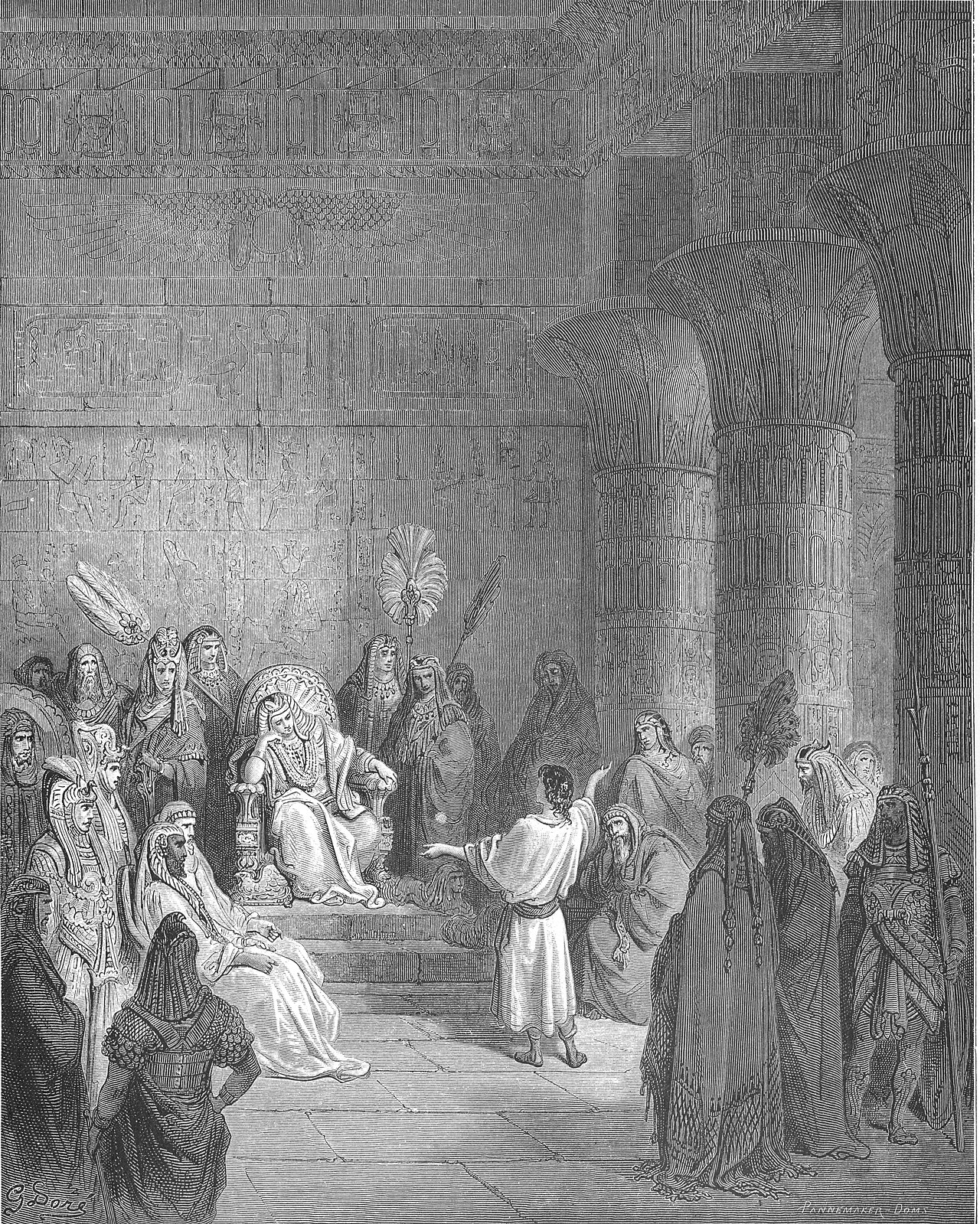
Pharaoh tells the first dream again, and the retelling runs longer than the telling. He adds that he never saw cows so ugly in all the land of Egypt. The detail the king adds is the one that makes the famine terrible, that the abundance will leave no mark behind.
This site's exposition
I have never seen such ugly cows
Pharaoh kept royal herds, and at 47:6 he puts capable men of Joseph's family in charge of his livestock. A king who knew cattle calls these the worst he had seen in Egypt. His added word ugly carries the dread the famine brings.
The record, by era
The Puritans and the Awakening1 voice
And, behold, seven other kine,.... Here some addition is made: these are said not only to be very ill favoured, and leanfleshed; see Gill on Gen 41:3, but poor, thin, meagre, exhausted of their flesh and strength through some disease upon them, or want of food: and it follows, what was not before expressed: such as I never saw in all the land of Egypt, for badness; so poor, so lean, and so ill favoured; for whatever might be seen in other countries, never were such seen in Egypt, which was famous for good cattle.
The words behind it
19 Hebrew wordsEvery Hebrew word of this verse in the order it stands, with what it means and the door to its own study. The last column counts the times a word stands in the whole Bible: the rarer the word, the more the places it appears belong together.
| Hebrew | Sound | Meaning | Word study | In the Bible |
|---|---|---|---|---|
| וְהִנֵּ֞ה | vehineh | and there! | H2009 → | 843 times |
| שֶֽׁבַע־ | sheva'- | seven | H7651 → | 394 times |
| פָּר֤וֹת | parot | cows | H6510 → | 26 times |
| אֲחֵרוֹת֙ | ʾacherot | another | H312 → | 166 times |
| עֹל֣וֹת | olot | [were] coming up | H5927 → | 890 times |
| אַחֲרֵיהֶ֔ן | ʾachareihen | after them | H310 → | 715 times |
| דַּלּ֨וֹת | dalot | weak | H1803 → | |
| וְרָע֥וֹת | veraot | and displeasing of | H7451 → | 662 times |
| תֹּ֛אַר | toar | form | H8389 → | 15 times |
| מְאֹ֖ד | meod | very | H3966 → | 300 times |
| וְרַקּ֣וֹת | verakot | and thin of | H7534 → | 3 times |
| בָּשָׂ֑ר | basar | flesh | H1320 → | 270 times |
| לֹֽא־ | lo'- | not | H3808 → | 5168 times |
| רָאִ֧יתִי | raiti | I have seen | H7200 → | 1300 times |
| כָהֵ֛נָּה | khahenah | like them | ||
| בְּכָל־ | bekhol | in all | H3605 → | 5413 times |
| אֶ֥רֶץ | ʾeretz | [the] land of | H776 → | 2504 times |
| מִצְרַ֖יִם | mitzrayim | Egypt | H4714 → | 641 times |
| לָרֹֽעַ׃ | laroa' | to <the> badness | H7455 → |
וְהִנֵּ֞הand there!
vehinehH2009 →843 times
שֶֽׁבַע־seven
sheva'-H7651 →394 times
פָּר֤וֹתcows
parotH6510 →26 times
אֲחֵרוֹת֙another
ʾacherotH312 →166 times
עֹל֣וֹת[were] coming up
olotH5927 →890 times
אַחֲרֵיהֶ֔ןafter them
ʾachareihenH310 →715 times
דַּלּ֨וֹתweak
dalotH1803 →
וְרָע֥וֹתand displeasing of
veraotH7451 →662 times
תֹּ֛אַרform
toarH8389 →15 times
מְאֹ֖דvery
meodH3966 →300 times
וְרַקּ֣וֹתand thin of
verakotH7534 →3 times
בָּשָׂ֑רflesh
basarH1320 →270 times
לֹֽא־not
lo'-H3808 →5168 times
רָאִ֧יתִיI have seen
raitiH7200 →1300 times
כָהֵ֛נָּהlike them
khahenah
בְּכָל־in all
bekholH3605 →5413 times
אֶ֥רֶץ[the] land of
ʾeretzH776 →2504 times
מִצְרַ֖יִםEgypt
mitzrayimH4714 →641 times
לָרֹֽעַ׃to <the> badness
laroa'H7455 →
A shaded row is a word that stands 400 times or fewer in the Bible.
Where this verse is studied
On this page
Studies12
About Genesis
Who and where
1 name in this verse with a page on the site.
This page draws on Adam Clarke, Commentary on the Bible; John Gill, Exposition of the Old Testament and John Gill, Exposition of the Old Testament (1748-1763).