
Genesis 39 to 41 · Story · Stewardship
Joseph over Egypt
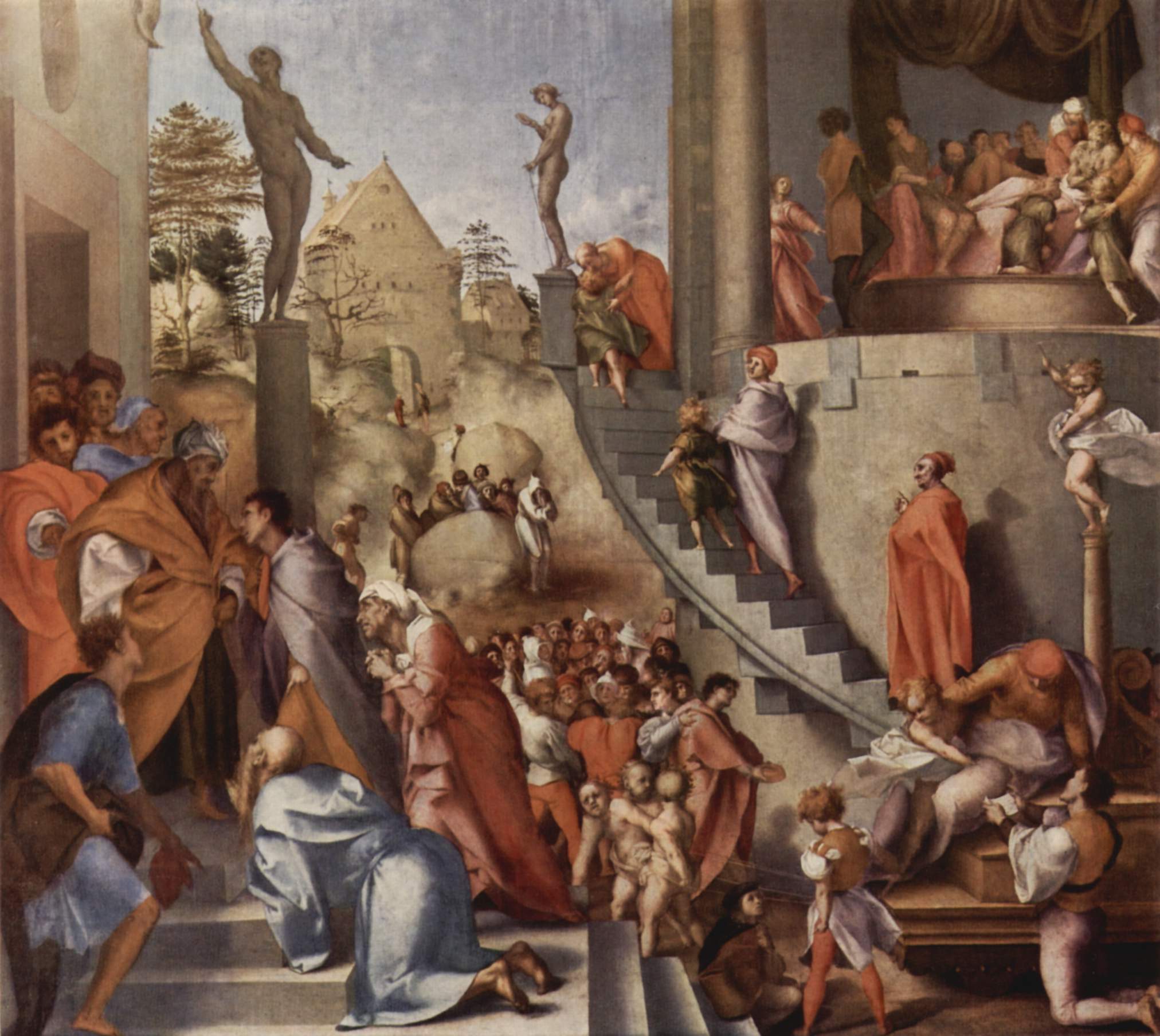
Genesis 39 to 41 tells how Potiphar, the prison warden and Pharaoh each put Joseph in charge of what was theirs.
A slave bought from passing traders came to run the grain stores that fed Egypt and its neighbours through seven years of famine.
You shall be in charge of my house, and all my people are to obey your commands. Only with regard to the throne will I be greater than you.”
- Where
- Egypt
- Who
- Joseph, Pharaoh
- When
- from Joseph's purchase by Potiphar to the famine years, with his entry into Pharaoh's service at thirty (Genesis 39:1 and Genesis 41:46)
Summary
Joseph never owned the houses he ran. In each of them the text gives the LORD's presence with him as the reason for his rise. In each he answered to a master for what was put in his hands. His foresight in the years of plenty kept a nation alive in the years of hunger.
- Joseph refused his master's wife because she was the one thing his master had not put in his hands, and because the act would be a sin against God.
- The LORD blessed Potiphar's house and field on account of Joseph.
- Joseph was thirty years old when he entered Pharaoh's service, after years as a slave and a prisoner.
Over Potiphar's House
Genesis 39:1 to 6 tells how an Egyptian officer came to trust a bought slave with everything.
Joseph over Egypt reads Joseph as a manager of goods that were never his. It belongs to the value of stewardship, because Joseph answered to a master for everything in his care.
The question the study answers is what his masters saw in Joseph and how he handled what they gave him. It follows the events in order and reads the Hebrew verb for his appointment. It sets his refusal beside his charge and gives two readings of his counsel to Pharaoh.
Potiphar held office under Pharaoh (Genesis 39:1). When he “saw that the LORD was with him and made him prosper in all he did” (Genesis 39:3), he made Joseph his attendant and then set him over the whole house.
So Potiphar left all that he owned in Joseph’s care; he did not concern himself with anything except the food he ate. Now Joseph was well-built and handsome,The verse shows what a master's full trust in a steward looked like in practice.
The Hebrew verb for setting Joseph over the house in Genesis 39:4 and Genesis 39:5 is paqad, glossed “he appointed”. Adam Clarke, in his Commentary on the Bible (1832), wrote that the word is “the same as επισκοπος, overseer or bishop, among the Greeks”.
The Story in Ten Events
The story turns at Joseph's refusal in Genesis 39:9 and at Pharaoh's choice in Genesis 41:40.
The events run from a slave's purchase in Genesis 39:1 to the nations buying grain in Genesis 41:57.
- Potiphar buys Joseph“bought him from the Ishmaelites”Genesis 39:1
- Potiphar sets Joseph over his house“entrusted him with everything he owned”Genesis 39:4
- The LORD blesses the Egyptian's house“blessed the Egyptian’s household on account of him”Genesis 39:5
- Joseph refuses his master's wife“withheld nothing from me except you”Genesis 39:9
- The warden puts the prison in Joseph's care“all the prisoners under Joseph’s care”Genesis 39:22
- Joseph counsels a reserve of grain“a reserve for the land”Genesis 41:36
- Pharaoh gives Joseph his signet ring“put it on Joseph’s finger”Genesis 41:42
- Joseph gathers the grain of the good years“like the sand of the sea”Genesis 41:49
- The famine begins, and Egypt has bread“there was food throughout the land of Egypt”Genesis 41:54
- The nations come to Egypt to buy“every nation came to Joseph in Egypt”Genesis 41:57
A timeline of ten events in Genesis 39 to 41, each with words of the Berean text and its verse.
Pharaoh gives Joseph his signet ring, Joseph gathers the grain of the good years, The famine begins, and Egypt has bread, The nations come to Egypt to buy
The Refusal and the Prison
Joseph refused what his master had kept back and was trusted again in the prison.
But he refused. “Look,” he said to his master’s wife, “with me here, my master does not concern himself with anything in his house, and he has entrusted everything he owns to my care.Joseph answers his master's wife as a steward, naming the trust his master had placed in him before he names the sin.
Adam Clarke found two reasons in Joseph's answer to her. The first was “Gratitude to his master, to whom he owed all that he had”, and the second “His fear of God”.
Potiphar had Joseph thrown into “the prison where the king’s prisoners were confined” (Genesis 39:20), and there “the LORD was with him and extended kindness to him” (Genesis 39:21).
The warden did not concern himself with anything under Joseph’s care, because the LORD was with Joseph and gave him success in whatever he did.The warden left the prison to Joseph without checking his work, which is the trust Potiphar had shown in his house.
Over Pharaoh's House and Land
Pharaoh chose the man who had read his dreams and gave him authority over the whole land of Egypt.
After Joseph interpreted Pharaoh's two dreams, he advised the king to “look for a discerning and wise man” (Genesis 41:33). He also told him to appoint commissioners and to take a fifth of the harvest of Egypt in the seven years of abundance (Genesis 41:34).
Then Pharaoh said to Joseph, “Since God has made all this known to you, there is no one as discerning and wise as you.Pharaoh grounds his choice in what God had shown Joseph, the meaning of the two dreams.
Pharaoh then said, “I hereby place you over all the land of Egypt” (Genesis 41:41). He declared that without Joseph's permission no one in Egypt “shall lift his hand or foot” (Genesis 41:44).
The Seven Years of Grain
Genesis 41:46 to 57 tells the storing of the good years and the selling of the bad.
Joseph left Pharaoh's presence and “traveled throughout the land of Egypt” (Genesis 41:46).
During those seven years, Joseph collected all the excess food in the land of Egypt and stored it in the cities. In every city he laid up the food from the fields around it.The verse shows the method of the storing, with the grain of each city's own fields kept in that city.
Adam Clarke read the fifth of Genesis 41:34 as “that part of the produce which is claimed by the king by way of tax”.
When the famine came, the people cried to Pharaoh for food, and he told them, “Go to Joseph and do whatever he tells you” (Genesis 41:55).
When the famine had spread over all the land, Joseph opened up all the storehouses and sold grain to the Egyptians; for the famine was severe in the land of Egypt.The verse stands here because the stores Joseph filled became the people's food when the famine struck.
What Joseph took in exchange for the grain as the famine went on, and how the land of Egypt became Pharaoh's, is told in Genesis 47.
Lord of His Master's Household
Joseph's own account of his office in Egypt gives the credit to God.
Years later Joseph told his brothers that “it was to save lives that God sent me before you” (Genesis 45:5).
Therefore it was not you who sent me here, but God, who has made me a father to Pharaoh—lord of all his household and ruler over all the land of Egypt.Joseph's words show that he saw his rule in Egypt as a trust given by God.
Voices on Joseph the Steward
One voice gives the source of Joseph's success and one draws the duty a trust lays on the one who holds it.
1662 to 1714 · Matthew Henry
Henry draws from Joseph's refusal a rule for every servant.
Read the page on Matthew Henry
“Note, We are bound in honour, as well as justice and gratitude, not in any thing to injure those that have a good opinion of us and place a trust in us, how secretly soever it may be done.”
Matthew Henry · Commentary on the Whole Bible · on Genesis 39:8 to 9Puritan
1703 to 1791 · John Wesley
Wesley speaks to the slave far from his father's house.
“Those that can separate us from all our friends, cannot deprive us of the gracious presence of our God. When Joseph had none of his relations with him, he had his God with him, even in the house of the Egyptian: Joseph was banished from his father's house, but the Lord was with him. It is God's presence with us that makes all we do prosperous.”
John Wesley · Explanatory Notes upon the Old Testament · on Genesis 39:2Evangelical
Did Joseph Mean Himself?
Readers have differed over whether Joseph's counsel in Genesis 41:33 pointed to himself.
The question is whether Joseph, when he told Pharaoh to find a man to set over the land, was putting himself forward.
Joseph spoke of himselfEphrem the Syrian
Ephrem the Syrian, in his Commentary on Genesis, wrote, “When Joseph said, ‘Let Pharaoh select a man,’ he spoke about himself.” He held that Joseph did not say it openly “out of modesty”.
The objection: Joseph named no one, and nothing in the text shows that he expected Pharaoh to choose a foreign slave fresh from prison.
Joseph gave the counsel of prudenceAdam Clarke
Adam Clarke wrote, “As it is impossible that Joseph could have foreseen his own elevation, consequently he gave this advice without any reference to himself.”
The objection: Pharaoh found the answer to the counsel in the man who gave it, at once and in front of his officials (Genesis 41:37 to 39).
The Steward of Egypt
Luke 12:42 sets Joseph's office beside Jesus' question about the manager of a household.
Jesus asked for the same wisdom in a manager that Pharaoh looked for, and He joined faithfulness to it.
And the Lord answered, “Who then is the faithful and wise manager, whom the master puts in charge of his servants to give them their portion at the proper time?The question stands here because it names the manager Joseph was, set over a household to give its people their food at the proper time.
The Greek word behind “manager” there is oikonomos, the manager of a household.
Sources
Scripture is the Berean Standard Bible.
- STEP Bible, Translators Amalgamated Hebrew Old Testament, the tagged Hebrew text (Tyndale House, Cambridge), CC BY 4.0.
- STEP Bible, Translators Brief lexicon of Extended Strongs for Greek (Tyndale House, Cambridge), CC BY 4.0.
- Adam Clarke, Commentary on the Bible (1832), on Genesis 39:4, 39:9, 41:33 and 41:34.
- John Wesley, Explanatory Notes upon the Old Testament (1765), on Genesis 39:2.
- Matthew Henry, Commentary on the Whole Bible (1710), on Genesis 39:8 to 9.
- Ephrem the Syrian, Commentary on Genesis, on Genesis 41:33.
Keep Studying
People and groups5
Places1