

Matthew 18 · Value 15 of 41 · Featured Study
Forgiveness
Forgiveness in Scripture is the release of a debt.
Jesus told of a servant forgiven an unpayable debt.
Be kind and tenderhearted to one another, forgiving each other just as in Christ God forgave you.
- Anchor text
- Matthew 18:22 “Jesus answered, “I tell you, not just…”
- Its opposite
- Bitterness and revenge
- Hold in memory
- Ephesians 4:32, Psalm 103:12
Summary
Scripture speaks of forgiveness first as God's own act. He lifts sin away, does not count it against the sinner and removes it from him, and He does so at His own cost. In the Gospels Jesus forgave sins on earth with the authority of God and gave His blood for the forgiveness of sins. The command to forgive one another rests on what God has done.
- Forgiveness of sin belongs to God, and Scripture keeps one Hebrew verb for forgiving, salach, for Him alone.
- God forgives through atonement, and without the shedding of blood there is no forgiveness (Hebrews 9:22).
- Believers forgive one another because God has forgiven them, and in the measure He has forgiven them (Colossians 3:13).
- Jesus warned that the Father will not forgive the one who will not forgive others (Matthew 6:15).
- Forgiving releases the debt from the heart and still leaves room for rebuke and repentance (Leviticus 19:17; Luke 17:3).
What Forgiveness Is
Four words of Hebrew and Greek carry what Scripture means by forgiving.
What does Scripture mean when it says that God forgives, and why does it command His people to forgive in the same breath? This study of forgiveness answers from the text in the order Scripture keeps, with God's forgiving first and ours after it. It gives the Hebrew and Greek words, the key texts and the commands. It shows the ground of forgiveness in God, Christ's forgiving and His teaching, the confession that receives pardon, the people who forgave, the practice and the opposite. It then names the stories, the witnesses of the church, the voices, the science and the questions on which readers disagree.
Salach, to forgive
The Hebrew verb salach (H5545) means to forgive, and in the Old Testament no human being is its subject. A psalm blesses the LORD “who forgives all your iniquities.”
Nasa, to lift
The Hebrew verb nasa (H5375) means to lift and to carry, and in a few of its uses to forgive, as in “Blessed is he whose transgressions are forgiven.”
Aphiemi, to release
The Greek verb aphiemi (G863) means to send away and to let go, and it names the cancelling of the servant's debt in the parable, where his master “forgave his debt, and released him.”
Charizomai, to forgive freely
The Greek verb charizomai (G5483) means to give grace, and in some uses to forgive freely, as in “Forgive as the Lord forgave you.”
Salach, to forgive, Nasa, to lift, Aphiemi, to release, Charizomai, to forgive freely, The Words Nasa, Salach and Aphiemi, the study in brief
The Key Texts of Forgiveness
The key texts carry God's forgiveness from the name He proclaimed to Moses to the forgiveness Paul names in Christ.
Law
Then the LORD passed in front of Moses and called out: “The LORD, the LORD God, is compassionate and gracious, slow to anger, abounding in loving devotion and faithfulness, maintaining loving devotion to a thousand generations, forgiving iniquity, transgression, and sin. Yet He will by no means leave the guilty unpunished; He will visit the iniquity of the fathers on their children and grandchildren to the third and fourth generations.”
The LORD proclaims to Moses that forgiving iniquity, transgression and sin belongs to His own name.
History
and if My people who are called by My name humble themselves and pray and seek My face and turn from their wicked ways, then I will hear from heaven, forgive their sin, and heal their land.
God answers Solomon's prayer at the temple with a promise to forgive a people who humble themselves and turn.
Wisdom
If You, O LORD, kept track of iniquities, then who, O Lord, could stand? But with You there is forgiveness, so that You may be feared.
The psalmist confesses that no one could stand if God kept track of iniquities, and that forgiveness is found with Him.
Prophets
“Come now, let us reason together,” says the LORD. “Though your sins are like scarlet, they will be as white as snow; though they are as red as crimson, they will become like wool.
The LORD calls a guilty Judah to come and reason with Him about sins as red as crimson.
Isaiah 1:18BSB
Acts and Epistles
All the prophets testify about Him that everyone who believes in Him receives forgiveness of sins through His name.”
Peter tells the household of Cornelius that all the prophets testify to forgiveness through the name of Jesus.
Acts 10:43BSB
Acts and Epistles
In Him we have redemption through His blood, the forgiveness of our trespasses, according to the riches of His grace
Paul joins forgiveness to redemption and measures it by the riches of God's grace.
2 Chronicles 7:14, Psalm 130:3 to 4, Isaiah 1:18, Acts 10:43, Ephesians 1:7
Where Scripture Commands Forgiveness
The Law, the wisdom books, Jesus and Paul command God's people to forgive.
The Law told Israel, “Do not seek revenge or bear a grudge against any of your people, but love your neighbor as yourself” (Leviticus 19:18). Proverbs calls it a man's virtue “to overlook an offense” (Proverbs 19:11).
Jesus set the command at the place of prayer: “when you stand to pray, if you hold anything against another, forgive it” (Mark 11:25).
In Ephesians 4:32 Paul uses one Greek verb, charizomai, for both the believer's forgiving and God's.
In each row what God's people are asked to do answers something God has already done.
2 paragraphs, A table of five rows in two columns, each cell in the Berean words of its verse.
What God Does With Sin
The Law ties God's forgiveness to atonement, and the prophets join it to a changed life.
Of the sin offering the Law says, “in this way the priest will make atonement on their behalf, and they will be forgiven” (Leviticus 4:20).
Jamieson, Fausset and Brown commented on Micah 7:19 in 1871. They wrote, “When God takes away the guilt of sin that it may not condemn us, He takes away also the power of sin that it may not rule us”.
Spurgeon counted what God has not done for sinners as a reason for praise.2 quotations, 1 paragraph
The Hebrew verb rachaq, to remove far away, stands twice in Psalm 103:12. Psalm 103:10 praises God for a punishment He has withheld.
“As far as the east is from the west, so far hath he removed our transgressions from us. O glorious verse, no word even upon the inspired page can excel it! Sin is removed from us by a miracle of love! What a load to move, and yet is it removed so far that the distance is incalculable. Fly as far as the wing of imagination can bear you, and if you journey through space eastward, you are further from the west at every beat of your wing.”
Charles Spurgeon · The Treasury of David, Vol. 4 · on Psalm 103:12
“He hath not dealt with us after our sins; nor rewarded us according to our iniquities. Else had Israel perished outright, and we also had long ago been consigned to the lowest hell. We ought to praise the Lord for what he has not done as well as for what he has wrought for us; even the negative side deserves our adoring gratitude.”
Charles Spurgeon · The Treasury of David, Vol. 4 · on Psalm 103:10
Who is a God like You, who pardons iniquity and passes over the transgression of the remnant of His inheritance—who does not retain His anger forever, because He delights in loving devotion?Micah closes his book by asking who is a God like the LORD, who pardons iniquity because He delights in loving devotion.
a paragraph, Spurgeon counted what God has not done for sinners as a reason for praise., Micah 7:18
Christ and Forgiveness
The Gospels record Jesus forgiving sins Himself, commanding His disciples to forgive and naming forgiveness as the purpose of His blood.
Jesus told a paralyzed man, “Son, your sins are forgiven” (Mark 2:5). Some of the scribes asked in their hearts, “Who can forgive sins but God alone?” He answered them by healing the man.
But so that you may know that the Son of Man has authority on earth to forgive sins...” He said to the paralytic, “I tell you, get up, pick up your mat, and go home.”Jesus heals the man so that the scribes may know that He has authority on earth to forgive sins.
And forgive us our debts, as we also have forgiven our debtors.The petition calls sins debts and ties the disciple's request to his own forgiving of his debtors.
Jesus answered Peter's question with the parable of the unforgiving servant. It ends, “That is how My heavenly Father will treat each of you unless you forgive your brother from your heart” (Matthew 18:35).
This is My blood of the covenant, which is poured out for many for the forgiveness of sins.At the last supper Jesus gave the cup as His blood of the covenant, poured out so that sins might be forgiven.
Mark 2:10 to 11, Father, Forgive Them, the study in brief, Matthew 6:12, Matthew 26:28
The Hard Text, Matthew 6:14 to 15
These two verses follow the prayer Jesus taught in Matthew 6:9 to 13.
In the prayer the word for sins is debts (opheilema), and in the warning after it the word is trespasses (paraptoma), which the lexicon defines as a side-slip.
For if you forgive men their trespasses, your heavenly Father will also forgive you. But if you do not forgive men their trespasses, neither will your Father forgive yours.God's forgiveness of the disciple is tied in these verses to the disciple's forgiving of others, first as a promise and then as a warning.
Adam Clarke set the trespasses of others against our debts to God.1 paragraph
Adam Clarke drew the contrast in his Commentary on the Bible (1832). He wrote, “Mens sins against us are only their stumblings, or fallings off from the duties they owe us; but ours are debts to Gods justice”. Of the warning he wrote, “He who does not awake at the sound of so loud a voice, is not asleep but dead”. Augustine had said it before him in the Enchiridion (chapter 74), “The man whom the thunder of this warning does not awaken is not asleep, but dead”.
The question whether a believer can be lost has a study of its own.1 paragraph
Some readers have taken this warning as a threat to their salvation. The study of eternal security sets the warning texts of Scripture beside its promises and gives the readings of four traditions.
Matthew 6:14 to 15, Adam Clarke set the trespasses of others against our debts to God., The question whether a believer can be lost has a study of its own.
Confession, the Side God Asks of Us
Psalm 32, Psalm 51 and 1 John 1:9 show what a sinner brings to God's forgiveness.
David confessed to Nathan, “I have sinned against the LORD,” and Nathan answered, “The LORD has taken away your sin” (2 Samuel 12:13). Psalm 51 asks for mercy before it names the sin.
Spurgeon likened sin kept silent to a fire in the bones and a wound that must be lanced.2 quotations, 1 verse
When I kept silent, my bones became brittle from my groaning all day long. For day and night Your hand was heavy upon me; my strength was drained as in the summer heat. Selah Then I acknowledged my sin to You and did not hide my iniquity. I said, “I will confess my transgressions to the LORD,” and You forgave the guilt of my sin. SelahThe psalm moves from a body worn down by silence to guilt forgiven at the word of confession.
“When I kept silence. When through neglect I failed to confess, or through despair dared not do so, my bones, those solid pillars of my frame, the stronger portions of my bodily constitution, waxed old, began to decay with weakness, for my grief was so intense as to sap my health and destroy my vital energy. What a killing thing is sin! It is a pestilent disease! A fire in the bones! While we smother our sin it rages within, and like a gathering wound swells horribly and torments terribly. Through my roaring all the day long.”
Charles Spurgeon · The Treasury of David, Vol. 2 · on Psalm 32:3
“I acknowledged my sin unto thee. After long lingering, the broken heart bethought itself of what it ought to have done at the first, and laid bare its bosom before the Lord. The lancet must be let into the gathering ulcer before relief can be afforded. The least thing we can do, if we would be pardoned, is to acknowledge our fault; if we are too proud for this we double deserve punishment. And mine iniquity have I not hid. We must confess the guilt as well as the fact of sin.”
Charles Spurgeon · The Treasury of David, Vol. 2 · on Psalm 32:5
David prays to be cleansed with hyssop and given a heart created new.2 quotations, 4 verses
Have mercy on me, O God, according to Your loving devotion; according to Your great compassion, blot out my transgressions. Wash me clean of my iniquity and cleanse me from my sin. For I know my transgressions, and my sin is always before me. Against You, You only, have I sinned and done what is evil in Your sight, so that You may be proved right when You speak and blameless when You judge.David appeals to God's loving devotion and compassion before he confesses that he sinned against God.
“Have mercy upon me, O God. He appeals at once to the mercy of God, even before he mentions his sin. The sight of mercy is good for eyes that are sore with penitential weeping. Pardon of sin must ever be an act of pure mercy, and therefore to that attribute the awakened sinner flies. ‘According to thy lovingkindness.’ Act, O Lord, like thyself; give mercy like thy mercy. Show mercy such as is congruous with thy grace.”
Charles Spurgeon · The Treasury of David, Vol. 2 · on Psalm 51:1
Purify me with hyssop, and I will be clean; wash me, and I will be whiter than snow.Hyssop is the plant Israel dipped in the Passover blood to mark the doorposts (Exodus 12:22).
Create in me a clean heart, O God, and renew a right spirit within me.The verb for create is bara, the verb of Genesis 1:1, so the psalm asks God for a work only He can do.
The sacrifices of God are a broken spirit; a broken and a contrite heart, O God, You will not despise.David offers God the humbled spirit that no offering of animals could replace.
“The sacrifices of God are a broken spirit. All sacrifices are presented to thee in one, by the man whose broken heart presents the Saviour's merit to thee. When the heart mourns for sin, thou art better pleased than when the bullock bleeds beneath the axe. ‘A broken heart’ is an expression implying deep sorrow, embittering the very life; it carries in it the idea of all but killing anguish in that region which is so vital as to be the very source of life.”
Charles Spurgeon · The Treasury of David, Vol. 2 · on Psalm 51:17
If we confess our sins, He is faithful and just to forgive us our sins and to cleanse us from all unrighteousness.John grounds the promise in God's faithfulness and justice, and his verb for cleanse is katharizo.
Spurgeon likened sin kept silent to a fire in the bones and a wound that must be lanced., David prays to be cleansed with hyssop and given a heart created new., 1 John 1:9, Forgiving Yourself: What Scripture Says, the study in brief
Who Forgave
Three people of Scripture forgave those who had wronged them or prayed for their healing.
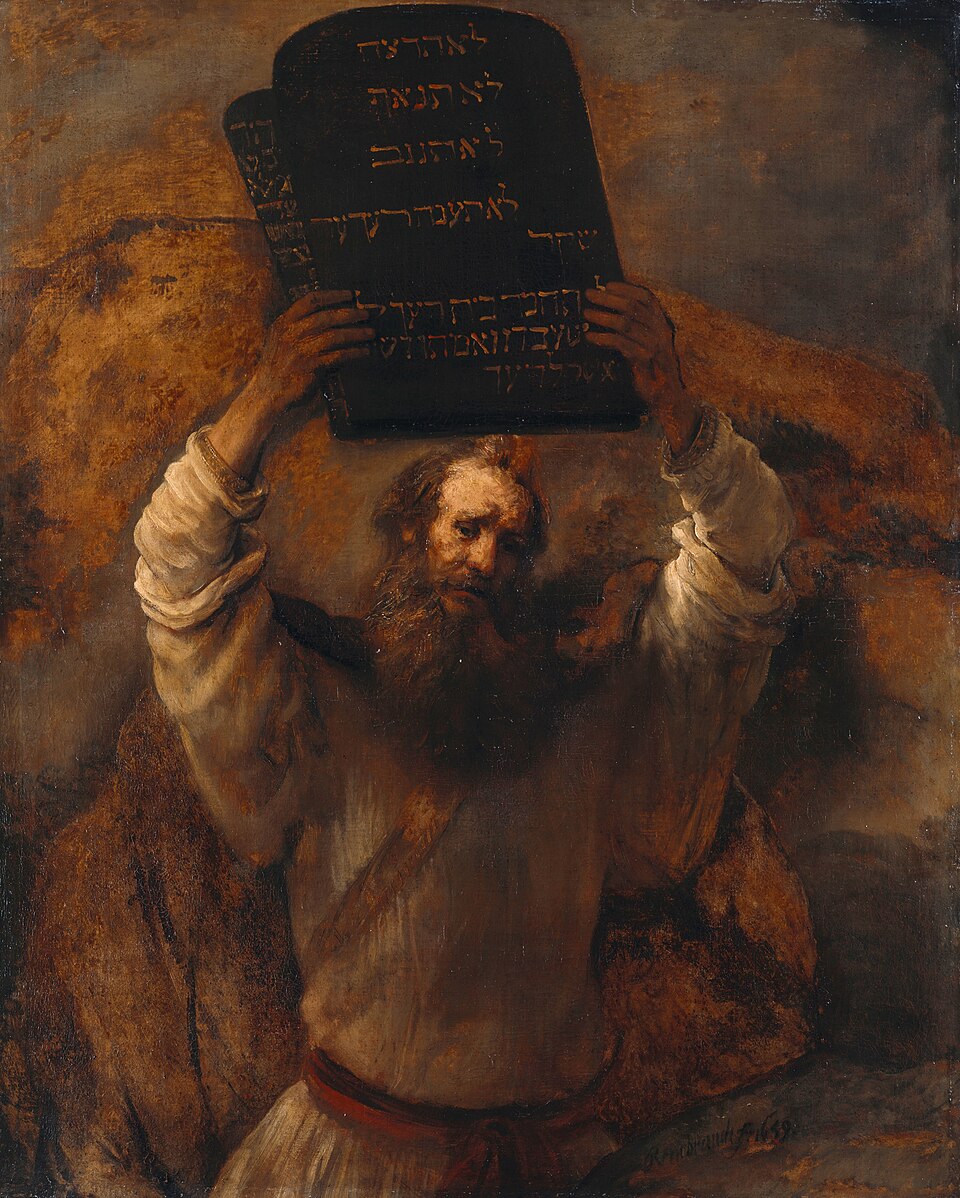
When Miriam, who had criticized him, became leprous, he cried out to the LORD, “O God, please heal her!”
Numbers 12:13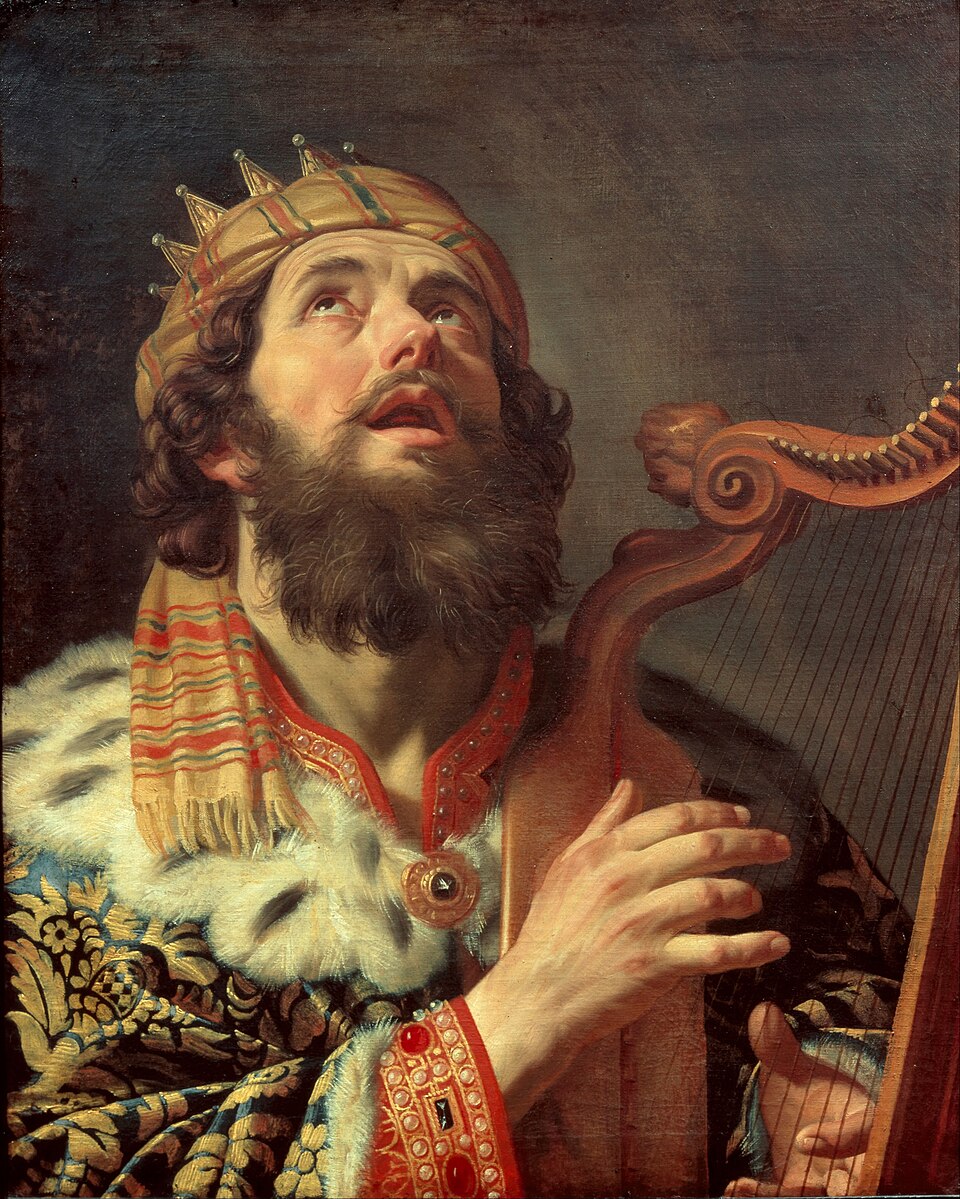
Coming back to Jerusalem, he told Shimei, who had cursed him, “You shall not die.”
2 Samuel 19:23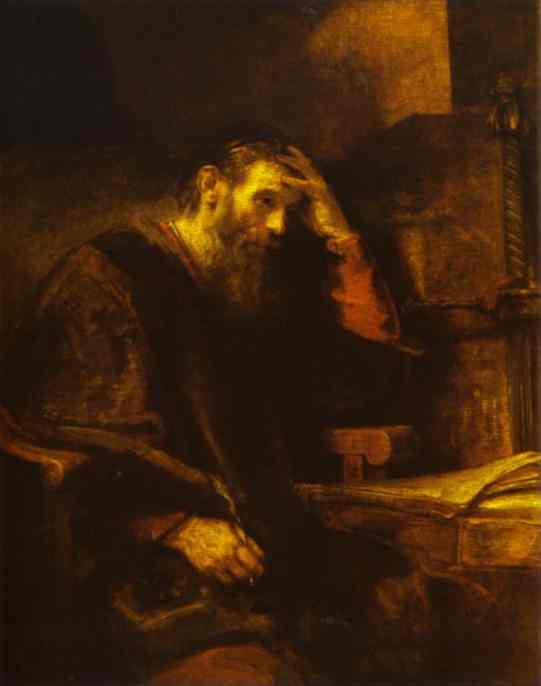
He wrote to the Corinthians of a man the church had punished, “If you forgive anyone, I also forgive him.”
2 Corinthians 2:10
The Practice of Forgiveness
Scripture names seven practices of forgiveness, each in the words of the verse that gives it.
- 1Be reconciled before worship“First go and be reconciled to your brother; then come and offer your gift.”Matthew 5:24
- 2Rebuke instead of harboring hatred“You must not harbor hatred against your brother in your heart. Directly rebuke your neighbor, so that you will not incur guilt on account of him.”Leviticus 19:17
- 3Go to him privately first“If your brother sins against you, go and confront him privately. If he listens to you, you have won your brother over.”Matthew 18:15
- 4Forgive the one who repents“Watch yourselves. If your brother sins, rebuke him; and if he repents, forgive him.”Luke 17:3
- 5Let love cover sins“Above all, love one another deeply, because love covers over a multitude of sins.”1 Peter 4:8
- 6Leave vengeance to God“Do not avenge yourselves, beloved, but leave room for God’s wrath.”Romans 12:19
- 7Comfort the one forgiven“So instead, you ought to forgive and comfort him, so that he will not be overwhelmed by excessive sorrow.”2 Corinthians 2:7
Rebuke instead of harboring hatred, Go to him privately first, Forgive the one who repents, Let love cover sins, Leave vengeance to God, Comfort the one forgiven
What Stands Against Forgiveness
Revenge and the held grudge stand against forgiveness in Scripture.
Scripture's first boast of revenge is Lamech's, “If Cain is avenged sevenfold, then Lamech seventy-sevenfold” (Genesis 4:24). Paul urged the Corinthians to forgive “in order that Satan should not outwit us” (2 Corinthians 2:11).
Wisdom
Do not say, “I will avenge this evil!” Wait on the LORD, and He will save you.
Proverbs answers the wish to avenge a wrong with the call to wait for the LORD.
Epistles
“Be angry, yet do not sin.” Do not let the sun set upon your anger, and do not give the devil a foothold.
Paul allows anger and forbids keeping it past sunset, because held anger gives the devil a foothold.
Proverbs 20:22, Ephesians 4:26 to 27
Forgiveness in the Stories of the Bible
Five stories tell of a brother who ran to meet Jacob, a brother who wept over those who sold him, a woman forgiven much, a son welcomed home and a martyr who prayed.
Esau meets JacobGenesis 33
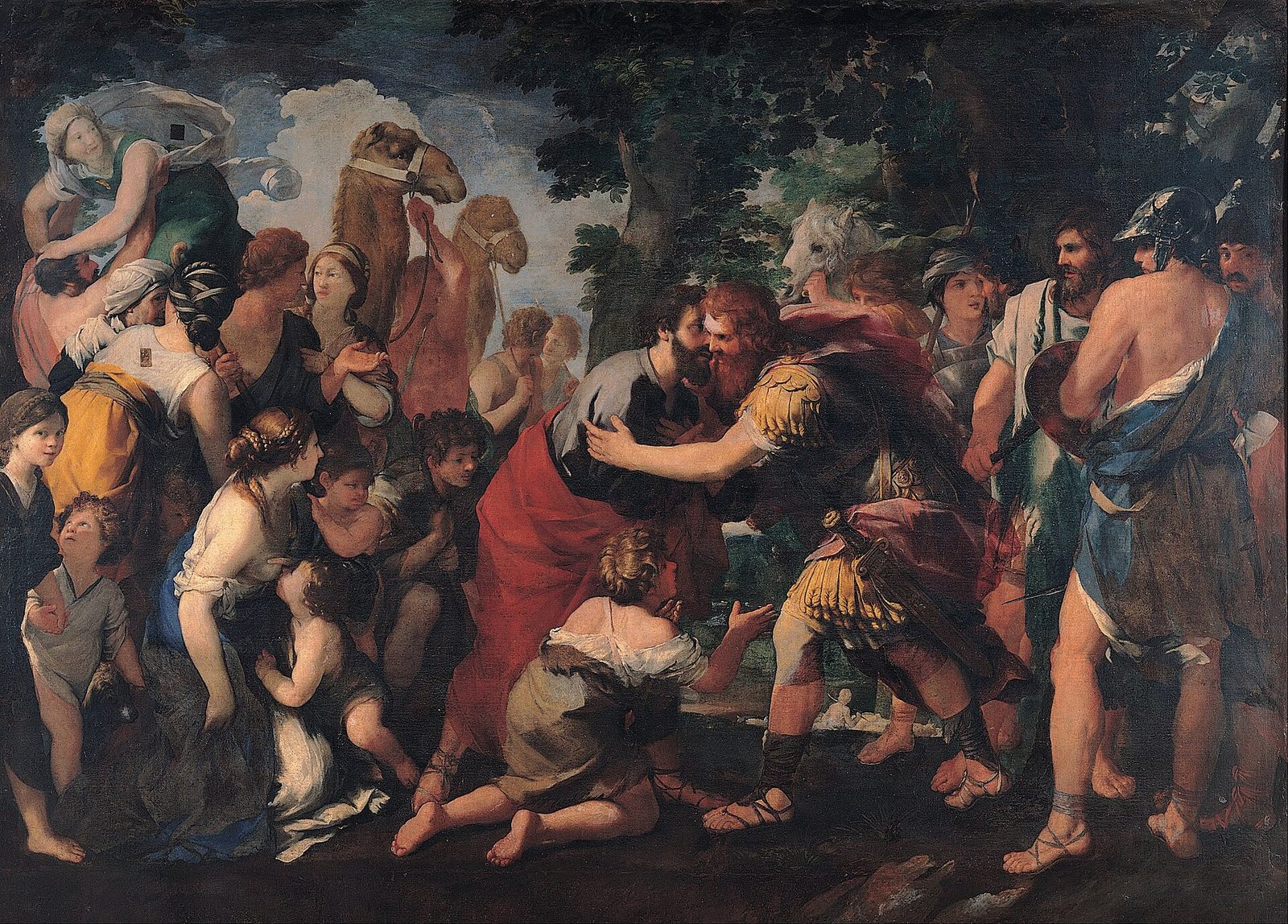
Jacob had taken his father's blessing, and “Esau held a grudge against Jacob” and planned to kill him (Genesis 27:41). Twenty years later Jacob came home afraid. “Esau, however, ran to him and embraced him, threw his arms around his neck, and kissed him. And they both wept” (Genesis 33:4).
Read the page on Esau 12 sections, 11 verses set out
Joseph and his brothersGenesis 45 and 50
Joseph's brothers had sold him into Egypt. When he made himself known, he told them not to be distressed or angry with themselves, and he kissed each of them as he wept (Genesis 45:5 to 15). After their father died they begged him to “forgive the transgression”. Joseph answered, “Am I in the place of God?”, and he promised to provide for them (Genesis 50:17 to 21).
Read the study of Joseph Forgives His Brothers 9 sections, 13 verses set out
The woman who loved muchLuke 7
At a Pharisee's table a sinful woman wept at Jesus' feet and anointed them. Jesus told of a lender who “forgave both” of his debtors (Luke 7:42). He said of her, “her many sins have been forgiven, she has loved much” (Luke 7:47).
The lost son and his fatherLuke 15
A younger son squandered his share in a distant country and came home to ask for a hired servant's place. “But while he was still in the distance, his father saw him and was filled with compassion. He ran to his son, embraced him, and kissed him” (Luke 15:20). The father called for the best robe and a feast before the son's speech was done.
StephenActs 7
Stephen was stoned outside Jerusalem while the witnesses laid their garments at the feet of a young man named Saul. “Falling on his knees, he cried out in a loud voice, ‘Lord, do not hold this sin against them.’ And when he had said this, he fell asleep” (Acts 7:60).
Read the study of Father, Forgive Them, which sets Stephen's prayer beside Luke 23:34
Joseph and his brothers (Genesis 45 and 50), The woman who loved much (Luke 7), The lost son and his father (Luke 15), Stephen (Acts 7)
Forgiveness in the Church's History
Four accounts tell of a martyr at the temple, the confessors of Lyons, a survivor of Ravensbrück and a congregation in Charleston.
James the Justthe apostolic age
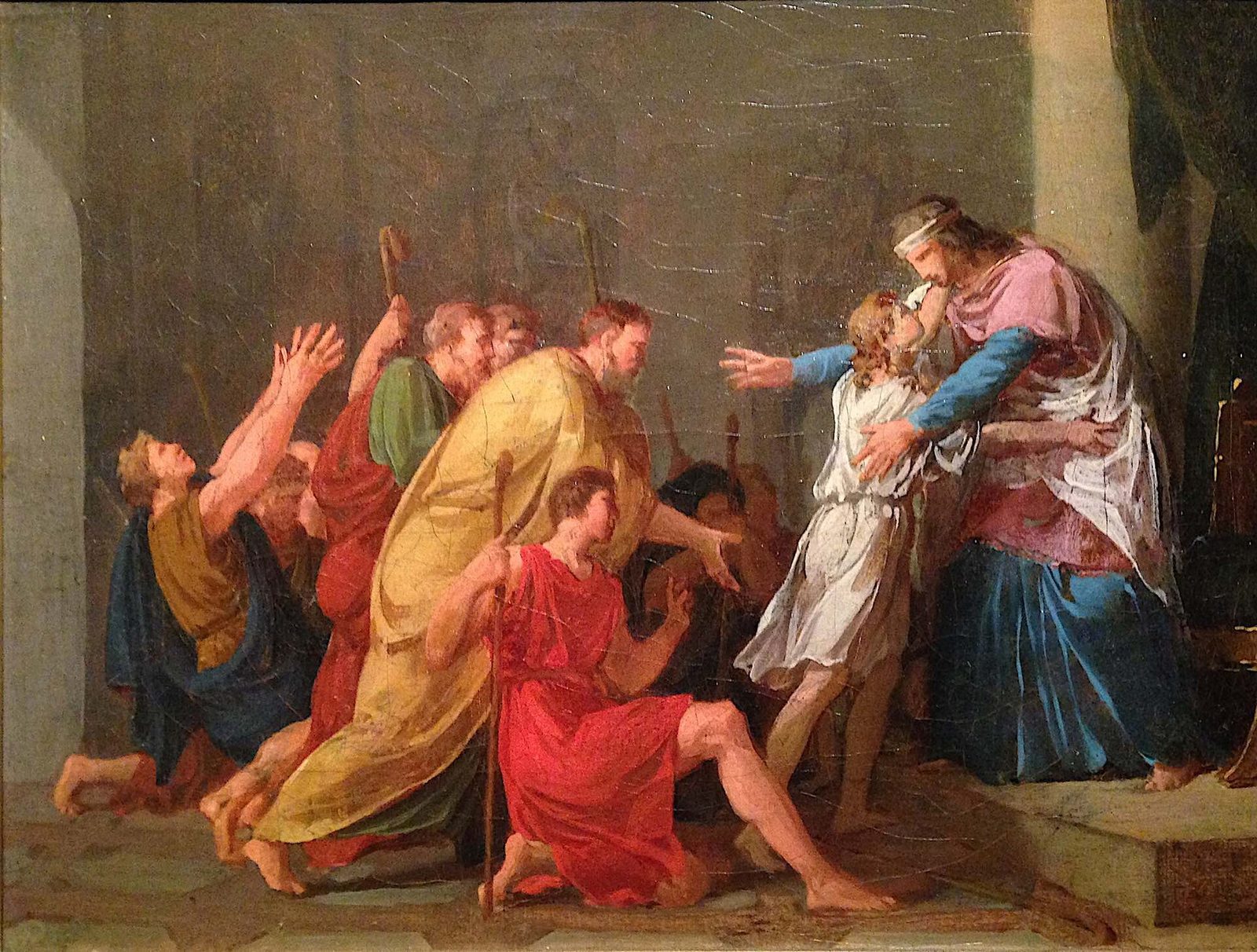
Eusebius preserves the account Hegesippus gave of the death of James the Just (Church History 2.23). Thrown from the temple and not killed by the fall, James “turned and knelt down” and asked God to forgive the men who were stoning him. Hegesippus is the one source for the account.
The martyrs of Lyons and Vienneabout 177
The churches of Lyons and Vienne wrote of their martyrs in a letter that Eusebius preserves (Church History 5.2.5). It says of the confessors, “They absolved all, but bound none. And they prayed for those who had inflicted cruelties upon them, even as Stephen”.
Corrie ten Boom1947
In a Guideposts article of November 1972 Corrie ten Boom told of a church in Munich in 1947, where a former guard of Ravensbrück asked her to forgive him. She wrote, “Forgiveness is an act of the will, and the will can function regardless of the temperature of the heart”, and she took his hand. Her book The Hiding Place appeared in 1971.
Read the study of Corrie ten Boom and the Guard 8 sections, 5 verses set out
Emanuel AME Church, Charleston2015
On 17 June 2015 nine people were killed at a Bible study at Emanuel AME Church in Charleston. At the bond hearing two days later the daughter of Ethel Lance told the gunman, “I will never be able to hold her again. But I forgive you” (NPR, 2 July 2015). The same report gives the objection of the activist Millicent Brown, that “you don't usually jump to forgiveness first”.
The martyrs of Lyons and Vienne (about 177), Corrie ten Boom (1947), Emanuel AME Church, Charleston (2015)
Voices on Forgiveness, by Century
Four quotations from the fourth century to the nineteenth, each under the line it teaches.
died 407 · John Chrysostom
Homily on Ephesians 17
Fourth to fifth century. God's pardon cost Him His Son, while ours often costs nothing and is still withheld.
The quotation1 quotation
“‘Even as God,’ saith he, ‘also in Christ forgave you.’ And this, moreover, contains a high allusion. Not simply, he would say, hath He forgiven us, and at no risk or cost, but at the sacrifice of His Son; for that He might forgive thee, He sacrificed the Son; whereas thou, oftentimes, even when thou seest pardon to be both without risk and without cost, yet dost not grant it.”
John Chrysostom · Homily on Ephesians 17 · on Ephesians 4:32Patristic
died 1274 · Thomas Aquinas
Commentary on Matthew
Thirteenth century. Forgiving others is a condition of being forgiven, because no sin is forgiven without charity.
The quotation1 quotation
“This condition is also necessary, because without it there is no remission of sins; hence: But if you will not forgive, etc. Nor is this surprising, because no sin can ever be forgiven without charity: ‘Charity covers all offenses’ (Pr 10:12). For he who harbors …”
Thomas Aquinas · Commentary on Matthew · on Matthew 6:15Patristic
1662 to 1714 · Matthew Henry
Commentary on the Whole Bible
Eighteenth century. Christ's forgiving is the reason for ours and an example believers must follow.
The quotation1 quotation
“And the reason is: Even as Christ forgave you, so also do you. The consideration that we are forgiven by Christ so many offences is a good reason why we should forgive others. It is an argument of the divinity of Christ that he had power on earth to forgive sins; and it is a branch of his example which we are obliged to follow, if we ourselves would be forgiven.”
Matthew Henry · Commentary on the Whole Bible · on Colossians 3:13Puritan
1834 to 1892 · Charles Spurgeon
The Treasury of David, Vol. 7
Nineteenth century. Pardon belongs to God, and He holds it ready for all who come confessing their sins.
The quotation1 quotation
“But there is forgiveness with thee. Blessed but. Free, full, sovereign pardon is in the hand of the great King: it is his prerogative to forgive, and he delights to exercise it. Because his nature is mercy, and because he has provided a sacrifice for sin, therefore forgiveness is with him for all that come to him confessing their sins. The power of pardon is permanently resident with God: he has forgiveness ready to his hand at this instant. ‘That thou mayest be feared.’ This is the fruitful root of piety.”
Charles Spurgeon · The Treasury of David, Vol. 7 · on Psalm 130:4
Matthew Henry, Charles Spurgeon
How Forgiveness Has Been Taught
The Didache, Cyprian, Augustine, Luther, Calvin and Thomas Watson taught forgiveness from the early church to the seventeenth century.
The Didache taught the church to pray the prayer Jesus taught three times a day.1 paragraph
The Didache sets down the prayer Jesus taught, with its petition for forgiveness, and tells the church, “Thrice in the day thus pray” (chapter 8).
Cyprian taught that the petition binds the one who prays by a condition.1 paragraph
Cyprian of Carthage wrote in his treatise on the prayer (chapter 23) that the Lord “has bound us by a certain condition and engagement”. We are to ask “that our debts be forgiven us in such a manner as we ourselves forgive our debtors”.
Augustine taught that forgiving from the heart is the greatest of the alms.1 paragraph
Augustine counted forgiving among the many kinds of alms in the Enchiridion (chapters 72 and 73). He wrote, “But none of those is greater than to forgive from the heart a sin that has been committed against us”.
Luther taught that God gives forgiveness in the Gospel before anyone prays for it.1 paragraph
Martin Luther wrote in the Large Catechism that God has “given us the Gospel, in which is pure forgiveness before we prayed or ever thought about it”. He added that “we, too, must ever forgive our neighbor who does us injury, violence, and wrong”.
Calvin taught that only God forgives guilt and that a person forgives by putting away wrath and revenge.1 paragraph
John Calvin wrote in the Institutes that the guilt of an offense belongs to God alone to forgive. He taught that a person forgives when “we can voluntarily divest our minds of wrath, hatred, and revenge”.
Thomas Watson taught that an enemy must be forgiven though he need not be trusted.1 paragraph
The Puritan Thomas Watson wrote on the fifth petition (first printed 1692), “we are not bound to trust an enemy; but we are bound to forgive him”. He described forgiving as striving “against all thoughts of revenge” and seeking “reconciliation with them”.
Where the Science Speaks
A review of many reports and one large trial tested programmes that teach forgiveness.
A meta-analysis of 54 research reports found that people treated to promote forgiveness reported more forgiveness than untreated people (Wade, Hoyt, Kidwell and Worthington, 2014).
A randomised trial of a self-directed workbook among 4,598 people in five countries found lower unforgiveness after two weeks than in a group waiting for the workbook (Ho and others, 2024).
Forgiveness and Health, the study in brief
Six Studies of Forgiveness
Each study takes one part of forgiveness further, grouped by the texts, the stories, the words, the practice and the science.
The texts
1 study
- Passages and psalms · 13 verses set outFather, Forgive Them
Luke 23:34 and Acts 7:59 to 60 record the dying prayers of Jesus and of Stephen for the people who killed them.
- Passages and psalms · 13 verses set outFather, Forgive Them
The stories
2 studies
- Stories · 5 verses set outCorrie ten Boom and the Guard
In 1947 Corrie ten Boom, who had survived Ravensbrück, met a former guard of the camp after she spoke in a church in Munich, and he asked her to forgive him.
- Stories · 13 verses set outJoseph Forgives His Brothers
Genesis 42 to 45 tells how Joseph tested his brothers and then made himself known to them, and Genesis 50:15 to 21 returns to the family after the funeral in Canaan.
- Stories · 5 verses set outCorrie ten Boom and the Guard
The words
1 study
- Symbols and words · 11 verses set outThe Words Nasa, Salach and Aphiemi
Nasa and salach in Hebrew and aphiemi in Greek are the verbs the Bible most often renders forgive, and the Hebrew Bible and the New Testament each add rarer words beside them.
- Symbols and words · 11 verses set outThe Words Nasa, Salach and Aphiemi
The practice
1 study
- Doctrines · 16 verses set outForgiving Yourself: What Scripture Says
Scripture answers a conscience that keeps accusing with God's own verdict on confessed sin, in the Psalms, Romans, Hebrews and 1 John and in the restoration of Peter.
- Doctrines · 16 verses set outForgiving Yourself: What Scripture Says
The science
1 study
- Doctrines · 8 verses set outForgiveness and Health
Hebrews 12:15 calls bitterness a root that springs up and defiles many, and Paul names bitterness first among the sins that believers are told to get rid of in Ephesians 4:31.
- Doctrines · 8 verses set outForgiveness and Health

Corrie ten Boom and the Guard, Joseph Forgives His Brothers, The Words Nasa, Salach and Aphiemi, Forgiving Yourself: What Scripture Says, Forgiveness and Health
Where Readers Disagree
Seven readings answer three questions, each with its holders, the work that argues it and the objection raised against it.
Must the wrongdoer repent first
| Reading | Held by | Work | Objection |
|---|---|---|---|
| Forgiveness is given to the one who repents and asks for it | Augustine of Hippo; John Wesley (Patristic; Methodist) | Augustine, Enchiridion 73 to 74 (translated by J. F. Shaw, 1887); Wesley, Explanatory Notes upon the New Testament (1755), on Luke 17:4 | Mark 11:25 commands forgiving at prayer with no repentance named, and Jesus and Stephen prayed for men who had not repented. |
| The Christian forgives from the heart whether or not the other repents | John Calvin (Reformed) | Calvin, Institutes of the Christian Religion 3.20.45 | God declares that He will not leave the guilty unpunished (Exodus 34:7), and Ephesians 4:32 sets His forgiving as the pattern of the believer's. |
| The heart forgives at once, and the pardon is spoken when it is asked | Albert Barnes; Ambrose of Milan, as the Catena Aurea quotes him (Presbyterian; Patristic) | Barnes, Notes on the New Testament, on Matthew 6:14; Ambrose on Luke 17:3 in Aquinas's Catena Aurea | Luke 17:3 joins forgiving to the brother's repentance and names no earlier stage. |
The Christian forgives from the heart whether or not the other repents, The heart forgives at once, and the pardon is spoken when it is asked
What Matthew 6:14 to 15 means
Read the study of Seventy Times Seven
| Reading | Held by | Work | Objection |
|---|---|---|---|
| Forgiving others is a true condition of being forgiven | Cyprian of Carthage; Augustine of Hippo; Thomas Aquinas (Patristic; Roman Catholic) | Cyprian, On the Lord's Prayer 23 (1886 translation); Augustine, Enchiridion 74; Aquinas, Commentary on Matthew, on 6:15 | Luther answered that God forgives freely and without condition, out of pure grace, and sets the condition as a sign for the believer's assurance. |
| Forgiving others is the sign and evidence of grace received | Martin Luther; John Calvin; Matthew Henry (Lutheran; Reformed) | Luther, Large Catechism, the fifth petition (1921 translation); Calvin, Institutes 3.20.45; Henry, Commentary on the Whole Bible (1710), on Matthew 6:14 to 15 | Augustine read the warning as it stands, that the one who will not forgive “need not suppose that his own sins are forgiven of God. For the Truth cannot lie.” |
Whether forgiving restores trust at once
Read the study of Reconciliation
| Reading | Held by | Work | Objection |
|---|---|---|---|
| Forgiveness is owed while trust, correction and justice may remain | Augustine of Hippo; John Calvin; Thomas Watson (Patristic; Reformed; Puritan) | Augustine, Enchiridion 72; Calvin, Institutes 4.20.17 to 18; Watson, The Lord's Prayer, the fifth petition (1692) | Paul says that God “reconciled us to Himself through Christ” (2 Corinthians 5:18), so a forgiveness modelled on God's aims at a restored relation. |
| True forgiveness always leads to reconciliation | Chris Brauns, as Trevin Wax reports his book (Evangelical) | Chris Brauns, Unpacking Forgiveness (Crossway, 2008), as Trevin Wax summarizes it in The Gospel Coalition (2009) | Paul writes, “If it is possible on your part, live at peace with everyone” (Romans 12:18), which allows a peace the other refuses. |
Sources
Scripture is the Berean Standard Bible.
- STEP Bible, Translators Brief lexicon of Extended Strongs for Hebrew and for Greek (Tyndale House, Cambridge), CC BY 4.0, with the Greek brief lexicon based on Abbott-Smith (1922)
- Charles Spurgeon, The Treasury of David, volume 2 (1870), on Psalms 32 and 51; volume 4 (1874), on Psalm 103; volume 7 (1885), on Psalm 130.
- Robert Jamieson, A. R. Fausset and David Brown, Commentary Critical and Explanatory on the Whole Bible (1871), on Micah 7:19.
- Adam Clarke, Commentary on the Bible (1832), on Matthew 6:15.
- John Chrysostom, Homilies on Ephesians, homily 17, on Ephesians 4:32.
- Thomas Aquinas, Commentary on the Gospel of Matthew, on Matthew 6:15, in a modern English translation.
- Matthew Henry, Commentary on the Whole Bible (1710), on Matthew 6:14 to 15 and Colossians 3:13.
- Augustine of Hippo, Enchiridion, chapters 72 to 74, translated by J. F. Shaw, Nicene and Post-Nicene Fathers, first series, volume 3 (1887)
- The Didache, chapter 8, translated by M. B. Riddle, Ante-Nicene Fathers, volume 7 (1886)
- Cyprian of Carthage, On the Lord's Prayer (Treatise 4), chapter 23, translated by Robert Ernest Wallis, Ante-Nicene Fathers, volume 5 (1886)
- Martin Luther, The Large Catechism, the fifth petition, translated by F. Bente and W. H. T. Dau, Triglot Concordia (St. Louis: Concordia, 1921)
- John Calvin, Institutes of the Christian Religion, book 3, chapter 20, section 45, and book 4, chapter 20, sections 17 to 18, translated by Henry Beveridge (1845)
- Thomas Watson, The Lord's Prayer, the fifth petition (first printed in A Body of Practical Divinity, 1692)
- John Wesley, Explanatory Notes upon the New Testament (1755), on Luke 17:4.
- Albert Barnes, Notes, Explanatory and Practical, on the New Testament (1832 to 1869), on Matthew 6:14.
- Ambrose of Milan on Luke 17:3, as Thomas Aquinas quotes him in the Catena Aurea on Luke.
- Trevin Wax, review of Chris Brauns, Unpacking Forgiveness (Wheaton: Crossway, 2008), The Gospel Coalition, 6 August 2009.
- Eusebius, Church History, book 2, chapter 23, and book 5, chapter 2, translated by Arthur Cushman McGiffert, Nicene and Post-Nicene Fathers, second series, volume 1 (Buffalo: Christian Literature Publishing, 1890)
- Corrie ten Boom, article on forgiving a former guard of Ravensbrück, Guideposts, November 1972, reprinted as Guideposts Classics: Corrie ten Boom on Forgiveness.
- Wade Goodwyn, Charleston's Black Leaders Want To See Justice As Much As Forgiveness, NPR, Morning Edition, 2 July 2015.
- N. G. Wade, W. T. Hoyt, J. E. Kidwell and E. L. Worthington, Efficacy of psychotherapeutic interventions to promote forgiveness: a meta-analysis, Journal of Consulting and Clinical Psychology 82(1): 154 to 170 (2014)
- M. Y. Ho, E. L. Worthington, R. G. Cowden and others, International REACH forgiveness intervention: a multisite randomised controlled trial, BMJ Public Health 2(1): e000072 (2024)
Keep Studying
Read it6
Studies14
In this value6
People and groups14
Show the next 6 titles
Doctrines16