
Micah 7:19
in Micah 7He will again have compassion on us; He will vanquish our iniquities. You will cast out all our sins into the depths of the sea.
BSB
The same verse in ASV and KJV ▾
ASV
He will again have compassion upon us; he will tread our iniquities under foot; and thou wilt cast all their sins into the depths of the sea.
KJV
He will turn again, he will have compassion upon us; he will subdue our iniquities; and thou wilt cast all their sins into the depths of the sea.
⋯
This verse in Micah 7
Commentary
12 notes on this verse"The Lord sits enthroned over the flood." A flood is an overflow of water that causes all lying below it to disappear. It cleanses all that was previously filthy. Therefore he calls the grace of baptism a flood, so that the soul, being washed well of its sins and rid of the old person, is suitable henceforth as a dwelling place of God in the Spirit. Further, what is said in the twenty-first psalm agrees with this.
This site's exposition
Who is a God like unto thee, that pardoneth iniquity
on Micah 7:18-19
The book closes on its own name, Micah meaning who is like the Lord, and verse 18 turns that name into a question the whole prophecy has been answering, who is a God like unto thee, that pardoneth iniquity, and passeth by the transgression of the remnant of his heritage. Gill and the older commentators read the wordplay as deliberate, the prophet signing the book with the very syllables of its argument, anger not retained because mercy is delighted in. Verse 19 answers with the picture the church has returned to ever since, thou wilt cast all their sins into the depths of the sea, sin not merely forgiven but sent where it cannot be recovered. Henry reads the double verb, he will subdue our iniquities before he casts them away, as pardon that deals with sin's power first and only then with its record.
The record, by era
The Church Fathers3 voices
(Verse 18-20.) Who is God like you? You who take away iniquity and pass over the sin of the remnant of your inheritance. He will not continue to be angry, for he delights in showing mercy. He will again have compassion on us; he will tread our iniquities underfoot and hurl all our sins into the depths of the sea. You will be faithful to Jacob, and show mercy to Abraham, as you swore to our fathers long ago. LXX: Who is like you, O God? You who removes iniquities and surpasses injustices for those who remain as your heritage? He did not retain his anger as testimony because he desires mercies. He will return and have mercy on us, he will submerge our sins, and all our sins will be cast into the deep sea. He will give Jacob truth and Abraham mercy, as you swore to our fathers in the days of old. The wise prophet, seeing the multitude of nations disturbed in its conclusion, is amazed and afraid of God, and therefore the Lord rages in order to take away sins and grant salvation. He praises and marvels at the Lord, saying: Who is like you, O God, taking away iniquities and surpassing injustices (Exodus 12): just as the exterminator passed over the people of Israel in Egypt and did not destroy them (hence the name Passover, which means passing over), so you spare the nations, not counting their iniquities against them. Furthermore, what follows is this: Those who remain of his inheritance have not held his wrath as a testimony. This is the meaning: If he spared the nations that did not want to believe in his Law, and those who were left from the people are abandoned, he did not want to impute their injustices to them nor did he inflict his wrath as a testimony of just punishment. What will he do with his flock, which grazes in the middle of Carmel, and in Bashan, and in Gilead? […]
He will turn again and have compassion upon us; he will tread our iniquities under foot, and all our sins shall be cast into the depths of the sea. He will perform the truth to Jacob and the mercy to Abraham, as he hath sworn …
We should give a tunic to one who has none at all. Who is the person who does not have a tunic? It is one who utterly lacks God. Therefore we should divest ourselves and give to one who is naked. One has God; another does not have God at all. We give to the one who does not have God. The prophet in Scripture says, "We should cast our sins into the depths of the sea." John continues, "He who has food should do likewise." Whoever has food should give some to one who has none. He should generously give him not only clothing but also what he can eat.
The Puritans and the Awakening2 voices
1 Woe is me! for I am as when they have gathered the summer fruits, as the grape-gleanings of the vintage: there is no cluster to eat: my soul desired the first-ripe fruit. 2 The good man is perished out of the earth: and there is none upright among men: they all lie in wait for blood; they hunt every man his brother with a net.
quarantine:scripture (2026-07-29) — scripture-overlap:94%@v1-2
He will turn again,....
5 more voices on this verse
The Puritans and the Awakening1 voice
But, if God forgive the sin that has been committed by us, he will subdue the sin that dwells in us, and in that there is none like him in forgiving; and all those whose sins are pardoned earnestly desire and hope; to have their corruptions mortified and their iniquities subdued, and please themselves with the hopes of it.
The Nineteenth Century4 voices
A commentator
Albert Barnes1798–1870
Notes, Explanatory and Practical, on the Old and New Testaments (1832-1869)
He will turn again - who seemed to be turned away from us when we were turned away from Him. “He will subdue, or trample under foot” Joe 2:14, our worst enemy, “our iniquities”, as He saith, “He shall bruise Satan under your feet shortly” Rom 16:20. Hitherto, sinful passions had not rebelled only, but had had the mastery over us. Sin subdued man; it was his lord, a fierce tyrant over him; he could not subdue it.
BUT lately I tuned my harp to the music of forgiven sin and we sang of pardon bought with blood, finding our keynote in the words of David—"Who forgives all your iniquities." It was a sweet subject to all our hearts, for we all have a portion in it, seeing we are all sinful and have need to be forgiven—therefore did our souls dance to the high sounding cymbals as we rejoiced in the complete pardon which our gracious God has given to all who believe in Jesus.
A commentator
Jamieson, Fausset & Brown1802–1910
Commentary Critical and Explanatory on the Whole Bible (1871)
When God takes away the guilt of sin that it may not condemn us, He takes away also the power of sin that it may not rule us. cast . . . into . . . depths of the sea--never to rise again to view, buried out of sight in eternal oblivion: not merely at the shore side, where they may rise again. our . . . their--change of person.
BUT lately I tuned my harp to the music of forgiven sin and we sang of pardon bought with blood, finding our keynote in the words of David—"Who forgives all your iniquities." It was a sweet subject to all our hearts, for we all have a portion in it, seeing we are all sinful and have need to be forgiven—therefore did our souls dance to the high sounding cymbals as we rejoiced in the complete pardon which our gracious God has given to all who believe in Jesus. But, Beloved, the pardon of sin is not enough for us—we have another equally urgent need. If the Lord would forgive us all our sins we could not be happy with that alone. "Who forgives all your iniquities" is not perfect music till we add to it the next note, "who heals all your diseases." We feel that we have within us a tendency to sin and that tendency is our misery. From this tendency we must be emancipated, or we are no more free than the captive who has had the manacles removed from one wrist but feels the iron eating into the other arm! We wish to be delivered from every propensity to sin—yes, to be rescued altogether from its power. God has now given us a new life and this will never be easy till the last link of the chain of sin is utterly removed. Since our new birth there remains no rest for us short of being perfectly like our God in righteousness and true holiness. The heavenly Seed within us must and will grow—and as it increases in the soul, it will expel the power of evil, for it cannot endure the least particle of it. We may now be called "the Irreconcilables," for we can never be at peace with evil. We cannot tolerate sin. The thought of it pains us and when we fall into a sinful act we are cut to the quick. We thirst to be pure! We pant to be holy and we shall never be satisfied until we are perfectly so.
The words behind it
9 Hebrew wordsEvery Hebrew word of this verse in the order it stands, with what it means and the door to its own study. The last column counts the times a word stands in the whole Bible: the rarer the word, the more the places it appears belong together.
| Hebrew | Sound | Meaning | Word study | In the Bible |
|---|---|---|---|---|
| יָשׁ֣וּב | yashuv | he will return | H7725 → | 1056 times |
| יְרַֽחֲמֵ֔נוּ | yerachamenu | he will have compassion on us | H7355 → | |
| יִכְבֹּ֖שׁ | yikhbosh | he will subdue | H3533 → | |
| עֲוֹֽנֹתֵ֑ינוּ | ʾavonoteinu | iniquities our | H5771 → | |
| וְתַשְׁלִ֛יךְ | vetashlikh | so you may cast | H7993 → | |
| בִּמְצֻל֥וֹת | bimtzulot | in [the] depths of | H4688 → | |
| יָ֖ם | yam | [the] sea | H3220 → | 396 times |
| כָּל־ | kol- | all | H3605 → | 5413 times |
| חַטֹּאותָֽם׃ | chatotam | sins their | H2403 → | 295 times |
יָשׁ֣וּבhe will return
yashuvH7725 →1056 times
יְרַֽחֲמֵ֔נוּhe will have compassion on us
yerachamenuH7355 →
יִכְבֹּ֖שׁhe will subdue
yikhboshH3533 →
עֲוֹֽנֹתֵ֑ינוּiniquities our
ʾavonoteinuH5771 →
וְתַשְׁלִ֛יךְso you may cast
vetashlikhH7993 →
בִּמְצֻל֥וֹתin [the] depths of
bimtzulotH4688 →
יָ֖ם[the] sea
yamH3220 →396 times
כָּל־all
kol-H3605 →5413 times
חַטֹּאותָֽם׃sins their
chatotamH2403 →295 times
A shaded row is a word that stands 400 times or fewer in the Bible.
The walk
8 stopsEach card is a verse this one points to, and under it the verses that one points to in turn. Where several paths arrive at the same place, that place is listed first: the text keeps returning to it.
Through
Isaiah 43:25I, yes I, am He who blots out your transgressions for My own sake and remembers your sins no more.
it leads to
- Hebrews 8:12
For I will forgive their iniquities and will remember their sins no more.”
Reached by 2 separate paths from here.
- Jeremiah 31:34
No longer will each man teach his neighbor or his brother, saying, ‘Know the LORD,’ because they will all know Me, from the least of them to the greatest, declares the LORD. For I…
Reached by 2 separate paths from here.
- Micah 7:18–19
Who is a God like You, who pardons iniquity and passes over the transgression of the remnant of His inheritance—who does not retain His anger forever, because He delights in loving devotion?
- Hebrews 10:17
Then He adds: “Their sins and lawless acts I will remember no more.”
- Isaiah 1:18
“Come now, let us reason together,” says the LORD. “Though your sins are like scarlet, they will be as white as snow; though they are as red as crimson, they will become like wool.
- Hebrews 8:12
Through
Psalms 103:12As far as the east is from the west, so far has He removed our transgressions from us.
it leads to
- Isaiah 43:25
I, yes I, am He who blots out your transgressions for My own sake and remembers your sins no more.
Reached by 3 separate paths from here.
- 1 John 1:7
But if we walk in the light as He is in the light, we have fellowship with one another, and the blood of Jesus His Son cleanses us from all sin.
- Micah 7:18
Who is a God like You, who pardons iniquity and passes over the transgression of the remnant of His inheritance—who does not retain His anger forever, because He delights in loving devotion?
- Isaiah 43:25
Where this verse is studied
On this page
Studies1
About Micah
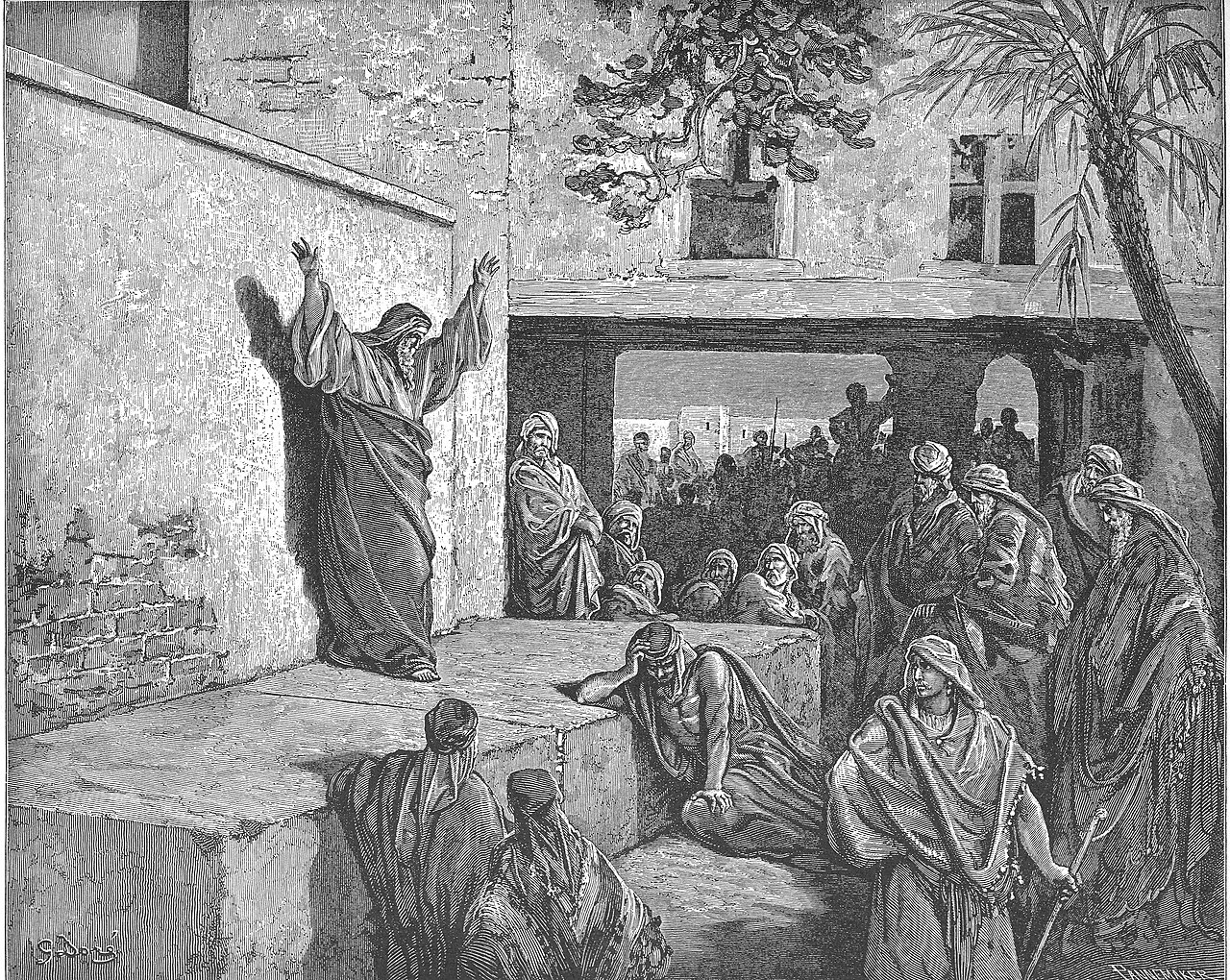
This page draws on 10 works. Open the list of works
This page draws on Albert Barnes, Notes, Explanatory and Practical, on the Old and New Testaments (1832-1869); Basil of Caesarea, HOMILIES ON THE PSALMS 28:8; Charles Spurgeon, The Metropolitan Tabernacle Pulpit, Sermon No. 1577: “Sin Subdued” (lightly modernized text, CCEL edition); Cosmas Indicopleustes, The Christian Topography, Book 5; Jamieson, Fausset & Brown, Commentary Critical and Explanatory on the Whole Bible; Jerome, Commentary on Micah; John Gill, Exposition of the Old Testament; John Gill, Exposition of the Old Testament (1748-1763); Matthew Henry, Commentary on the Whole Bible and Origen of Alexandria, HOMILIES ON THE GOSPEL OF LUKE 23:5.