
Subject
Restoration
What God rebuilds after ruin: years the locust ate, given back.
Part of Life questions
Also called: rebuilt, made new, the years the locust ate, renewal, brought back, repaired
This subject covers what God rebuilds after ruin, in a person and in a nation. What was taken belongs to Loss. Turning back to God, which usually comes first, belongs to Repentance.
What Restoration covers, and where it stops
This subject covers what God rebuilds after ruin, in a person and in a nation. What was taken belongs to Loss. Turning back to God, which usually comes first, belongs to Repentance.
On this page, 6 sections
The one drawing
Across the canon
11 passages
Where Scripture speaks
The passages this subject stands on, in canon order.
After Job had prayed for his friends, the LORD restored his prosperity and doubled his former possessions.He restores my soul; He guides me in the paths of righteousness for the sake of His name.Restore to me the joy of Your salvation, and sustain me with a willing spirit.When the LORD restored the captives of Zion, we were like dreamers.They will rebuild the ancient ruins; they will restore the places long devastated; they will renew the ruined cities, the desolations of many generations.But I will restore your health and heal your wounds, declares the LORD, because they call you an outcast, Zion, for whom no one cares.”I will repay you for the years eaten by locusts—the swarming locust, the young locust, the destroying locust, and the devouring locust—My great army that I sent against you.I will restore My people Israel from captivity; they will rebuild and inhabit the ruined cities. They will plant vineyards and drink their wine; they will make gardens and eat their fruit.For this son of mine was dead and is alive again! He was lost and is found!’ So they began to celebrate.Brothers, if someone is caught in a trespass, you who are spiritual should restore him with a spirit of gentleness. But watch yourself, or you also may be tempted.And after you have suffered for a little while, the God of all grace, who has called you to His eternal glory in Christ, will Himself restore you, secure you, strengthen you, and establish you.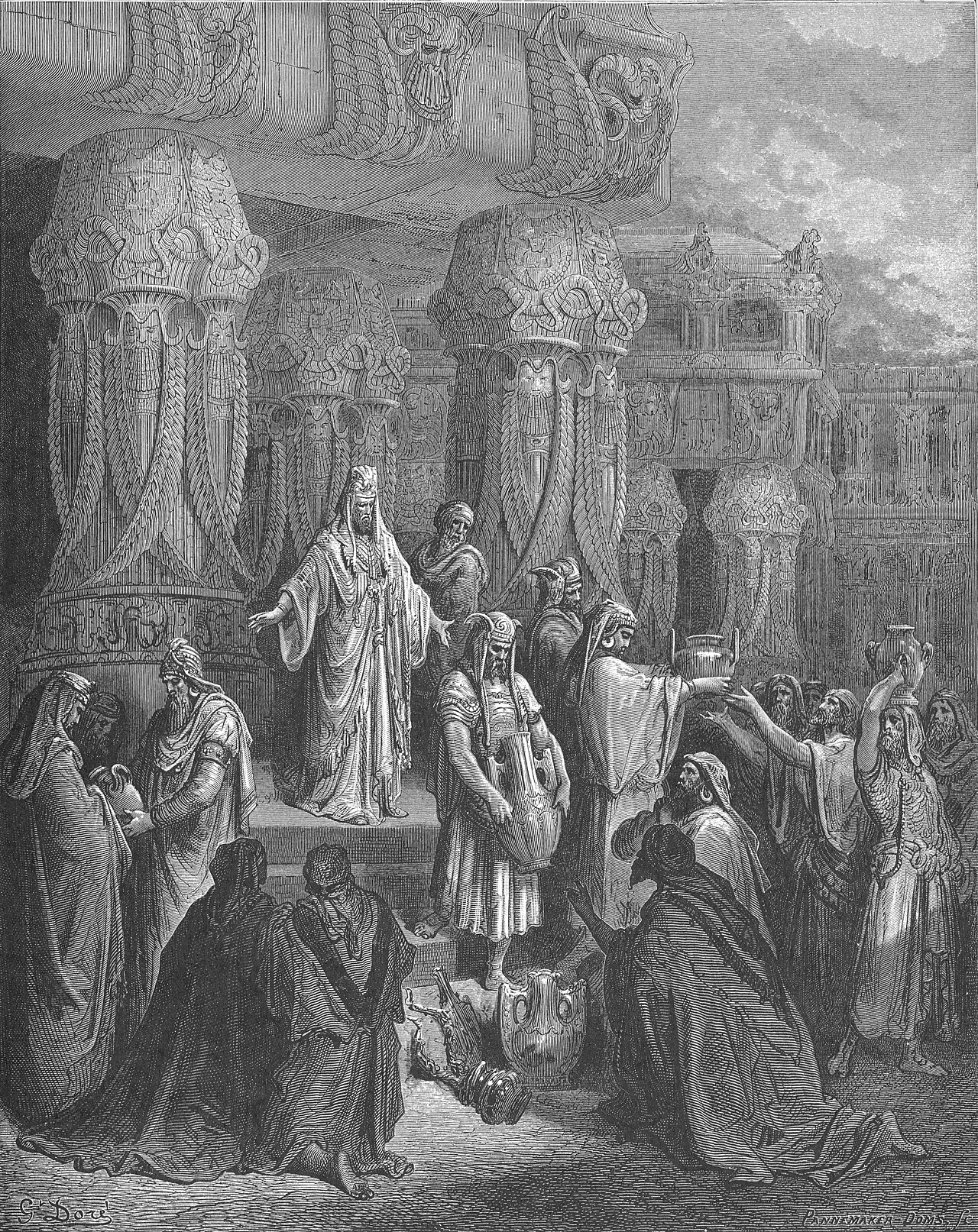
Restoration in Scripture, in full
Restoration is what happens after loss, when God does not merely comfort the wound but reverses it. Scripture begins with a garden broken by sin (Genesis 3:23-24) and ends with a garden-city where nothing is cursed any longer (Revelation 22:3). Between those two points sits the whole story of restoration.
Job lost everything in a single day: his children, his flocks, his health. He never received a full explanation. But at the end of the book, God gave him twice what he had before (Job 42:10). The doubling did not erase the grief of the children he had buried, but it showed that God's last word over a ruined life is not ruin.
The clearest picture of national restoration in the Old Testament is the return from exile. Jerusalem's walls lay broken for seventy years (Nehemiah 1:3). Then God stirred a pagan king's heart to send the people home, rebuild the temple, and raise the walls again in fifty-two days (Nehemiah 6:15). The prophet Joel promised something even more personal: God would restore the years the locust had eaten (Joel 2:25): not just future blessing, but the years themselves, given back.
David knew restoration from the inside. After his sin with Bathsheba, he did not ask God to erase his guilt and move on quietly. He asked for something specific: for the joy of salvation to be restored to him (Psalm 51:12). He had not lost his salvation; he had lost the joy of it. Restoration, in David's mouth, is God giving back what sin had stolen from a heart that was still His.
The New Testament tells the same story in miniature through a parable. A son takes his inheritance, wastes it, and comes home expecting nothing but a servant's job. His father runs to him instead. When the son is finally seated at the table, the father says it plainly: his son was dead, and is alive again; he was lost, and is found (Luke 15:24). That is restoration in one sentence: not a second chance earned, but a relationship given back whole.
Restoration is not only for the fallen; it is also for the ones who help them up. Paul tells the Galatian church that when a believer is caught in sin, the spiritual ones among them are to restore such a person in a spirit of gentleness (Galatians 6:1): not punish, not shame, but restore. Restoration is meant to move through God's people, not only from God directly.
None of this restoration work is automatic. It is always the LORD's own doing; the God who restores the soul (Psalm 23:3) is a shepherd, not a distant judge issuing pardons from a throne. He walks the sheep back onto the path himself.
All of it points forward to Christ. He is the one through whom everything broken gets put back together: not just souls, but eventually creation itself (Romans 8:21). The cross is where the cost of restoration was paid, and the empty tomb is the proof that what God restores, stays restored. Whatever a person has lost to sin, to sorrow, or to years that felt like locusts stripping a field bare, the God of Scripture is not finished with it yet. He restores.
5 voices
What teachers have said
The same God who, as it were (in human language), was on the watch for all means to destroy, shall be as much on the watch for the means of their restoration.
Jamieson, Fausset & Brown · Commentary Critical and Explanatory on the Whole Bible, 1871
Pardoning mercy is a release from the curse of the law, and renewing grace is a release from the dominion of sin. Both are from Christ, and are branches of the great salvation.
Matthew Henry · Commentary on the Whole Bible, 1710
He alludes to the tree of life, and intimates, that this is the only restorer of that life which we have lost by sin.
John Wesley · Explanatory Notes upon the Old Testament, 1765
The power which exists in a grain of wheat refashions and restores the grain, after its corruption and death, into a body with stalk and ear.
Origen of Alexandria · On First Principles 2.10.3
Written before 253.
Here is not only a gracious prophetic promise of their restoration from captivity, but of their conversion to God through Christ.
Adam Clarke · Commentary on the Bible
Written before 1832.
The words underneath
Each card is one Hebrew or Greek word behind restoration. It gives the sense, the count across the canon, and the number in Strong's 1890 concordance.
palingenesia: regeneration
Greek · G3824Strong's entry: (spiritual) rebirth (the state or the act), i.e. (figuratively) spiritual renovation; specially, Messianic restoration
the Messianic restoration awaiting creation itself
2 times in the New Testament · palingenesia, in full →
apokathistemi: to restore
Greek · G600Strong's entry: to reconstitute (in health, home or organization)
Christ's promised restoring of all things
8 times in the New Testament · apokathistemi, in full →
chadash: to renew
Hebrew · H2318Strong's entry: to be new; causatively, to rebuild
God renewing what sin and time wore down
10 times in the Old Testament · chadash, in full →
shub: to return: return
Hebrew · H7725Strong's entry: to turn back (hence, away) transitively or intransitively, literally or figuratively (not necessarily with the idea of return to the starting point); generally to retreat; often adverbial, again
the root word behind almost every restoration promise
1,056 times in the Old Testament · shub, in full →
Life questions