
Genesis 32:28
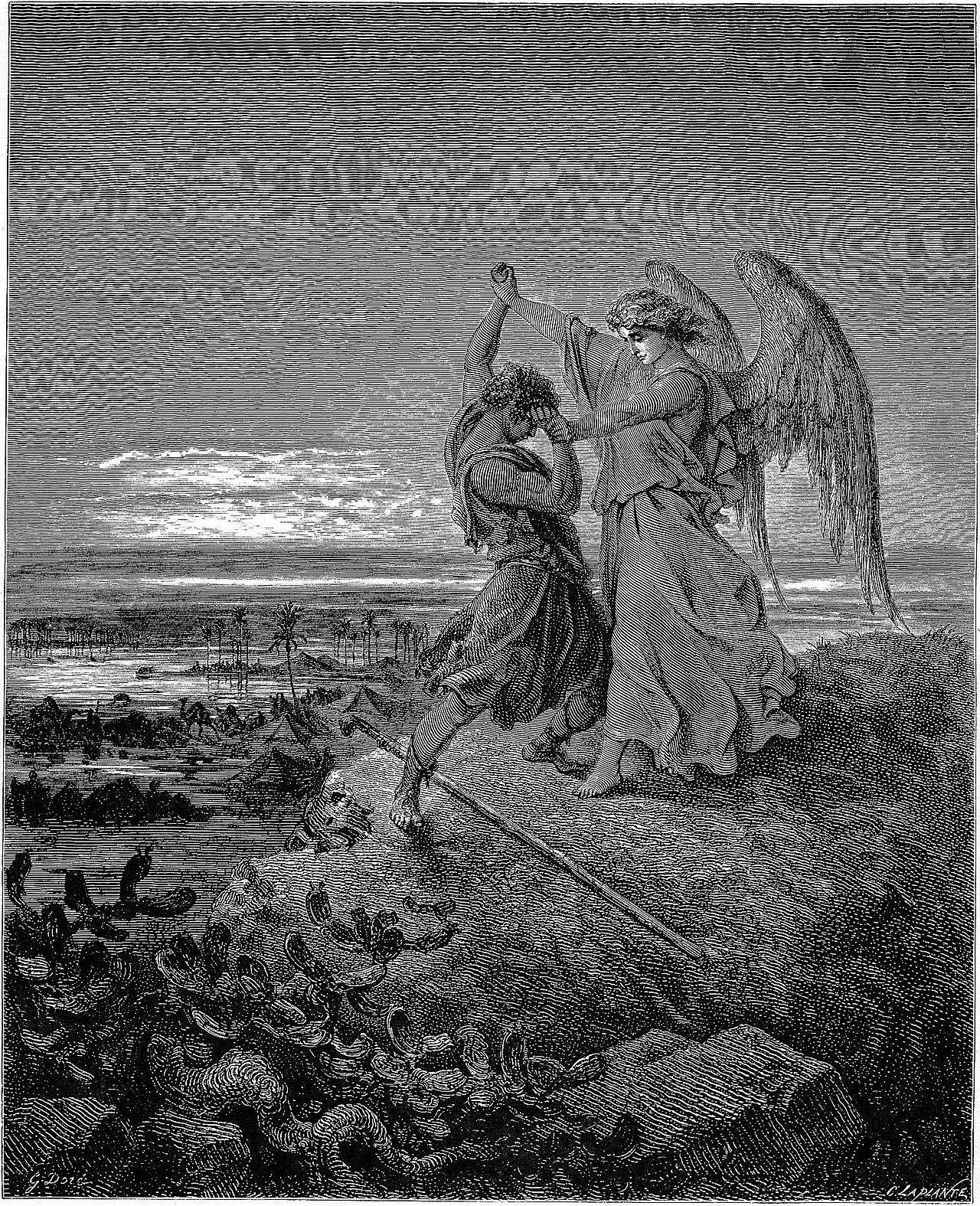
in Genesis 32Then the man said, “Your name will no longer be Jacob, but Israel, because you have struggled with God and with men, and you have prevailed.”
BSB
The same verse in ASV and KJV ▾
ASV
And he said, Thy name shall be called no more Jacob, but Israel: for thou hast striven with God and with men, and hast prevailed.
KJV
And he said, Thy name shall be called no more Jacob, but Israel: for as a prince hast thou power with God and with men, and hast prevailed.
⋯
This verse in Genesis 32
Commentary
13 notes on this verse(Verse 27 and 28.) And he said to him: What is your name? He said, Jacob. And he said to him: Your name shall no longer be called Jacob, but your name shall be called Israel: for you have wrestled with God, and have prevailed with men. Josephus, in the first book of Antiquities, thinks that Israel was called so because he wrestled with an angel. I carefully examined this, but I could not find it at all in Hebrew. And why should I seek the opinions of individuals, when the one who gave the name explains the etymology himself?
This site's exposition
What is your name
on Genesis 32:27-28
The last man who could not see Jacob asked him who he was, and that was Isaac at Genesis 27:19, where the answer was Esau. Here he gives his own name, the name Esau threw at him for supplanting twice. The confession comes first, and the new name follows it.
This site's exposition
Your name will no longer be Jacob
Israel joins the verb sarah, to strive, with El, God. The renaming is spoken again at Genesis 35:10, and the narrative keeps both names to the end of the book. Abram, renamed at 17:5, is called Abraham from then on.
The record, by era
The Church Fathers3 voices
Be with me now in thy faithful spirit, holy and blessed Patriarch Jacob, to combat the poisonous hissings of the serpent of unbelief. Prevail once more in thy wrestling with the Man, and, being the stronger, once more entreat His blessing. Why pray for what thou mightest demand from thy weaker Opponent? Thy strong arm has vanquished Him Whose blessing thou prayest. Thy bodily victory is in broad contrast to thy soul's humility, thy deeds to thy thoughts.
Now, as I said just a little while ago, Jacob was also called Israel, which was the name generally borne by the people descended from him. This name was given him by the angel who wrestled with him when Jacob was on his way back from Mesopotamia. This angel obviously presents a type of Christ. For the fact that Jacob "prevailed over" him (the angel, of course, being a willing loser to symbolize the hidden meaning) represents the passion of Christ, in which the Jews seemed to prevail over him. And yet Jacob obtained a blessing from the very angel whom he had defeated; thus the giving of the name was the blessing. Now "Israel" means "seeing God," and the vision of God will be the reward of all the saints at the end of the world. Moreover, the angel also touched the apparent victor on the broad part of his thigh and thus made him lame. And so the same man, Jacob, was the same time blessed and lame—blessed in those who among this same people of Israel have believed in Christ and crippled in respect of those who do not believe. For the broad part of the thigh represents the general mass of the race. For in fact it is to the majority of that stock that the prophetic statement applies, "They have limped away from their paths."
Do you see how God revealed the complete explanation of why he demonstrated such considerateness? At the same time God taught this good man [Jacob] through the imposition of the name [Israel] who it was that he had seen and had been allowed to hold on to. Recall the text says, "You will no longer be called Jacob but Israel." Now Israel means "seeing God." "Since you are privileged to see God, insofar as it is possible for a human being to see him, hence I also give you this name so that it may be clear to everyone in future that you were accorded a vision." And he added, "For you have fought with God and will thus be powerful in dealing with human beings." No longer have any fear or expect to suffer any harm from anyone. Having gained such might in the first place as to succeed in wrestling with God, much more will you prevail over human beings and prove superior to all.
The Medieval Church1 voice
A commentator
BonaventureItinerarium Mentis in Deum, Chapter 7 · Written in the 13th century.
proposed
This was also shown to blessed Francis, when in the rapture of contemplation on the lofty mountain — where I pondered in my mind these things which have been written — there appeared a Seraph with six wings affixed to a cross, as I and …
The Puritans and the Awakening1 voice
Yet this was not all; having power with God, he shall have power with men too. Having prevailed for a blessing from heaven, he shall, no doubt, prevail for Esau's favour. Note, Whatever enemies we have, if we can but make God our friend, we are well off; those that by faith have power in heaven have thereby as much on earth as they have occasion for.
5 more voices on this verse
The Puritans and the Awakening3 voices
2 And when Jacob saw them, he said, This is God's host: and he called the name of that place Mahanaim. Jacob, having got clear of Laban, pursues his journey homewards towards Canaan: when God has helped us through difficulties we should go on our way heaven-ward with so much the more cheerfulness and resolution. Here is Jacob's convoy in his journey (
quarantine:debris (2026-07-29) — unbalanced-parens
Lord, what will become of that promise, if they be all cut off? Jacob having piously made God his friend by a prayer, is here prudently endeavouring to make Esau his friend by a present. He had prayed to God to deliver him from the hand of Esau - His prayer did not make him presume upon God's mercy, without the use of means.
And he said, thy name shall be called no more Jacob, but Israel,....
The Nineteenth Century2 voices
A commentator
Jamieson, Fausset & Brown1802–1910
Commentary Critical and Explanatory on the Whole Bible (1871)
Thy name shall be called no more Jacob, but Israel--The old name was not to be abandoned; but, referring as it did to a dishonorable part of the patriarch's history, it was to be associated with another descriptive of his now sanctified and eminently devout character.
Thy name shall be called no more Jacob, but Israel - ושראל Yisrael, from שר sar, a prince, or שרה sarah, he ruled as a prince, and אל el, God; or rather from איש ish, a man, (the א aleph being dropped), and ראה raah, he saw, אל el, God; and this corresponds with the name which Jacob imposed on the place, calling it פניאל peniel, the faces of God, or of Elohim, which faces being manifested to him caused him to say, Gen 32:30, ראיתי אלהים פנים אל פנים raithi Elohim panim el panim, i.e., “I have seen the Elohim faces to faces, (i.e., fully and completely, without any medium), ותנצל נפשי vattinnatsel napshi, and my soul is redeemed.” We may learn from this that the redemption of the soul will be the blessed consequence of wrestling by prayer and supplication with God: “The kingdom of heaven suffereth violence, and the violent take it by force.” From this time Jacob became a new man; but it was not till after a severe struggle that he got his name, his heart, and his character changed. After this he was no more Jacob the supplanter, but Israel - the man who prevails with God, and sees him face to face. And hast prevailed - More literally, Thou hast had power with God, and with man thou shalt also prevail. עם אלהים Im Elohim, with the strong God; עם אנשים im anashim, with weak, feeble man. There is a beautiful opposition here between the two words: Seeing thou hast been powerful with the Almighty, surely thou shalt prevail over perishing mortals; as thou hast prevailed with God, thou shalt also prevail with men: God calling the things that were not as though they had already taken place, because the prevalency of this people, the Israelites, by means of the Messiah, who should proceed from them, was already determined in the Divine counsel. He has never said to the seed of Jacob, Seek ye my face in vain. He who wrestles must prevail.
The words behind it
16 Hebrew wordsEvery Hebrew word of this verse in the order it stands, with what it means and the door to its own study. The last column counts the times a word stands in the whole Bible: the rarer the word, the more the places it appears belong together.
| Hebrew | Sound | Meaning | Word study | In the Bible |
|---|---|---|---|---|
| וַיֹּ֗אמֶר | vaiyomer | and he said | H559 → | 5305 times |
| לֹ֤א | lo' | not | H3808 → | 5168 times |
| יַעֲקֹב֙ | yaako | Jacob | H3290 → | 350 times |
| יֵאָמֵ֥ר | yeamer | it will be called | H559 → | 5305 times |
| עוֹד֙ | ʾod | again | H5750 → | 490 times |
| שִׁמְךָ֔ | shimkha | name your | H8034 → | 864 times |
| כִּ֖י | ki | that | H3588 → | 4482 times |
| אִם־ | ʾim- | except | H518 → | 1069 times |
| יִשְׂרָאֵ֑ל | yisrael | Israel | H3478 → | 2507 times |
| כִּֽי־ | ki- | for | H3588 → | 4482 times |
| שָׂרִ֧יתָ | sarita | you have struggled | H8280 → | |
| עִם־ | ʾim- | with | H5973 → | 1050 times |
| אֱלֹהִ֛ים | ʾelohim | God | H430 → | 2601 times |
| וְעִם־ | veim- | and with | H5973 → | 1050 times |
| אֲנָשִׁ֖ים | ʾanashim | people | H582 → | 566 times |
| וַתּוּכָֽל׃ | vatukhal | and you have prevailed | H3201 → | 194 times |
וַיֹּ֗אמֶרand he said
vaiyomerH559 →5305 times
לֹ֤אnot
lo'H3808 →5168 times
יַעֲקֹב֙Jacob
yaakoH3290 →350 times
יֵאָמֵ֥רit will be called
yeamerH559 →5305 times
עוֹד֙again
ʾodH5750 →490 times
שִׁמְךָ֔name your
shimkhaH8034 →864 times
כִּ֖יthat
kiH3588 →4482 times
אִם־except
ʾim-H518 →1069 times
יִשְׂרָאֵ֑לIsrael
yisraelH3478 →2507 times
כִּֽי־for
ki-H3588 →4482 times
שָׂרִ֧יתָyou have struggled
saritaH8280 →
עִם־with
ʾim-H5973 →1050 times
אֱלֹהִ֛יםGod
ʾelohimH430 →2601 times
וְעִם־and with
veim-H5973 →1050 times
אֲנָשִׁ֖יםpeople
ʾanashimH582 →566 times
וַתּוּכָֽל׃and you have prevailed
vatukhalH3201 →194 times
A shaded row is a word that stands 400 times or fewer in the Bible.
The walk
8 stopsEach card is a verse this one points to, and under it the verses that one points to in turn. Where several paths arrive at the same place, that place is listed first: the text keeps returning to it.
Through
Revelation 2:17He who has an ear, let him hear what the Spirit says to the churches. To the one who overcomes, I will give the hidden manna. I will also give him a white stone…
it leads to
- Isaiah 62:2
Nations will see your righteousness, and all kings your glory. You will be called by a new name that the mouth of the LORD will bestow.
- Isaiah 65:15
You will leave behind your name as a curse for My chosen ones, and the Lord GOD will slay you; but to His servants He will give another name.
- Revelation 19:12–13
He has eyes like blazing fire, and many royal crowns on His head. He has a name written on Him that only He Himself knows.
- Revelation 3:12–13
The one who overcomes I will make a pillar in the temple of My God, and he will never again leave it. Upon him I will write the name of My God, and the…
- Revelation 2:7
He who has an ear, let him hear what the Spirit says to the churches. To the one who overcomes, I will grant the right to eat from the tree of life in the…
- Isaiah 62:2
Through
Genesis 35:10And God said to him, “Though your name is Jacob, you will no longer be called Jacob. Instead, your name will be Israel.” So God named him Israel.
it leads to
- Genesis 17:5
No longer will you be called Abram, but your name will be Abraham, for I have made you a father of many nations.
- Genesis 32:27–28
“What is your name?” the man asked. “Jacob,” he replied.
- Genesis 17:15
Then God said to Abraham, “As for Sarai your wife, do not call her Sarai, for her name is to be Sarah.
- Genesis 17:5
Where this verse is studied
On this page
About Genesis
Who and where
1 name in this verse with a page on the site.
This page draws on 12 works. Open the list of works
This page draws on Adam Clarke, Commentary on the Bible; Augustine of Hippo, City of God 16.39; Bonaventure, Itinerarium Mentis in Deum, Chapter 7; Hilary of Poitiers, ON THE TRINITY 5.19; Jamieson, Fausset & Brown, Commentary Critical and Explanatory on the Whole Bible; Jerome, Hebrew Questions on Genesis; John Chrysostom, HOMILIES ON GENESIS 58.10; John Gill, Exposition of the Old Testament; John Gill, Exposition of the Old Testament (1748-1763); John Wesley, Explanatory Notes upon the Old Testament; Keil and Delitzsch, Biblical Commentary on the Old Testament and Matthew Henry, Commentary on the Whole Bible.