
King
Cyrus the Great
King of Persia · Return from Exile · 559–530 BC
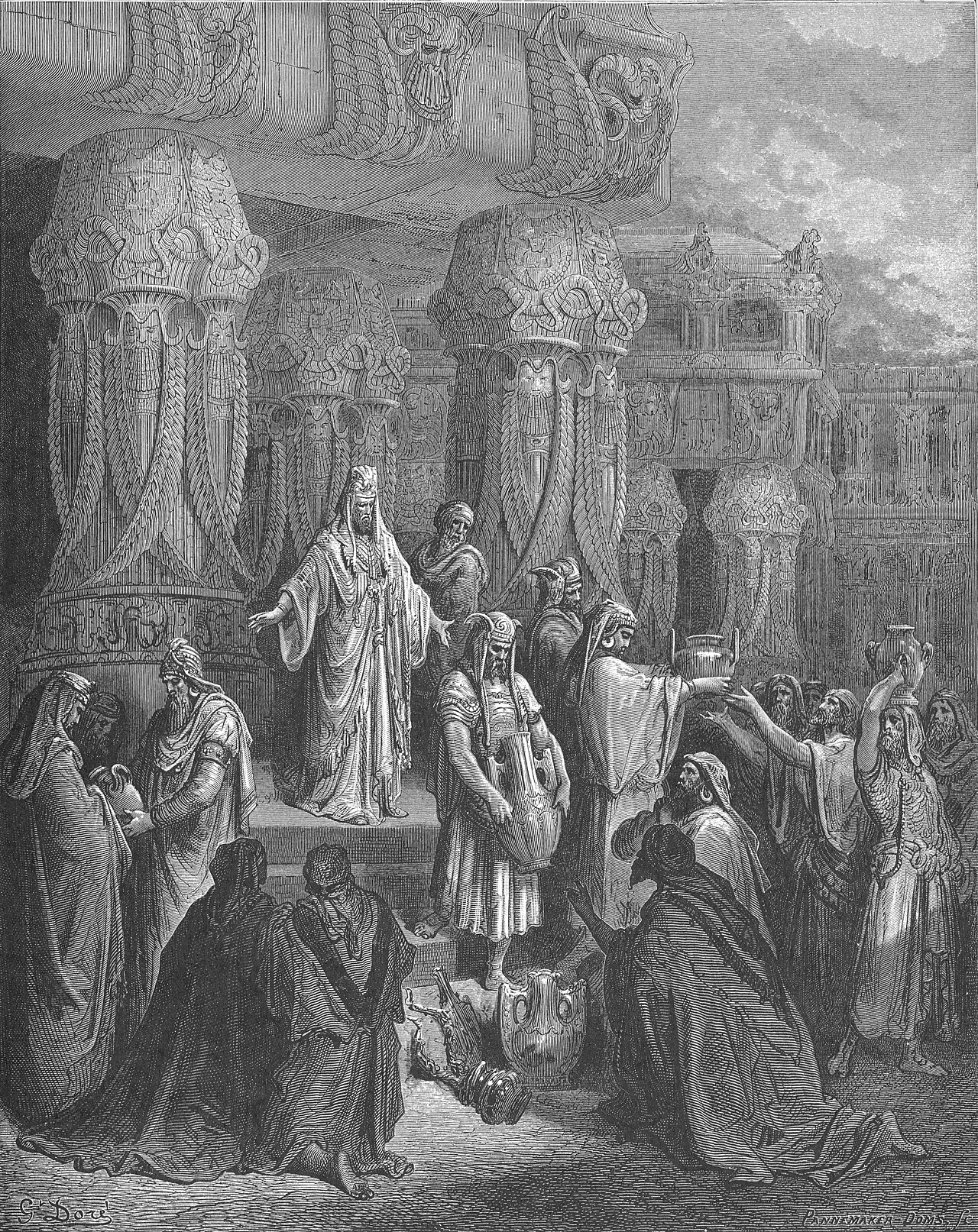
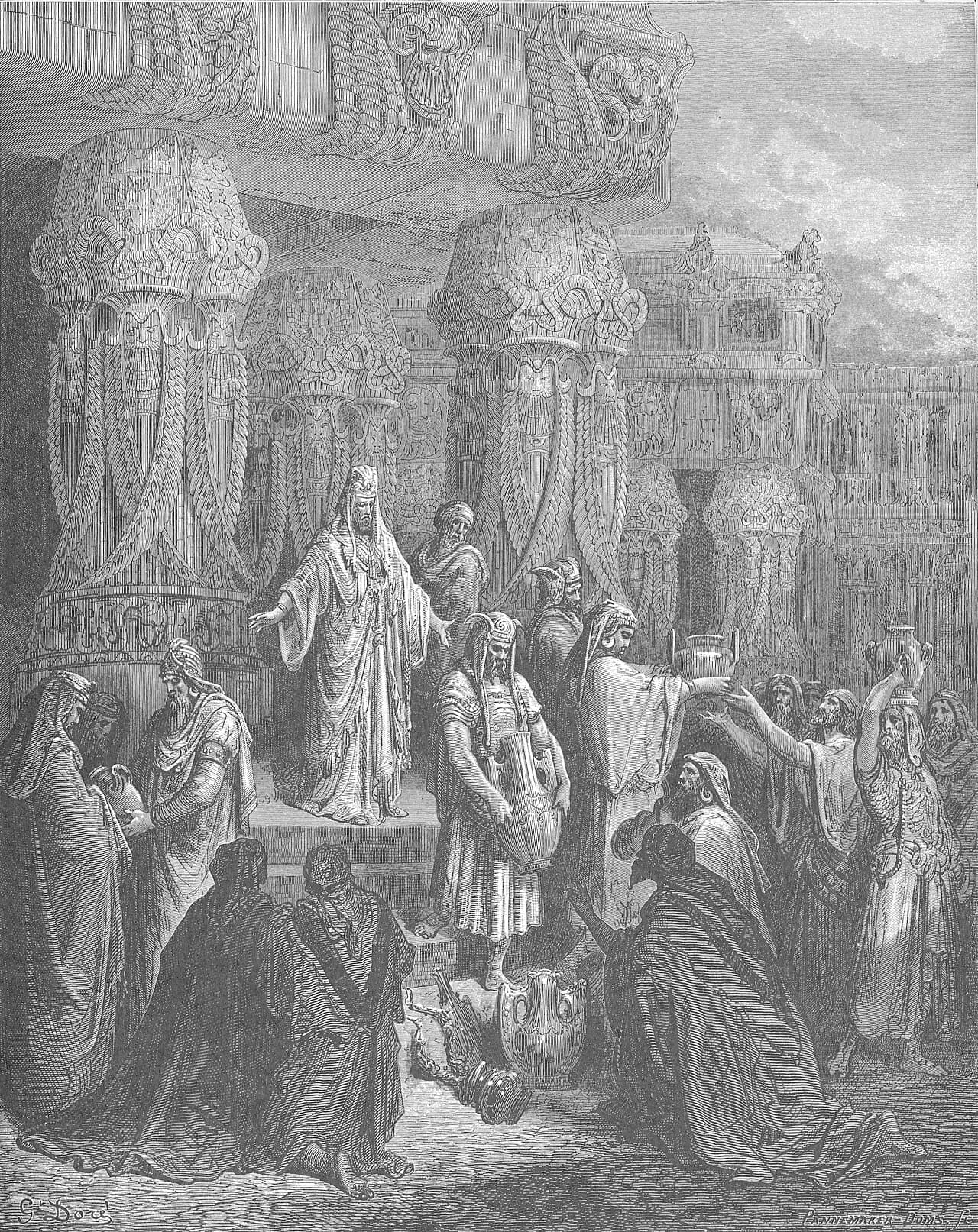
Cyrus Restores the Vessels of the Temple — Gustave Doré, The Holy Bible (1866), public domain
Summary
The founder of the Persian Empire, named by Isaiah about 150 years before his birth. He decreed that the Jewish exiles could return to Judah and rebuild the temple, fulfilling prophecy and ending the Babylonian captivity.
- The record places Cyrus the Great in Return from Exile.
- 5 moments stand in order on this page, each with its verse.
On this page
Start here
This is what the LORD says to Cyrus His anointed, whose right hand I have grasped to subdue nations before him, to disarm kings, to open the doors before him, so that the gates will not be shut:
Isaiah 45:1→- 5 key events in order
Cyrus the Great
- Role
- King of Persia
- Era
- Return from Exile
- Dates
- 559–530 BC
- Tribe
- Persia
- Father
- Cambyses I
- Spouse
- Cassandane
The life in order
from the events the row records, with the first and last verse that names the person among the passages this page stands on
1What the record holds, in its own order
- Named by Isaiah 150 years before his birthIsaiah 44:28who says of Cyrus, ‘My shepherd will fulfill all that I desire,’ who says of Jerusalem, ‘She will be rebuilt,’ and of the temple, ‘Let its foundation be laid.’”
- Conquered Babylon without battleIsaiah 45:1-2This is what the LORD says to Cyrus His anointed, whose right hand I have grasped to subdue nations before him, to disarm kings, to open the doors before him, so that the gates will not be shut:
- Edict of Cyrus — Jews may returnEzra 1:1-4In the first year of Cyrus king of Persia, to fulfill the word of the LORD spoken through Jeremiah, the LORD stirred the spirit of Cyrus king of Persia to send a proclamation throughout his kingdom and to put it in writing as follows:
- 42,360 exiles returnedEzra 2:64The whole assembly numbered 42,360,
- Temple rebuilding authorizedEzra 6:3-5In the first year of King Cyrus, he issued a decree concerning the house of God in Jerusalem: Let the house be rebuilt as a place for offering sacrifices, and let its foundations be firmly laid. It is to be sixty cubits high and sixty cubits wide,
Biography
Cyrus the Great is one of the most remarkable figures in Scripture because he is named by God through Isaiah over 150 years before his birth (Isaiah 44:28; 45:1) — called by name, called "my shepherd," called "anointed" (the Hebrew word is mashiach, messiah). When Cyrus conquered Babylon in 539 BC without a battle — the river was diverted and Persian soldiers walked under the city gates — he found the Jewish exiles there.
In 538 BC he issued the Cyrus Cylinder and the biblical Edict of Cyrus (Ezra 1:1-4), decreeing that all displaced peoples could return to their homelands and that the God of Israel should be honored. He returned the Temple vessels Nebuchadnezzar had taken and authorized the rebuilding of the Temple. Approximately 42,360 Jewish exiles returned to Judah under Zerubbabel.
Cyrus died in 530 BC during a military campaign east, never seeing the Temple completed — but his decree set it in motion.
This is what the LORD says to Cyrus His anointed, whose right hand I have grasped to subdue nations before him, to disarm kings, to open the doors before him, so that the gates will not be shut:
What they got right, and what they got wrong
Strengths
Military and political genius, founding of history's largest empire, humanitarian policies toward conquered peoples, fulfilled Scripture precisely
Weaknesses
Polytheist who did not acknowledge YHWH as the only God; used the language of many gods in his decrees
Lessons
God accomplishes His redemptive purposes through surprising, unexpected instruments. Cyrus did not worship YHWH yet he fulfilled YHWH's precise prophecy. This liberates us from thinking God is limited to working through the spiritually qualified — His sovereignty extends over all people and nations.
Spiritual significance
Cyrus is one of Scripture's most striking demonstrations of God's sovereignty over all nations. God used a pagan king — not even a worshipper of YHWH — to fulfill precise, specific prophecy and to serve as the instrument of Israel's restoration. This shows that God's purposes are not limited by the faith of his instruments.
How Cyrus the Great points to Jesus
Cyrus as a type of Christ is one of the clearest in the Old Testament: called "anointed" (mashiach), he releases captives from bondage without requiring payment, allowing them to go free and return home to worship God. This prefigures Christ who releases sinners from spiritual bondage and restores them to God.
Keep studying
On this page
Keep this page