
Job 42 · Story · Failure and Restoration
The Latter Days of Job
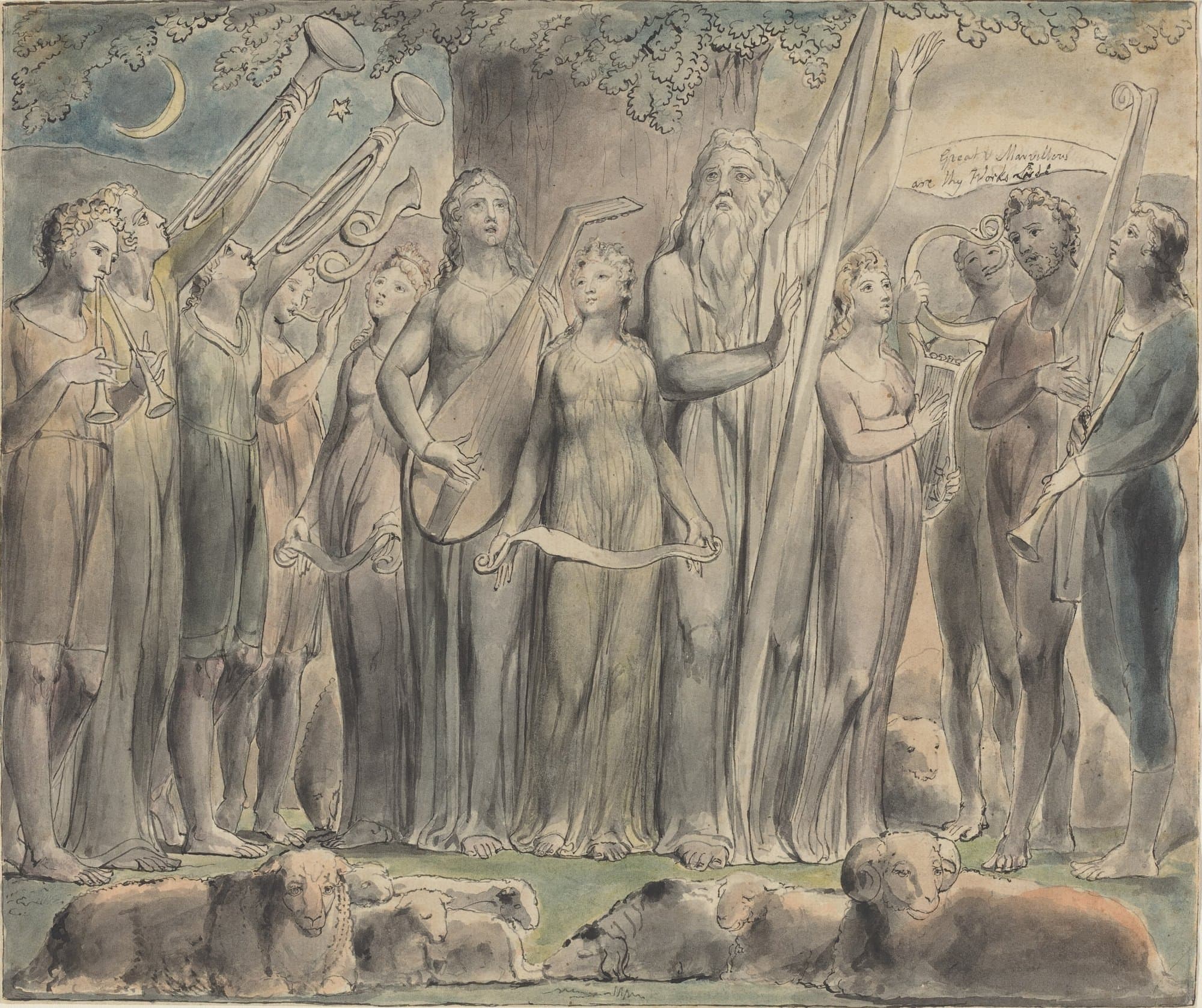
Job 42:7 to 17 records the end of Job's trial, from his friends' sacrifice to his death at a great age.
Job lived 140 years after his trial and saw four generations of his family.
After Job had prayed for his friends, the LORD restored his prosperity and doubled his former possessions.
- Who
- Job
Summary
Job lost his flocks, his servants and his ten children, and the LORD Himself said that Job had been ruined without cause (Job 2:3). When the debate was over, the LORD turned Job's fortunes, and the turn came after Job had prayed for the friends who had blamed him (Job 42:10). His latter days held more than his first, and the book records them as the LORD's blessing (Job 42:12).
- The LORD told Eliphaz that he and his two friends had not spoken accurately about Him, as Job had (Job 42:7).
- The LORD accepted Job's prayer for his friends (Job 42:9).
- Teachers differ on whether the doubled goods confirm the friends' doctrine of reward or set it aside.
The End of the Book of Job
The book of Job opens and closes in prose around the poetry of the debate.
Failure and restoration takes more than one form in Scripture, and in the book of Job the failure belongs to Job's friends, who argued that his ruin proved hidden sin.
This study answers what the restoration of Job 42 gave back to Job and how it bears on the friends' teaching that God always repays the righteous in this life. It tells the closing scenes in order and sets Job's household before and after side by side. It gives the readings of the doubling, of the children and of the prayer, with the teachers who hold them.
The narrator calls Job blameless and upright, and after his first losses Job did not sin or charge God with wrongdoing (Job 1:1 and Job 1:22).
Before and After
Job 1 and Job 42 count the same holdings.
Each herd of Job 1:3 stands doubled in Job 42:12, and the count of children stands the same.
| Holding | Job 1:2 to 3, before the trial | Job 42:12 to 13, the latter days | The change |
|---|---|---|---|
| Sheep | "7,000 sheep" | "14,000 sheep" | Doubled |
| Camels | "3,000 camels" | "6,000 camels" | Doubled |
| Oxen | "500 yoke of oxen" | "1,000 yoke of oxen" | Doubled |
| Donkeys | "500 female donkeys" | "1,000 female donkeys" | Doubled |
| Sons | "seven sons" | "seven sons" | The same |
| Daughters | "three daughters" | "three daughters" | The same |
The Hebrew of Job 42:10 says the LORD increased all that Job had to mishneh, a word for a duplicate or a double amount. Job 1:3 gives the servants only as a very large number, and Job 42:12 does not list them.
The Story Told in Order
Four scenes of Job 42:7 to 15 are told one by one.
The LORD sent the friends to JobJob 42:7 to 9
Eliphaz had reasoned that the innocent never perish (Job 4:7).
The LORD sent Eliphaz, Bildad and Zophar to Job with seven bulls and seven rams for a burnt offering (Job 42:8).
Job prayed, and the LORD turned his fortunesJob 42:10
The Hebrew of Job 42:10 joins shuv, to turn back, with shevut, captivity, in a phrase the Berean renders restored his prosperity.
Albert Barnes wrote that the language "is taken from restoration to country and home after having been a captive in a foreign land".
Keil and Delitzsch held that the phrase came to mean the end of misery of any kind.
His kin came back to his houseJob 42:11
After the restoration his brothers, sisters and old acquaintances dined with him in his house (Job 42:11). They comforted him over the adversity the LORD had brought on him, and each gave him silver and a gold ring.
Albert Barnes observed that "in his trials his kindred stood aloof from him", as Job had said in Job 19:13.
Job named his daughters and gave them an inheritanceJob 42:13 to 15
Job named his daughters Jemimah, Keziah and Keren-happuch (Job 42:14). Adam Clarke gave the meanings of the names as "days upon days", "cassia" and "the horn of plenty".
No women in the land were as beautiful as Job's daughters, and their father gave them an inheritance among their brothers (Job 42:15). Albert Barnes wrote that the gift is recorded "because it was not common".
Furthermore, you shall say to the Israelites, ‘If a man dies and leaves no son, you are to transfer his inheritance to his daughter.The law of Israel gave a daughter her father's inheritance where he left no son, which sets apart Job's gift to daughters who had seven brothers.
What the Text Leaves Unsaid
Two things a reader may want to know are left untold in the book.
Satan is named for the last time in Job 2:7, and neither the LORD's speeches nor the closing chapter tell Job of the scenes in heaven that began his trial.
The book gives the years Job lived after the trial and none before it. Adam Clarke wrote, "How long he had lived before his afflictions, we cannot tell."
Teachers on Job's Restoration
Matthew Henry and John Wesley read the restoration as God's care reaching to every loss and every number.
1662 to 1714 · Matthew Henry
Commentary on the Whole Bible
The quotation1 quotation
“As God appointed to Adam another seed instead of that which was slain ( Gen. iv. 25 ), so he did to Job with advantage. God has ways to repair the losses and balance the griefs of those who are written childless, as Job was when he had buried all his children.”
Matthew Henry · Commentary on the Whole Bible · on Job 42:16Puritan
1703 to 1791 · John Wesley
Explanatory Notes upon the Old Testament
The quotation1 quotation
“Just double to what they were, chap. i, 3. This is a remarkable instance of the extent of the Divine providence, to things that seem minute as this, the exact number of a man's cattle; as also of the harmony of providence, and the reference of one event to another: for known unto God are all his works, from the beginning to the end.”
John Wesley · Explanatory Notes upon the Old Testament · on Job 42:12Evangelical
The Doubling, the Children and the Prayer
Teachers read three features of the ending in more than one way.
The doubling: the ending vindicates Job and sets the friends' rule asideKeil and Delitzsch
Keil and Delitzsch, in their Biblical Commentary on the Old Testament, held that the LORD's verdict proves Job right to deny that suffering is always the punishment of sin. They read the book's last lesson as suffering leading the righteous to glory, a glory that is not always revealed in this life.
The doubling: the ending restates reward in this lifeOehler, as Keil and Delitzsch report him; John Gill
Keil and Delitzsch report that Oehler read the ending as sanctioning anew the side of the friends' doctrine that looks to this present life.
John Gill observed that Job 42:12 "verified the words of Bildad, Job 8:6; though they were spoken by him only by way of supposition."
if you are pure and upright, even now He will rouse Himself on your behalf and restore your righteous estate. Though your beginnings were modest, your latter days will flourish.Bildad promised a restored estate and flourishing latter days to a man who was pure, the outcome Job 42:12 records for Job.
Jamieson, Fausset and Brown saw in Job's full years "what Eliphaz had painted as the lot of the godly" (Job 5:26).
The doubling: an exact double marks a told endingThe Cambridge Bible for Schools and Colleges
The Cambridge Bible for Schools and Colleges took the exact doubling of every herd as a sign that the reader of the epilogue is not reading literal history.
The children: the same number is a doublingKeil and Delitzsch
Keil and Delitzsch held that seven sons and three daughters were a doubling, because in the Old Testament dead children are not wholly lost to their parents. They pointed to David's words about his dead son in 2 Samuel 12:23.
The children: the doubling is a general statementAlbert Barnes
Albert Barnes called the doubling of Job 42:10 "a general declaration, and was true in all essential respects", since Job had the same number of sons and daughters as before.
Adam Clarke noted that the Vulgate, the Septuagint, the Syriac and the Arabic keep seven sons, while the Chaldee reads fourteen sons and three daughters.
The prayer: it marks the time of the turningAlbert Barnes; Keil and Delitzsch
Barnes wrote that "It is not implied of necessity that his praying for them had any particular effect in restoring his prosperity".
Keil and Delitzsch read the Hebrew preposition of Job 42:10 as when, so that the prayer marks the turning point.
The prayer: it was the condition of mercyAdam Clarke
Adam Clarke wrote on Job 42:10 that "mercy can be shown only to the merciful" and that "Job must forgive his unfeeling friends, if he would be forgiven by the Lord".
The LORD's Gift in His Own Time
Job 42:5 stands in Job's last speech to the LORD.
Sources
Scripture is the Berean Standard Bible.
- STEP Bible, the Translators Amalgamated Hebrew Old Testament (TAHOT), Tyndale House, Cambridge, CC BY 4.0, with Strong's numbers, morphology, glosses and transliterations.
- STEP Bible, the Brief lexicon of Extended Strongs for Hebrew (TBESH), Tyndale House, Cambridge, CC BY 4.0.
- Carl Friedrich Keil and Franz Delitzsch, Biblical Commentary on the Old Testament, on Job 42.
- Cambridge Bible for Schools and Colleges, The Book of Job, on Job 42.
- Adam Clarke, Commentary on the Bible (1832), on Job 42:10, 42:13, 42:14 and 42:16.
- Albert Barnes, Notes, Explanatory and Practical, on the Old Testament, on Job 42:10, 42:11 and 42:15.
- John Gill, Exposition of the Old Testament (1748 to 1763), on Job 42:12.
- Robert Jamieson, A. R. Fausset and David Brown, Commentary Critical and Explanatory on the Whole Bible (1871), on Job 42:17.
- Matthew Henry, Commentary on the Whole Bible (1710), on Job 42:16.
- John Wesley, Explanatory Notes upon the Old Testament (1765), on Job 42:12.
Keep Studying
Read it1
In this trial6
People and groups7