
2 Peter · General Epistles · The Study Guide
2 Peter — the Study Guide
An apostle who senses his death is near (1:14) leaves the church a last testament: grow in the true knowledge of Christ, resting on eyewitness testimony and the sure prophetic word — because false teachers will rise from within, and scoffers will deny His coming. But the Lord is not slow; he is patient, and the day will come as a thief, so live now as citizens of the new heavens and new earth you are waiting for.
The Remembrance Testament
— four stages of a farewell letter, each shape computed from the text2 Peter is a testamentary letter — the genre of Deut 31-33, John 13-17, Acts 20:17-38, and 2 Timothy — an apostle's last charge before he can no longer speak in person (1:12-15; 3:1). It moves in four stages: build the ladder, trust the warrant, know the false teachers by their judged precedents, and do not be shaken by the scoffers.
epichorēgeō → — originally a wealthy patron fully funding a theater chorus; the ladder is to be richly supplied, not scraped together.
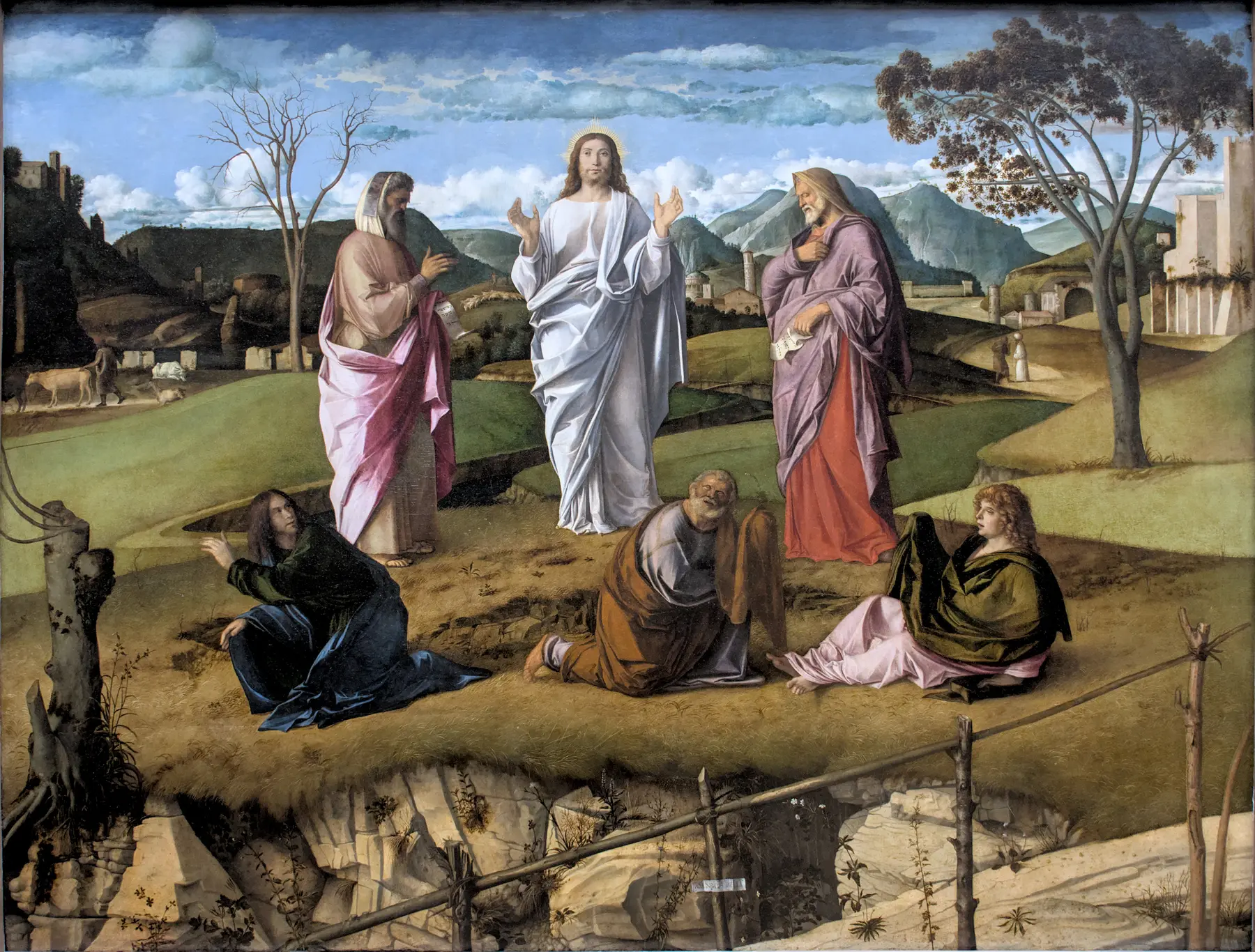
Peter grounds apostolic authority not in “cunningly devised fables” but in having seen Christ's majesty and heard the Father's voice borne to Him “by the Majestic Glory” on the Mount — a first-person claim naming Peter as present (cf. Matt 17:1; Mark 9:2; Luke 9:28).
The surer prophetic word1:19-21“No prophecy of scripture is of private interpretation… men spake from God, being moved by the Holy Spirit.” Pheromenoi — a nautical term for a ship driven by the wind — pictures the Spirit carrying human authors along a course not their own, without erasing their own voice.
Three tight “if... God spared not” clauses, each judgment paired with a rescued remnant (or none), building to the principle of 2:9: the Lord knows how to deliver the godly and to reserve the unjust for judgment.
Cast down to Tartarus; committed to pits of darkness, reserved unto judgment.
None spared.
The ancient world2:5The flood upon the world of the ungodly.
Noah spared — “a preacher of righteousness,” one of eight.
Sodom and Gomorrah2:6-8Condemned to destruction, turned to ashes, an example to the ungodly after.
Righteous Lot delivered — “sore distressed by the lascivious life of the wicked.”
The angels' precedent is MannaFest's Watchers reading — see the block below. After the precedents, the false teachers are indicted at length (2:10-22): presumptuous, self-willed, “springs without water,” and cast as Balaam's error — a prophet-for-hire who loved the wages of unrighteousness (2:15-16; Num 22-24).

“Where is the promise of his coming? ... all things continue as they were.”
2 Peter 3:3-4History is not, in fact, uniform — the world already once perished, deluged with water.
2 Peter 3:5-6One day with the Lord is as a thousand years — the seeming delay is patience, “not wishing that any should perish.”
2 Peter 3:8-9The day of the Lord will come unannounced; the heavens pass away with a great noise, the elements melting with fervent heat.
2 Peter 3:10“Wherein dwelleth righteousness” — kainos, new in kind, not merely new in time (Isa 65:17; Rev 21:1).
2 Peter 3:13The Argument
— the whole letter in three sentences- Author
- Simon Peter, near the end of his life (see Contested Points)
- Date
- c. AD 65-68, if Petrine — shortly before Peter's martyrdom
- Genre
- A testamentary farewell letter
- Audience
- General — the same recipients as 1 Peter (1 Pet 1:1)
- 1
Sensing his death near (1:14, alluding to John 21:18-19), Peter writes to stir up his readers' “sincere mind” by putting them in remembrance before he can no longer do so in person — grow in the graces that confirm your calling and election, resting on the sure prophetic word and his own eyewitness testimony of Christ's majesty.
- 2
False teachers have arisen within the churches, denying the Master who bought them, indulging the flesh, and mocking the promise of Christ's return; Peter names them for what they are — their character, their certain doom, and the three OT precedents (Watchers, Flood, Sodom) that guarantee it.
- 3
Scoffers argue from apparent uniformity that “all things continue as they were,” but the Lord's patience is not absence, and the day of the Lord will come as a thief, dissolving the heavens so that a new heavens and new earth, wherein righteousness dwells, can stand in their place.
2 Peter 2 shares extensive verbal and structural overlap with the whole of Jude — the single most discussed literary-dependence question in the General Epistles alongside the Synoptic Problem; see Contested Points below.
Christ in 2 Peter
— the letter's Christ-centered anchor, verse by verseRead the ASV and you will find an article the whole argument turns on: “the righteousness of our God and the Saviour Jesus Christ.” That “the” leaves it open whether one person is being named or two. The Greek behind it has a single article governing both nouns (tou theou hēmōn kai sōtēros Iēsou Christou), and by the Granville Sharp rule that construction identifies the two titles with one person — Jesus is our God and Savior, exactly as most modern translations render it and as the identical construction reads at Titus 2:13. The 1901 translators did not render it that way. That divergence is worth seeing rather than hiding: the strongest grammatical affirmation of Christ's deity in this letter is a translation decision you can watch being made. And the letter does not lean on it alone — three more times it calls Him “our Lord and Saviour” (1:11; 2:20; 3:18).
The eyewitness Transfiguration testimony1:16-18Peter anchors the certainty of the Second Coming in having already seen a preview of Christ's glory on the Mount — the Transfiguration read, in long patristic tradition, as a foretaste of the Parousia.
Christ as the bought Master2:1Agorasanta despotēn — “the Master that bought them” — even the false teachers within the visible church are described as purchased by Christ's redemption, a text central to the extent-of-the-atonement discussion.
The Christ-centered hope of the day of the Lord3:132 Peter's eschatology terminates not in destruction for its own sake but in a renewed creation “wherein dwelleth righteousness” — the same hope named in Isaiah 65:17, 66:22 and Revelation 21:1.
The letter's final word3:18“Grow in the grace and knowledge of our Lord and Saviour Jesus Christ” — sanctification is Christocentric knowledge, not abstract moral effort, closing the same inclusio the letter opened.
The Angels That Sinned
— 2:4 — Tartarus, the Watchers, and the door to the full treatment“For if God spared not angels when they sinned, but cast them down to hell, and committed them to pits of darkness, to be reserved unto judgment.”
Tartaroō (word-loader link above) — a NT hapax borrowing the Greek mythological term for the netherworld prison of the Titans — applied to the judged angels of Genesis 6, paired in the very next clause with the Flood. MannaFest holds the angelic-Watchers reading of Genesis 6:1-4 as its settled flag: this verse, together with Jude 1:6, is read as the New Testament's own inspired commentary confirming it. The founder's roster (Missler, Gary Wayne, Alberino — see Voices below) is directly load-bearing here.
Themes
— six load-bearing lines through the letterProgressive sanctification as a ladder
Each grace “added” (epichorēgeo, the Greek theatrical term for a patron fully funding a chorus) to the last — growth commanded, its absence diagnosed as spiritual blindness that has “forgotten” its own cleansing.
Assurance confirmed by works, not earned by them
“Give the more diligence to make your calling and election sure” — a live text in the Reformed/Arminian conversation over the ground of assurance; fruit confirms, it does not merit.
Epignōsis — the letter's keyword
Full, personal, experiential knowledge of Christ, not mere information — opening and closing the letter as a deliberate inclusio.
The inspiration of Scripture
The classic proof-text for verbal, plenary inspiration: prophecy's origin is not human insight but the Spirit “carrying along” human authors who nonetheless spoke as themselves.
False teachers as a named, internal category
Pseudodidaskaloi — a NT coinage pairing “false teachers” with the OT's “false prophets” — the danger is people within the church, not merely outside it.
The day of the Lord and cosmic renewal
The scoffers' argument from uniform process is answered by the Flood and by redefined “delay” — patience, not absence — ending not in bare destruction but new heavens and a new earth.
Original Language
— epignōsis density — the vocabulary of true knowledge, each word a doorThe Approved Voices on 2 Peter
— the roster applied — the specific work named, so you can go to itReturn of the Nephilim / Genesis & the Nephilim (lecture series, late 1990s)
Marcus Brown's formative teacher. Reads 2:4's judged angels through the Watchers and Genesis 6 lens, load-bearing for the block above; frames the letter's Second-Coming material within his integrated-design eschatology.
Birthright: The Coming Posthuman Apocalypse (2020)
Reads the Genesis 6 corruption behind 2:4-5 as a calculated assault on the human line aimed at the messianic seed — the standard contemporary popular articulation of the Watchers framework.
The Genesis 6 Conspiracy (2014)
Supplementary depth on 2:4-5's angels-and-Flood pairing: the Watchers framework traced past the Flood through the Anakim, the Rephaim, and the giant-clans of the conquest narratives.
Knowing Scripture (1977)
The standard Reformed treatment of “moved by the Holy Spirit” (1:20-21) as warrant for verbal plenary inspiration without mechanical dictation; Sproul chaired the council that drafted the 1978 Chicago Statement on biblical inerrancy.
Desiring God: Meditations of a Christian Hedonist (1986)
The frame in which 1:4's partaking of the divine nature is read as participation in God's moral character and joy, not absorption into His being.
Explanatory Notes Upon the New Testament (1754), on 2 Peter 1
The ladder of virtues (1:5-8) read as a classic holiness and means-of-grace text — each grace a link in a chain, none of them optional.
Commentary on the Catholic Epistles (1551) · Commentary on the Whole Bible (1710) · Commentary Critical and Explanatory (1871)
The public-domain floor beneath the page: Calvin reads 1:4's partaking as participation in God's qualities, guarding against a pantheistic misreading; Henry and JFB give the standard verse-by-verse coverage of all three chapters, including 1:20-21's private interpretation.
One honest gap, named rather than papered over: Spurgeon preached across this letter's themes — growth in grace, and making your calling and election sure — but no individual sermon of his on a 2 Peter text is confirmed here, so none is cited. Beyond Sproul, no roster voice is yet confirmed treating the inspiration and canon questions this letter raises. Marcus Brown's own commentary leads above all; within a tier, all voices are equal — no single voice, Spurgeon included, is elevated above its rating.
Contested Points
— presented at full strength, then MannaFest's flagPetrine authorship — the NT's single most-disputed authorship question
The case against
2 Peter's Greek is markedly more ornate than 1 Peter's, a gap felt since antiquity; if 2 Peter used Jude (the majority critical view), an apostle borrowing from a lesser, non-apostolic figure is thought unusual; 3:4's scoffers (“where is the promise... all things continue”) read, on the critical view, as a later generation's crisis over an unfulfilled expectation; 3:15-16's reference to a Pauline letter collection as “scripture” presupposes decades of canon-consciousness; and external attestation is the latest and weakest of any NT book — absent from the Muratorian Fragment, unquoted by name before Origen, listed by Eusebius among the antilegomena, with formal consensus not solidifying until the 4th century.
The traditional defense
1:1, 1:14 (alluding to John 21:18-19), 1:16-18's first-person Transfiguration claim, and 3:1's “this second epistle” all explicitly claim Peter, and a pseudonymous work claiming this much checkable personal detail would be a stronger and more troubling fraud than typical pseudepigrapha; the style gap is explained by an amanuensis (cf. Rom 16:22, 1 Pet 5:12); dependence direction between 2 Peter and Jude is not settled even in critical scholarship; 3:4's “delay” works equally as a taunt within Peter's own lifetime (cf. 1 Thess 4:13-18); and thin early attestation is not unique to 2 Peter among the NT's shorter books, with the church's eventual universal reception read as the Spirit's guidance of canon-recognition rather than a late invention slipping through.
MannaFest flag — MannaFest holds the traditional Petrine authorship, with full awareness this is the most contested authorship question in the NT and that the external attestation is genuinely the thinnest of any canonical book — the church's settled canonical judgment, consistent with a high view of Scripture's reliability.
2 Peter and Jude — the literary relationship
2 Peter used Jude
The majority critical position: Jude 4-18 parallels 2 Pet 2:1-3:3 so closely that the shorter, tighter letter (Jude) is read as prior, with 2 Peter expanding and generalizing it for a wider audience.
Jude used 2 Peter, or both drew on shared tradition
The minority position(s): either Jude compressed and sharpened 2 Peter's material for its own polemical purpose, or both independently drew on common apostolic-era preaching or a shared source no longer extant.
MannaFest flag — MannaFest does not adjudicate the direction of dependence — critical scholarship itself is divided, and the honest answer is that the shared material is undeniable while its direction is not. What is worth doing instead is reading the two letters against each other, which the Jude study is built to let you do.
The textual variant at 3:10 — dissolution or exposure?
“Shall be burned up” (katakaēsetai)
The majority-text reading, behind most traditional translations: the earth and its works are consumed in the day of the Lord's fire — straightforward cosmic destruction.
“Shall be found” (heurethēsetai)
The reading of Sinaiticus and Vaticanus, adopted by the NA/UBS critical text and most modern translations: the earth and its works are laid bare, exposed to judgment, rather than annihilated.
MannaFest flag — A genuine text-critical crux, and MannaFest does not resolve it here. It belongs beside John 7:53-8:11, Mark 16:9-20 and 1 John 5:7-8 among the handful of variants every student should meet directly rather than inherit through a footnote — and it is worth noticing that the two readings pull the doctrine of the last day in genuinely different directions: annihilation of the works, or their exposure.