
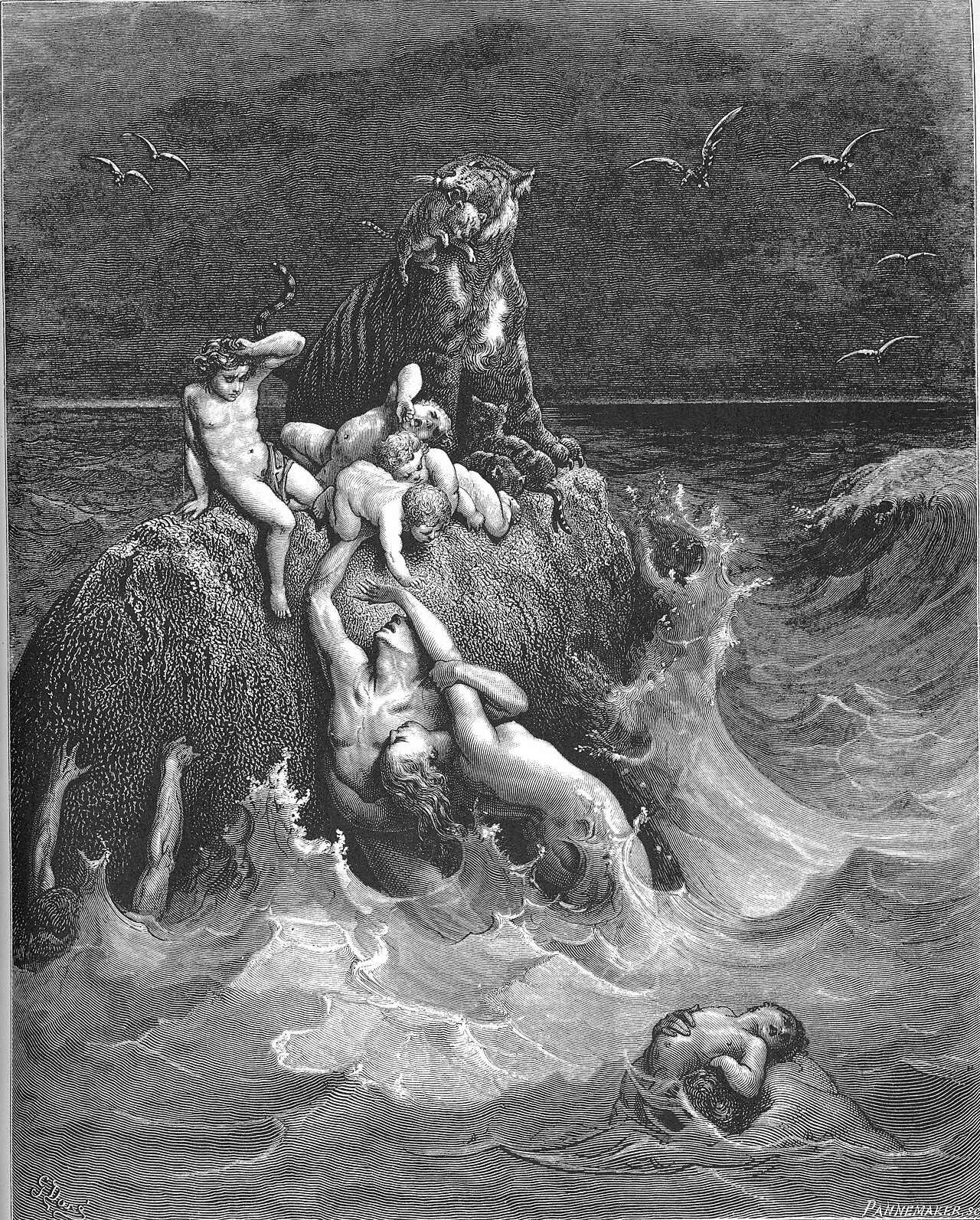
Genesis 6–9 · The Deluge · Featured Study
The Flood
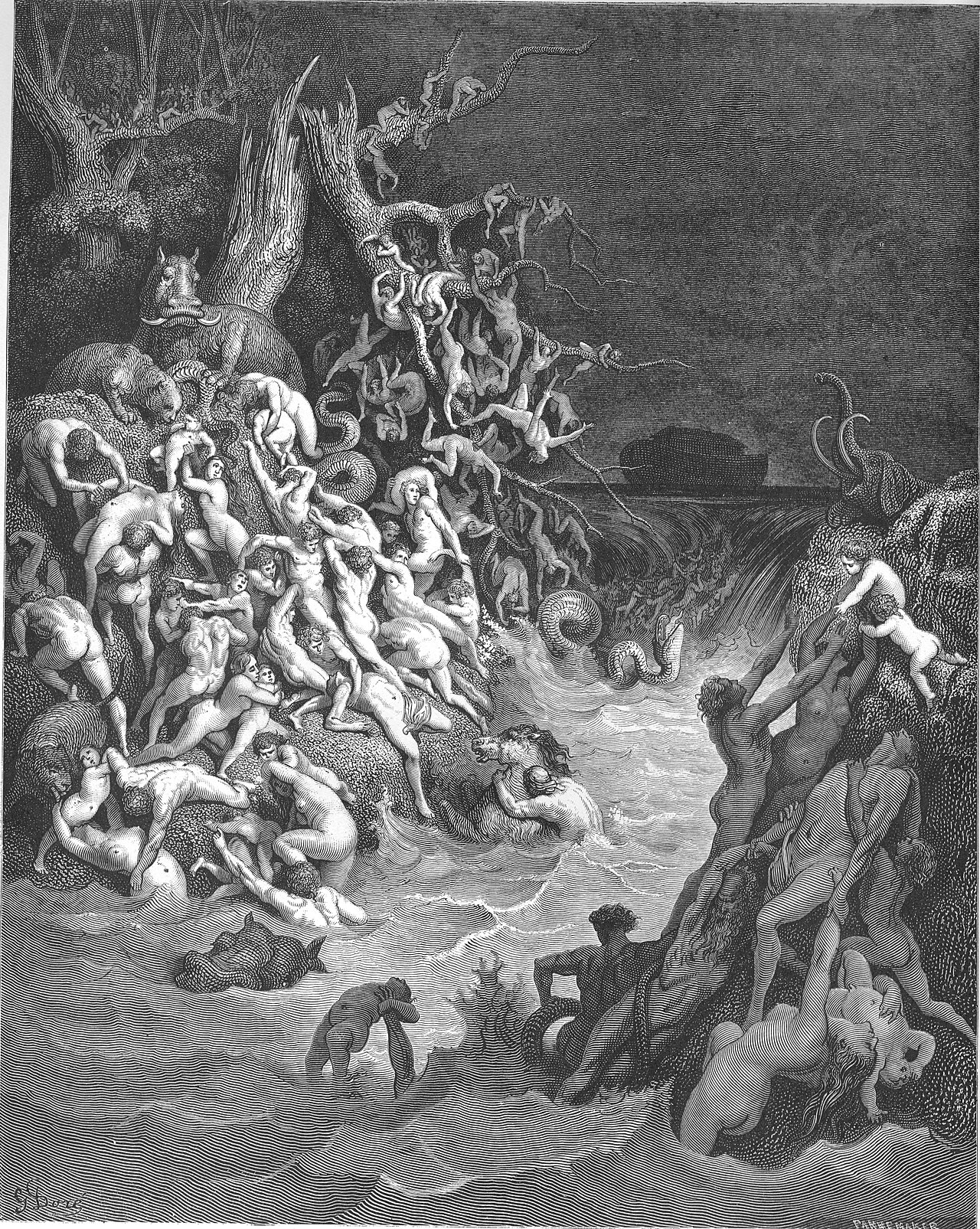
A real Deluge, the world so filled with violence that God resolves to wipe it out, yet grace precedes the ark: Noah “found favor” (6:8) before he was ever told to build (6:14). Judgment and mercy run together, and salvation comes through the water, a figure of baptism into Christ (1 Pet 3:20–21).
Summary
This page maps the flood narrative as a mirror pattern that turns on one verse, and lays out the ark's single door alongside the debate over how far the flood reached.
- Shows the flood's rising and falling halves as a mirrored structure pivoting on Genesis 8:1
- Explains the word tebah, used elsewhere in Scripture only for Noah's ark and Moses' basket
- Presents both readings of the flood's extent, global and local, without settling the question
- Carries Marcus's own words on why Genesis was written the way it was
The Flood Chiasm
a mirror pivoting on five words (Wenham, palistrophe)
Judgment rising
The fountains and windows are opened
Gen 7:11150 days the waters prevail
Gen 7:24The LORD shuts Noah in
Gen 7:16The waters rise over the mountains
Gen 7:19–20Mercy receding
The fountains and windows are closed
Gen 8:2150 days the waters abate
Gen 8:3Noah opens the window
Gen 8:6The waters fall; the land appears
Gen 8:5, 13“And God remembered Noah.” The whole story turns here, from rising judgment to receding mercy.
The Ark & the One Door
salvation through water
The tebah, a word used in all of Scripture only of Noah's ark and Moses' basket (Exod 2:3), is a pitch-sealed vessel of salvation through water. The single door the LORD Himself shuts (7:16) stands beside “I am the door” (John 10:9).
Many faithful readers hold the Deluge of Genesis 7 as literal, global history, the traditional, young-earth reading. Others read it as a real, catastrophic judgment described in the totalizing language its narrator and its original hearers knew, without settling the question of its geographic extent. This is a widely held reading on either side, not a conclusion this site presses on the reader, and every reading meets in Peter's use of it as the pattern of the final judgment by fire (2 Pet 3:6–7).
On Why the Account Was Given
Marcus Brown, in his own words
the book was written by moses to the jews in the exodus and its purpose was to teach them about YHWH, not explain every little detail and be a perfect account, or else there would have been much more included
Marcus Brown· founder
Keep studying
On this page
People1
Places1
By subject
Words1
Go further1