
Also called: wait on the LORD, delay, how long, patience of the saints, the years between, tarry
This subject covers the years between a promise and its answer, and what Scripture says a person does in them. Bearing with people and delays without letting go belongs to Patience. The expectation the waiting rests on belongs to Hope.
What Waiting covers, and where it stops
This subject covers the years between a promise and its answer, and what Scripture says a person does in them. Bearing with people and delays without letting go belongs to Patience. The expectation the waiting rests on belongs to Hope.
On this page, 6 sections
The one drawing
Across the canon
Old Testament
New Testament
The other 57 books of the canon carry none.
12 passages
Where Scripture speaks
The passages this subject stands on, in canon order.
Noah waited seven more days and again sent out the dove from the ark.Wait patiently for the LORD; be strong and courageous. Wait patiently for the LORD!Be still before the LORD and wait patiently for Him; do not fret when men prosper in their ways, when they carry out wicked schemes.I waited patiently for the LORD; He inclined to me and heard my cry.I wait for the LORD; my soul does wait, and in His word I put my hope.But those who wait upon the LORD will renew their strength; they will mount up with wings like eagles; they will run and not grow weary, they will walk and not faint.The LORD is good to those who wait for Him, to the soul who seeks Him.But as for me, I will look to the LORD; I will wait for the God of my salvation. My God will hear me.For the vision awaits an appointed time; it testifies of the end and does not lie. Though it lingers, wait for it, since it will surely come and will not delay.Now there was a man in Jerusalem named Simeon, who was righteous and devout. He was waiting for the consolation of Israel, and the Holy Spirit was upon him.But if we hope for what we do not yet see, we wait for it patiently.Be patient, then, brothers, until the Lord’s coming. See how the farmer awaits the precious fruit of the soil—how patient he is for the fall and spring rains.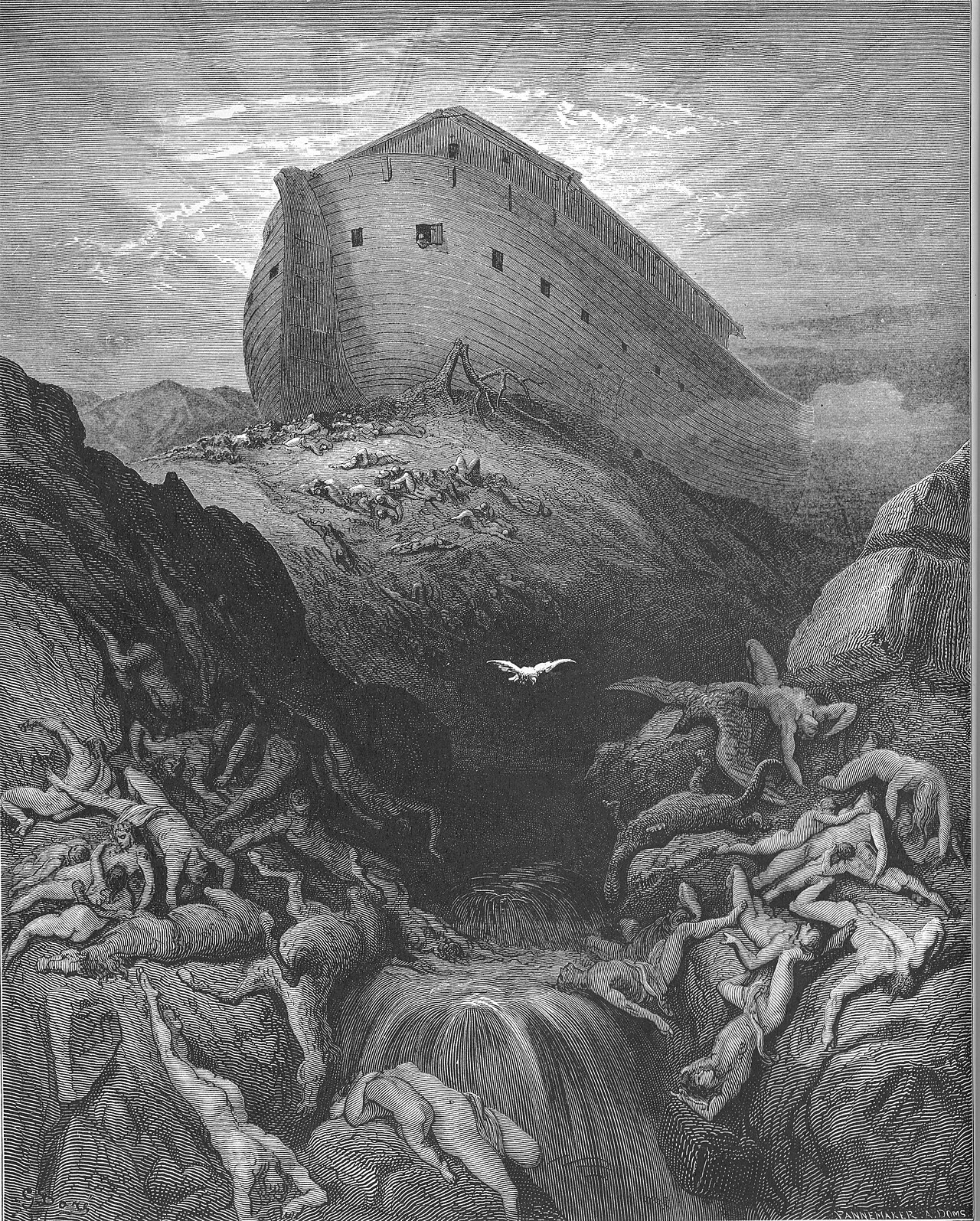
Waiting in Scripture, in full
Much of the Bible takes place in the space between a promise and its answer. God speaks, and then, often, a long time passes before anything visibly happens. Waiting is not a side note in Scripture. It is one of the main places where faith is either tested or grown.
Noah offers one of the earliest pictures of this. After the flood, he did not step out of the ark the moment the rain stopped. He waited: releasing a dove, watching for a sign, letting the water recede at its own pace before God finally told him it was time to come out (Genesis 8:6-16). Faith did not mean rushing ahead of God. It meant trusting his timing, even while watching and hoping.
The Psalms are full of people waiting on God in the middle of real pain. One psalm describes waiting patiently for the Lord, who eventually inclines toward the sufferer and hears the cry (Psalm 40:1). Another simply says to rest in the Lord and wait patiently for him, resisting the urge to grow anxious when it looks like others are prospering while doing wrong (Psalm 37:7). Waiting, in these prayers, is not passive. It is an active choice to keep trusting God instead of taking matters into one's own hands.
Isaiah gives one of the most famous promises about waiting in all of Scripture: those who wait upon the Lord will renew their strength, rising up as if on eagles' wings, running without growing weary, walking without fainting (Isaiah 40:31). This promise does not remove the waiting. It reframes it; waiting becomes the very place where God supplies fresh strength, not despite the delay but through it.
The prophet Habakkuk had to learn this firsthand. He complained to God about injustice that seemed to go unanswered, and God's response was not an immediate fix but a promise for an appointed time still to come, along with the instruction that though it may seem slow, it will surely come and should be waited for (Habakkuk 2:3). Faith, for Habakkuk, meant living by trust in God's future action rather than being paralyzed by present frustration.
The New Testament shows waiting reaching its fullest meaning in the story of an old man named Simeon. He had spent years waiting for the consolation of Israel, and it had been revealed to him that he would not die before seeing the Lord's promised Messiah. When Mary and Joseph brought the infant Jesus to the temple, Simeon took him in his arms and recognized that his long wait was finally over (Luke 2:25-32). His entire life had been shaped by a single, patient hope, and it was not disappointed.
Paul later describes this same posture as the normal Christian life. Believers wait, with hope, for what they do not yet fully see, and this waiting itself is described as an expression of patience (Romans 8:24-25). James tells believers to be patient the way a farmer is patient for a harvest, watching for the precious fruit of the earth and waiting for the early and the latter rain (James 5:7).
Waiting, across all of Scripture, is not empty time. It is the space where trust is proven and character is formed, and it always ends the same way it began: with a God who keeps his promises, even when the answer takes longer than expected.
5 voices
What teachers have said
Those that wait upon the Lord, as dependents on him, expectants from him, and suppliants to him, shall inherit the earth, as a token of his present favour to them and an earnest of better things intended for them in the other world. God is a good Master, that provides plentifully and well, not only for his working servants, but for his waiting servants.
Matthew Henry · Commentary on the Whole Bible, 1710
The word קוה kavah, which we translate to wait, properly signifies the extension of a cord from one point to another. This is a fine metaphor: God is one point, the human heart is the other; and the extended cord between both is the earnest believing desire of the soul.
Adam Clarke · Commentary on the Bible
Written before 1832.
Patient waiting is necessary that we may fulfill what we have begun to be and, through God's help, that we may obtain what we hope for and believe.
Cyprian · Treatise IX. On the Advantage of Patience 13
Written before 258.
But if from that time it was said, "Yet a little while, and He that shall come will come, and will not tarry," it is plain that now He is nearer. Wherefore also waiting is no small reward.
John Chrysostom · Homily on Hebrews 21
Written before 407.
Wait therefore he will, wait he does, and when Christ comes to heal him, lo! he is waiting his turn. What an attitude for a sinner at Mercy's gate! The man's hopes seemed low enough ere Christ came to him.
Jamieson, Fausset & Brown · Commentary Critical and Explanatory on the Whole Bible, 1871
The words underneath
Each card is one Hebrew or Greek word behind waiting. It gives the sense, the count across the canon, and the number in Strong's 1890 concordance.
qavah: to await
Hebrew · H6960Strong's entry: to bind together (perhaps by twisting), i.e. collect; (figuratively) to expect
qâvâh — to wait, hope stretched taut like a cord toward God
49 times in the Old Testament · qavah, in full →
yachal: to wait: wait
Hebrew · H3176Strong's entry: to wait; by implication, to be patient, hope
yâchal — to wait, to hope with patient expectation
41 times in the Old Testament · yachal, in full →
hypomone: perseverance
Greek · G5281Strong's entry: cheerful (or hopeful) endurance, constancy
hypomonḗ — patient endurance, hopeful waiting under pressure
32 times in the New Testament · hypomone, in full →
damam: to silence: stationary
Hebrew · H1826Strong's entry: to be dumb; by implication, to be astonished, to stop; also to perish
dâmam — to be still, to wait in silence before the Lord
30 times in the Old Testament · damam, in full →
Life questions