
Isaiah 40 and Psalm 27 · Passage · Patience
Waiting on the Lord
Isaiah promises that those who wait upon the LORD will renew their strength, and Psalm 27 closes by calling the reader to wait for Him with courage.
Isaiah's promise answers a people who complained that their way was hidden from the LORD and that their God ignored their claim.
But those who wait upon the LORD will renew their strength; they will mount up with wings like eagles; they will run and not grow weary, they will walk and not faint.
- The passage
- Isaiah 40:27 to 31, Psalm 27:13 to 14
- Books
- Isaiah, Psalms
- Hold in memory
- Isaiah 40:31, Psalm 27:14
Summary
Waiting on the LORD in Isaiah 40 and Psalm 27 is trust held toward God while His help is still to come. The Hebrew verb for that waiting is qavah, to look for and expect. Isaiah grounds the waiting in the nature of God as the Creator, and Psalm 27 grounds it in the trust its first verse declares.
- Isaiah uses the same two verbs of weariness for the LORD, who never tires, for the young, who do, and for the people who wait for Him, who will not.
- Psalm 40:1 and Micah 7:7 confess the same waiting, and Psalm 37:7 and Lamentations 3:25 to 26 join it to stillness and quiet before the LORD.
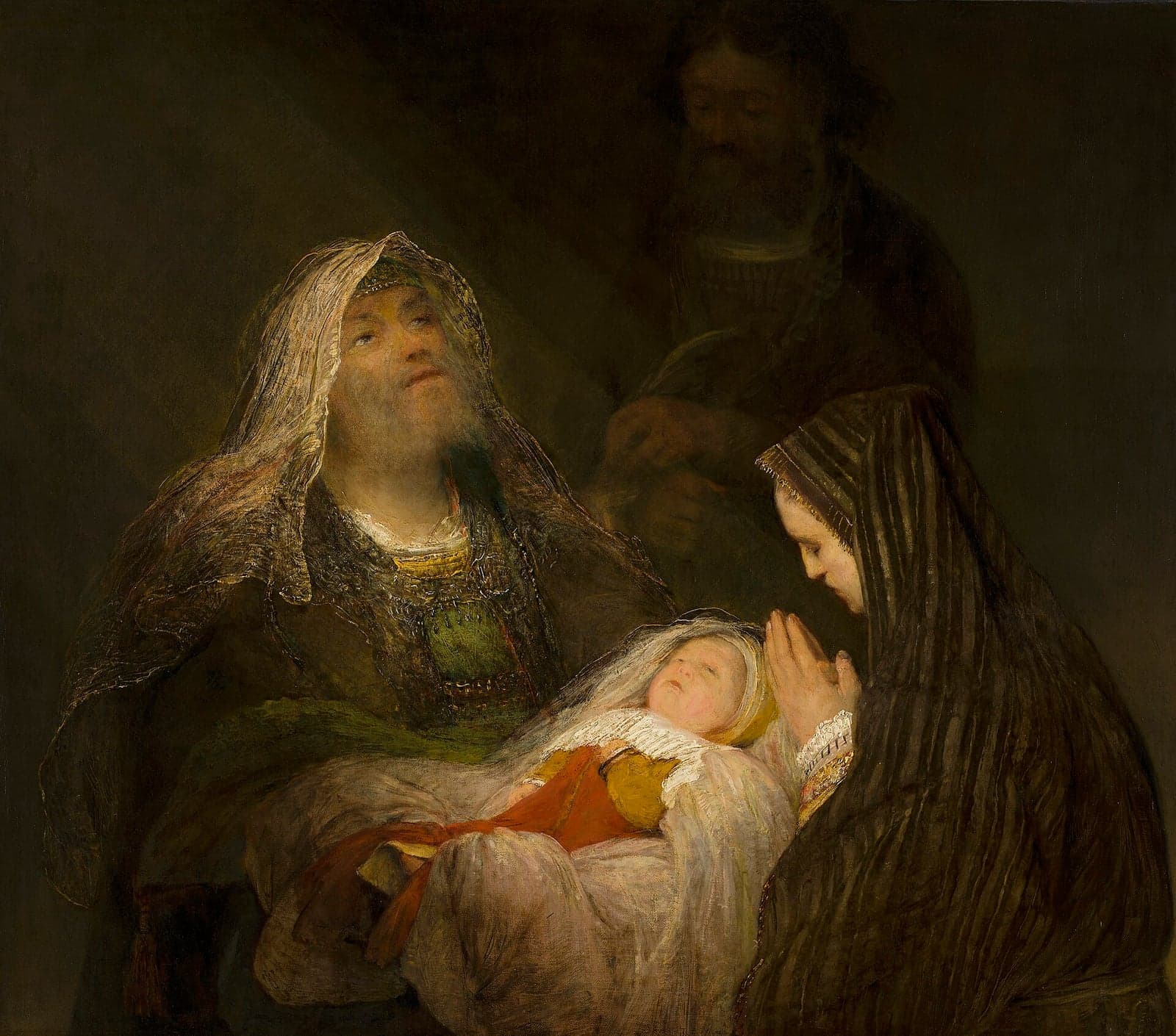
- In the New Testament Simeon was waiting for the consolation of Israel, and the Holy Spirit had revealed that he would see the Lord's Christ before he died (Luke 2:25 to 26).
Israel's Complaint and God's Answer
Verses 28 to 30 answer the complaint of verse 27 with who the LORD is and what He gives.
The last five verses of Isaiah 40 are one of the Old Testament's chief texts on waiting for God. The last two verses of Psalm 27 give the same counsel as a command. Together the two passages teach the side of patience that looks to God for help and leaves the timing to Him. That patience belongs to the slowness to anger and steady endurance that Scripture asks of God's people.
The question the page answers is what it means to wait upon the LORD and why Isaiah says the waiting brings strength. The page sets out the passage verse by verse. It also gives the Hebrew words for waiting and weariness and the setting of the promise in Isaiah 40. It ends with the other texts that wait for God and with what teachers of the church have said about the promise.
Why do you say, O Jacob, and why do you assert, O Israel, “My way is hidden from the LORD, and my claim is ignored by my God”?The passage opens with Israel's own words, and every line after it answers them.
The last words of the verse in Hebrew are mishpati ya'avor, my justice passes by. The lexicon defines mishpat as a verdict pronounced judicially, so Israel is saying that its case has gone past God unheard.
Do you not know? Have you not heard? The LORD is the everlasting God, the Creator of the ends of the earth. He will not grow tired or weary; His understanding is beyond searching out.The first answer is who God is, put as questions Israel could answer for itself.
He gives power to the faint and increases the strength of the weak.God's gift goes to those with the least strength of their own.
Even youths grow tired and weary, and young men stumble and fall.Isaiah names the young, the strongest of people, and says that even they give out.
Isaiah 40:29, Isaiah 40:30
From the Complaint to the Command
The ladder sets the complaint, God's answer and His promise in order, with the last two verses of Psalm 27 after them.
Rungs 2 to 5 each speak of strength, first God's, then the failing strength of the young, then the renewed strength of those who wait.
A structure ladder of seven numbered rungs, five for the verses of Isaiah and two for the verses of the psalm, each with its verse and its move in the passage.
Those Who Wait upon the LORD
Verse 31 names those who wait and gives them four promises: new strength, wings like eagles, running and walking.
The verse opens with qoveh YHWH, those who wait for the LORD, a participle of qavah that describes them by their waiting. They "will renew their strength", and the Hebrew is yachalifu koach, with the verb chalaph. The same two words open the next chapter, where the LORD calls the islands to be silent and says, "let the peoples renew their strength" (Isaiah 41:1).
Isaiah's word for the eagle is nesher, which the lexicon defines as the eagle or other large bird of prey.
“But those who have confidence not in their own strength, but in God, and always await His mercy, let them change their strength and go from virtue to virtue: and let them take wings like eagles, and hear: Your youth will be renewed like the eagle's (Psalm 103:5); let them run to the Lord, and not grow weary of desiring Him; let them walk, and never grow faint.”
Jerome · Commentary on Isaiah · on Isaiah 40:31Patristic
The words about youth are Jerome's citation of Psalm 103:5, and the joining of the two verses is his own reading, since Isaiah speaks only of the eagles' wings.
Qavah, to wait for
49 uses in the canon
The verb qavah (H6960) names the waiting in both passages. Of its uses in the canon, 17 stand in the Psalms and 15 in Isaiah.
Chalaph, to pass on or change
28 uses in the canon
The verb chalaph (H2498) stands in renew their strength. The lexicon defines it as to slide by, and so to pass on, spring up, pierce or change.
Ya'af, to tire
9 uses in the canon
The verb ya'af (H3286) means to tire, as if from wearisome flight, and it stands in Isaiah 40:28, 30 and 31.
Yaga, to be exhausted
26 uses in the canon
The verb yaga (H3021) means properly to gasp, and so to be exhausted or to toil, and it stands in the same three verses.
The Comfort of Isaiah 40
The promise closes a chapter that opens with comfort for God's people.
The time will surely come when everything in your palace and all that your fathers have stored up until this day will be carried off to Babylon. Nothing will be left, says the LORD.Isaiah spoke this word to Hezekiah, and it is the last prophecy before chapter 40.
“Comfort, comfort My people,” says your God. “Speak tenderly to Jerusalem, and proclaim to her that her forced labor has been completed; her iniquity has been pardoned. For she has received from the hand of the LORD double for all her sins.”Chapter 40 opens with comfort for Jerusalem, and the waiting of verse 31 belongs to that comfort.
Lift up your eyes on high: Who created all these? He leads forth the starry host by number; He calls each one by name. Because of His great power and mighty strength, not one of them is missing.Just before the complaint the LORD calls every star by name so that not one is missing, which answers Israel's fear before Israel speaks.
Albert Barnes, in his Notes on the Old and New Testaments, names the first hearers of verse 31. He writes that it "properly refers to those who were suffering a long and grievous captivity in Babylon, and who had no prospect of deliverance but in him".
Wait Patiently for the LORD
Psalm 27 opens in confidence and closes with a command, and other psalms and prophets speak of the same waiting.
The LORD is my light and my salvation— whom shall I fear? The LORD is the stronghold of my life— whom shall I dread?The psalm opens by naming the LORD as light, salvation and stronghold, so the command at its end rests on that trust.
Wait patiently for the LORD; be strong and courageous. Wait patiently for the LORD!The verse gathers the trust of the whole psalm into a command for the hearer to keep.
In the Hebrew the verse begins and ends with qavveh, an imperative of qavah, and between the two stand chazaq, be strong, and a verb asking that the heart show strength. The Berean text renders qavah here as wait patiently.
The lexicon defines qavah first as to bind together, perhaps by twisting, and so to collect, and figuratively as to expect. The first sense stands in Genesis 1:9, where God says, "Let the waters under the sky be gathered into one place". In both passages the verb carries its figurative sense, to wait for and expect. The root sense does not settle what it means in each verse.
Four more texts that wait for the LORDPsalm 37:7, Psalm 40:1, Lamentations 3:25 to 26 and Micah 7:7
Be still before the LORD and wait patiently for Him; do not fret when men prosper in their ways, when they carry out wicked schemes.This psalm sets stillness before the LORD beside waiting for Him. The words are dom, from damam, to be dumb or silent, and hitcholel, from chul, which the lexicon defines as to twist and figuratively to wait.
I waited patiently for the LORD; He inclined to me and heard my cry.The verse is the psalmist's own record of waiting, and its Hebrew doubles the verb qavah, in words glossed certainly to wait and I waited.
The LORD is good to those who wait for Him, to the soul who seeks Him. It is good to wait quietly for the salvation of the LORD.The poet of Lamentations calls the LORD good to those who wait for Him and calls quiet waiting good.
But as for me, I will look to the LORD; I will wait for the God of my salvation. My God will hear me.Micah resolves to look to the LORD and to wait for the God of his salvation, and his verb for waiting is yachal.
The LORD's word to Habakkuk gives the same counsel for a vision that is slow to come: "Though it lingers, wait for it, since it will surely come and will not delay" (Habakkuk 2:3).
Now there was a man in Jerusalem named Simeon, who was righteous and devout. He was waiting for the consolation of Israel, and the Holy Spirit was upon him. The Holy Spirit had revealed to him that he would not see death before he had seen the Lord’s Christ.Luke's verb for Simeon's waiting is prosdechomai, which the lexicon defines as to await with confidence or patience.
Luke uses the same verb of the people Anna spoke to in the temple, "all who were waiting for the redemption of Jerusalem" (Luke 2:38).
How Teachers Have Read the Promise
Three commentators of the eighteenth and nineteenth centuries read the waiting as trust, as strength renewed for each task, and as prayer and stillness before God.
1662 to 1714 · Matthew Henry
Matthew Henry, in his Commentary on the Whole Bible, says that those who wait "shall renew their strength as their work is renewed, as there is new occasion".
1798 to 1870 · Albert Barnes
Albert Barnes reads the verb as expectation. He writes that the word "denotes properly to wait, in the sense of expecting". To wait on Yahweh, he says, "means to wait for his help; that is, to trust in him, to put our hope or confidence in him".
1834 to 1892 · Charles Spurgeon
Charles Spurgeon, in The Treasury of David, writes on the command of Psalm 27, "Wait at his door with prayer; wait at his foot with humility". On Psalm 37:7 he describes the aim of a gracious heart: "To hush the spirit, to be silent before the Lord".
Strength for Those Who Wait
Isaiah and the psalmist ask the same thing of people who cannot yet see God's help: to keep looking to Him, and to take the strength He gives while they look.
But if we hope for what we do not yet see, we wait for it patiently.Paul joins waiting patiently to hope for what is not yet seen, the hope Isaiah and the psalmist already held.
Sources
Scripture is the Berean Standard Bible.
- The tagged Hebrew text of Isaiah 40 and 41, Psalms 27 and 40, Lamentations 3, Micah 7 and Genesis 1, and the tagged Greek text of Luke 2, with Strong's numbers and morphology.
- STEP Bible TBESH and TBESG with the Strong's definitions, entries h2498, h3021, h3176, h3286, h4941, h5404, h6960 and g4327 (Tyndale House, Cambridge, CC BY 4.0)
- Albert Barnes, Notes, Explanatory and Practical, on the Old and New Testaments, on Isaiah 40.
- Jerome, Commentary on Isaiah, on Isaiah 40.
- Matthew Henry, Commentary on the Whole Bible (1710), on Isaiah 40.
- Charles Spurgeon, The Treasury of David, vol. 2 (1870), on Psalms 27 and 37.
Keep Studying
Studies1
In this value5