
2 Peter 3 · Debate · Waiting
Why Does God Delay?
Christian teachers have read God's delays as discipline, as timing and as mystery.
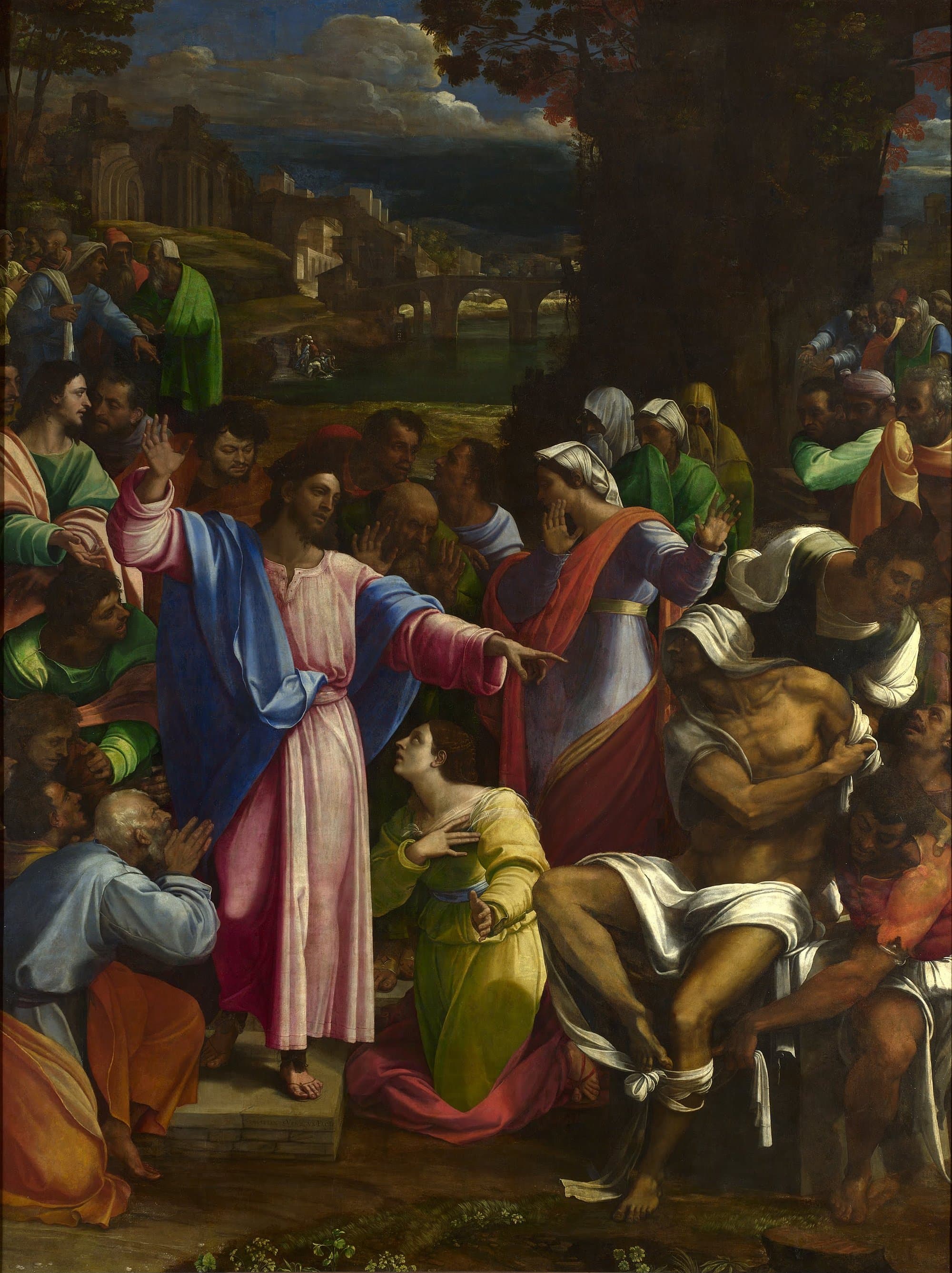
When Jesus reached Bethany, Lazarus had already been in the tomb four days.
The Lord is not slow in keeping His promise as some understand slowness, but is patient with you, not wanting anyone to perish but everyone to come to repentance.
- The question
- Why does God delay what He has promised or what His people ask of Him?
Summary
Scripture records many delays: promises kept late, prayers answered after long years and a Lord who stayed away while His friend died. The question of why God waits runs from the Psalms to the martyrs of Revelation 6:10, who ask how long until He avenges their blood. Christian teachers have answered it with texts from both Testaments, and each answer meets an objection from Scripture as well.
- John Chrysostom and John Wesley read the hardships of waiting as a Father's training of His children.
- Irenaeus and Jamieson, Fausset and Brown read delay as timing, God working all things at the hour He has set.
- Albert Barnes and John Gill held that the reasons for some delays stay hidden in God's counsel.
The Question Every Waiting Believer Asks
Psalm 13 opens with the question in four words: "How long, O LORD?"
Waiting is the trial this study belongs to, and it raises a question that believers have asked since the psalmists: why does God delay what He has promised or what His people ask of Him? The question is pressed hardest when the need is urgent and the one praying has done nothing wrong.
This study sets out three answers, each with its texts, its holders and the strongest objection to it. It tests each on two accounts in the Gospels and names the ground all three share.
Three Readings of Delay
The readings differ over what a delay is for.
The three readings part over the purpose of a delay, and so over what the one who waits needs.
| The question | Delay as discipline | Delay as timing | Delay as mystery |
|---|---|---|---|
| What is the delay? | A Father's training of His children through hardship. | The interval before a time God has already set. | A part of God's counsel that He has not made known. |
| A key text | "the testing of your faith develops perseverance" (James 1:3) | "the vision awaits an appointed time" (Habakkuk 2:3) | "How unsearchable are His judgments" (Romans 11:33) |
| What does the one who waits need? | Endurance, and trust that the Father means it for good. | Patience to wait for the time God has fixed. | Humility to trust God where no reason is given. |
| What does it make of John 11:6? | The disciples' faith was trained by the death and the raising. | Jesus waited for the hour that would show God's glory most fully. | Jesus' word that the sickness was for God's glory (John 11:4) is the only reason given before He came. |
Each Reading Stated
Each reading rests on its own texts and has its own holders.
Delay as disciplineHebrews 12:5 to 11
No discipline seems enjoyable at the time, but painful. Later on, however, it yields a harvest of righteousness and peace to those who have been trained by it.The writer to the Hebrews says that the training God gives is painful at the time and fruitful later, the pattern this reading finds in delay.
John Chrysostom, in his thirtieth homily on Hebrews, compared God's discipline to medicine: "They who drink bitter medicines, first submit to some unpleasantness, and afterwards feel the benefit". John Wesley wrote on Romans 5:3 that believers receive tribulations "as tokens of his fatherly love, whereby we are prepared for a more exalted happiness".
Delay as timingGalatians 4:4 and 2 Peter 3:8 to 9
But when the time had fully come, God sent His Son, born of a woman, born under the law,Paul dates the sending of the Son by a time God had set, the clearest case of a long wait ended at its appointed hour.
Irenaeus wrote in Against Heresies, Book III, "With Him is nothing incomplete or out of due season". He read the hour Jesus spoke of at Cana and the fullness of time in Galatians 4:4 as one teaching. On 2 Peter 3:8 Jamieson, Fausset and Brown wrote, "No delay which occurs is long to God: as to a man of countless riches, a thousand guineas are as a single penny."
Delay as mysteryJob 42:3 and Deuteronomy 29:29
You asked, ‘Who is this who conceals My counsel without knowledge?’ Surely I spoke of things I did not understand, things too wonderful for me to know.Job, after God spoke from the whirlwind, confessed that he had spoken of things too wonderful for him to know, though God never told him the reason for his suffering.
Albert Barnes asked in his Notes on Galatians 4:4 why the Messiah did not come sooner, and he answered, "To these questions perhaps no answer entirely satisfactory can be given. God undoubtedly saw reasons which we cannot". He went on to set that delay beside the long delays of every human good, "in entire accordance with the whole system of divine arrangements". John Gill read Deuteronomy 29:29 of God's dealings with Israel, counting among the secret things of God "particularly the times and seasons of their accomplishment, which he retains in his own power".
Two Cases Every Reading Claims
Jesus waited two days before going to Bethany, and a widow kept asking a judge for justice.
Two more days before BethanyJohn 11:4 to 15
Now Jesus loved Martha and her sister and Lazarus. So on hearing that Lazarus was sick, He stayed where He was for two days,The verses set the delay inside Jesus' love for the family, which every reading has to account for.
So Jesus told them plainly, “Lazarus is dead, and for your sake I am glad I was not there, so that you may believe. But let us go to him.”The verses give the one reason Jesus Himself stated, which the discipline and the timing readings both claim.
Cyril of Alexandria wrote in his Commentary on the Gospel of John that Jesus "deferred His arrival in order that He might not heal him while sick, but raise him when dead".
The widow and the unjust judgeLuke 18:1 to 8
Will not God bring about justice for His elect who cry out to Him day and night? Will He continue to defer their help? I tell you, He will promptly carry out justice on their behalf. Nevertheless, when the Son of Man comes, will He find faith on earth?”These verses carry the promise and the question that all three readings must answer.
Luke says Jesus told the parable so that His disciples would pray at all times and not lose heart (Luke 18:1). Charles Spurgeon preached on Luke 18:8 in his sermon The Search for Faith: "Though for wise and gracious purposes the answer to those prayers may be delayed, yet it is absolutely certain."
What Every Reading Holds
The three readings agree on more than they dispute.
All three readings hold that God is at work while His people wait and that His promises stand. They differ over how much of God's purpose a believer can see in a given delay.
He has made everything beautiful in its time. He has also set eternity in the hearts of men, yet they cannot fathom the work that God has done from beginning to end.The verse joins the timing and the mystery readings in one sentence of the Teacher.
The Three Readings Weighed
Each reading faces one objection that the other readings press hardest.
Each reading has two holders, and each holder a work a reader can open.
| Reading | Held by | Works |
|---|---|---|
| Discipline | John Chrysostom; John Wesley | Chrysostom, Homily on Hebrews 30; Wesley, Explanatory Notes upon the New Testament (1755), on Romans 5:3 |
| Timing | Irenaeus; Jamieson, Fausset and Brown | Irenaeus, Against Heresies, Book III; Jamieson, Fausset and Brown, Commentary (1871), on 2 Peter 3:8 |
| Mystery | Albert Barnes; John Gill | Barnes, Notes, on Galatians 4:4; Gill, Exposition of the Old Testament, on Deuteronomy 29:29 |
The objection to the discipline reading1 paragraph
Some waits end in death before the promise comes, and training cannot be their whole purpose. Hebrews says of the patriarchs, "All these people died in faith, without having received the things they were promised" (Hebrews 11:13).
The objection to the timing reading1 paragraph
To say that God has fixed a time names who sets the end of a delay and leaves the reason for that time unspoken. Jesus told the disciples, "It is not for you to know times or seasons that the Father has fixed by His own authority" (Acts 1:7).
The objection to the mystery reading1 paragraph
Scripture often gives the reason for a delay. Second Peter 3:9 gives one for the delay of the return, and at Bethany Jesus gave His own (John 11:15), so the mystery reading holds only where Scripture is silent.
Waiting for the God Who Delays
Every reading leaves the one who waits a task and a hope.
Whether a delay trains, waits for its hour or stays hidden in God's counsel, the believer's part is the persistence the widow showed. The readings help a believer name what may be happening while the waiting goes on.
Not only that, but we also rejoice in our sufferings, because we know that suffering produces perseverance; perseverance, character; and character, hope. And hope does not disappoint us, because God has poured out His love into our hearts through the Holy Spirit, whom He has given us.The verses close the debate with the end every reading expects, a hope that rests on God's love already given.
Sources
Scripture is the Berean Standard Bible.
- John Chrysostom, Homily on Hebrews 30.
- Jamieson, Fausset and Brown, Commentary Critical and Explanatory on the Whole Bible (1871), on 2 Peter 3:8.
- John Wesley, Explanatory Notes upon the New Testament (1755), on Romans 5:3.
- Irenaeus, Against Heresies, Book III.
- Albert Barnes, Notes, Explanatory and Practical, on the Old and New Testaments (1832 to 1869), on Galatians 4:4.
- John Gill, Exposition of the Old Testament (1748 to 1763), on Deuteronomy 29:29.
- Cyril of Alexandria, Commentary on the Gospel of John, Book 7, on John 11:6.
- Charles Spurgeon, The Search for Faith, Sermon 1963, The Metropolitan Tabernacle Pulpit (1887), on Luke 18:8.
Keep Studying
Studies4