
Genesis 8:10
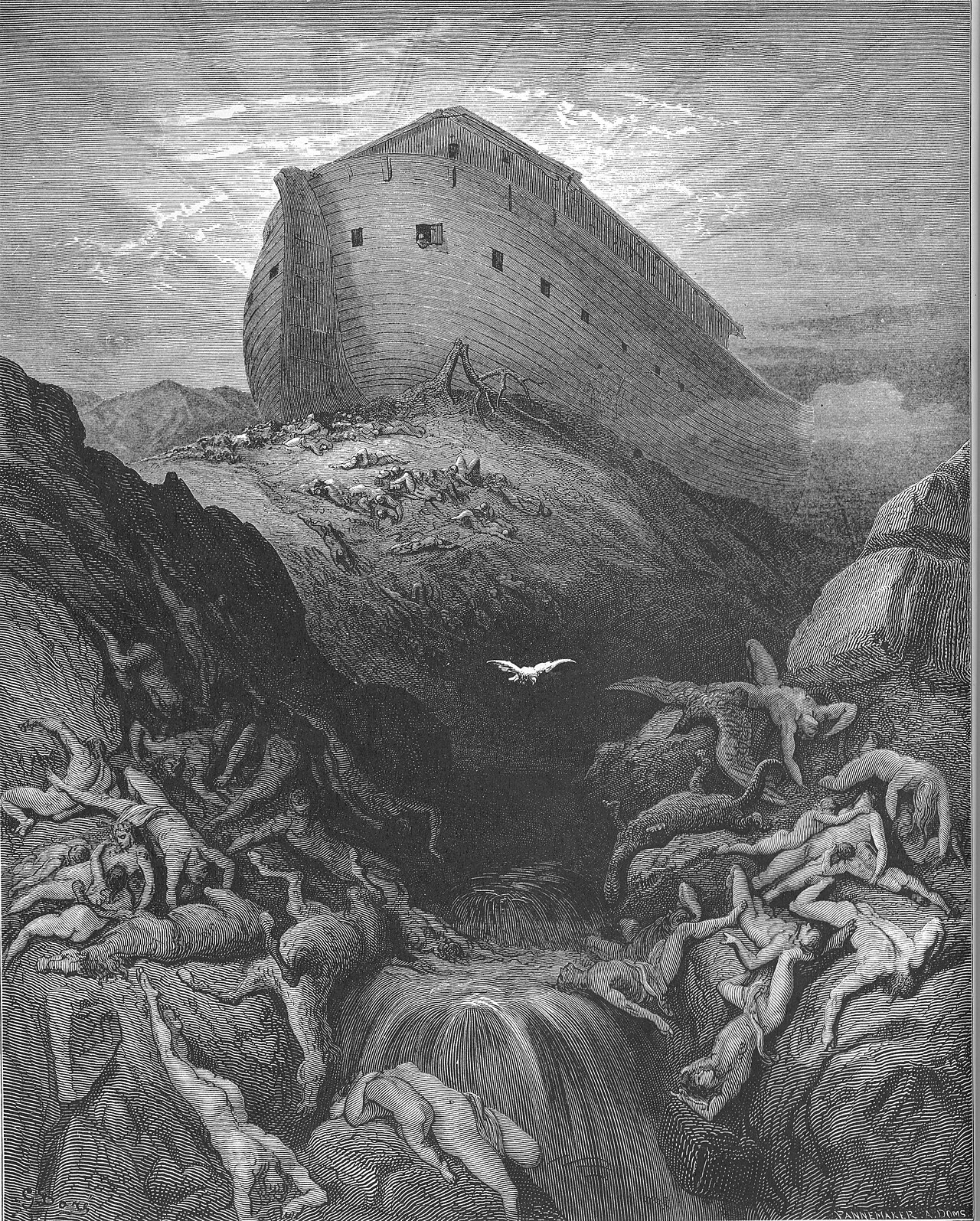
in Genesis 8Noah waited seven more days and again sent out the dove from the ark.
BSB
The same verse in ASV and KJV ▾
ASV
And he stayed yet other seven days; and again he sent forth the dove out of the ark;
KJV
And he stayed yet other seven days; and again he sent forth the dove out of the ark;
⋯
This verse in Genesis 8
Commentary
4 notes on this verseThis site's exposition
Noah waited seven more days
on Genesis 8:10-12
Noah waits in sevens, the same count as the seven days of warning at 7:4 and the seven pairs of clean animals at 7:2. The dove comes back that evening with an olive leaf freshly plucked, which means something is growing on the drained ground. On the third sending she does not return. That silence is the answer.
The record, by era
The Church Fathers1 voice
Christ is a dove because he commands his holy ones to be as doves when he says, "Be simple as doves." But the prophet speaks of what Christ the dove is when, in his person, he describes his return to heaven after his suffering: "Who …
The Puritans and the Awakening1 voice
And he stayed yet other seven days,.... As he had stayed seven days between the sending out of the raven and the dove, so he stayed seven days more after he had sent out the dove, and it returned to him, waiting patiently for his deliverance, and the signs of it; though he could have been glad to have known its near approach, for which he made the experiments be did: and again he sent forth the dove out of the ark; very probably the selfsame dove he had sent out before.
The Nineteenth Century1 voice
A commentator
Jamieson, Fausset & Brown1802–1910
Commentary Critical and Explanatory on the Whole Bible (1871)
proposed
again he sent forth the dove--Her flight, judging by the time she was abroad, was pursued to a great distance, and the newly plucked olive leaf, she no doubt by supernatural impulse brought in her bill, afforded a welcome proof that the declivities of the hills were clear.
quarantine:debris (2026-07-29) — starts-lowercase
How the passage was read
What the Jewish commentators add
[AND HE STAYED.] Va-yachel (and he stayed) is, I believe, derived from the word techillah (beginning). 18 From the root chet, lamed, lamed. Cf.
1 more on this passage, in their own words ▾
‘TARAPH’ (PLUCKED) IN HER MOUTH. Rashi wrote: “I am of the opinion that the dove was a male and that therefore Scripture sometimes speaks of it as masculine. It is indicated by taraph (he plucked) rather than tarpha (she plucked). and sometimes as feminine.
This section is reception history: how the passage was read and kept in the Jewish tradition. Where a reading parts from an essential of the Christian faith, the section says so at that point.
Texts and citation data: Sefaria; each excerpt follows its version’s licence. 3 further sources are cited on this chapter that carry no English text this site may quote or only restate the verse.
The words behind it
11 Hebrew wordsEvery Hebrew word of this verse in the order it stands, with what it means and the door to its own study. The last column counts the times a word stands in the whole Bible: the rarer the word, the more the places it appears belong together.
| Hebrew | Sound | Meaning | Word study | In the Bible |
|---|---|---|---|---|
| וַיָּ֣חֶל | vaiyachel | and he waited | H2342 → | |
| ע֔וֹד | od | again | H5750 → | 490 times |
| שִׁבְעַ֥ת | shivat | seven | H7651 → | 394 times |
| יָמִ֖ים | yamim | days | H3117 → | 2304 times |
| אֲחֵרִ֑ים | ʾacherim | other | H312 → | 166 times |
| וַיֹּ֛סֶף | vaiyosef | and he repeated | H3254 → | 212 times |
| שַׁלַּ֥ח | shalach | to send out | H7971 → | 845 times |
| אֶת־ | ʾet- | <obj.> | H853 → | 10935 times |
| הַיּוֹנָ֖ה | haiyonah | the dove | H3123 → | 31 times |
| מִן־ | min- | from | H4480 → | 1188 times |
| הַתֵּבָֽה׃ | hatevah | the ark | H8392 → | 28 times |
וַיָּ֣חֶלand he waited
vaiyachelH2342 →
ע֔וֹדagain
odH5750 →490 times
שִׁבְעַ֥תseven
shivatH7651 →394 times
יָמִ֖יםdays
yamimH3117 →2304 times
אֲחֵרִ֑יםother
ʾacherimH312 →166 times
וַיֹּ֛סֶףand he repeated
vaiyosefH3254 →212 times
שַׁלַּ֥חto send out
shalachH7971 →845 times
אֶת־<obj.>
ʾet-H853 →10935 times
הַיּוֹנָ֖הthe dove
haiyonahH3123 →31 times
מִן־from
min-H4480 →1188 times
הַתֵּבָֽה׃the ark
hatevahH8392 →28 times
A shaded row is a word that stands 400 times or fewer in the Bible.
The walk
8 stopsEach card is a verse this one points to, and under it the verses that one points to in turn. Where several paths arrive at the same place, that place is listed first: the text keeps returning to it.
Through
Psalms 40:1I waited patiently for the LORD; He inclined to me and heard my cry.
it leads to
- James 5:7–11
Be patient, then, brothers, until the Lord’s coming. See how the farmer awaits the precious fruit of the soil—how patient he is for the fall and spring rains.
Reached by 2 separate paths from here.
- Psalms 27:13–14
Still I am certain to see the goodness of the LORD in the land of the living.
- Psalms 37:7
Be still before the LORD and wait patiently for Him; do not fret when men prosper in their ways, when they carry out wicked schemes.
- Psalms 34:15
The eyes of the LORD are on the righteous, and His ears are inclined to their cry.
- Psalms 116:2
Because He has inclined His ear to me, I will call on Him as long as I live.
- James 5:7–11
Through
Romans 8:25But if we hope for what we do not yet see, we wait for it patiently.
it leads to
- Romans 12:12
Be joyful in hope, patient in affliction, persistent in prayer.
- Hebrews 10:36
You need to persevere, so that after you have done the will of God, you will receive what He has promised.
- Psalms 27:14
Wait patiently for the LORD; be strong and courageous. Wait patiently for the LORD!
- Romans 12:12
Where this verse is studied
On this page
About Genesis
Who and where
1 name in this verse with a page on the site.
This page draws on Adam Clarke, Commentary on the Bible; Jamieson, Fausset & Brown, Commentary Critical and Explanatory on the Whole Bible; John Gill, Exposition of the Old Testament (1748-1763); Matthew Henry, Commentary on the Whole Bible and Maximus of Turin, SERMONS 64.2.