

Prophet
Daniel
Prophet in the Court · Babylonian Exile · c. 620-530 BC
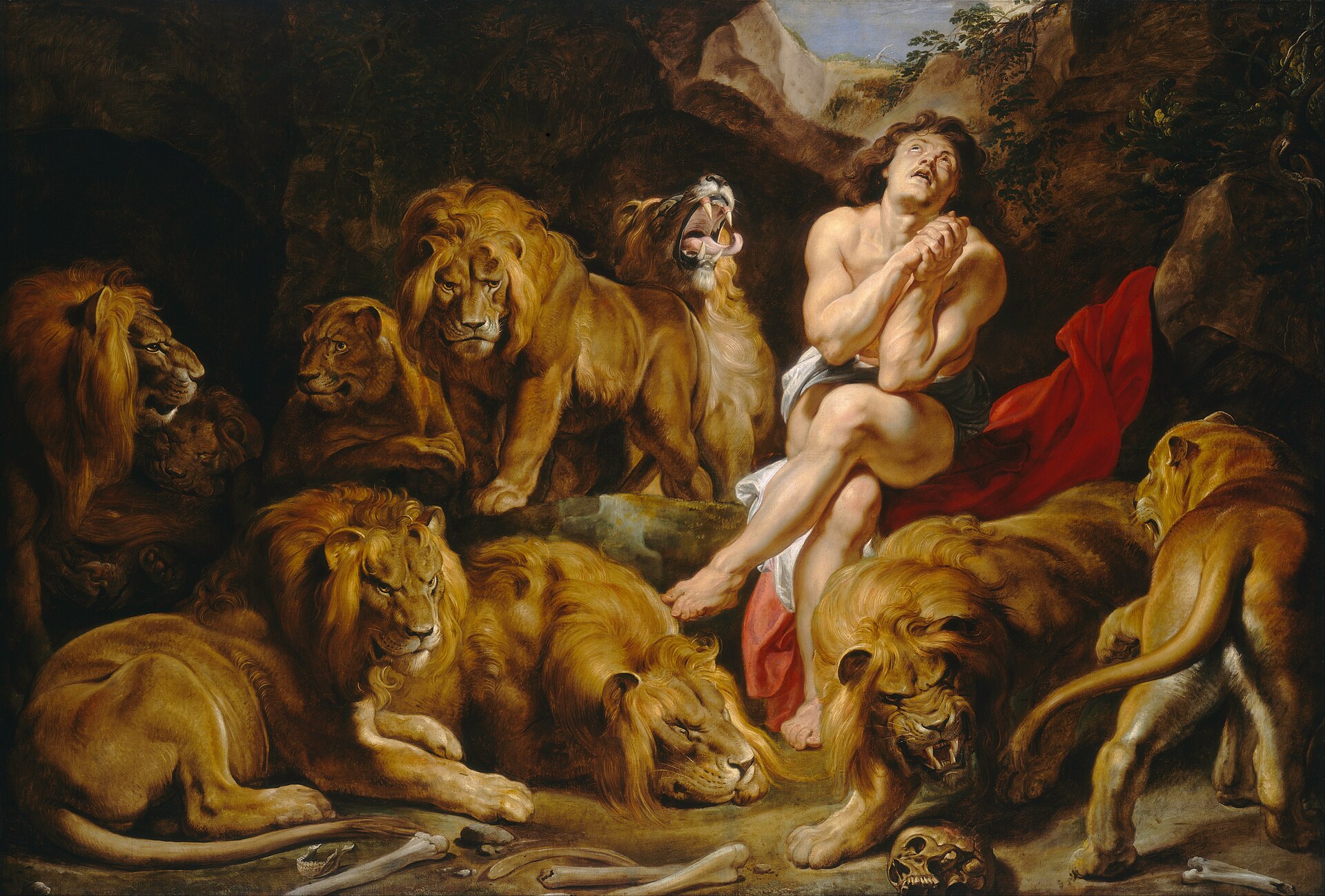
Daniel in the Lions' Den, Peter Paul Rubens
Summary
Daniel was taken to Babylon as a youth of noble birth in the first deportation from Judah (605 BC), trained in Babylonian learning, and rose to advise Nebuchadnezzar and later Darius the Mede. His book holds the court narratives of faithful exile (chapters 1 to 6) and four visions (chapters 7 to 12) that shaped the hope of the Second Temple period.
- Daniel was carried from Jerusalem to Babylon in 605 BC as a young man of Judah's noble line, and he never went home.
- He served at the top of two empires for about seventy years, reading the dreams of the kings he served without ever worshipping their gods.
- He was in his eighties in the lions' den, and the law that put him there was written because his enemies could find nothing else against him.
- Half his book is vision, and he says four times over that it frightened him and that he did not understand it.
- Jesus called him a prophet, and the title Jesus used of Himself more than any other comes out of Daniel 7.
On this page
Start here
He changes the times and seasons; He removes kings and establishes them. He gives wisdom to the wise and knowledge to the discerning.
Daniel 2:21→- 6 key events in order
- 71 verses name Daniel, across 6 books
In Scripture
- Verses
- 71
- Books
- 6
Daniel
- Role
- Prophet in the Court
- Era
- Babylonian Exile
- Dates
- c. 620-530 BC
- Tribe
- Judah
The life in order
in the order the canon tells it
- The Lord delivers Jehoiakim into Nebuchadnezzar’s handDaniel 1:2And the Lord delivered into his hand Jehoiakim king of Judah, along with some of the articles from the house of God. He carried these off to the land of Shinar, to the house of his god, where he put them in the treasury of his god.
- He is renamed after a Babylonian godDaniel 1:7The chief official gave them new names: To Daniel he gave the name Belteshazzar; to Hananiah, Shadrach; to Mishael, Meshach; and to Azariah, Abednego.
- He decides not to defile himself with the king’s foodDaniel 1:8But Daniel made up his mind that he would not defile himself with the king’s food or wine. So he asked the chief official for permission not to defile himself.
- God gives the four young men knowledge and understandingDaniel 1:17To these four young men God gave knowledge and understanding in every kind of literature and wisdom. And Daniel had insight into all kinds of visions and dreams.
- He remains until the first year of King CyrusDaniel 1:21And Daniel remained there until the first year of King Cyrus.
- He blesses the God who removes kings and establishes themDaniel 2:21He changes the times and seasons; He removes kings and establishes them. He gives wisdom to the wise and knowledge to the discerning.
- Nebuchadnezzar makes him ruler over the province of BabylonDaniel 2:48Then the king promoted Daniel and gave him many generous gifts. He made him ruler over the entire province of Babylon and chief administrator over all the wise men of Babylon.
- He is alarmed at the dream he has to interpret for the kingDaniel 4:19For a time, Daniel, who was also known as Belteshazzar, was perplexed, and his thoughts alarmed him. So the king said, “Belteshazzar, do not let the dream or its interpretation alarm you.” “My lord,” replied Belteshazzar, “may the dream apply to those who hate you, and its interpretation to your enemies!
- He tells the king to break away from his sinsDaniel 4:27Therefore, may my advice be pleasing to you, O king. Break away from your sins by doing what is right, and from your iniquities by showing mercy to the oppressed. Perhaps there will be an extension of your prosperity.”
- Belshazzar has him brought in and does not know who he isDaniel 5:13So Daniel was brought before the king, who asked him, “Are you Daniel, one of the exiles my father the king brought from Judah?
- He refuses the reward before he reads the writingDaniel 5:17In response, Daniel said to the king, “You may keep your gifts for yourself and give your rewards to someone else. Nevertheless, I will read the inscription for the king and interpret it for him.
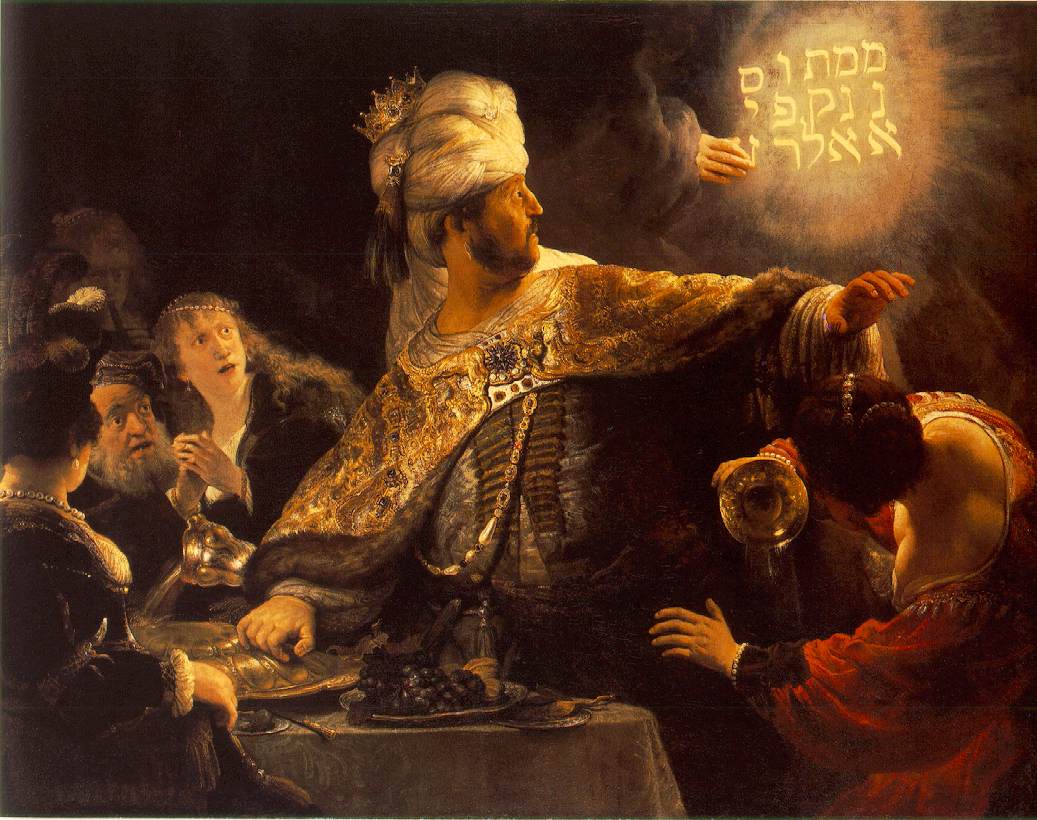
- The four words on the plaster of the wallDaniel 5:25Now this is the inscription that was written: MENE, MENE, TEKEL, PARSIN.
- His enemies can find nothing except the law of his GodDaniel 6:5Finally these men said, “We will never find any charge against this Daniel, unless we find something against him concerning the law of his God.”
- The windows opened toward Jerusalem, three times a dayDaniel 6:10Now when Daniel learned that the document had been signed, he went into his house, where the windows of his upper room opened toward Jerusalem, and three times a day he got down on his knees, prayed, and gave thanks to his God, just as he had done before.
- My God sent His angel and shut the mouths of the lionsDaniel 6:22My God sent His angel and shut the mouths of the lions. They have not hurt me, for I was found innocent in His sight, and I have done no wrong against you, O king.”
- One like the Son of Man, coming with the clouds of heavenDaniel 7:13In my vision in the night I continued to watch, and I saw One like the Son of Man coming with the clouds of heaven. He approached the Ancient of Days and was led into His presence.
- Gabriel is named and sent to explain the visionDaniel 8:16And I heard the voice of a man calling from between the banks of the Ulai: “Gabriel, explain the vision to this man.”
- He reads Jeremiah and counts the seventy yearsDaniel 9:2in the first year of his reign, I, Daniel, understood from the sacred books, according to the word of the LORD to Jeremiah the prophet, that the desolation of Jerusalem would last seventy years.
- The prince of the kingdom of Persia, and twenty-one daysDaniel 10:13However, the prince of the kingdom of Persia opposed me for twenty-one days. Then Michael, one of the chief princes, came to help me, for I had been left there with the kings of Persia.
- Go your way, rest, and rise at the end of the daysDaniel 12:13But as for you, go on your way until the end. You will rest, and will arise to your inheritance at the end of the days.”
Why Daniel matters
Daniel was a young man of Judah's royal or noble line who was carried to Babylon in 605 BC and never went home. He served in a foreign court for roughly seventy years, under two empires, and outlasted both the king who deported him and the kingdom that king had built. The book that carries his name holds six stories about his life and six visions he was given, and Jesus later called him a prophet. He was renamed Belteshazzar after a Babylonian god and trained in the language and literature of the Chaldeans. He took the name, the schooling and the office. He refused the king's food, because that crossed a covenant line. He served the empire without worshipping it, and where he drew that line is the shape of his whole life. He read two of Nebuchadnezzar's dreams and told the king what they meant while the king was still able to hurt him. He was grieved to have to do it and said so out loud. Sixty years later a hand wrote four words on the plaster of a banquet hall and no one could read them. Daniel was fetched out of retirement, refused the reward before he did the work, and told the last king of Babylon that his reign had been counted and closed. The city fell that night. The story he is known for happened after that, under the government that replaced Babylon. He was in his eighties and had just been promoted again. Men who wanted him destroyed audited his administration and found nothing, so they wrote a law against his prayers. He went home, opened the windows that faced Jerusalem, and prayed as he always had. The other half of the book is vision, and it cost him. Four times he was shown something about kingdoms and the end of things, and four times he reports that he was frightened, or ill for days, or left without strength. At the close he says that he heard and did not understand. The man who read other men's dreams without difficulty could not carry his own. Scripture records no sin of Daniel. No one in the book rebukes him, God never reproves him, and hostile auditors looking for a charge find nothing. His own longest prayer is a confession in the first person plural, and the narrator says he was confessing his own sin along with his people's. Both facts belong on the page together, and the second is what keeps the first from turning him into a monument. The Bible does not record his death. The last words spoken to him tell him to go his way, to rest, and to rise to his inheritance at the end of the days. That is where the book leaves him, on a promise rather than at a grave.
Biography
Daniel and his three companions (Hananiah, Mishael, Azariah — known by their Babylonian names Shadrach, Meshach, and Abednego) were selected as youths for training in the Babylonian court. They refused to defile themselves with the king's food and were given exceptional wisdom by God. Daniel interpreted Nebuchadnezzar's dream of the four-part statue (ch 2), the fiery furnace scene (ch 3) preserved his three companions, and the dream of the great tree (ch 4) was interpreted as Nebuchadnezzar's humbling. Under Belshazzar, Daniel interpreted the writing on the wall the night Babylon fell to Cyrus (ch 5). Under Darius the Mede, his prayer life led to his being thrown to the lions; the lions did not harm him (ch 6). The apocalyptic visions (ch 7-12) are among the most important in the Hebrew Bible. Chapter 7: the four beasts from the sea; the Ancient of Days; the Son of Man coming on clouds receiving an everlasting dominion. Chapter 8: the ram and the he-goat (Persia and Greece). Chapter 9: the seventy weeks — a prophecy of the coming anointed one cut off. Chapter 10-12: Michael's combat with the prince of Persia; the resurrection of "many who sleep in the dust of the earth" (12:2, the clearest OT resurrection verse). Daniel's "Son of Man" figure (ch 7) becomes Jesus' primary self-designation in the Gospels. The seventy weeks prophecy (ch 9) has generated more eschatological debate than perhaps any other OT passage.
He changes the times and seasons; He removes kings and establishes them. He gives wisdom to the wise and knowledge to the discerning.
The lions' den
Daniel 6, in the order it happens
- The new government promotes the old regime’s manDaniel 6:3Soon, by his extraordinary spirit, Daniel distinguished himself among the administrators and satraps. So the king planned to set him over the whole kingdom.
- Hostile auditors find nothingDaniel 6:4Thus the administrators and satraps sought a charge against Daniel concerning the kingdom, but they could find no charge or corruption, because he was trustworthy, and no negligence or corruption was found in him.
- So the charge has to be built out of his GodDaniel 6:5Finally these men said, “We will never find any charge against this Daniel, unless we find something against him concerning the law of his God.”
- A law against praying to anyone but the kingDaniel 6:7All the royal administrators, prefects, satraps, advisers, and governors have agreed that the king should establish an ordinance and enforce a decree that for thirty days anyone who petitions any god or man except you, O king, will be thrown into the den of lions.
- He prays as he always hadDaniel 6:10Now when Daniel learned that the document had been signed, he went into his house, where the windows of his upper room opened toward Jerusalem, and three times a day he got down on his knees, prayed, and gave thanks to his God, just as he had done before.
- The king who signed the law gives the orderDaniel 6:16So the king gave the order, and they brought Daniel and threw him into the den of lions. The king said to Daniel, “May your God, whom you serve continually, deliver you!”
- A stone, and the king’s own signet ringDaniel 6:17A stone was brought and placed over the mouth of the den, and the king sealed it with his own signet ring and with the rings of his nobles, so that nothing concerning Daniel could be changed.
- The king fasts all night and cannot sleepDaniel 6:18Then the king went to his palace and spent the night fasting. No entertainment was brought before him, and sleep fled from him.
- At dawn he runs to the pit and shouts down itDaniel 6:20When he reached the den, he cried out in a voice of anguish, “O Daniel, servant of the living God, has your God, whom you serve continually, been able to deliver you from the lions?”
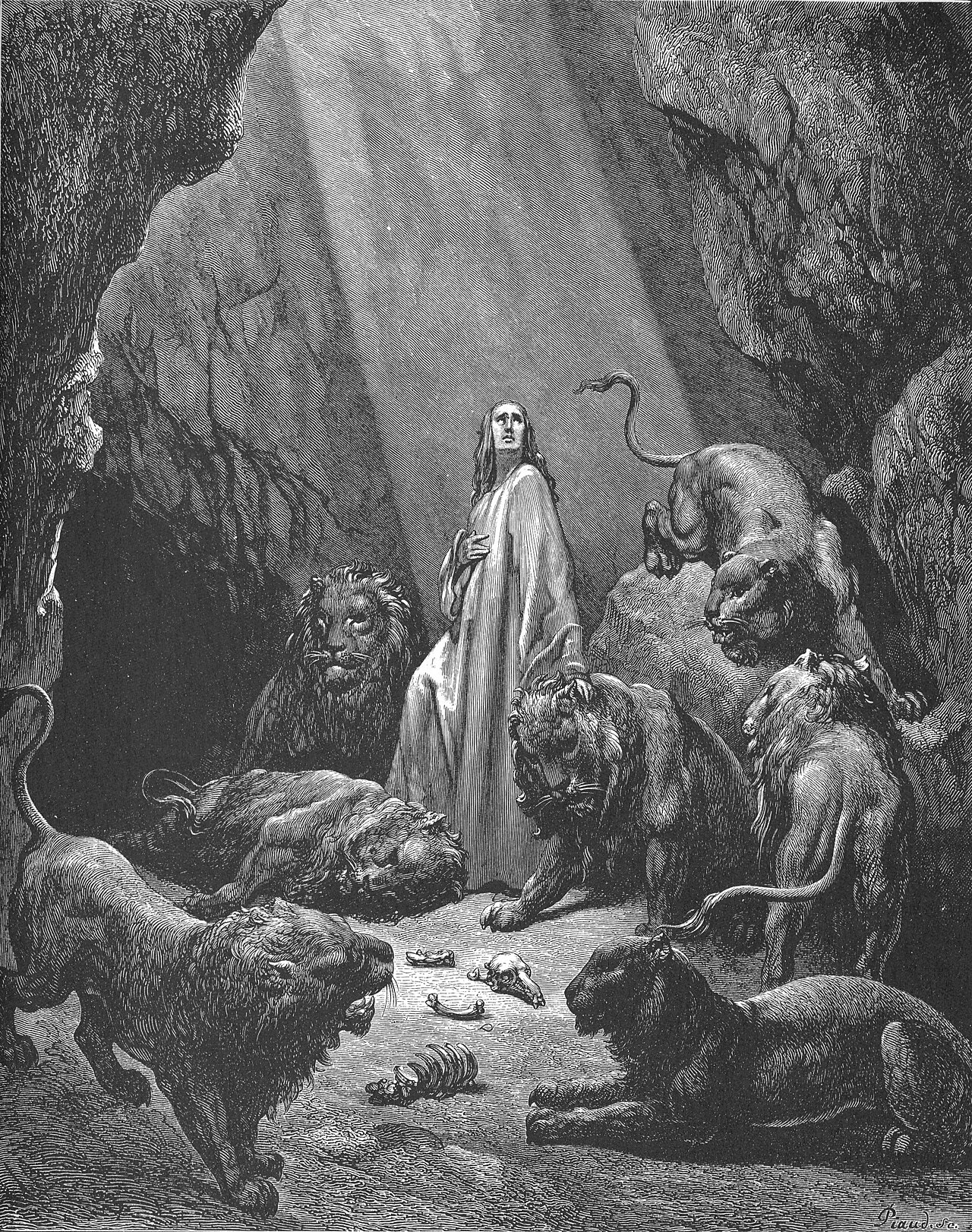
- Daniel answers from insideDaniel 6:22My God sent His angel and shut the mouths of the lions. They have not hurt me, for I was found innocent in His sight, and I have done no wrong against you, O king.”
He was in his eighties. The men who built the trap were his colleagues in the new administration, and they built it out of his prayers because his record gave them nothing else to use. Daniel 6:24 then reports what the king did to the accusers, which is the record of Persian justice and not a verdict the text approves.
Daniel in the lions’ den: the full studyKey events
- 1Taken to Babylon in first deportation
605 BCE
- 2Interprets Nebuchadnezzar's statue dream
603
- 3Three companions in the furnace
c. 585
- 4Interprets Belshazzar's feast; Babylon falls
539
- 5Lions' den episode under Darius the Mede
c. 538
- 6Final vision of the resurrection (Dan 12)
c. 530
More key verses
Text: Berean Standard Bible.
“If the God whom we serve exists, then He is able to deliver us from the blazing fiery furnace and from your hand, O king.”
“In my vision in the night I continued to watch, and I saw One like the Son of Man coming with the clouds of heaven. He approached the Ancient of Days and was led into His presence.”
“And many who sleep in the dust of the earth will awake, some to everlasting life, but others to shame and everlasting contempt.”
What they got right, and what they got wrong
Strengths
Faithfulness under pressure; prayer discipline; wisdom in serving pagan kings while refusing to compromise.
Weaknesses
Periods of overwhelming grief at visions received (Dan 10:8 — "no strength was left in me"). Not a character flaw but the cost of revelation.
Lessons
Faithfulness in a foreign court is possible with divine enabling. Prayer discipline is non-negotiable. Apocalyptic hope sustains through empire-level chaos.
Spiritual significance
Daniel models diaspora faithfulness in high office. His apocalyptic visions shape Second Temple eschatology and New Testament apocalyptic. His seventy weeks prophecy is the most structurally important OT messianic timeline.
How Daniel points to Jesus
The largest line running out of Daniel into the Gospels is the Son of Man. Daniel 7:13 shows one in human form coming with the clouds of heaven, approaching the Ancient of Days and being led into His presence, and 7:14 gives Him dominion, glory and kingship, served by every nation and language, in a kingdom that will never be destroyed. He does not rise out of the sea like the four beasts before Him. He comes down. Hippolytus of Rome, writing a commentary on Daniel in the early third century, quotes both verses and reads them of Christ. John Wesley, in his Explanatory Notes upon the Old Testament of 1765, reads 7:13 of the Messiah and of the ascension, where He received His royal investiture. Jesus took that title for Himself more often than any other, and the place where the connection is put past argument is His trial. The high priest asked Him under oath whether He was the Christ, and He answered with this chapter: “I am,” said Jesus, “and you will see the Son of Man sitting at the right hand of Power and coming with the clouds of heaven.” The court did not need the reference explained. The high priest tore his robes, which means the quotation was heard as a claim. Stephen sees the same figure standing at the right hand of God as he dies. Revelation 1:13 puts One like the Son of Man among the lampstands, and 1:14 gives Him the description Daniel 7:9 had given the Ancient of Days, hair white like wool, as white as snow. The second line is the stone. In Daniel 2:34 a stone is cut out, but not by human hands, and it strikes the statue of the four empires; in 2:35 it becomes a mountain that fills the whole earth, and 2:44 says the God of heaven will set up a kingdom that will never be destroyed. Irenaeus, in Against Heresies in the late second century, says it outright, that Christ is the stone which is cut out without hands, who shall destroy temporal kingdoms and introduce an eternal one. Gregory of Nyssa, preaching On the Baptism of Christ in the fourth century, reads the cutting without hands of the virgin birth, and that is his reading rather than the passage's plain sense. Honored teachers then differ about when the stone strikes. Adam Clarke reads a kingdom that spreads and prevails to the end of the world. Jamieson, Fausset and Brown read a destroying judgment dealt by Christ at His coming again. Both readings are held by men this site honors, and the pages on last things carry the question. The third line is the seventy weeks. Daniel 9:24 decrees seventy sevens for Daniel's people and his holy city to put an end to sin, to make atonement for iniquity and to bring in everlasting righteousness, and 9:26 says the Messiah will be cut off and will have nothing. The count lands on Messiah. This site's tradition reads the seventieth seven as still future, on the pre-tribulational premillennial reading it holds elsewhere. Five other readings are set out with the men who hold each, among them John Calvin, Sir Isaac Newton, R. C. Sproul, and Keil and Delitzsch. This page says where the count lands and sends the reader on rather than running the arithmetic. Both deliverance stories were read early as pictures of Christ with His people. This site reads the fourth man in the furnace as the pre-incarnate Christ. John Wesley calls Him the Angel of the covenant appearing before His incarnation, and Jamieson, Fausset and Brown call Him the messenger of the covenant giving a prelude to it. John Calvin reads the figure as a created angel, on the ground that Nebuchadnezzar spoke as the nations around him spoke, calling angels sons of God because something of God shines in them, and his reason is given below in his own words. He is honored here, and nothing on this page frames him as opposing anyone. Cyril of Jerusalem preached the lions' den as a lesson in faith in his fifth Catechetical Lecture in the fourth century. Adam Clarke and John Wesley both read the angel who shut the lions' mouths as the one who had stood in the furnace. It ends in a resurrection. Daniel 12:2 is the clearest statement in the Old Testament that the dead will rise to two outcomes, some to everlasting life and others to shame and everlasting contempt, and Jesus uses its exact shape in John 5:28 and 5:29, where all who are in their graves hear His voice and come out to a resurrection of life or a resurrection of judgment. Matthew Henry makes that connection at 12:2 and notes that Jewish readers read the verse of the resurrection too. Basil of Caesarea quotes it in a pastoral letter to Optimus in the fourth century. Jerome, in his commentary in the early fifth century, reads the last verse spoken to Daniel the same way, and says the whole context has to do with the resurrection of all the dead, at the time when the prophet also is to rise. That is the last word Daniel is given: go your way, rest, and rise. One pattern lies under all of it, and the page states it once. The God who rules the kingdom of men kept His own people through the fire and the pit rather than out of them. The fourth man walks inside the furnace. The angel comes down into the den.
The Son of Man (Dan 7:13) is Jesus's primary self-designation. The seventy weeks (Dan 9:24-27) is fulfilled in Messiah's coming and cutting off. The resurrection of Dan 12 is fulfilled in Christ's resurrection and awaited final resurrection.
The voices
each quoted from the work named
But Daniel - would not defile himself - I have spoken of this resolution in the introduction. The chief reasons why Daniel would not eat meat from the royal table were probably these three: - 1. Because they ate unclean beasts, which were forbidden by the Jewish law. 2. Because they ate, as did the heathens in general, beasts which had been strangled, or not properly blooded. 3. Because the animals that were eaten were first offered as victims to their gods.
This one prophet therefore saw within the compass of his own time the rise, reign, and ruin of that monarchy
The Son of God - Probably he had heard David speak of him. Jesus Christ, the Angel of the covenant, did sometimes appear before his incarnation. Those who suffer for Christ, have his gracious presence with them in their sufferings, even in the fiery furnace, even in the valley of the shadow of death, and therefore need fear no evil.
4 more teachers on these versesJohn Calvin · Adam Clarke · Jerome · Charles Spurgeon
No doubt God here sent one of his angels, to support by his presence the minds of his saints, lest they should faint. ... A single angel was sent to these three men; Nebuchadnezzar calls him a son of God; not because he thought him to be Christ, but according to the common opinion among all people, that angels are sons of God, since a certain divinity is resplendent in them; and hence they call angels generally sons of God.
Now when Daniel knew that the writing was signed - He saw what was designed, and he knew whom he served. His windows being open - He would not shut them to conceal himself, but “kneeled down with his face turned toward Jerusalem, and prayed thrice each day, giving thanks to God as usual.” When the Jews were in distant countries, in prayer they turned their faces towards Jerusalem; and when in Jerusalem, they turned their faces towards the temple.
Jeremiah had predicted seventy years for the desolation of the Temple (Jeremiah 29:1-10), at the end of which the people would again return to Judaea and build the Temple and the city of Jerusalem. But this fact did not render Daniel careless, but rather encouraged him to pray that God might through his supplications fulfil that which He had graciously promised.
IT did not do Daniel any harm to know that he was greatly beloved of God, or else he would not have received that information from Heaven. Some people are always afraid that if Christian people obtain full assurance and receive a sweet sense of Divine love, they will grow proud, and be carried away with conceit. Do not have any such fear for other people and especially do not be afraid of it for yourselves!
Daniel in Scripture
Open a book to read its mentions here. Text: Berean Standard Bible. Names repeat in Scripture, so some of these verses may speak of another person called Daniel. The two marks are drawn from the chapters this page's own references stand in.
Old TestamentNew Testamentsegment width = share of mentions
Old Testament5 books · 70 mentions
1 Chronicles1 mention
Ezra1 mention
Nehemiah1 mention
Ezekiel3 mentions
- Ezekiel 14:14then even if these three men—Noah, Daniel, and Job—were in it, their righteousness could deliver only themselves, declares the Lord GOD.
- Ezekiel 14:20then as surely as I live, declares the Lord GOD, even if Noah, Daniel, and Job were in it, they could not deliver their own sons or daughters. Their righteousness could deliver only themselves.
- Ezekiel 28:3Behold, you are wiser than Daniel; no secret is hidden from you!
Daniel64 mentions
- Daniel 1:6Among these young men were some from Judah: Daniel, Hananiah, Mishael, and Azariah.
- Daniel 1:7The chief official gave them new names: To Daniel he gave the name Belteshazzar; to Hananiah, Shadrach; to Mishael, Meshach; and to Azariah, Abednego.
- Daniel 1:8But Daniel made up his mind that he would not defile himself with the king’s food or wine. So he asked the chief official for permission not to defile himself.
- Daniel 1:9Now God had granted Daniel favor and compassion from the chief official,
- Daniel 1:10but he said to Daniel, “I fear my lord the king, who has assigned your food and drink. For why should he see your faces looking thinner than those of the other young men your age? You would endanger my head before the king!”
59 further mentions in Daniel, read them in the book.
New Testament1 book · 1 mention
Common questions
How old was Daniel in the lions' den?
He was in his eighties. He arrived in Babylon in 605 BC as one of the young men chosen for court training, and the den comes after Babylon fell, which the Nabonidus Chronicle dates to October 539 BC. That is sixty-six years between the two. Scripture never gives his age at either end, so no exact figure is possible, but the child of the picture books is not the man the text describes. He was a senior administrator whom the new government had just promoted.
One other detail belongs here. The seven lions, the six days in the pit, and the prophet carried in by the hair of his head to bring him dinner are not in Daniel 6. They come from Bel and the Dragon, a Greek work outside the Protestant canon that tells of a second den, and they have wandered into retellings of this one.
Where was Daniel during the fiery furnace?
The text does not say. Chapter 3 names Shadrach, Meshach and Abednego, and Daniel is not mentioned once from 3:1 to 3:30. Readers have guessed that he was away on the king's business or exempt by rank, and nothing in the book supports or rules out either guess.
This site names the silence rather than filling it. Chapter 3 is a story about three men and chapter 6 is a story about one, and they are not the same story with a different cast.
Who was the fourth man in the furnace?
Readers differ; the positions are named
Nebuchadnezzar says he sees four men walking unbound in the fire and that the fourth looks like a son of the gods, and three verses later he blesses the God who sent His angel and delivered His servants. This site reads that fourth man as the pre-incarnate Christ, and the Christophany page sets out the case. John Wesley and Jamieson, Fausset and Brown both read Him as the Angel of the covenant.
John Calvin reads the figure as a created angel, and his reason is doctrinal. He holds that Nebuchadnezzar spoke as the nations around him spoke, calling angels sons of God because something of God shines in them, and not because the king had recognised Christ. His reading is given on this page in his own words, and he is honored as a teacher this site respects.
Who was Darius the Mede?
Readers differ; the positions are named
Daniel 5:31 says Darius the Mede received the kingdom at the age of sixty-two, and no text outside Daniel names such a ruler. Four proposals are on the table and this site settles none of them.
John C. Whitcomb, in Darius the Mede (Eerdmans, 1959), identifies him as Gubaru, the governor Cyrus installed over Babylon. Donald J. Wiseman proposed in 1965 that Daniel 6:28 be read as one reign under two names, making Darius a second throne name of Cyrus himself. Older commentators including Jamieson, Fausset and Brown followed Xenophon and identified him with Cyaxares II. Much of critical scholarship holds the figure to be unhistorical, and the study guide names this as the strongest single objection to the book's historicity and holds it as a real difficulty rather than airbrushing it.
One warning for the reader. The Darius of Ezra and Haggai is Darius the Great of Persia, a different man a generation later, and he is not the king of Daniel 6.
Was there really a Belshazzar?
Yes, and this is the case where the evidence changed. Until the middle of the nineteenth century no source outside Daniel named him, and the classical historians end the dynasty with Nabonidus, so Daniel 5 was cited as proof that the book knew the period badly.
In 1854 Henry Rawlinson published clay cylinders recovered at Ur naming Bel-shar-usur as the eldest son of Nabonidus. Further texts showed Nabonidus spending years at Tema in Arabia while his son held royal authority in Babylon. Raymond Dougherty set the case out in Nabonidus and Belshazzar (Yale University Press, 1929) and read Daniel's offer of the third place in the kingdom as the highest a co-regent could give, because the first two were taken.
Two things stand honestly beside that. The inscriptions do not give Belshazzar the formal royal titulary, and Daniel calls Nebuchadnezzar his father. The usual answer to the second, that Semitic usage takes father for an ancestor or a royal predecessor, is old and well attested, and some scholars hold it insufficient.
When was the book of Daniel written?
Readers differ; the positions are named
The traditional case puts it in the sixth century with the man himself. It rests on the Imperial Aramaic, which K. A. Kitchen judged practically undatable within about 600 to 330 BC; on Persian administrative loanwords that the second-century Greek versions already misunderstand; on eight copies at Qumran by about 125 BC with the book cited as Scripture in 4Q174; on sixth-century detail the later Greek historians had lost, such as Belshazzar and the offer of only the third place in the kingdom; and on Christ ascribing the book to the prophet Daniel and treating its prophecy as still ahead of His hearers.
The critical case puts it in the second century. It rests on chapter 11 running exact up to about 164 BC and diverging after that; on three Greek instrument names in chapter 3; on the developed angelology and the two-outcome resurrection read as later theology; on Daniel standing in the Writings rather than the Prophets; and on Ben Sira passing him over in a roll-call of Israel's heroes around 180 BC. The critique is old rather than modern, since Porphyry argued it in the third century AD.
The study guide carries both columns at full strength, and this site states one rule with either dating. Because the date is itself in dispute, Daniel's precision is never offered here as proof of inspiration, because that would argue in a circle.
Did Daniel ever sin?
The book records no sin of Daniel. No one in it rebukes him, God never reproves him, and the men who audit his administration in chapter 6 are hostile, have every motive, and find nothing. Along with Joseph he is one of the very few figures of whom Scripture reports no moral failure.
That is not the whole answer. Daniel's own longest recorded prayer, in chapter 9, is a confession, and it is in the first person plural from beginning to end. We have sinned and done wrong, he prays, we have acted wickedly and rebelled. The narrator's summary at 9:20 says he was confessing his own sin and that of his people Israel. He did not stand outside his nation and pray about it. He stood inside it and prayed as one of the guilty, and the two facts belong together.
What is the prince of the kingdom of Persia in Daniel 10?
Daniel 10:12 and 10:13 say that an answer went out on the first day he set himself to understand, and that the prince of the kingdom of Persia opposed the messenger for twenty-one days until Michael came to help. That is the whole of what Scripture says. The text does not explain the mechanism, does not give the being's origin, and does not build a system out of it.
Two living teachers on this site's roster take up the passage. Jane Hamon, in Resisting the Prince Of Persia, writes that in Daniel 10 “we see Daniel's prayers fueling a heavenly battle in which Gabriel is sent with a prophetic message but is delayed until Michael, the archangel, comes and fights this Persian principality.” Dutch Sheets, in his Give Him 15 daily devotional for October 12, 2023, states the delay plainly: “the angel sent to answer Daniel’s prayers had been delayed for 21 days by the demonic resistance in the spiritual realm.”
The point the text itself makes is the one a reader should leave with. The words were heard on day one.
Why does the book jump around in time?
Because the six stories and the four visions are arranged by kind rather than by date. Chapters 1 to 6 run in order, from the deportation to the den. Then the visions restart the clock. Chapter 7 is dated to the first year of Belshazzar and chapter 8 to his third year, which puts both of them years before the writing on the wall and before the lions. Only chapter 9 and chapters 10 to 12 fall after the den.
So the lions' den is not the last thing that happened to him, and the four beasts are not the first vision he had after it. The timeline on this page follows the life. The study guide sets out the book's own two-part design.
Notable art
11 verified pieces depicting Daniel
Sources cited
- Berean Standard BibleEvery verse quoted on this page, taken byte for byte from the site's verses table. Public domain since 2023.
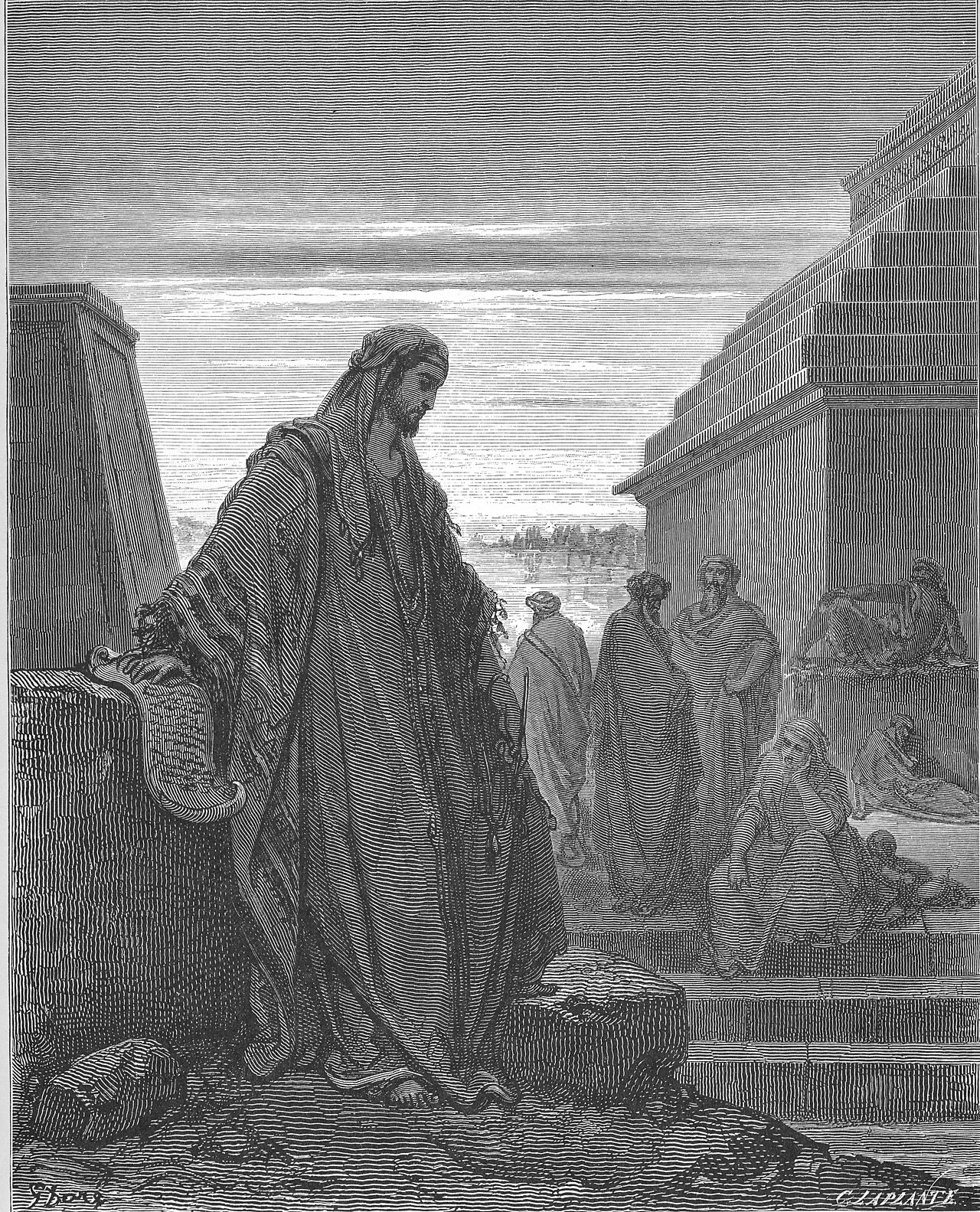
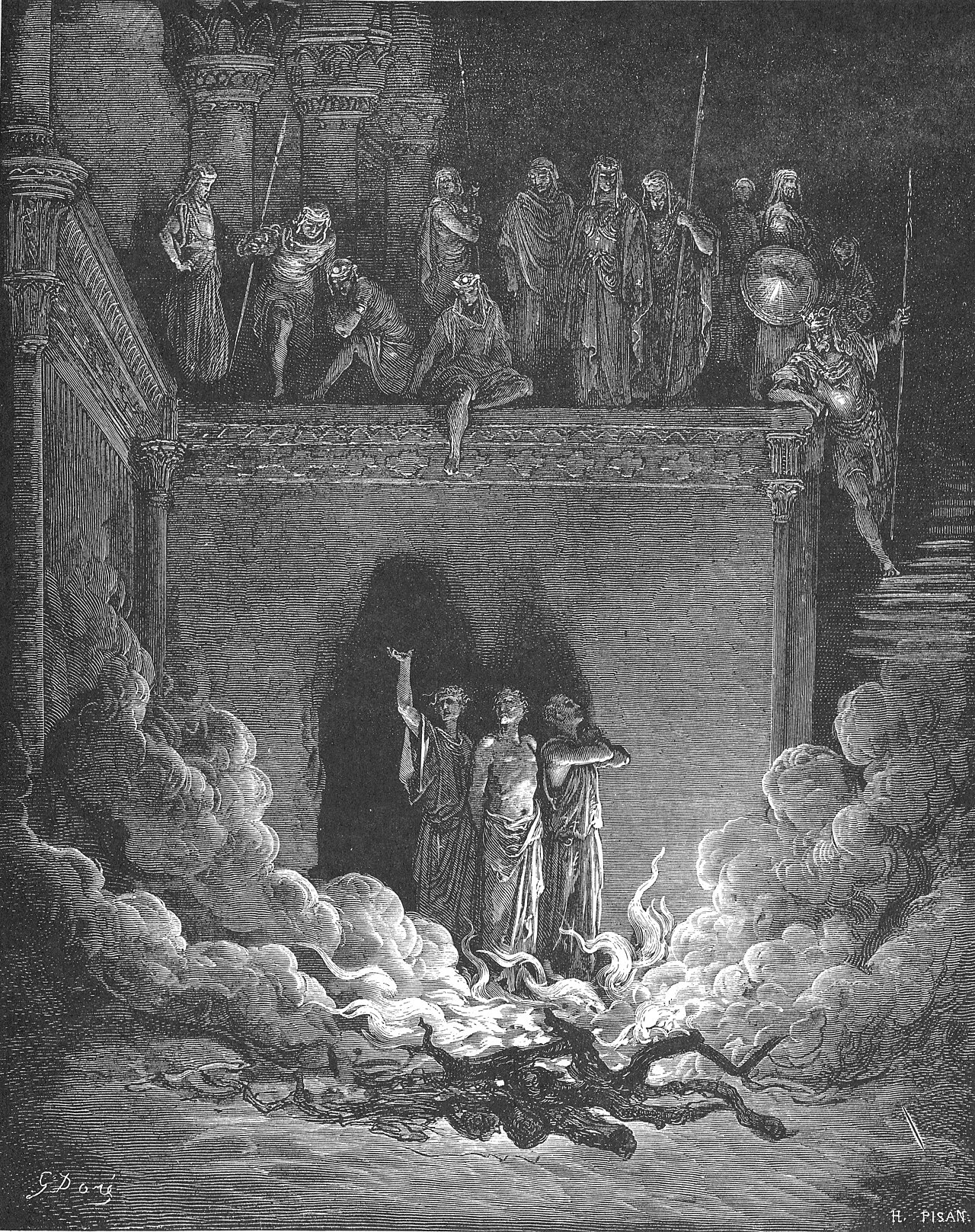
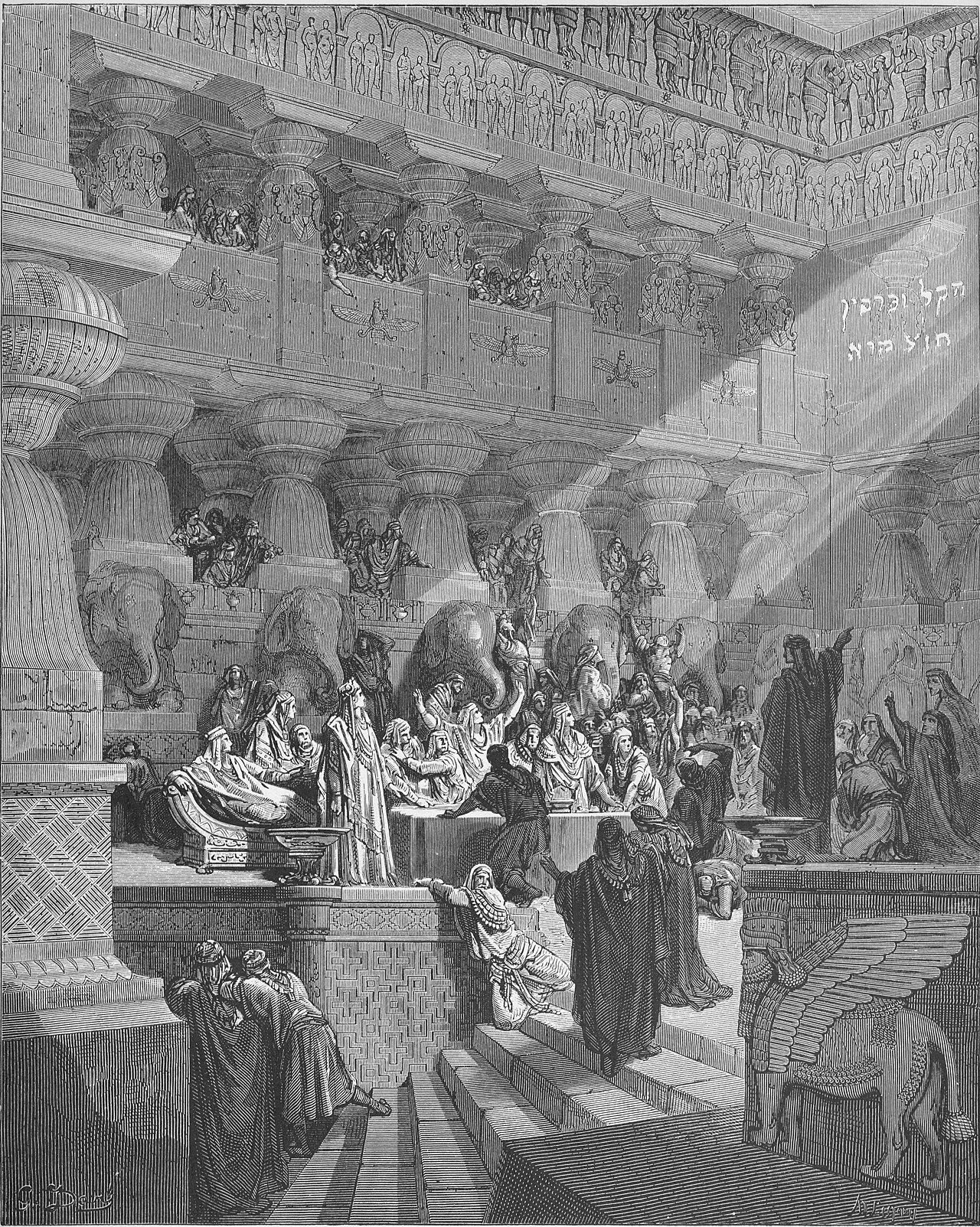
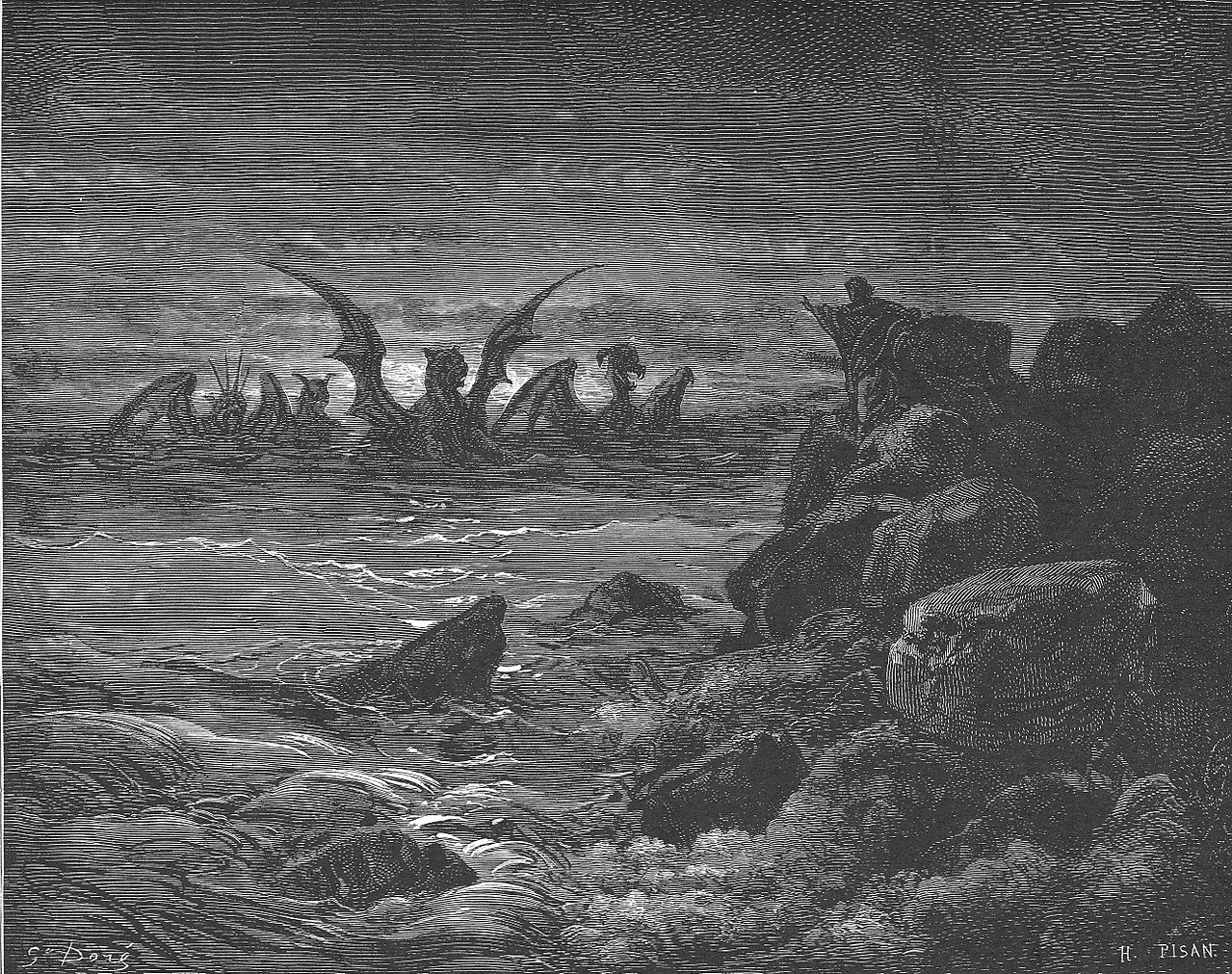
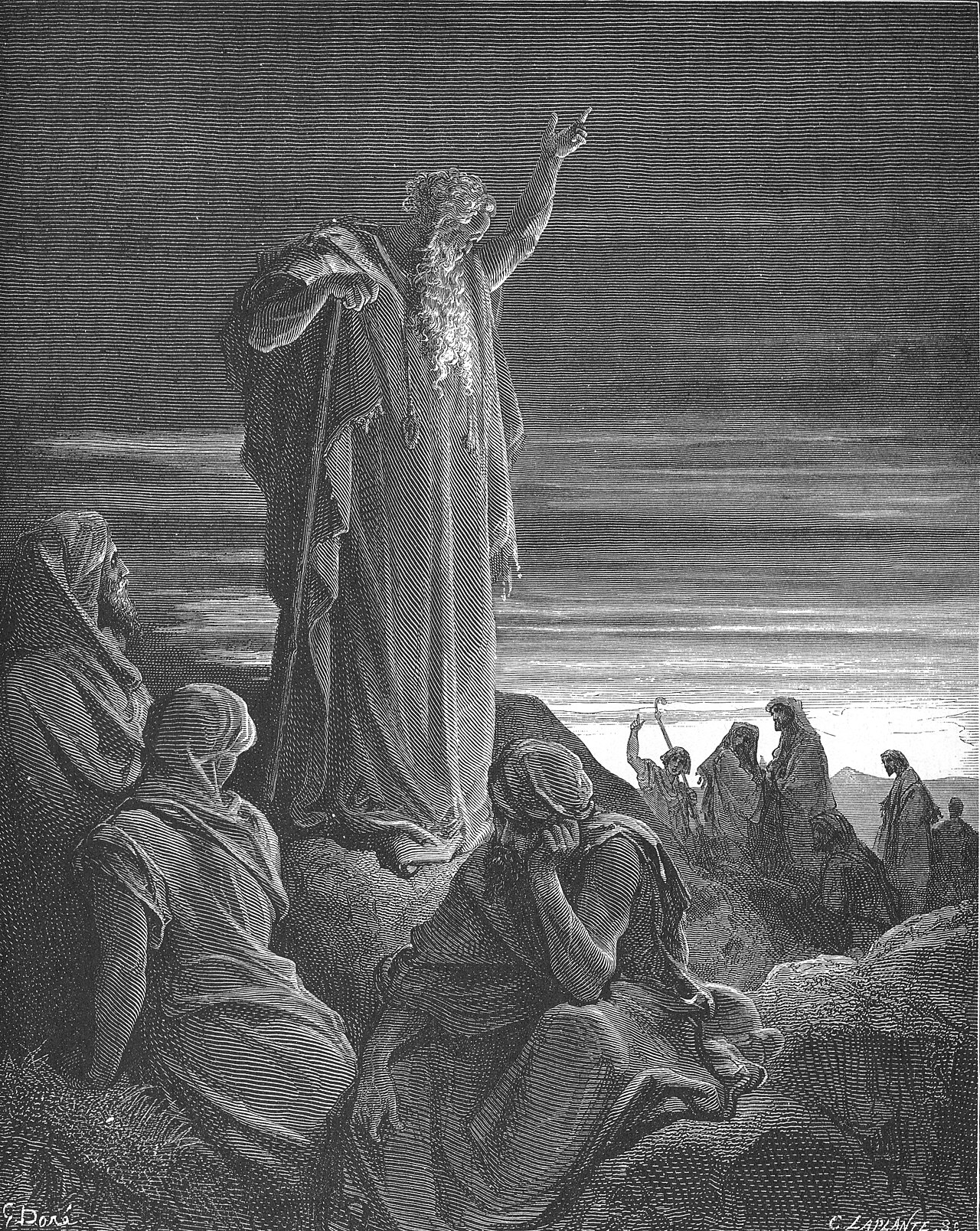
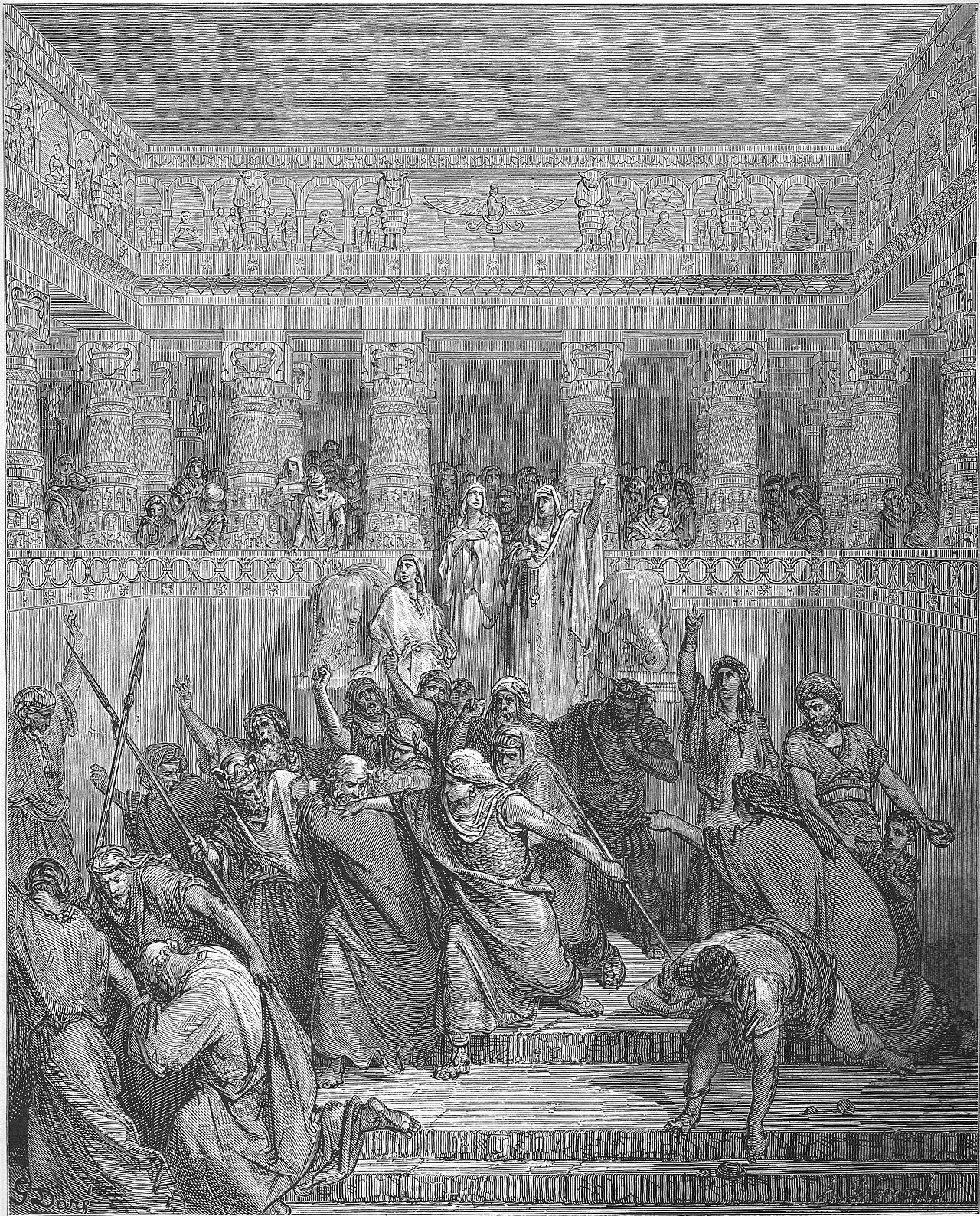
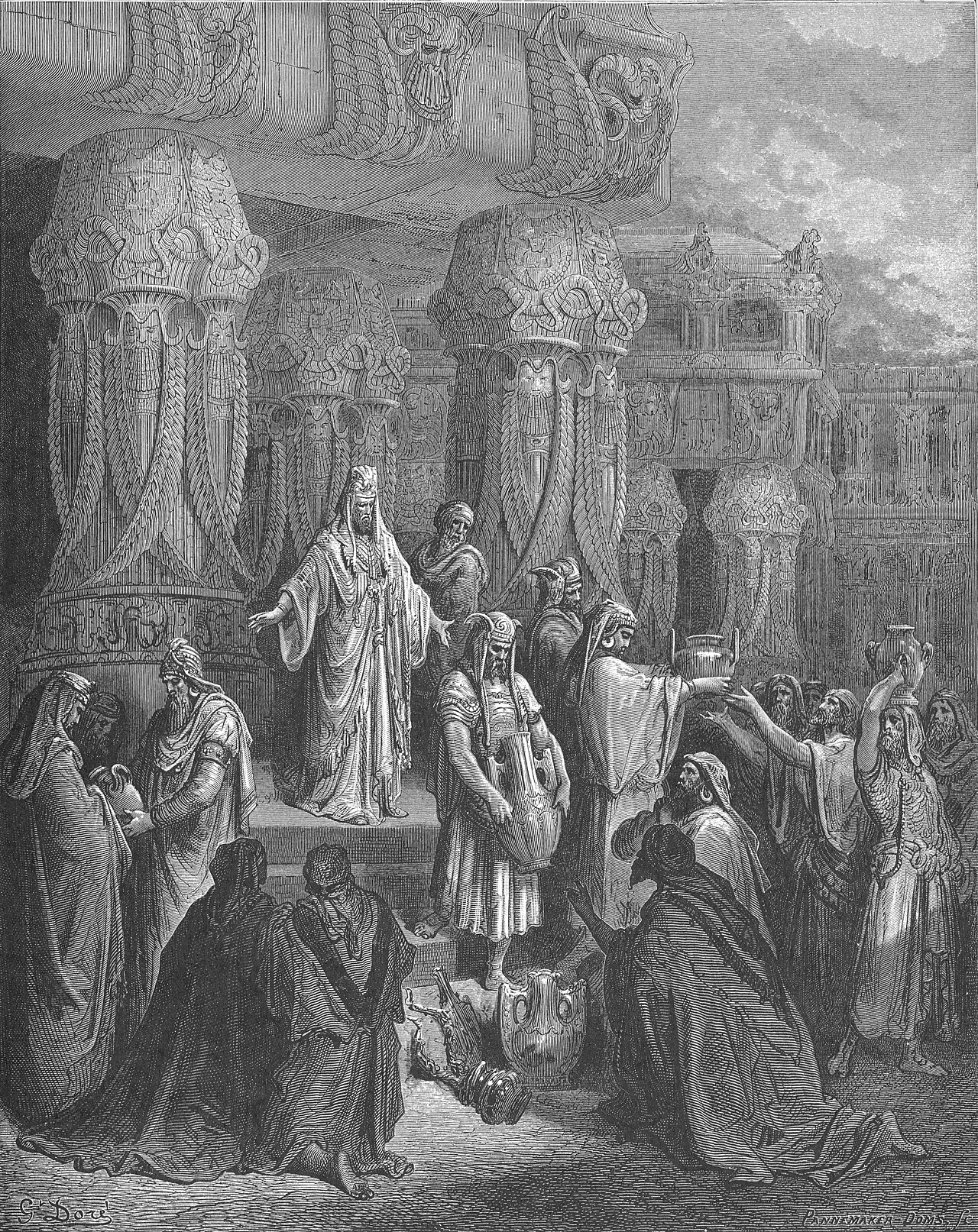
- Gustave Doré, The Holy Bible with Illustrations by Gustave Doré (1866)Plates 104, 126, 128, 129, 130, 131, 132 and 134 on this page. Public domain.
- Peter Paul Rubens, Daniel in the Lions' DenThe painting at the head of this page. Public domain.
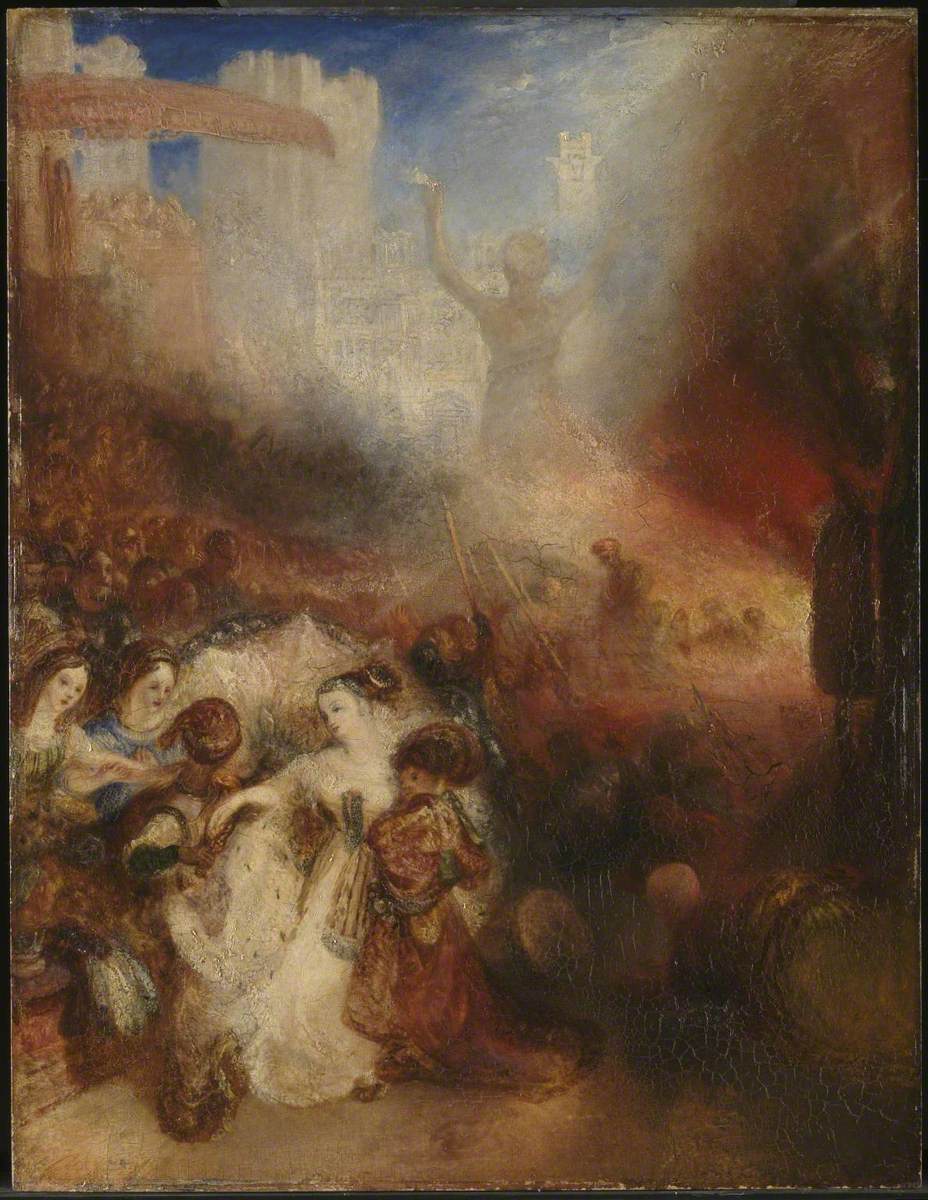
- J. M. W. Turner, Shadrach, Meshach and Abednego in the Burning Fiery FurnaceThe furnace on the art wall. Public domain.
- Rembrandt van Rijn, Belshazzar's FeastThe feast on the art wall. Public domain.
- Adam Clarke, Commentary on the Bible (1832)Quoted on Daniel 1:8 and 6:10, and reported on Daniel 2:44 and 6:22. Public domain.
- Matthew Henry, Commentary on the Whole Bible (1710)Quoted on Daniel 1:21 and reported on Daniel 12:2. Public domain.
- John Wesley, Explanatory Notes upon the Old Testament (1765)Quoted on Daniel 3:25 and reported on Daniel 6:22 and 7:13. Public domain.
- John Calvin, Commentary on Daniel (1561)Quoted on Daniel 3:24 and 3:25 for the created-angel reading of the fourth man, in his own words. Public domain.
- Jerome, Commentary on DanielQuoted on Daniel 9:2 and reported on Daniel 12:13. Written in the early fifth century. Public domain translation.
- Jamieson, Fausset & Brown, Commentary Critical and Explanatory on the Whole Bible (1871)Reported on Daniel 2:34, 2:44, 3:25 and 5:31. Public domain.
- Charles H. Spurgeon, The Metropolitan Tabernacle PulpitSermon no. 2256, “Daniel's Band”, quoted on Daniel 10:11. The volume year is a publication date rather than the date of preaching, so no year is printed here. Public domain, CCEL edition.
- The early Christian writers cited on this pageIrenaeus, Hippolytus of Rome, Gregory of Nyssa, Basil of Caesarea and Cyril of Jerusalem, each named by century rather than by a stored death year. Public domain translations.
- Jane Hamon, Resisting the Prince Of PersiaModern and in copyright. Quoted at thirty-three words under the site’s cite-only limit, with no year printed because the work carries no confirmed publication date in the site’s records.
- Dutch Sheets, Give Him 15 daily devotional, “The Prince of Persia” (October 12, 2023)Modern and in copyright. Quoted at twenty-three words under the site’s cite-only limit, with the specific devotional and its date named.
- John C. Whitcomb, Darius the Mede (Eerdmans, 1959), Donald J. Wiseman in Notes on Some Problems in the Book of Daniel (Tyndale, 1965), and Raymond Dougherty, Nabonidus and Belshazzar (Yale University Press, 1929)The works behind the Darius proposals, the Aramaic dating study and the Belshazzar inscriptions. Named as the Babylon page names them; none was independently re-verified for this page.
- The Greek additions to Daniel, in the site’s apocrypha collectionSong of the Three, Susanna, and Bel and the Dragon, in the King James Apocrypha collection. Labelled study resources, never presented as Scripture.
- The Daniel study guide on this siteBoth dating cases at full strength, the book’s two-part structure, and the contested questions this page names without settling.
Keep studying
On this page
Studies14
On this person
People and groups1
Trails1
Every page that names them1
Doorway1
Keep this page