
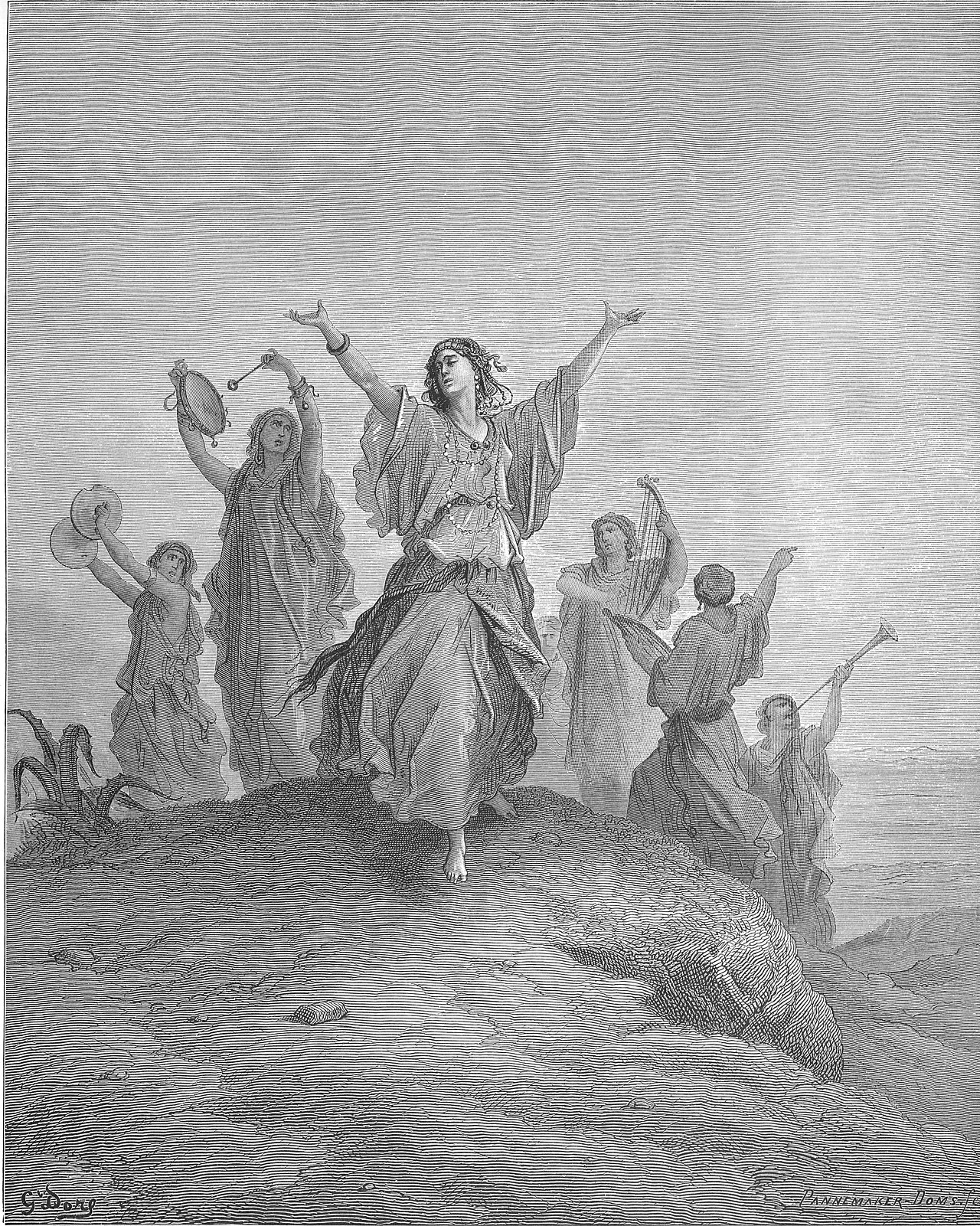
Judgeschapter 11
40 verses · Samuel, by tradition · 11th century BC · History
And it came to pass, when he saw her, that he rent his clothes, and said, Alas, my daughter! thou hast brought me very low, and thou art one of them that trouble me: for I have opened my mouth unto the Lord, and I cannot go back.
Introduction
Samuel, by tradition, History, Judges Overview.
This chapter was written for Israelites who knew the tribes east of the Jordan as a distant border, and tradition gives the book to Samuel. It brings back a man his own family had driven out, and it asks what Israel owes to someone it once rejected. Most of its words go to speech: a bargain, a long legal answer to a foreign king, and a promise made before a battle. Listen for how often a spoken word binds the one who speaks it. Notice also how little room the fighting takes. The last verses leave a question the book itself leaves open.
Context
- Who
- Israelites of Gilead whose title to the land east of the river was being challenged by the nation next to them
- What
- An account of Jephthah's call to lead Gilead, his dispute with the king of Ammon over the land, his victory, and the vow that cost him his daughter.
- Where
- Gilead east of the Jordan, from the land of Tob to Mizpah of Gilead, and the land between the Arnon and the Jabbok.
- When
- About 1090 BC on the traditional reckoning, some three hundred years after Israel entered the land by Jephthah's own count.
- Why
- To show Israel turning to a man it had rejected, and to show the grief a rash word spoken to God brought on the house of the one who made it.
Historical context
Jephthah is a Gileadite, the son of a prostitute, driven out of his father's house by his half-brothers so that he would inherit nothing. He spent the years before this chapter in the land of Tob at the head of a band of men.
Show the rest of the historical context, 7 more paragraphs
The war falls about 1090 BC on the traditional reckoning. His own argument at verse 26 puts three hundred years between Israel's arrival and his own day, and that figure is read as a round number for a long occupation, as the sum of the periods the book has recorded, and as a number to be fitted against the four hundred and eighty years of 1 Kings 6:1.
The setting is Gilead east of the Jordan, and the ground actually in dispute is the strip between the Arnon in the south and the Jabbok in the north, with Mizpah of Gilead as the place where the bargain was sworn and the vow was made.
The occasion is an Ammonite claim on that strip and the offer the rulers of Gilead had posted at Judges 10:18, headship over the region for whoever would start the fight.
A first hearer knew the history the embassy argues from, because it is the history of Numbers 20 and 21. Israel went around Edom and Moab without fighting either, and the ground north of the Arnon came out of the hands of Sihon the Amorite in a war Sihon began. He knew the Arnon was Moab's border, which is the fact the whole case rests on.
He knew what a vow was. Numbers 30:2 and Deuteronomy 23:21 to 23 bind a man to what has gone out of his lips, and Leviticus 27:1 to 8 provides for a vowed person to be redeemed instead by a valuation paid to the priest, thirty shekels for a woman of her years. The chapter records nobody mentioning the second provision.
He knew what the daughter was doing at verse 34. Meeting a victorious army with tambourines and dancing is what Miriam does at Exodus 15:20 and what the women of the cities do for Saul and David at 1 Samuel 18:6. She was doing the ordinary thing.
And he knew what it meant that she was an only child. In Israel a man's name and his land ran through his children, so the line of the man thrust out of his father's house ends at his own door.
Significance
The embassy was the part that mattered publicly. It told Israelites east of the river that their title to that ground was a matter of dated record, that the land had been taken from an Amorite king who attacked first, and that a claim left unpressed for three centuries was worth nothing.
Show the rest of the significance, 2 more paragraphs
The vow was the part that stayed with them privately. A man made a promise nobody asked him for, after the Spirit had already come upon him and after the victory was already framed in the promise itself.
Verse 40 records what Israel did about it. The young women went out for four days every year to remember her, which is the nation's own verdict on what happened.
This chapter in Jewish lifeWhat this chapter is in Jewish life and reading.
What is done
In the synagogue this chapter is heard as a Haftarah, the reading from the Prophets that follows the weekly Torah portion, and the portion it follows is Chukat. Chukat carries Israel's march east of the Jordan and the defeat of Sihon and Og, and the reading from Judges carries Jephthah's message to the king of Ammon, which argues Israel's title to that land from those same events. A congregation hears the argument and the history it rests on in one morning. The reading ends with the victory over Ammon, so the outcome of the vow falls after the point where the congregation stops. That the pairing turns on the shared campaign, and that the reading ends before the daughter comes out to meet her father, is the writer's reading of the table in src/lib/hebraic/readings.ts and of the two passages, confirmed against both.
How it is read
Rashi works this chapter as a map, because the case Jephthah argues is a case about territory. On the route out of Egypt he places the Reed Sea "South of the land of Edom, while the land of Edom is south of the land of Canaan", and he reads the request to Edom as a request to pass "From south to north, in order to enter the land of Canaan" (Rashi on Judges 11:16:1 and 11:17:1, the Metsudah Tanach series, Lakewood, N.J., CC-BY). On the land between the Arnon and the Jabbok he answers the Ammonite claim in one line, "Which you claim as yours, they annexed from Sichon", and on the three hundred years he says the towns near the Arnon "had belonged to Moav, but they recognized that they could not lay claim to them, since they were confiscated from Sichon, who had annexed them from the king of Moav" (Rashi on Judges 11:22:1 and 11:26:1, same edition). Radak, Metzudat David and Malbim comment across the chapter, and the corpus holds no English version of any of their comments here, so they stand as citations: Radak on Judges 11:1:1, Radak on Judges 11:15:1, Radak on Judges 11:24:1, Radak on Judges 11:25:1, Metzudat David on Judges 11:2:1, Metzudat David on Judges 11:12:1, Metzudat David on Judges 11:13:1 and Malbim on Judges 11:6:1. On the vow itself this site already records Radak as the standard medieval Jewish statement of the reading that the daughter was given to the LORD in perpetual virginity, set against the reading that she was offered as a burnt sacrifice, with the holders of both positions named (src/components/book/dossier-content/judges.ts).
What the rabbis say
The corpus records forty rabbinic locators on this chapter, thirty-seven of them Midrash and three Talmud, and every one is a locator without text, so this site cites where the rabbis took the chapter up rather than what they said there. Jephthah's years at the head of a band of men draw Bava Kamma 92b:13, Jerusalem Talmud Sheviit 6:1:13, Yalkut Shimoni on Torah 116:2 and Midrash Tanchuma, Ki Teitzei 3:1. The embassy to Ammon and the history it rehearses draw Sifrei Bamidbar 42:2, Bamidbar Rabbah 11:7, Bamidbar Rabbah 19:15, Bamidbar Rabbah 19:25, Midrash Tanchuma, Chukat 20:1 and Midrash Tanchuma Buber, Chukat 47:1, the last two on the portion this chapter is read with. The three hundred years draw Seder Olam Rabbah 12:2, Seder Olam Rabbah 15:2 and Esther Rabbah 1:11. The vow draws the largest cluster of all: Bereshit Rabbah 60:3, Bereshit Rabbah 70:3, Midrash Tanchuma, Bechukotai 5:1, Kohelet Rabbah 4:17:1, Kohelet Rabbah 10:15:1 and Ein Yaakov, Taanit 1:9. The four days the daughters of Israel kept draw Nazir 5a:7. The rabbis teach in these places, and this site reports them as their teaching rather than as a rule of the text.
Sources: Rashi, Rashi on Judges 11:16:1, 11:17:1, 11:22:1 and 11:26:1, the Metsudah Tanach series, Lakewood, N.J., CC-BY; Radak, Radak on Judges 11:1:1, 11:15:1, 11:24:1 and 11:25:1, cited only, no English version in the corpus; Metzudat David, Metzudat David on Judges 11:2:1, 11:12:1 and 11:13:1, cited only; Malbim, Malbim on Judges 11:6:1, cited only; MannaFest, the Judges dossier, src/components/book/dossier-content/judges.ts, for Radak on the vow, 2026; MannaFest, the readings table, src/lib/hebraic/readings.ts, for the portion Chukat, 2026.
The heads below are this chapter's scenes. The numbered points under each are its verses.
The outcast son called back to lead
Judges 11:1-3
Gilead names both the father and the country, and the brothers expel Jephthah over inheritance, since where a wife had sons "the son of another woman" had no claim on the estate. The "worthless men" who gather to him in Tob bear the word used of Abimelech's hirelings at 9:4, the following David draws at Adullam in 1 Samuel 22:2. The next deliverer runs a band outside the land.
Judges 11:1
“The history of Jephthah appears to be an independent history inserted by the compiler of the Book of Judges. Jdg 11:4-5 introduce the Ammonite war without any apparent reference to Jdg 10:17-18. A genealogy of Manasseh 1Ch 7:14-17 gives the families which sprang from Gilead, and among them mention is made of an “Aramitess” concubine as the mother of one family.”
Gilead's sons call Jephthah the son of another woman, and Adam Clarke reads the Hebrew ishshah achereth as a woman of another people, likely a Canaanite. Matthew Henry reports that Josephus calls Jephthah a stranger on his mother's side. The inheritance is refused on his birth alone.
Judges 11:2
“Thou shalt not inherit in our father's house--As there were children by the legitimate wife, the son of the secondary one was not entitled to any share of the patrimony, and the prior claim of the others was indisputable.”
Jamieson, Fausset & Brown · Commentary Critical and Explanatory on the Whole Bible (1871)reformed
Albert Barnes places Tob north of Gilead, toward Damascus. Adam Clarke notes that the worthless men, in Hebrew anashim reykim, can also mean poor men with no property and no work. The band was landless, like its leader.
Judges 11:3
“The land of Tob - To the north of Gilead, toward Damascus. The readiness with which Jephthah took to the freebooter’s life gives us a lively picture of the unsettled times in which he lived.”
Judges 11:4-6
Chapter 10 closed with the rulers of Gilead seeking a man to launch the attack against the Ammonites, and he is the one they drove out. The elders go to Tob to fetch him, so Israel's leaders stand outside the land asking a favour of an exile. They first offer "be our commander," a command over one campaign that ends when the campaign does.
Judges 11:4
“Probably this was the same invasion with that mentioned, ch. x. 17 , when the children of Ammon were gathered together and encamped in or against Gilead. And those words, in process of time, refer to what goes immediately before of the expulsion of Jephthah; many days after he had been thus thrust out in disgrace was he fetched back again with honour.”
Matthew Henry · Commentary on the Whole Bible (1707-1721)puritan
The elders of Gilead go in person to Tob and send no messengers. John Gill reads the visit as a mark of respect to Jephthah, and as the surest way to answer his objections face to face. The Ammonites, Gill notes, had already gathered for war.
Judges 11:5
“And it was so, that when the children of Ammon made war against Israel,.... Were preparing for it, and had assembled their forces near them, and had began to make some efforts against them: the elders of Gilead went to fetch Jephthah out of the land of Tob; they did not send messengers to him, but went themselves, partly to show greater respect to him, and partly in hopes of better success, being aware of objections he would make, which they could better answer themselves than a deputation.”
The elders admit that no man among them could lead Gilead against the Ammonites. Matthew Henry notes they chose Jephthah as a bold man, trained to the sword in Tob. Israel was camped at Mizpah without a commander.
Judges 11:6
“Come, and be our captain - The Israelites were assembled in Mizpeh, but were without a captain to lead them against the Ammonites. And we find, from the conclusion of the preceding chapter, that they offered the command to any that would accept it.”
Adam Clarke · Commentary on the Bible (1810-1826)evangelical
1 more voice on this verse
Judges 11:6
“They knew none among themselves that was able to undertake that great trust, but in effect confessed themselves unfit for it; they know him to be a bold man, and inured to the sword, and therefore he must be the man.”
Matthew Henry · Commentary on the Whole Bible (1707-1721)puritan
Judges 11:7-8
Verse 2 lays the expulsion on his brothers and verse 7 lays it on the elders of Gilead, who answer without denying it. The offer rises from commander in verse 6 to "leader over all of us who live in Gilead" in verse 8, the headship the rulers of Gilead had already posted at 10:18. The elders hold to terms set before they knew who would claim them.
Judges 11:7
“They had thrust God out by their idolatries, yet in their distress begged his help; he told them how justly he might have rejected them, and yet graciously delivered them. Many slight God and good men till they come to be in distress, and then they are desirous of God's mercy and good men's prayers.”
Matthew Henry · Commentary on the Whole Bible (1707-1721)puritan
1 more voice on this verse
Judges 11:7
“It is probable that he saw some of his brothers among the deputies. Jephthah was now in circumstances to make his own terms. With his former experience, he would have shown little wisdom or prudence without binding them to a clear and specific engagement to invest him with unlimited authority, the more especially as he was about to imperil his life in their cause.”
Jamieson, Fausset & Brown · Commentary Critical and Explanatory on the Whole Bible (1871)reformed
Adam Clarke hears the elders' answer as an admission that Gilead had wronged Jephthah, with the new title offered to repair it. The men who drove him from his father's house now make him leader over all Gilead. Their distress has reversed the old verdict.
Judges 11:8
“Therefore we turn again to thee now - We are convinced that we have dealt unjustly by thee, and we wish now to repair our fault, and give thee this sincere proof of our regret for having acted unjustly, and of our confidence in thee.”
Adam Clarke · Commentary on the Bible (1810-1826)evangelical
1 more voice on this verse
Judges 11:8
“It is our wisdom to make no man our enemy, because we know not how soon our distresses may be such as that we may be highly concerned to make him our friend. An encouragement to men of worth that are slighted or ill-treated.”
Matthew Henry · Commentary on the Whole Bible (1707-1721)puritan
Judges 11:9-11
Jephthah makes the elders swear, "The LORD is our witness if we do not do as you say". Mizpah took its name at Genesis 31:49 from the same appeal, "May the LORD keep watch between you and me". He then "repeated all his terms in the presence of the LORD," so a bargain with men becomes a matter with God, the shape of the vow at verse 30.
Judges 11:9
“Jephthah made his own aggrandisement the condition of his delivering; his country. The circumstances of his birth and long residence in a pagan land were little favorable to the formation of the highest type of character. Yet he has his record among the faithful Heb 11:32.”
Matthew Henry notes that the Hebrew reads the LORD be a hearer, so the oath places God as the one listening to every term. With that oath, Henry writes, the contract between Jephthah and Gilead was ratified. Henry holds that all Israel later agreed to it.
Judges 11:10
“The Lord be a hearer, so the word is. Whatever we speak, it concerns us to remember that God is a hearer, and to speak accordingly. Thus was the original contract ratified between Jephthah and the Gileadites, which all Israel, it should seem, agreed to afterwards, for it is said ( ch. xii.”
Matthew Henry · Commentary on the Whole Bible (1707-1721)puritan
The elders chose Jephthah and the people confirmed him, and Adam Clarke reads the two as steps of one appointment. Albert Barnes takes the phrase before the LORD to mean the tabernacle, the ark or the high priest was at Mizpah. John Wesley reads it as the assembled people.
Judges 11:11
“Jephthah uttered all his words before the Lord in Mizpeh - This phrase designates the presence of the tabernacle, or the ark, or of the high priest with Urim and Thummim Jdg 20:26; Jdg 21:2; Jos 18:8; 1Sa 21:7. The high priest waited upon Jephthah with the ephod, and possibly the ark, at his own house (see Jdg 20:18 here). A trace of Jephthah’s claim to unite all Israel under his dominion is found in Jdg 12:2, and breathes through his whole message to the king of the Ammonites. See Jdg 11:12, Jdg 11:15, Jdg 11:23, Jdg 11:27.”
1 more voice on this verse
Judges 11:11
“Before the Lord - That is, before the public congregation, wherewith God was usually, and then especially present. Messengers - That is, ambassadors, to prevent blood-shed, that so the Israelites might be acquitted before God and men, from all the sad consequences of this war; herein he shewed great prudence, and no less piety.”
John Wesley · Explanatory Notes upon the Old Testament (1765)evangelical
Jephthah's case against Ammon, three centuries old
Judges 11:12-13
He sends before he strikes, as Deuteronomy 20:10 orders: "make an offer of peace". The king claims Israel seized his land "from the Arnon to the Jabbok", but that was the kingdom of Sihon the Amorite. Numbers 21:24 has Israel stop at "the border of the Ammonites, because it was fortified", and Deuteronomy 2:19 had forbidden Israel to harass Ammon, so the two nations never fought over it.
Judges 11:12
“The bravest officers have always been averse to war; so Jephthah, whose courage was indisputable, resolved not only to make it clearly appear that hostilities were forced upon him, but to try measures for avoiding, if possible, an appeal to arms: and in pursuing such a course he was acting as became a leader in Israel (De 20:10-18).”
Jamieson, Fausset & Brown · Commentary Critical and Explanatory on the Whole Bible (1871)reformed
The land the king claims, from the Arnon to the Jabbok, had been the kingdom of Sihon, Albert Barnes notes, and Reuben and Gad now held it. Matthew Henry reads the demand as a cover for plunder. Adam Clarke takes Moab as Ammon's partner in the claim.
Judges 11:13
“From Arnon even unto Jabbok ... - The land bounded by the Arnon on the south, by the Jabbok on the north, by the Jordan on the west, and by the wilderness on the east was, of old, the kingdom of Sihon, but then the territory of Reuben and Gad.”
Judges 11:14-15
What follows is the longest speech in Judges, and it is built as a legal answer. The thesis comes first, "Israel did not take away the land of Moab or of the Ammonites," so the case turns on whose land it was when Israel took it. Verses 16 to 22 are the evidence for that one sentence, and the evidence is history drawn from Numbers 20 and 21.
Judges 11:14
“And Jephthah sent messengers again unto the king of the children of Ammon. Being willing to give him all the satisfaction he could, and if possible live peaceably with him, and prevent the effusion of blood.”
This is what Jephthah says is the style of a king's message, and John Gill reads it as Jephthah speaking now as leader of Israel. Albert Barnes ties the speech's close agreement with Numbers and Deuteronomy to the Law kept with the ark at Mizpah. Deuteronomy 2:9 had kept Israel from Moab's land.
Judges 11:15
“And said unto him,.... By his messengers: thus saith Jephthah; in a majestic style, as governor of Israel: Israel took not away the land of Moab, nor the land of the children of Ammon; they were charged not to take any, nor did they take any that belonged to any of these countries, or that was then in the possession of either of them, Deu 2:9 what they did take was in the hands of Sihon and Og, and they had obtained it by conquest, and so no more belonging to either of these.”
1 more voice on this verse
Judges 11:15
“Consult the marginal references. If the ark with the copy of the Law Deu 31:26 was at Mizpeh, it would account for Jephthah’s accurate knowledge of it; and this exact agreement of his message with Numbers and Deuteronomy would give additional force to the expression, “he uttered all his words before the Lord” Jdg 11:11. Jdg 11:17 No mention is made of this embassy to Moab in the Pentateuch. Jdg 11:19 Into my place - This expression implies that the trans-Jordanic possessions of Israel were not included in the land of Canaan properly speaking.”
Judges 11:16-18
The route follows Numbers 20:14-21 and 21:4-13: Kadesh, Edom's refusal, the long way around Edom and Moab, and camp beyond the Arnon without entering Moab. Jephthah reports an embassy to the king of Moab that Numbers records only for Edom, and both accounts stand as written. The argument needs one fact, "the Arnon was its border," so the ground north of the river lay outside Moab when Israel reached it.
Israel asks leave of two kings and accepts both refusals. The stay at Kadesh is part of Jephthah's evidence, for it shows Israel holding back at the borders of Edom and Moab with no attempt to force the way.
Israel took the long way around Edom and Moab, through the wilderness to the east side of Moab. Matthew Henry applies Genesis 30:33 here, that Israel's past right dealing answers for it in the present war. Israel never set foot in Moab.
Judges 11:19-22
These four verses follow Numbers 21:21-25 closely, down to the request to pass through, Sihon's refusal, the battle at Jahaz, and the possession running from Arnon to Jabbok. The argument is that the land came out of Amorite hands in a war Sihon began, so Ammon is asking back ground it never held. Deuteronomy 2:24-36 tells the same campaign a third time, and the three accounts agree on the place, the aggressor and the outcome.
Edom and Moab refused, and Sihon went further: he gathered his people, encamped at Jahaz and fought. Matthew Henry calls Sihon the aggressor and Israel the defender in that war. The battle came to Israel.
delivered Sihon and all his people: Jephthah names the LORD, the God of Israel, as the one who delivered Sihon into Israel's hand. Land given by God in a war Sihon started is the strongest title he can claim. Verse 23 draws that conclusion.
The four limits mark out a whole country: the Arnon on the south, the Jabbok on the north, the desert on the east and the Jordan on the west. Adam Clarke identifies the wilderness as the Arabian desert. Jephthah answers the king's claim of verse 13 with the same boundaries.
Judges 11:22
“From the wilderness even unto Jordan - From Arabia Deserta on the east to Jordan on the west.”
Adam Clarke · Commentary on the Bible (1810-1826)evangelical
Judges 11:23-24
The god named in verse 24 is Chemosh, the god of Moab at Numbers 21:29 and 1 Kings 11:7, while Ammon's god is Milcom at 1 Kings 11:5. Readers take this three ways: Jephthah argues from the king's premise without granting it, Moab and Ammon shared cults on that border, or the strip was Moabite before Sihon took it. The text passes no judgment on his words.
Judges 11:23
“The Lord God of Israel hath dispossessed the Amorites - Jephthah shows that the Israelites did not take the land of the Moabites or Ammonites, but that of the Amorites, which they had conquered from Sihon their king, who had, without cause or provocation, attacked them; and although the Amorites had taken the lands in question from the Ammonites, yet the title by which Israel held them was good, because they took them not from the Ammonites, but conquered them from the Amorites.”
Adam Clarke · Commentary on the Bible (1810-1826)evangelical
Adam Clarke reads the verse as an argument on the king's own terms: every nation holds by right the land it believes its god gave it. Jephthah applies that rule to Israel and the LORD. The king's claim fails by his own rule.
Judges 11:24
“Wilt not thou possess that which Chemosh thy god giveth thee to possess?.... Chemosh was the idol of the Moabites, see Num 21:29, which has led some to think, that the present king of Ammon was also king of Moab, and who insisted on that part of the country, which formerly belonged to Moab, to be delivered to him, as well as that which had belonged to Ammon.”
1 more voice on this verse
Judges 11:24
“Wilt not thou possess that which Chemosh thy god giveth thee - As if he had said: “It is a maxim with you, as it is among all nations, that the lands which they conceive to be given them by their gods, they have an absolute right to, and should not relinquish them to any kind of claimant. You suppose that the land which you possess was given you by your god Chemosh and therefore you will not relinquish what you believe you hold by a Divine right.”
Adam Clarke · Commentary on the Bible (1810-1826)evangelical
Judges 11:25-26
Balak hired Balaam and never brought an army against Israel, in Numbers 22 to 24, so Moab's own king pressed no claim by arms. The "three hundred years" of verse 26 is read as a round number, as the sum of the book's servitudes and rests so far, or against the 480 years of 1 Kings 6:1. Jephthah's point, a claim left unpressed for centuries, holds on any reading.
Judges 11:25
“And now art thou anything better than Balak the son of Zippor king of Moab?.... This argument seems to strengthen the conjecture, that this king was king of Moab at this time, and so Balak was one of his predecessors.”
Heshbon was Sihon's royal city in verse 19, so the list begins with the seat of the kingdom Israel had taken. Villages and cities along the Arnon fill out the land. Matthew Henry holds that so long a silence ended Ammon's claim.
Judges 11:26
“So that, supposing their title had not been clear at the first (which yet he had proved it was), yet, no claim having been made for so many generations, the entry of the children of Ammon, without doubt, was barred for ever.”
Matthew Henry · Commentary on the Whole Bible (1707-1721)puritan
Judges 11:27-28
The speech ends by handing the case to "the LORD, the Judge," and the title he gives God is the book's own word for its heroes. Genesis 18:25 asks the same of the same office, whether "the Judge of all the earth" will "do what is right". The king "paid no heed," so the longest argument in Judges meets silence and the war goes forward.
Judges 11:27
“With this solemn reference of the matter to the Judge of heaven and earth he designs either to deter the Ammonites from proceeding and oblige them to retire, when they saw the right of the cause was against them, or to justify himself in subduing them if they should go on. Note, War is an appeal to heaven, to God the Judge of all, to whom the issues of it belong.”
Matthew Henry · Commentary on the Whole Bible (1707-1721)puritan
Matthew Henry reads the speech as built for two outcomes: to turn the Ammonites back, or to justify Jephthah's war against them if they came on. The king's refusal settles which one follows. John Gill adds that he ignored the appeal to the LORD as Judge as well as the arguments.
Judges 11:28
“Howbeit, the king of the children of Ammon hearkened not unto the words of Jephthah which he sent him. He attended not to the arguments Jephthah made use of, and did not choose to seem at least to be convinced by them, nor to regard the awful appeal he had made to the great Jehovah.”
The vow, and whatever comes out of the doors
Judges 11:29-31
the Spirit of the Lord came upon Jephthah: The Spirit of the LORD comes on Jephthah, the third of seven times in Judges, and no command, priest or answer attends the vow. The Hebrew behind "whatever" can be rendered whoever, and its last connective is read as and or as or: "will belong to the LORD" or "I will offer it up as a burnt offering". Both renderings are old, and the grammar carries either.
Judges 11:29
“Then the Spirit of the Lord ... - This was the sanctification of Jephthah for his office of Judge and savior of God’s people Israel. Compare Jdg 6:34; Jdg 13:25. The declaration is one of the distinctive marks which stamp this history as a divine history.”
Jamieson, Fausset and Brown set the vow in an old custom: a commander going out to war promised his god a costly offering if victory came. Matthew Henry points to the law of such a vow to the LORD in Leviticus 27:2. The vow hangs on the deliverance.
Judges 11:30
“And whereas he [Jovinianus] prefers the fidelity of the father Jephthah to the tears of the virgin daughter, that corroborates our point. For we are not commending virgins of the world so much as those who are virgins for Christ's sake.”
Jerome · written before 420 · Against Jovinianus 1.23patristic
2 more voices on this verse
Judges 11:30
“Returning to the camp at Mizpeh, he then began his march against the enemy. There he made his celebrated vow, in accordance with an ancient custom for generals at the outbreak of a war, or on the eve of a battle, to promise the god of their worship a costly oblation, or dedication of some valuable booty, in the event of victory.”
Jamieson, Fausset & Brown · Commentary Critical and Explanatory on the Whole Bible (1871)reformed
Judges 11:30
“The matter of such a singular vow ( Lev. xxvii. 2 ) must be something that has a plain and direct tendency either to the advancement of God's glory, and the interests of his kingdom among men, or to the furtherance of ourselves in his service, and in that which is antecedently our duty.”
Matthew Henry · Commentary on the Whole Bible (1707-1721)puritan
Augustine observes that cattle do not run out to greet a general home from war, and a dog was unclean and unfit for an offering. Albert Barnes and Jamieson, Fausset and Brown conclude that Jephthah had a person in view from the start. Barnes traces the thought to his years in Syrian Tob.
Judges 11:31
“The words of this verse prove conclusively that Jephthah intended his vow to apply to human beings, not animals: for only one of his household could be expected to come forth from the door of his house to meet him. They also preclude any other meaning than that Jephthah contemplated a human sacrifice. This need not, however, surprise us, when we recollect his Syrian birth and long residence in a Syrian city, where such fierce rites were probably common.”
Judges 11:32-33
The war gets two verses and the vow gets eight, which is the chapter's own weighting of what happened. Aroer stands on the Arnon and Minnith lies inland, so the twenty cities fall across the very strip the speech had just argued about. Ammon is subdued and the narrative turns straight back to Mizpeh, where the words of verse 30 were spoken.
Judges 11:32
“Jephthah passed over unto the children of Ammon . . . and the Lord delivered them into his hands--He met and engaged them at Aroer, a town in the tribe of Gad, upon the Arnon. A decisive victory crowned the arms of Israel, and the pursuit was continued to Abel (plain of the vineyards), from south to north, over an extent of about sixty miles.”
Jamieson, Fausset & Brown · Commentary Critical and Explanatory on the Whole Bible (1871)reformed
Albert Barnes reads Abel-keramim as a place among vineyards, about seven miles from Rabbah of the Ammonites. John Gill links Minnith with the wheat of Ezekiel 27:17. Jerome placed Minnith four miles from Heshbon.
Judges 11:33
“And he smote them from Aroer,.... A city which lay near the river Arnon, on the borders of Moab, Deu 3:12. even till thou come to Minnith; which seems to have been a place famous for wheat, Eze 27:17 so David de Pomis (a) says it was a place where the best wheat grew. Jerom says (b) in his time was shown a village called Mannith, four miles from Esbus (or Heshbon), as you go to Philadelphia.”
1 more voice on this verse
Judges 11:33
“As in the conflicts with the Moabites, Canaanites, and Midianites Judg. 3; 4; 7, the battle was on Israelite territory, in self-defense, not in aggressive warfare. The plain of the vineyards - Rather, “Abel-Ceramim” (compare Abel-Meholah), identified with an “Abel” situated among vineyards, 7 miles from Robbah. “Minnith” is “Maanith,” 4 miles from Heshbon, on the road to Rab-bah.”
She comes out "with tambourines and dancing," as Miriam does at Exodus 15:20 and the women do for Saul and David at 1 Samuel 18:6, the ordinary welcome for a victory. The house she leaves is the house of the vow at verse 31. The last clause does the most work: "She was his only child," so the line of the man driven from his father's house ends with her.
Judges 11:34
“With timbrels and with dances - From this instance we find it was an ancient custom for women to go out to meet returning conquerors with musical instruments, songs, and dances; and that it was continued afterwards is evident from the instance given 1Sa 18:6, where David was met, on his return from the defeat of Goliath and the Philistines, by women from all the cities of Israel, with singing and dancing, and various instruments of music.”
Adam Clarke · Commentary on the Bible (1810-1826)evangelical
Judges 11:35-36
He tears his clothes and says he "cannot take it back," standing on Numbers 30:2 and Deuteronomy 23:21-23. The chapter never mentions Leviticus 27:1-8, where a person vowed to the LORD is redeemed by a valuation paid to the priest. Her answer asks for no release, and the reason she gives is the victory: "the LORD has avenged you of your enemies, the Ammonites."
Judges 11:35
“IN Jephtha case there were good reasons for going back. He had made a rash vow and such things are much better broken than kept. If a man makes a vow to commit a crime, his vow to do so is, in itself, a sin. The carrying out of his vow will be doubly sinful.”
1 more voice on this verse
Judges 11:35
“Jephthah was right in not being deterred from keeping his vow by the loss and sorrow to himself (compare the marginal references), just as Abraham was right in not withholding his son, his only son, from God, when commanded to offer him up as a burnt-offering. But Jephthah was wholly wrong in that conception of the character of God which led to his making the rash vow. And he would have done right not to slay his child, though the guilt of making and of breaking such a vow would have remained.”
Adam Clarke reads the daughter's answer as obedience joined to love of Israel, for her father has returned and the Ammonites are defeated. Matthew Henry says she set the people before her life. Albert Barnes sees in her word how deep the pagan idea of human sacrifice ran.
Judges 11:36
“And she said unto him - What a pattern of filial piety and obedience! She was at once obedient, pious, and patriotic. A woman to have no offspring was considered to be in a state of the utmost degradation among the Hebrews; but she is regardless of all this, seeing her father is in safety, and her country delivered.”
Adam Clarke · Commentary on the Bible (1810-1826)evangelical
Judges 11:37-38
She asks for two months to "mourn my virginity," her virginity rather than her life, and that is the hinge of the dispute over her fate. Readers who hold that she died answer that a woman dying childless in Israel lost her name with her life, so the mourning fits either outcome. The mountains and friends are given no place name, and the text gives no reason for two months.
Judges 11:37
“Mountains - Which she chose as a solitary place, and therefore fittest for lamentation. Bewail - That I shall die childless, which was esteemed both a curse and a disgrace for the Israelites, because such were excluded from that great privilege of increasing the holy seed, and contributing to the birth of the Messiah.”
John Wesley · Explanatory Notes upon the Old Testament (1765)evangelical
he sent her away for two months: Jephthah grants the request in one word, and the two months are the length she asked. Her friends go with her into the mountains. Matthew Henry commends them as friends who wept with her as well as rejoiced.
Judges 11:38
“Those are unworthy the name of friends that will only rejoice with us, and not weep with us. (7.) That heroic zeal for the honour of God and Israel, though alloyed with infirmity and indiscretion, is worthy to be had in perpetual remembrance.”
Matthew Henry · Commentary on the Whole Bible (1707-1721)puritan
Judges 11:39-40
Josephus in Antiquities of the Jews 5.7.10 and Keil and Delitzsch read a burnt offering. John Gill and Adam Clarke read lifelong virginity, taking "she had never had relations with a man" as the outcome recorded. The text carries no priest, altar or word from God, Leviticus 18:21 and Deuteronomy 12:31 forbid human sacrifice, and Hebrews 11:32 names Jephthah among the faithful without mentioning the vow.
Judges 11:39
“It is also sometimes contrary to duty to fulfill a promise or to keep an oath. As was the case with Herod, who swore that whatever was asked he would give to the daughter of Herodias, and so allowed the death of John, that he might not break his word. And what shall I say of Jephthah, who offered up his daughter in sacrifice, she having been the first to meet him as he returned home victorious; whereby he fulfilled the vow which he had made that he would offer to God whatever should meet him first.”
Ambrose of Milan · written before 397 · On the Duties of the Clergy 1.50.255patristic
1 more voice on this verse
Judges 11:39
“It is probably conceived, that the Greeks, who used to steal sacred histories, and turn them into fables, had from this history their relation of Iphigenia (which may be put for Jephtigenia) sacrificed by her father Agamemnon, which is described by many of the same circumstances wherewith this is accompanied.”
John Wesley · Explanatory Notes upon the Old Testament (1765)evangelical
The word rendered lament is disputed, and John Gill reports that Kimchi and Ben Melech take it as to talk with Jephthah's daughter and comfort her. Albert Barnes notes that no other text mentions this yearly custom of the young women. He suggests the account draws on an ancient song.
Judges 11:40
“To lament the daughter of Jephthah - I am satisfied that this is not a correct translation of the original לתנות לבת יפתח lethannoth lebath yiphtach. Houbigant translates the whole verse thus: Sed iste mos apud Israel invaluit, ut virgines Israel, temporibus diversis, irent ad filiam Jepthe-ut eam quotannis dies quatuor consolarentur; “But this custom prevailed in Israel that the virgins of Israel went at different times, four days in the year, to the daughter of Jephthah, that they might comfort her.””
Adam Clarke · Commentary on the Bible (1810-1826)evangelical
1 more voice on this verse
Judges 11:40
“That the daughters of Israel went yearly to lament the daughter of Jephthah the Gileadite,.... Either the death of her, as some, or her virginity, as others; though the word (p) used may signify to talk and discourse with her, to hold a confabulation with her, and comfort her, as Kimchi and Ben Melech interpret it; to bring her some news, and tell her some diverting stories, to cheer and refresh her in her solitude.”
How this psalm is built
The form: Narrative prose carrying a negotiated appointment, a diplomatic speech built as a legal brief, and a vow with its discharge, as Keil and Delitzsch classes it.
The patterns in this chapter
| Device | What it does | Where to see it |
|---|---|---|
| The longest speech in the book, built as a legal answer | Verses 14 to 27 run longer than any other speech in Judges. The thesis stands first at verse 15, that Israel took neither Moab's land nor Ammon's. Verses 16 to 22 are the evidence, drawn out of Numbers 20 and 21. Verses 23 to 26 argue possession and the passage of time, and verse 27 hands the case over to the LORD as judge. Verse 28 records no reply of any kind.Keil and Delitzsch, Biblical Commentary on the Old Testament: Joshua, Judges, Ruth, 1863, on Judges 11:12 to 28. | Judges 11:14, Judges 11:15, Judges 11:22, Judges 11:27, Judges 11:28 |
| The offer raised from captain to head | The elders come to Tob at verse 6 offering command of one campaign. At verse 8 the offer rises to head over all who live in Gilead, which is the exact title the rulers of Gilead had posted at Judges 10:18 before they knew who would claim it. Jephthah holds them to the larger title and makes them swear to it at verses 9 to 11.Albert Barnes, Notes on the Old Testament, 1834 to 1885, on Judges 11:6 to 11. | Judges 10:18, Judges 11:6, Judges 11:8, Judges 11:9, Judges 11:10, Judges 11:11 |
| The house he was put out of and the house his child came out of | Verse 2 has the brothers drive him from his father's house so that he inherits nothing in it. Verse 34 has his own only child come out of the door of his house to meet him, and the verse stops to say he had no other son or daughter. The man expelled from one household loses his own line at the door of the next.Matthew Henry, Commentary on the Whole Bible, 1708 to 1710, on Judges 11:34 to 35. | Judges 11:1, Judges 11:2, Judges 11:34 |
| Mizpah, the place of watching | The bargain with the elders is sworn at Mizpah in Gilead at verse 11, and Genesis 31:49 gives that country the name for the reason that the LORD watch between two parties when they are out of each other's sight. The vow of verse 30 is made from the same town and the daughter comes out of the house there at verse 34. What was agreed under a watching God is discharged in the same place.John Gill, Exposition of the Old and New Testament, 1748 to 1763, on Judges 11:11. | Judges 11:11, Judges 11:29, Judges 11:34 |
The structure
13 more paragraphs on the patterns
The speech is the centre of the chapter by length and by care. It moves in the order a legal answer moves: the claim, the denial, the history, the argument from possession, the argument from precedent and the appeal to a judge.
The route in verses 16 to 18 is the route of Numbers 20:14 to 21 and Numbers 21:4 to 13. Verses 19 to 22 follow Numbers 21:21 to 25 closely, down to the request to pass through, Sihon's refusal, the battle at Jahaz and the possession running from the Arnon to the Jabbok. Deuteronomy 2:24 to 36 tells the same campaign a third time, and the three accounts agree on the place, the aggressor and the outcome. Jephthah reports an embassy to the king of Moab which Numbers records only for Edom, and both accounts stand as written.
The case turns on one fact: the Arnon was Moab's border when Israel arrived, so the ground north of it belonged to Sihon the Amorite and came out of Amorite hands in a war Sihon began. Numbers 21:24 says the border of the Ammonites was strong, and Deuteronomy 2:19 had forbidden Israel to harass Ammon at all.
The Spirit and the vow
The Spirit of the LORD comes upon Jephthah at verse 29, which is the third of seven places in Judges where the Spirit comes upon a man. The Berean text carries the seven at 3:10, 6:34, 11:29, 13:25, 14:6, 14:19 and 15:14, and four of them fall on Samson. The count was made over the store's own Berean text for this lane and is printed in its report.
The vow at verses 30 and 31 is made after the Spirit has come, and the text records no command for it and no answer to it. The law Jephthah stands on at verse 35 is Numbers 30:2 with Deuteronomy 23:21 to 23, which bind a man to what has gone out of his lips. Leviticus 27:1 to 8, where a person vowed to the LORD is redeemed by a valuation paid to the priest, is never mentioned in the chapter by him or by his daughter.
Across the canon
The men who gather to Jephthah at verse 3 are described as the same sort of following Abimelech hired at Judges 9:4, and the same kind David draws at Adullam in 1 Samuel 22:2.
Balak hired Balaam and never brought an army against Israel, which is Numbers 22 to 24, and verse 25 makes that the point: Moab's own king pressed no claim by arms on ground Ammon now wants.
The title Jephthah gives God at verse 27, the LORD the Judge, is the book's own word for its heroes. Genesis 18:25 puts the same question to the same office.
Tambourines and dancing at verse 34 is how Miriam meets the deliverance at the sea in Exodus 15:20 and how the women meet Saul and David at 1 Samuel 18:6. The daughter is doing the ordinary thing a victory called for.
In the New Testament
Hebrews 11:32 names Jephthah among the faithful, with Gideon, Barak, Samson, David and Samuel. The verse commends him for what he did by faith and says nothing about the vow. The site's Evidence Standard holds the commendation and the chapter together as they are written, and takes neither as settling the other.
Keep studying
Studies1
Sources for this chapter
The summary
Jamieson, Fausset & Brown, Commentary Critical and Explanatory; John Wesley, Notes on the Old Testament and Matthew Henry, Complete Commentary.
The form and classifications
Barry G. Webb, The Book of Judges, New International Commentary on the Old Testament, 2012; Keil and Delitzsch, Biblical Commentary on the Old Testament: Joshua, Judges, Ruth, 1863, on Judges 11 and Matthew Henry, Commentary on the Whole Bible, 1708 to 1710, on Judges 11:30 to 40.
The exposition
Adam Clarke, Commentary on the Bible; Albert Barnes; Augustine of Hippo, QUESTIONS ON JUDGES; Jamieson, Fausset & Brown, Commentary Critical and Explanatory on the Whole Bible; John Gill, Exposition of the Old Testament; John Wesley, Explanatory Notes upon the Old Testament; Keil and Delitzsch, Biblical Commentary on the Old Testament: Joshua, Judges, Ruth and Matthew Henry, Commentary on the Whole Bible.