
Place
Ammon
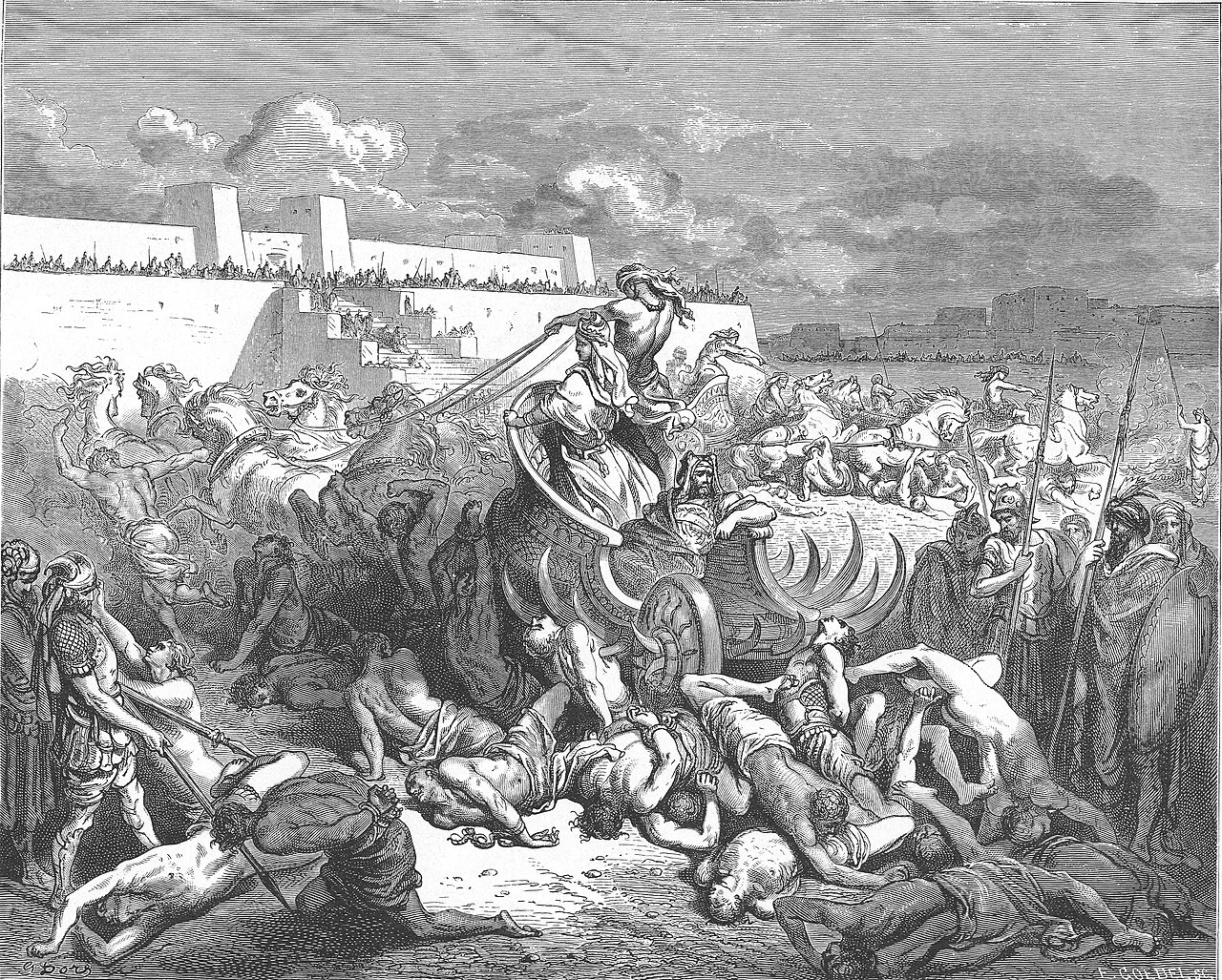
Gustave Doré, Doré's English Bible (1866). Public domain.
Summary
Kingdom east of the Jordan descended from Lot, judged alongside Moab in Zephaniah 2:8-11 and Amos 1:13-15.
- Ammon's kingdom traced its beginning to Lot's younger daughter, and its capital was the fortress city of Rabbah.
- The fullest story Scripture tells about Ammon is David's siege of Rabbah, which is also the story of Uriah, Bathsheba, and Nathan's rebuke.
- Ammon fought Israel across five centuries, from Jephthah's war in the judges era to Nehemiah's day, when Tobiah the Ammonite opposed the rebuilding of Jerusalem's wall.
- The prophets Amos, Jeremiah, Ezekiel, and Zephaniah all pronounce judgment on Ammon, chiefly for cruelty toward Israel and for gloating at Judah's exile.
- Even inside that judgment, Jeremiah records a promise that the LORD will one day restore Ammon from captivity.
On this page
In Scripture
- Verses
- 9
- Books
- 6
Near Ammon
- Mount Nebo27 km · 17 mi SW
- Peniel33 km · 21 mi NW
- Bethany beyond the Jordan37 km · 23 mi W
- Gilgal39 km · 25 mi W
- Jericho46 km · 29 mi W
- The Jordan River53 km · 33 mi NW
Straight-line distances, computed from the gazetteer coordinates.
Where it is
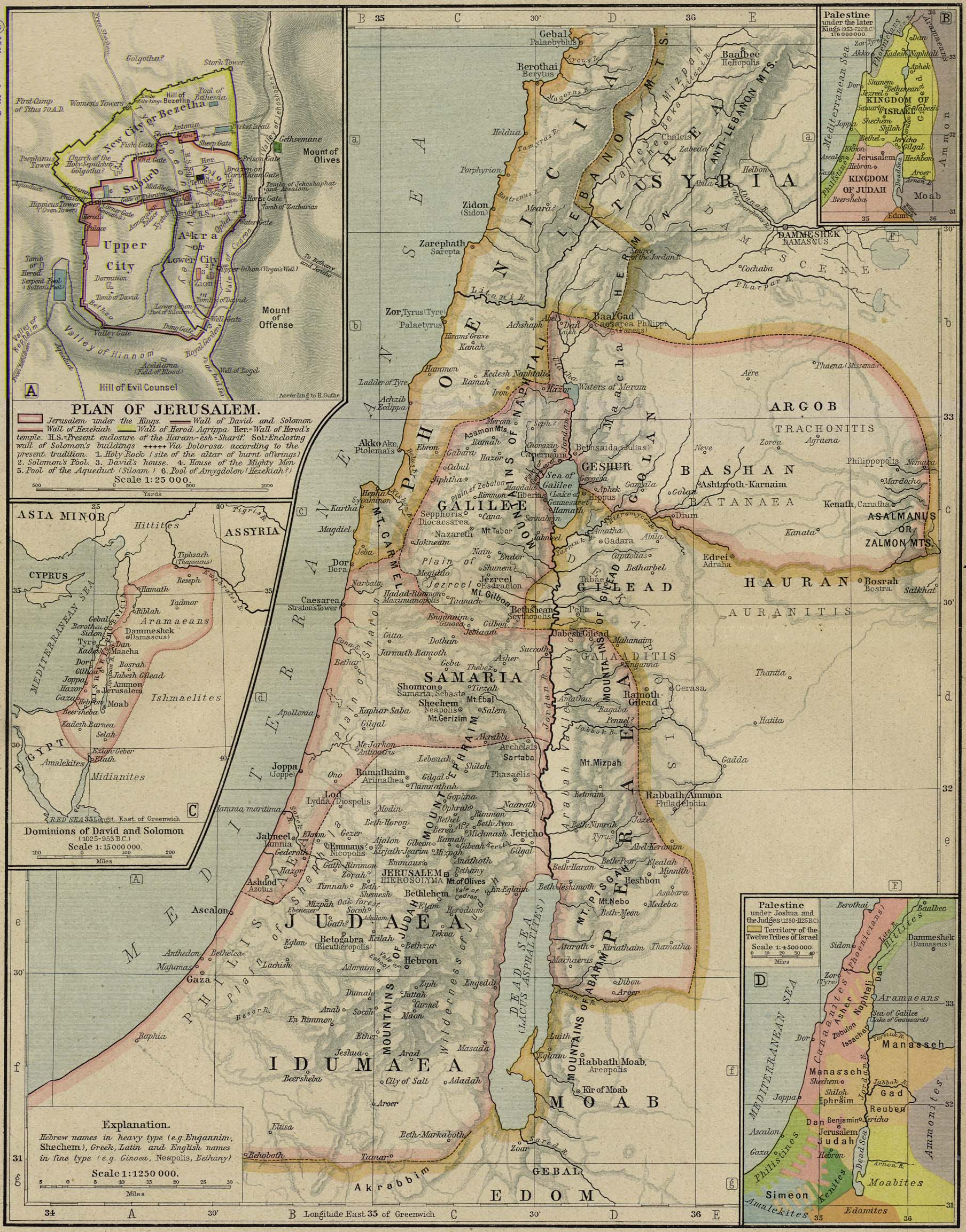
the country around it
- Coordinates
- 31.9502° N, 35.9241° Efind it on the Atlas →
- Region
- Transjordan
- Kind of place
- Region
- Located: the gazetteer fixes one site
- Placed: the point stands for an area, or is rounded
Not located: Edom, Moab. The gazetteer records no location for them, so they are not marked.
Why Ammon matters
David's war with Ammon, and the siege of Rabbah
2 Samuel 10 to 12, in the order it happens
Read 2 Samuel 10 to 12, in the order it happens
- David sends comforters to Hanun2 Samuel 10:2And David said, “I will show kindness to Hanun son of Nahash, just as his father showed kindness to me.” So David sent some of his servants to console Hanun concerning his father. But when they arrived in the land of the Ammonites,
- Hanun's princes suspect David2 Samuel 10:3the princes of the Ammonites said to Hanun their lord, “Just because David has sent you comforters, do you really believe he is showing respect for your father? Has not David instead sent his servants to explore the city, spy it out, and overthrow it?”
- Hanun humiliates David's envoys2 Samuel 10:4So Hanun took David’s servants, shaved off half of each man’s beard, cut off their garments at the hips, and sent them away.
- Joab besieges Rabbah, David stays behind2 Samuel 11:1In the spring, at the time when kings march out to war, David sent out Joab and his servants with the whole army of Israel. They destroyed the Ammonites and besieged Rabbah, but David remained in Jerusalem.
- Nathan confronts David2 Samuel 12:9Why then have you despised the command of the LORD by doing evil in His sight? You put Uriah the Hittite to the sword and took his wife as your own, for you have slain him with the sword of the Ammonites.
- Joab captures Rabbah's water supply2 Samuel 12:27Then Joab sent messengers to David to say, “I have fought against Rabbah and have captured the water supply of the city.
- David takes the crown of Rabbah2 Samuel 12:30Then he took the crown from the head of their king. It weighed a talent of gold and was set with precious stones, and it was placed on David’s head. And David took a great amount of plunder from the city.
- David's treatment of Rabbah's people, and Ammon's cities2 Samuel 12:31David brought out the people who were there and put them to work with saws, iron picks, and axes, and he made them work at the brick kilns. He did the same to all the Ammonite cities. Then David and all his troops returned to Jerusalem.
This same siege of Rabbah is also the setting of David's sin with Bathsheba and the death of Uriah the Hittite, told in full on the David and Bathsheba study.
David and Bathsheba: 2 Samuel 11-12What happened here, in order
in the order the canon tells it
- Ben-ammi is born, father of the AmmonitesGenesis 19:38The younger daughter also gave birth to a son, and she named him Ben-ammi. He is the father of the Ammonites of today.
- The LORD tells Israel not to harass AmmonDeuteronomy 2:19But when you get close to the Ammonites, do not harass them or provoke them, for I will not give you any of the land of the Ammonites. I have given it to the descendants of Lot as their possession.
- Ammon excluded from the assemblyDeuteronomy 23:3No Ammonite or Moabite or any of their descendants may enter the assembly of the LORD, even to the tenth generation.
- Israel serves the gods of AmmonJudges 10:6And again the Israelites did evil in the sight of the LORD. They served the Baals, the Ashtoreths, the gods of Aram, Sidon, and Moab, and the gods of the Ammonites and Philistines. Thus they forsook the LORD and did not serve Him.
- Jephthah defeats AmmonJudges 11:32So Jephthah crossed over to the Ammonites to fight against them, and the LORD delivered them into his hand.
- Nahash besieges Jabesh-gilead1 Samuel 11:1Soon Nahash the Ammonite came up and laid siege to Jabesh-gilead. All the men of Jabesh said to him, “Make a treaty with us, and we will serve you.”
- Solomon follows Milcom1 Kings 11:5Solomon followed Ashtoreth the goddess of the Sidonians and Milcom the abomination of the Ammonites.
- Ammonite raiders sent against Jehoiakim2 Kings 24:2And the LORD sent Chaldean, Aramean, Moabite, and Ammonite raiders against Jehoiakim in order to destroy Judah, according to the word that the LORD had spoken through His servants the prophets.
- Tobiah the Ammonite conspires against the wall-buildersNehemiah 4:7When Sanballat and Tobiah, together with the Arabs, Ammonites, and Ashdodites, heard that the repair to the walls of Jerusalem was progressing and that the gaps were being closed, they were furious,
- Jeremiah's oracle against RabbahJeremiah 49:2Therefore, behold, the days are coming, declares the LORD, when I will sound the battle cry against Rabbah of the Ammonites. It will become a heap of ruins, and its villages will be burned. Then Israel will drive out their dispossessors, says the LORD.
- Rabbah made a pasture for camelsEzekiel 25:5I will make Rabbah a pasture for camels, and Ammon a resting place for sheep. Then you will know that I am the LORD.’
- Amos condemns Ammon's cruelty in GileadAmos 1:13This is what the LORD says: “For three transgressions of the Ammonites, even four, I will not revoke My judgment, because they ripped open the pregnant women of Gilead in order to enlarge their territory.
- Ammon named beside Moab, and SodomZephaniah 2:9Therefore, as surely as I live,” declares the LORD of Hosts, the God of Israel, “surely Moab will be like Sodom and the Ammonites like Gomorrah—a place of weeds and salt pits, a perpetual wasteland. The remnant of My people will plunder them; the remainder of My nation will dispossess them.”
- Ammon named among the nations that escape the end-time invaderDaniel 11:41He will also invade the Beautiful Land, and many countries will fall. But these will be delivered from his hand: Edom, Moab, and the leaders of the Ammonites.
Ammon in Scripture
9 verses name it, in 6 books
Open a book to read its mentions here. Text: Berean Standard Bible.
Old TestamentNew Testamentsegment width = share of mentions
Old Testament6 books · 9 mentions
1 Kings1 mention
2 Chronicles2 mentions
- 2 Chronicles 20:10And now, here are the men of Ammon, Moab, and Mount Seir, whom You did not let Israel invade when they came out of the land of Egypt; but Israel turned away from them and did not destroy them.
- 2 Chronicles 20:22The moment they began their shouts and praises, the LORD set ambushes against the men of Ammon, Moab, and Mount Seir who had come against Judah, and they were defeated.
Nehemiah1 mention
Psalms1 mention
Jeremiah3 mentions
- Jeremiah 9:26Egypt, Judah, Edom, Ammon, Moab, and all the inhabitants of the desert who clip the hair of their temples. For all these nations are uncircumcised, and the whole house of Israel is uncircumcised in heart.”
- Jeremiah 27:3Send word to the kings of Edom, Moab, Ammon, Tyre, and Sidon through the envoys who have come to Jerusalem to Zedekiah king of Judah.
- Jeremiah 40:11When all the Jews in Moab, Ammon, Edom, and all the other lands heard that the king of Babylon had left a remnant in Judah and had appointed Gedaliah son of Ahikam, the son of Shaphan, over them,
Common questions
Who were the Ammonites, and where was their kingdom?
Ammon was a kingdom east of the Jordan, north of Moab, with the Jabbok River forming much of its border against the Israelite territory of Gilead. Its capital was Rabbah, a fortress city known today as Amman.
What is Ammon's connection to Lot?
Genesis traces Ammon's beginning to Lot's younger daughter, who bore a son named Ben-ammi after the destruction of Sodom and Gomorrah. Scripture calls him the father of the Ammonites.
Why did David's war with Ammon lead to the Bathsheba and Uriah affair?
Joab's army was besieging Rabbah, Ammon's capital, while David stayed behind in Jerusalem. It was during that siege that David saw Bathsheba and later sent Uriah back to the fighting at Rabbah to be killed. The full story of that sin and Nathan's rebuke is told on the David and Bathsheba study.
What was the crown David took from Rabbah?
Readers differ; the positions are named
Scripture says David took the crown from the head of Rabbah's king, a talent of gold set with precious stones. Some readers take this as the idol-crown of Milcom, Ammon's god, since the Hebrew word for their king can also be read as the god's name. Others take it as the literal crown of the human Ammonite king. The text itself does not settle which reading is correct.
Why do the prophets keep condemning Ammon?
Amos condemns Ammon for ripping open pregnant women in Gilead to seize more land. Ezekiel condemns them for gloating when Jerusalem's sanctuary was destroyed. Jeremiah and Zephaniah pronounce judgment on Ammon alongside Moab, though Jeremiah's own oracle ends with a promise that the LORD will one day restore Ammon from captivity.
Notable art
1 verified piece depicting Ammon
Sources cited
- OpenBible.info Bible Geocoding: Ammonread 2026-08-20The coordinates on this page. Used under CC-BY with attribution to OpenBible.info.
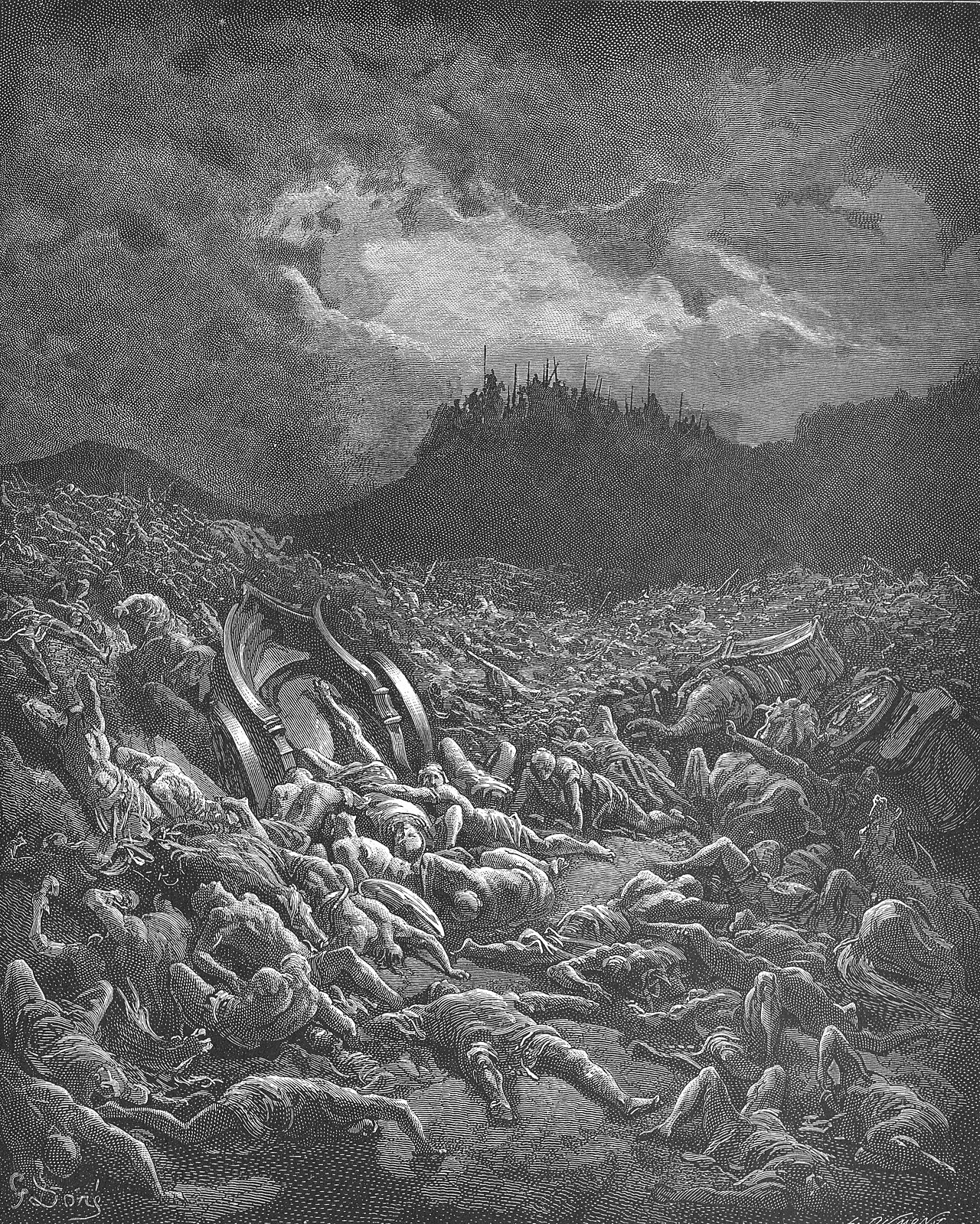
- Gustave Doré, Doré's English Bible (1866)The engravings on this page. Public domain.
Keep studying
On this page
Studies5
Doorway2
Keep this page