
Judges 11:39
in Judges 11After two months, she returned to her father, and he did to her as he had vowed. And she had never had relations with a man. So it has become a custom in Israel
BSB
The same verse in ASV and KJV ▾
ASV
And it came to pass at the end of two months, that she returned unto her father, who did with her according to his vow which he had vowed: and she knew not man. And it was a custom in Israel,
KJV
And it came to pass at the end of two months, that she returned unto her father, who did with her according to his vow which he had vowed: and she knew no man. And it was a custom in Israel,
⋯
This verse in Judges 11
Commentary
11 notes on this verseIt is also sometimes contrary to duty to fulfill a promise or to keep an oath. As was the case with Herod, who swore that whatever was asked he would give to the daughter of Herodias, and so allowed the death of John, that he might not break his word. And what shall I say of Jephthah, who offered up his daughter in sacrifice, she having been the first to meet him as he returned home victorious; whereby he fulfilled the vow which he had made that he would offer to God whatever should meet him first.
This site's exposition
he did to her as he had vowed
on Judges 11:39-40
Josephus in Antiquities of the Jews 5.7.10 and Keil and Delitzsch read a burnt offering. John Gill and Adam Clarke read lifelong virginity, taking "she had never had relations with a man" as the outcome recorded. The text carries no priest, altar or word from God, Leviticus 18:21 and Deuteronomy 12:31 forbid human sacrifice, and Hebrews 11:32 names Jephthah among the faithful without mentioning the vow.
The record, by era
The Church Fathers4 voices
As regards to the fact that Jephthah sacrificed his daughter to God as a whole burnt offering, these are the facts: he had vowed that if he were to obtain the victory, he would offer as a whole burnt offering whoever would come out of his house and meet him; because he had vowed this and won the battle and his daughter had been the one to meet him first, he fulfilled his vow. This event has become a great and rather difficult question to settle both for some who investigate the matter with piety and genuinely seek to know what this passage means and for some who out of ignorant impiety oppose the Holy Scriptures and call this a horrible misdeed that the God of the law and prophets would have delighted in sacrifices, yes, even human sacrifices. First let us reply to their calumnies by noting that the whole burnt offerings of cattle did not delight the God of the law and the prophets—or as I prefer to say, the God of Abraham, Isaac and Jacob. What pleased God about those sacrifices was that they were full of meaning and a foreshadowing of future things. We, however, have the very substance which was foreshadowed by these sacrifices that he wished to commend to us. Moreover, there was also a very pertinent reason why those sacrifices have been changed so that they no longer are commanded but even forbidden: it is so that we may not think that God is pleased by such sacrifices according to some carnal passion.
But we rightly ask whether human sacrifices must have foreshadowed future events.… But if this were true, this type of sacrifice would not displease God. But in fact the Scriptures themselves clearly testify that human sacrifices displease him. For when God wanted and commanded all the firstborn to belong to him and to be his, he nonetheless wanted the firstborn of humankind to be redeemed by their parents, so that they would not entrust their firstborn children to God through immolation.…Now clearly God loves and rewards those sacrifices when a just man endures injustice and struggles for the truth even to the point of death or when he is killed by enemies whom he has offended for righteousness' sake, as he has returned them good for evil, that is, love instead of hatred.… In imitation of Abel, thousands of martyrs have struggled for the truth to the point of death and have been sacrificed by savage enemies. The Scripture says of them, "God has tested them like gold in a furnace and he has accepted them as a whole burnt offering." So too the apostle says, "I am being sacrificed."13 But that is not how Jephthah made a whole burnt offering to the Lord out of his daughter. Rather he offered her as a literal sacrifice in the way that it was commanded for animals to be offered and forbidden for humans to be sacrificed. What he did seems rather similar to what Abraham did. In that instance the Lord gave him a special command that this ought to be done. He did not order him by way of a general commandment that such sacrifices should take place at some time. Indeed, the general rule prohibited it.
Never shall I be led to believe that the leader Jephthah made his vow otherwise than without thought, when he promised to offer to God whatever should meet him at the threshold of his house on his return. For he repented of his vow, as afterwards his daughter came to meet him. He tore his clothes and said, "Alas, my daughter, you have entangled me, you have become a source of trouble for me." And though with pious fear and reverence he took upon himself the bitter fulfillment of his cruel task, yet he ordered and left to be observed an annual period of grief and mourning for future times. It was a hard vow, but far more bitter was its fulfillment, while he who carried it out had the greatest cause to mourn. Thus it became a rule and a law in Israel from year to year, as it says: "that the daughters of Israel went to lament the daughter of Jephthah the Gileadite four days in a year." I cannot blame the man for holding it necessary to fulfill his vow, but yet it was a wretched necessity which could only be solved by the death of his child.…What, then, in the case of esteemed and learned people is full of marvel, that in the case of a virgin is found to be far more splendid, far more glorious, as she says to her sorrowing father, "Do to me according to that which has proceeded out of your mouth." But she asked for a delay of two months in order that she might go about with her companions upon the mountains to bewail fitly and dutifully her virginity now given up to death. The weeping of her companions did not move her, their grief did not prevail upon her, nor did their lamentations hold her back. She did not allow the day to pass, nor did the hour escape her notice. […]
A commentator
John ChrysostomHOMILIES CONCERNING THE STATUES 14.7 · Written in the 5th century.
proposed
For Jephthah likewise, when he had promised that the first thing that met him, after a victorious battle, he would sacrifice, fell into the snare of child-murder; for his daughter first meeting him, he sacrificed her and God did not forbid it. And I know, indeed, that many of the unbelievers impugn us of cruelty and inhumanity on account of this sacrifice; but I should say, that the concession in the case of this sacrifice was a striking example of providence and clemency; and that it was in care for our race that He did not prevent that sacrifice. For if after that vow and promise He had forbidden the sacrifice, many also who were subsequent to Jephthah, in the expectation that God would not receive their vows, would have increased the number of such vows, and proceeding on their way would have fallen into child-murder. But now, by suffering this vow to be actually fulfilled, He put a stop to all such cases in future. And to shew that this is true, after Jephthah's daughter had been slain, in order that the calamity might be always remembered, and that her fate might not be consigned to oblivion, it became a law among the Jews, that the virgins assembling at the same season should bewail during forty days the sacrifice which had taken place; in order that renewing the memory of it by lamentation, they should make all men wiser for the future; and that they might learn that it was not after the mind of God that this should be done, for in that case He would not have permitted the virgins to bewail and lament her. And that what I have said is not conjectural, the event demonstrated; for after this sacrifice, no one vowed such a vow unto God. Therefore also He did not indeed forbid this; but what He had expressly enjoined in the case of Isaac, that He directly prohibited; plainly shewing through both cases, that He doth not delight in such sacrifices.
The Puritans and the Awakening1 voice
It is probably conceived, that the Greeks, who used to steal sacred histories, and turn them into fables, had from this history their relation of Iphigenia (which may be put for Jephtigenia) sacrificed by her father Agamemnon, which is described by many of the same circumstances wherewith this is accompanied.
4 more voices on this verse
The Puritans and the Awakening2 voices
And it came to pass at the end of two months she returned to her father,....
The enterprise was difficult, and it was fit that so great an encouragement as this should be proposed to him that would undertake it. Now all agreed that Jephthah, the Gileadite, was a mighty man of valour, and very fit for that purpose, none so fit as he, but he lay under three disadvantages:-- 1.
The Nineteenth Century2 voices
A commentator
Jamieson, Fausset & Brown1802–1910
Commentary Critical and Explanatory on the Whole Bible (1871)
proposed
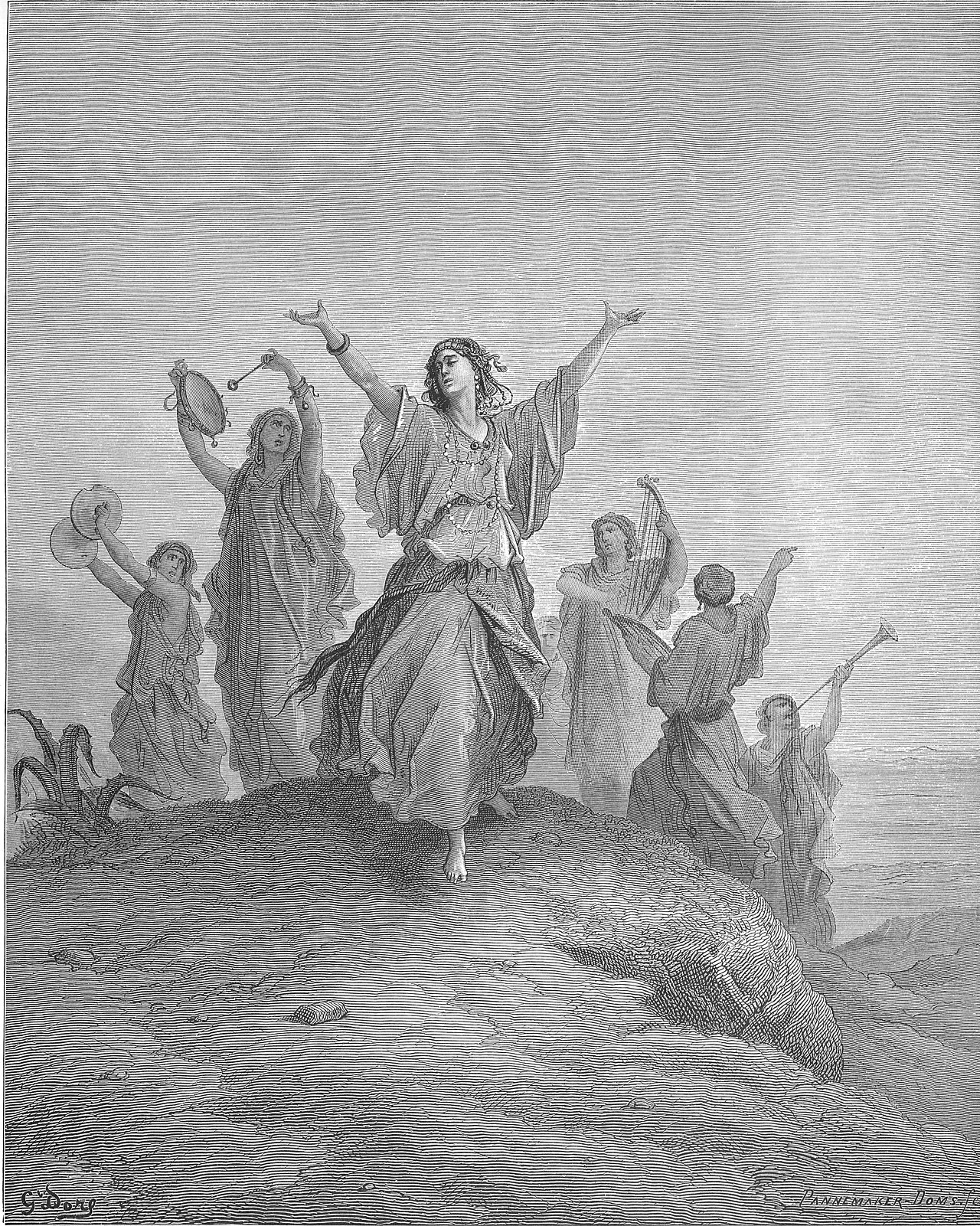
Jephthah came to Mizpeh unto his house, and, behold, his daughter came out to meet him with timbrels and with dances--The return of the victors was hailed, as usual, by the joyous acclaim of a female band (1Sa 18:6), the leader of whom was Jephthah's daughter.
And she knew no man - She continued a virgin all the days of her life.
The words behind it
20 Hebrew wordsEvery Hebrew word of this verse in the order it stands, with what it means and the door to its own study. The last column counts the times a word stands in the whole Bible: the rarer the word, the more the places it appears belong together.
| Hebrew | Sound | Meaning | Word study | In the Bible |
|---|---|---|---|---|
| וַיְהִ֞י | vayhi | and it was | H1961 → | 3559 times |
| מִקֵּ֣ץ׀ | miketz | from [the] end of | H7093 → | |
| שְׁנַ֣יִם | shenayim | two | H8147 → | 768 times |
| חֳדָשִׁ֗ים | chodashim | months | H2320 → | 284 times |
| וַתָּ֙שָׁב֙ | vatashov | and she returned | H7725 → | 1056 times |
| אֶל־ | ʾel- | to | H413 → | 5510 times |
| אָבִ֔יהָ | ʾaviha | father her | H1 → | 1212 times |
| וַיַּ֣עַשׂ | vaiyaas | and he did | H6213 → | 2628 times |
| לָ֔הּ | lah | to <the> her | ||
| אֶת־ | ʾet- | <obj.> | H853 → | 10935 times |
| נִדְר֖וֹ | nidro | vow his | H5088 → | |
| אֲשֶׁ֣ר | ʾasher | which | H834 → | 5497 times |
| נָדָ֑ר | nadar | he had vowed | H5087 → | |
| וְהִיא֙ | vehi' | and she | H1931 → | 1879 times |
| לֹא־ | lo'- | not | H3808 → | 5168 times |
| יָדְעָ֣ה | yadeah | she had known | H3045 → | 945 times |
| אִ֔ישׁ | ʾish | a man | H376 → | 1663 times |
| וַתְּהִי־ | vatehi- | and it was | H1961 → | 3559 times |
| חֹ֖ק | chok | a custom | H2706 → | |
| בְּיִשְׂרָאֵֽל׃ | beyisrael | in Israel | H3478 → | 2507 times |
וַיְהִ֞יand it was
vayhiH1961 →3559 times
מִקֵּ֣ץ׀from [the] end of
miketzH7093 →
שְׁנַ֣יִםtwo
shenayimH8147 →768 times
חֳדָשִׁ֗יםmonths
chodashimH2320 →284 times
וַתָּ֙שָׁב֙and she returned
vatashovH7725 →1056 times
אֶל־to
ʾel-H413 →5510 times
אָבִ֔יהָfather her
ʾavihaH1 →1212 times
וַיַּ֣עַשׂand he did
vaiyaasH6213 →2628 times
לָ֔הּto <the> her
lah
אֶת־<obj.>
ʾet-H853 →10935 times
נִדְר֖וֹvow his
nidroH5088 →
אֲשֶׁ֣רwhich
ʾasherH834 →5497 times
נָדָ֑רhe had vowed
nadarH5087 →
וְהִיא֙and she
vehi'H1931 →1879 times
לֹא־not
lo'-H3808 →5168 times
יָדְעָ֣הshe had known
yadeahH3045 →945 times
אִ֔ישׁa man
ʾishH376 →1663 times
וַתְּהִי־and it was
vatehi-H1961 →3559 times
חֹ֖קa custom
chokH2706 →
בְּיִשְׂרָאֵֽל׃in Israel
beyisraelH3478 →2507 times
A shaded row is a word that stands 400 times or fewer in the Bible.
The walk
8 stopsEach card is a verse this one points to, and under it the verses that one points to in turn. Where several paths arrive at the same place, that place is listed first: the text keeps returning to it.
Through
Isaiah 66:3Whoever slaughters an ox is like one who slays a man; whoever sacrifices a lamb is like one who breaks a dog’s neck; whoever presents a grain offering is like one who offers pig’s…
it leads to
- Proverbs 15:8
The sacrifice of the wicked is detestable to the LORD, but the prayer of the upright is His delight.
- Amos 5:21–22
“I hate, I despise your feasts! I cannot stand the stench of your solemn assemblies.
- Isaiah 1:11–15
“What good to Me is your multitude of sacrifices?” says the LORD. “I am full from the burnt offerings of rams and the fat of well-fed cattle; I take no delight in the blood…
- Isaiah 65:12
I will destine you for the sword, and you will all kneel down to be slaughtered, because I called and you did not answer, I spoke and you did not listen; you did evil…
- Isaiah 66:17
“Those who consecrate and purify themselves to enter the groves—to follow one in the center of those who eat the flesh of swine and vermin and rats—will perish together,” declares the LORD.
- Proverbs 15:8
Through
1 Samuel 1:28I now dedicate the boy to the LORD. For as long as he lives, he is dedicated to the LORD.” So they worshiped the LORD there.
it leads to
- Genesis 24:26
Then the man bowed down and worshiped the LORD,
- Genesis 24:26
Through
1 Samuel 2:18Now Samuel was ministering before the LORD—a boy wearing a linen ephod.
it leads to
- Exodus 28:4
These are the garments that they shall make: a breastpiece, an ephod, a robe, a woven tunic, a turban, and a sash. They are to make these holy garments for your brother Aaron and…
- 1 Samuel 3:1
And the boy Samuel ministered to the LORD before Eli. Now in those days the word of the LORD was rare and visions were scarce.
- Exodus 28:4
About Judges
This page draws on 12 works. Open the list of works
This page draws on Adam Clarke, Commentary on the Bible; Ambrose of Milan, On the Duties of the Clergy 1.50.255; Ambrose of Milan, On the Duties of the Clergy 3.12.78, 81; Augustine of Hippo, QUESTIONS ON JUDGES 49.1; Augustine of Hippo, QUESTIONS ON JUDGES 49.2-4; Jamieson, Fausset & Brown, Commentary Critical and Explanatory on the Whole Bible; John Chrysostom, HOMILIES CONCERNING THE STATUES 14.7; John Gill, Exposition of the Old Testament; John Gill, Exposition of the Old Testament (1748-1763); John Wesley, Explanatory Notes upon the Old Testament; Keil and Delitzsch, Biblical Commentary on the Old Testament: Joshua, Judges, Ruth and Matthew Henry, Commentary on the Whole Bible.