
Judges 11:34
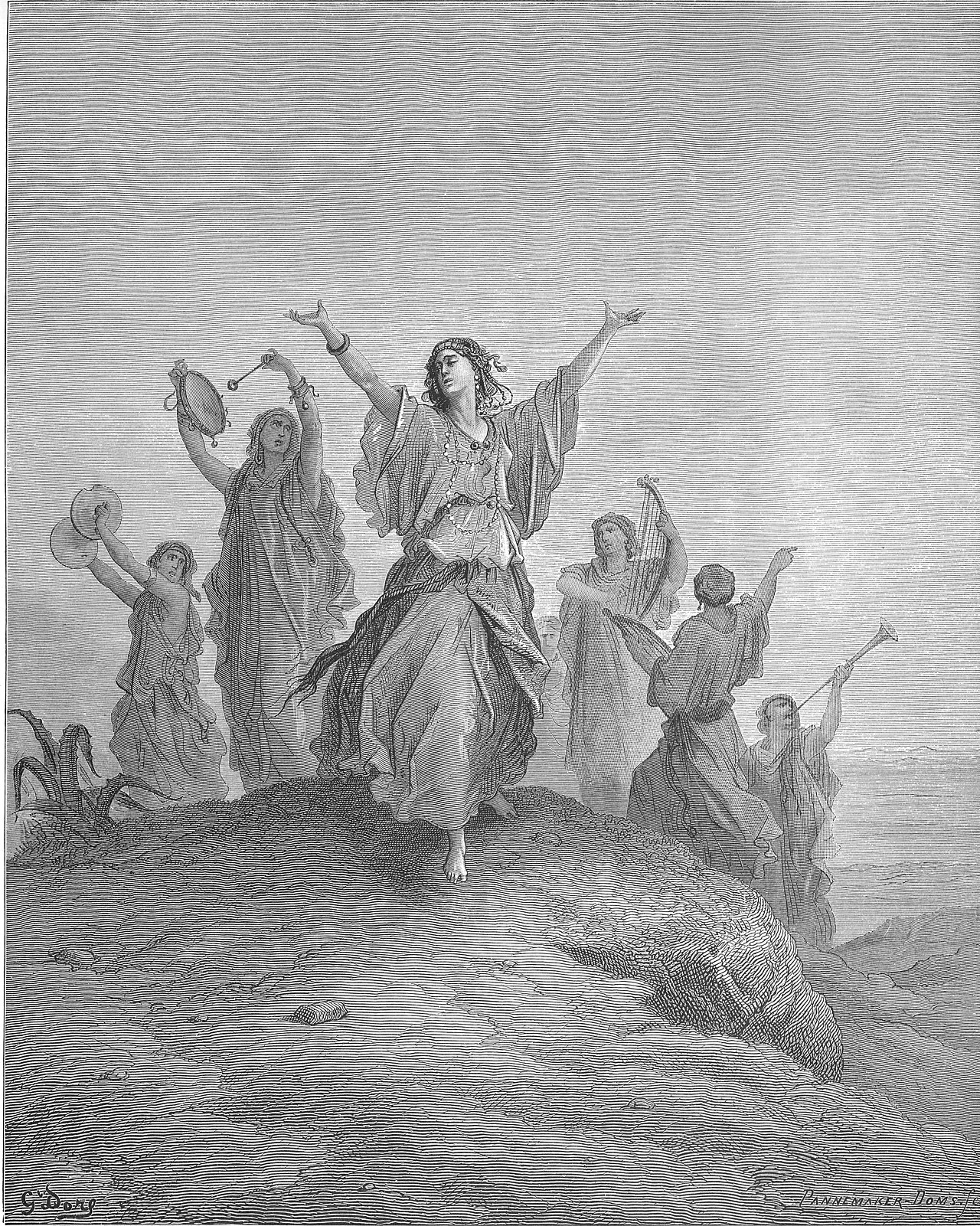
in Judges 11And when Jephthah returned home to Mizpah, there was his daughter coming out to meet him with tambourines and dancing! She was his only child; he had no son or daughter besides her.
BSB
The same verse in ASV and KJV ▾
ASV
And Jephthah came to Mizpah unto his house; and, behold, his daughter came out to meet him with timbrels and with dances: and she was his only child; besides her he had neither son nor daughter.
KJV
And Jephthah came to Mizpeh unto his house, and, behold, his daughter came out to meet him with timbrels and with dances: and she was his only child; beside her he had neither son nor daughter.
⋯
This verse in Judges 11
Commentary
7 notes on this verseWith timbrels and with dances - From this instance we find it was an ancient custom for women to go out to meet returning conquerors with musical instruments, songs, and dances; and that it was continued afterwards is evident from the instance given 1Sa 18:6, where David was met, on his return from the defeat of Goliath and the Philistines, by women from all the cities of Israel, with singing and dancing, and various instruments of music.
This site's exposition
his daughter coming out to meet him
She comes out "with tambourines and dancing," as Miriam does at Exodus 15:20 and the women do for Saul and David at 1 Samuel 18:6, the ordinary welcome for a victory. The house she leaves is the house of the vow at verse 31. The last clause does the most work: "She was his only child," so the line of the man driven from his father's house ends with her.
The record, by era
The Church Fathers1 voice
The Scriptures do not seem to pass judgment on this vow and its fulfillment as it does quite clearly in the case of Abraham, when he was ordered to sacrifice his son and did so. Rather the Scriptures seem to have only recorded the matter and left it to the reader to evaluate, just as in the case of Judah, Jacob's son, who in ignorance lay with his daughter-in-law but committed fornication by the very act, because he thought her to be a prostitute. The Scriptures never approve nor disapprove of the act explicitly but let the matter stand, to be evaluated and contemplated after consulting the righteousness and law of God. Therefore, the Scriptures of God do not offer any comment in either the vow or its fulfillment, so that our mind might be put to work to pass judgment on this matter and so that we might now say that such a vow displeased God and led to the punishment that his only daughter, of all people, ran out to meet her father.
The Puritans and the Awakening2 voices
And Jephthah came to Mizpeh unto his house,....
The enterprise was difficult, and it was fit that so great an encouragement as this should be proposed to him that would undertake it. Now all agreed that Jephthah, the Gileadite, was a mighty man of valour, and very fit for that purpose, none so fit as he, but he lay under three disadvantages:-- 1.
The Nineteenth Century2 voices
A commentator
Jamieson, Fausset & Brown1802–1910
Commentary Critical and Explanatory on the Whole Bible (1871)
proposed
Jephthah came to Mizpeh unto his house, and, behold, his daughter came out to meet him with timbrels and with dances--The return of the victors was hailed, as usual, by the joyous acclaim of a female band (1Sa 18:6), the leader of whom was Jephthah's daughter.
A commentator
Albert Barnes1798–1870
Notes, Explanatory and Practical, on the Old and New Testaments (1832-1869)
proposed
His daughter came out to meet him - The precise phrase of his vow Jdg 11:31. She was his “only child,” a term of special endearment (see Jer 6:26; Zec 12:10). The same word is used of Isaac Gen 22:2, Gen 22:12, Gen 22:16.
The words behind it
20 Hebrew wordsEvery Hebrew word of this verse in the order it stands, with what it means and the door to its own study. The last column counts the times a word stands in the whole Bible: the rarer the word, the more the places it appears belong together.
| Hebrew | Sound | Meaning | Word study | In the Bible |
|---|---|---|---|---|
| וַיָּבֹ֨א | vaiyavo' | and he came | H935 → | 2568 times |
| יִפְתָּ֣ח | yiftach | Jephthah | H3316 → | 30 times |
| הַמִּצְפָּה֮ | hamitzpah | <the> Mizpah | H4709 → | 40 times |
| אֶל־ | ʾel- | to | H413 → | 5510 times |
| בֵּיתוֹ֒ | beito | house his | H1004 → | 2046 times |
| וְהִנֵּ֤ה | vehineh | and there! | H2009 → | 843 times |
| בִתּוֹ֙ | vito | daughter his | H1323 → | 588 times |
| יֹצֵ֣את | yotzet | [was] coming out | H3318 → | 1067 times |
| לִקְרָאת֔וֹ | likrato | to meet him | H7122 → | 139 times |
| בְתֻפִּ֖ים | vetupim | with tambourines | H8596 → | |
| וּבִמְחֹל֑וֹת | uvimcholot | and with dancing | H4246 → | |
| וְרַק֙ | verak | and only | H7535 → | 109 times |
| הִ֣יא | hi' | she | H1931 → | 1879 times |
| יְחִידָ֔ה | yechidah | [was] an only [child] | H3173 → | |
| אֵֽין־ | ʾein- | not | H369 → | 789 times |
| ל֥וֹ | lo | [belonged] to <the> him | ||
| מִמֶּ֛נּוּ | mimenu | from him | H4480 → | 1188 times |
| בֵּ֖ן | ben | a son | H1121 → | 4930 times |
| אוֹ־ | ʾov- | or | H176 → | 321 times |
| בַֽת׃ | vat | a daughter | H1323 → | 588 times |
וַיָּבֹ֨אand he came
vaiyavo'H935 →2568 times
יִפְתָּ֣חJephthah
yiftachH3316 →30 times
הַמִּצְפָּה֮<the> Mizpah
hamitzpahH4709 →40 times
אֶל־to
ʾel-H413 →5510 times
בֵּיתוֹ֒house his
beitoH1004 →2046 times
וְהִנֵּ֤הand there!
vehinehH2009 →843 times
בִתּוֹ֙daughter his
vitoH1323 →588 times
יֹצֵ֣את[was] coming out
yotzetH3318 →1067 times
לִקְרָאת֔וֹto meet him
likratoH7122 →139 times
בְתֻפִּ֖יםwith tambourines
vetupimH8596 →
וּבִמְחֹל֑וֹתand with dancing
uvimcholotH4246 →
וְרַק֙and only
verakH7535 →109 times
הִ֣יאshe
hi'H1931 →1879 times
יְחִידָ֔ה[was] an only [child]
yechidahH3173 →
אֵֽין־not
ʾein-H369 →789 times
ל֥וֹ[belonged] to <the> him
lo
מִמֶּ֛נּוּfrom him
mimenuH4480 →1188 times
בֵּ֖ןa son
benH1121 →4930 times
אוֹ־or
ʾov-H176 →321 times
בַֽת׃a daughter
vatH1323 →588 times
A shaded row is a word that stands 400 times or fewer in the Bible.
The walk
8 stopsEach card is a verse this one points to, and under it the verses that one points to in turn. Where several paths arrive at the same place, that place is listed first: the text keeps returning to it.
Through
Psalms 150:4Praise Him with tambourine and dancing; praise Him with strings and flute.
it leads to
- Psalms 149:3
Let them praise His name with dancing, and make music to Him with tambourine and harp.
Reached by 2 separate paths from here.
- Isaiah 38:20
The LORD will save me; we will play songs on stringed instruments all the days of our lives in the house of the LORD.
- Exodus 15:20
Then Miriam the prophetess, Aaron’s sister, took a tambourine in her hand, and all the women followed her with tambourines and dancing.
- Psalms 149:3
Through
Exodus 15:20Then Miriam the prophetess, Aaron’s sister, took a tambourine in her hand, and all the women followed her with tambourines and dancing.
it leads to
- Psalms 150:4
Praise Him with tambourine and dancing; praise Him with strings and flute.
- 1 Samuel 18:6
As the troops were returning home after David had killed the Philistine, the women came out of all the cities of Israel to meet King Saul with singing and dancing, with joyful songs, and…
- Psalms 68:25
The singers lead the way, the musicians follow after, among the maidens playing tambourines.
- Psalms 150:4
Through
Jeremiah 31:4Again I will build you, and you will be rebuilt, O Virgin Israel. Again you will take up your tambourines and go out in joyful dancing.
it leads to
- Jeremiah 33:7
I will restore Judah and Israel from captivity and will rebuild them as in former times.
- Jeremiah 31:13
Then the maidens will rejoice with dancing, young men and old as well. I will turn their mourning into joy, and give them comfort and joy for their sorrow.
- Jeremiah 33:7
About Judges
This page draws on Adam Clarke, Commentary on the Bible; Albert Barnes, Notes, Explanatory and Practical, on the Old and New Testaments (1832-1869); Augustine of Hippo, QUESTIONS ON JUDGES 49.7; Jamieson, Fausset & Brown, Commentary Critical and Explanatory on the Whole Bible; John Gill, Exposition of the Old Testament (1748-1763) and Matthew Henry, Commentary on the Whole Bible.