
Judges 11:40
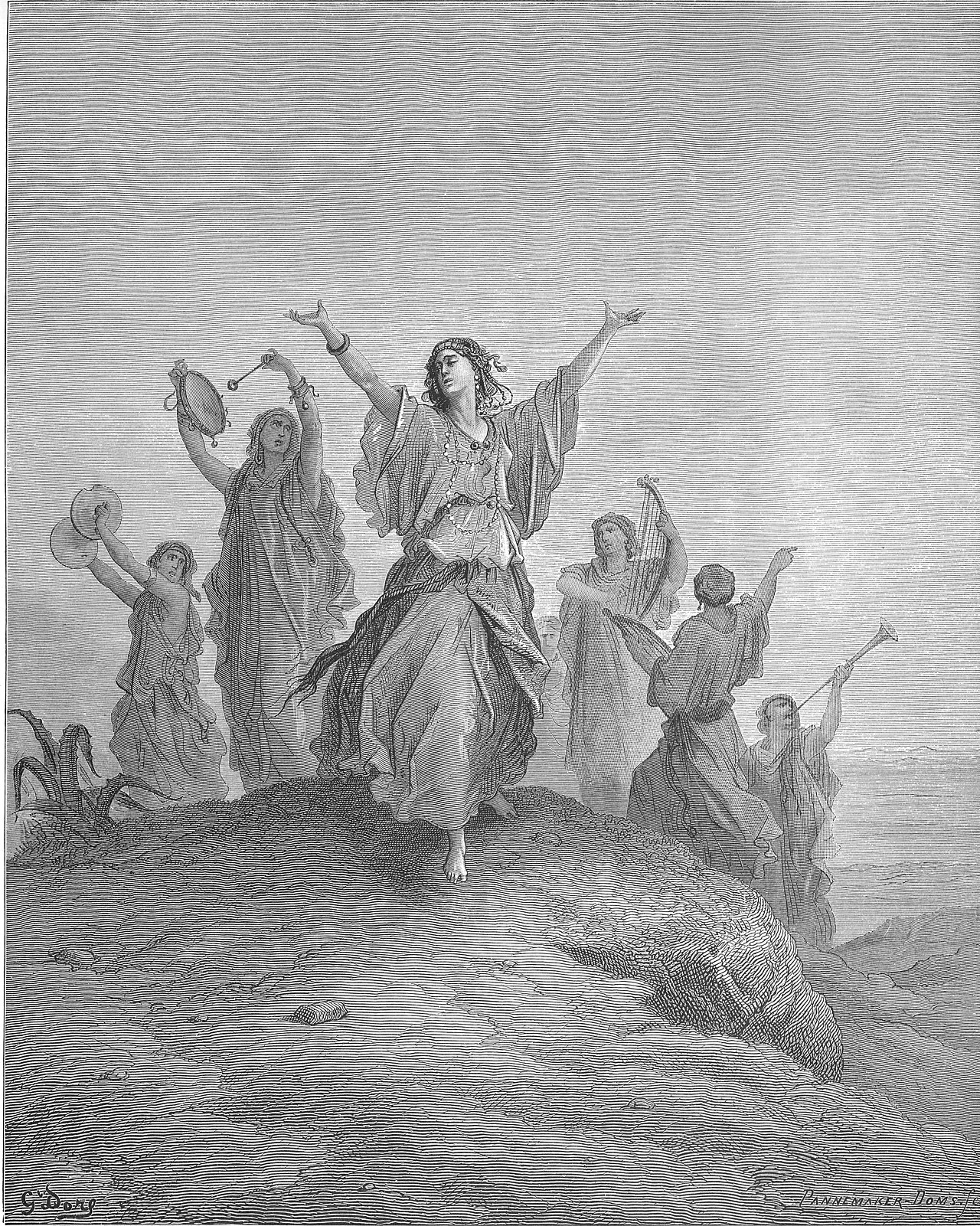
in Judges 11that each year the young women of Israel go out for four days to lament the daughter of Jephthah the Gileadite.
BSB
The same verse in ASV and KJV ▾
ASV
that the daughters of Israel went yearly to celebrate the daughter of Jephthah the Gileadite four days in a year.
KJV
That the daughters of Israel went yearly to lament the daughter of Jephthah the Gileadite four days in a year.
⋯
This verse in Judges 11
Commentary
12 notes on this verseThat the daughters of Israel went yearly to lament the daughter of Jephthah the Gileadite,.... Either the death of her, as some, or her virginity, as others; though the word (p) used may signify to talk and discourse with her, to hold a confabulation with her, and comfort her, as Kimchi and Ben Melech interpret it; to bring her some news, and tell her some diverting stories, to cheer and refresh her in her solitude.
This site's exposition
he did to her as he had vowed
on Judges 11:39-40
Josephus in Antiquities of the Jews 5.7.10 and Keil and Delitzsch read a burnt offering. John Gill and Adam Clarke read lifelong virginity, taking "she had never had relations with a man" as the outcome recorded. The text carries no priest, altar or word from God, Leviticus 18:21 and Deuteronomy 12:31 forbid human sacrifice, and Hebrews 11:32 names Jephthah among the faithful without mentioning the vow.
This site's exposition
go out for four days to lament
The word rendered lament is disputed, and John Gill reports that Kimchi and Ben Melech take it as to talk with Jephthah's daughter and comfort her. Albert Barnes notes that no other text mentions this yearly custom of the young women. He suggests the account draws on an ancient song.
The record, by era
The Church Fathers3 voices
It is also sometimes contrary to duty to fulfill a promise or to keep an oath. As was the case with Herod, who swore that whatever was asked he would give to the daughter of Herodias, and so allowed the death of John, that he might not break his word. And what shall I say of Jephthah, who offered up his daughter in sacrifice, she having been the first to meet him as he returned home victorious; whereby he fulfilled the vow which he had made that he would offer to God whatever should meet him first.
A commentator
John ChrysostomHOMILIES CONCERNING THE STATUES 14.7 · Written in the 5th century.
proposed
For Jephthah likewise, when he had promised that the first thing that met him, after a victorious battle, he would sacrifice, fell into the snare of child-murder; for his daughter first meeting him, he sacrificed her and God did not forbid it. And I know, indeed, that many of the unbelievers impugn us of cruelty and inhumanity on account of this sacrifice; but I should say, that the concession in the case of this sacrifice was a striking example of providence and clemency; and that it was in care for our race that He did not prevent that sacrifice. For if after that vow and promise He had forbidden the sacrifice, many also who were subsequent to Jephthah, in the expectation that God would not receive their vows, would have increased the number of such vows, and proceeding on their way would have fallen into child-murder. But now, by suffering this vow to be actually fulfilled, He put a stop to all such cases in future. And to shew that this is true, after Jephthah's daughter had been slain, in order that the calamity might be always remembered, and that her fate might not be consigned to oblivion, it became a law among the Jews, that the virgins assembling at the same season should bewail during forty days the sacrifice which had taken place; in order that renewing the memory of it by lamentation, they should make all men wiser for the future; and that they might learn that it was not after the mind of God that this should be done, for in that case He would not have permitted the virgins to bewail and lament her. And that what I have said is not conjectural, the event demonstrated; for after this sacrifice, no one vowed such a vow unto God. Therefore also He did not indeed forbid this; but what He had expressly enjoined in the case of Isaac, that He directly prohibited; plainly shewing through both cases, that He doth not delight in such sacrifices.
Never shall I be led to believe that the leader Jephthah made his vow otherwise than without thought, when he promised to offer to God whatever should meet him at the threshold of his house on his return. For he repented of his vow, as afterwards his daughter came to meet him. He tore his clothes and said, "Alas, my daughter, you have entangled me, you have become a source of trouble for me." And though with pious fear and reverence he took upon himself the bitter fulfillment of his cruel task, yet he ordered and left to be observed an annual period of grief and mourning for future times. It was a hard vow, but far more bitter was its fulfillment, while he who carried it out had the greatest cause to mourn. Thus it became a rule and a law in Israel from year to year, as it says: "that the daughters of Israel went to lament the daughter of Jephthah the Gileadite four days in a year." I cannot blame the man for holding it necessary to fulfill his vow, but yet it was a wretched necessity which could only be solved by the death of his child.…What, then, in the case of esteemed and learned people is full of marvel, that in the case of a virgin is found to be far more splendid, far more glorious, as she says to her sorrowing father, "Do to me according to that which has proceeded out of your mouth." But she asked for a delay of two months in order that she might go about with her companions upon the mountains to bewail fitly and dutifully her virginity now given up to death. The weeping of her companions did not move her, their grief did not prevail upon her, nor did their lamentations hold her back. She did not allow the day to pass, nor did the hour escape her notice. […]
The Puritans and the Awakening2 voices
But, says Mr. Henry, "We do not find any law, usage or custom, in all the Old Testament, which doth in the least intimate, that a single life was any branch or article of religion." And do we find any law, usage or custom there, which doth in the least intimate, that cutting the throat of an only child, was any branch or article of religion?
Some learned men have made this sacrifice a figure of Christ the great sacrifice: he was of unspotted purity and innocency, as she a chaste virgin; he was devoted to death by his Father, and so made a curse, or an anathema, for us; he submitted himself, as she did, to his Father's will: Not as I will, but as thou wilt.
4 more voices on this verse
The Puritans and the Awakening1 voice
The enterprise was difficult, and it was fit that so great an encouragement as this should be proposed to him that would undertake it. Now all agreed that Jephthah, the Gileadite, was a mighty man of valour, and very fit for that purpose, none so fit as he, but he lay under three disadvantages:-- 1.
The Nineteenth Century3 voices
To lament the daughter of Jephthah - I am satisfied that this is not a correct translation of the original לתנות לבת יפתח lethannoth lebath yiphtach. Houbigant translates the whole verse thus: Sed iste mos apud Israel invaluit, ut virgines Israel, temporibus diversis, irent ad filiam Jepthe-ut eam quotannis dies quatuor consolarentur; “But this custom prevailed in Israel that the virgins of Israel went at different times, four days in the year, to the daughter of Jephthah, that they might comfort her.” This verse also gives evidence that the daughter of Jephthah was not sacrificed: nor does it appear that the custom or statute referred to here lasted after the death of Jephthah’s daughter.
A commentator
Jamieson, Fausset & Brown1802–1910
Commentary Critical and Explanatory on the Whole Bible (1871)
proposed
Jephthah came to Mizpeh unto his house, and, behold, his daughter came out to meet him with timbrels and with dances--The return of the victors was hailed, as usual, by the joyous acclaim of a female band (1Sa 18:6), the leader of whom was Jephthah's daughter.
A commentator
Albert Barnes1798–1870
Notes, Explanatory and Practical, on the Old and New Testaments (1832-1869)
proposed
There is no allusion extant elsewhere to this annual lamentation of the untimely fate of Jephthah’s daughter. But the poetical turn of the narrative suggests that it may be taken from some ancient song (compare the marginal note 4).
The words behind it
12 Hebrew wordsEvery Hebrew word of this verse in the order it stands, with what it means and the door to its own study. The last column counts the times a word stands in the whole Bible: the rarer the word, the more the places it appears belong together.
| Hebrew | Sound | Meaning | Word study | In the Bible |
|---|---|---|---|---|
| מִיָּמִ֣ים׀ | miyamim | from days | H3117 → | 2304 times |
| יָמִ֗ימָה | yamimah | days towards | H3117 → | 2304 times |
| תֵּלַ֙כְנָה֙ | telakhnah | they go | H1980 → | 1546 times |
| בְּנ֣וֹת | benot | [the] daughters of | H1323 → | 588 times |
| יִשְׂרָאֵ֔ל | yisrael | Israel | H3478 → | 2507 times |
| לְתַנּ֕וֹת | letanot | to recount | H8567 → | |
| לְבַת־ | levat- | for [the] daughter of | H1323 → | 588 times |
| יִפְתָּ֖ח | yiftach | Jephthah | H3316 → | 30 times |
| הַגִּלְעָדִ֑י | hagiladi | the Gileadite | H1569 → | 11 times |
| אַרְבַּ֥עַת | ʾarbaat | four | H702 → | 318 times |
| יָמִ֖ים | yamim | days | H3117 → | 2304 times |
| בַּשָּׁנָֽה׃ ס | bashanah | in the year | H8141 → | 877 times |
מִיָּמִ֣ים׀from days
miyamimH3117 →2304 times
יָמִ֗ימָהdays towards
yamimahH3117 →2304 times
תֵּלַ֙כְנָה֙they go
telakhnahH1980 →1546 times
בְּנ֣וֹת[the] daughters of
benotH1323 →588 times
יִשְׂרָאֵ֔לIsrael
yisraelH3478 →2507 times
לְתַנּ֕וֹתto recount
letanotH8567 →
לְבַת־for [the] daughter of
levat-H1323 →588 times
יִפְתָּ֖חJephthah
yiftachH3316 →30 times
הַגִּלְעָדִ֑יthe Gileadite
hagiladiH1569 →11 times
אַרְבַּ֥עַתfour
ʾarbaatH702 →318 times
יָמִ֖יםdays
yamimH3117 →2304 times
בַּשָּׁנָֽה׃ סin the year
bashanahH8141 →877 times
A shaded row is a word that stands 400 times or fewer in the Bible.
The walk
8 stopsEach card is a verse this one points to, and under it the verses that one points to in turn. Where several paths arrive at the same place, that place is listed first: the text keeps returning to it.
Through
Judges 5:11the voices of the singers at the watering places. There they shall recount the righteous acts of the LORD, the righteous deeds of His villagers in Israel. Then the people of the LORD went…
it leads to
- Micah 6:5
My people, remember what Balak king of Moab counseled and what Balaam son of Beor answered. Remember your journey from Shittim to Gilgal, so that you may acknowledge the righteousness of the LORD.’”
- Judges 5:8
When they chose new gods, then war came to their gates. Not a shield or spear was found among forty thousand in Israel.
- 1 Samuel 12:7
Now present yourselves, so that I may confront you before the LORD with all the righteous acts He has done for you and your fathers.
- Deuteronomy 22:24
you must take both of them out to the gate of that city and stone them to death—the young woman because she did not cry out in the city, and the man because he…
- Lamentations 5:9
We get our bread at the risk of our lives because of the sword in the wilderness.
- Micah 6:5
Through
1 Kings 9:25Three times a year Solomon offered burnt offerings and peace offerings on the altar he had built for the LORD, burning incense with them before the LORD. So he completed the temple.
it leads to
- Deuteronomy 16:16
Three times a year all your men are to appear before the LORD your God in the place He will choose: at the Feast of Unleavened Bread, the Feast of Weeks, and the Feast…
- 2 Chronicles 8:16
Thus all the work of Solomon was carried out, from the day the foundation was laid for the house of the LORD until it was finished. So the house of the LORD was completed.
- Exodus 23:14–17
Three times a year you are to celebrate a feast to Me.
- Deuteronomy 16:16
About Judges
This page draws on 12 works. Open the list of works
This page draws on Adam Clarke, Commentary on the Bible; Albert Barnes, Notes, Explanatory and Practical, on the Old and New Testaments; Albert Barnes, Notes, Explanatory and Practical, on the Old and New Testaments (1832-1869); Ambrose of Milan, On the Duties of the Clergy 1.50.255; Ambrose of Milan, On the Duties of the Clergy 3.12.78, 81; Jamieson, Fausset & Brown, Commentary Critical and Explanatory on the Whole Bible; John Chrysostom, HOMILIES CONCERNING THE STATUES 14.7; John Gill, Exposition of the Old Testament (1748-1763); John Gill, Exposition of the Old Testament; John Wesley, Explanatory Notes upon the Old Testament; Keil and Delitzsch, Biblical Commentary on the Old Testament: Joshua, Judges, Ruth and Matthew Henry, Commentary on the Whole Bible.