
Genesis 41:25
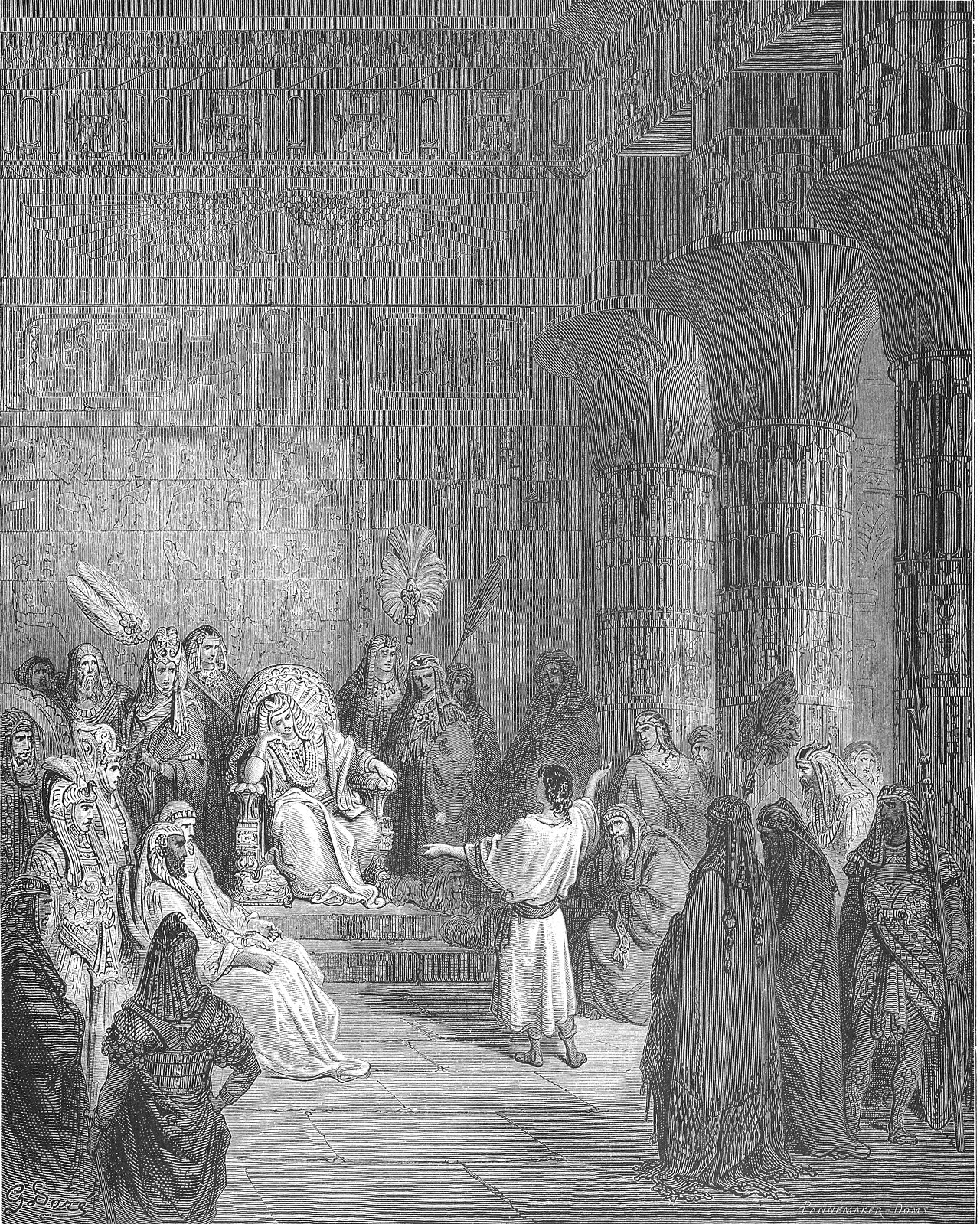
in Genesis 41At this, Joseph said to Pharaoh, “The dreams of Pharaoh are one and the same. God has revealed to Pharaoh what He is about to do.
BSB
The same verse in ASV and KJV ▾
ASV
And Joseph said unto Pharaoh, The dream of Pharaoh is one: what God is about to do he hath declared unto Pharaoh.
KJV
And Joseph said unto Pharaoh, The dream of Pharaoh is one: God hath shewed Pharaoh what he is about to do.
⋯
This verse in Genesis 41
Commentary
4 notes on this verseGod hath showed Pharaoh what he is about to do - Joseph thus shows the Egyptian king that though the ordinary cause of plenty or want is the river Nile, yet its inundations are under the direction of God: the dreams are sent by him, not only to signify beforehand the plenty and want, but to show also that all these circumstances, however fortuitous they may appear to man, are under the direction of an overruling Providence.
This site's exposition
The dreams of Pharaoh are one and the same
on Genesis 41:25-27
Joseph says first that the two dreams are one, and second that God has told Pharaoh what He is about to do. Seven good cows and seven ripe heads are seven years, and the thin ugly ones are seven years of famine. He says that to a pagan king's face. Clarke notes that Egypt credited the Nile with the abundance and the famine, and Joseph puts the river under God's hand.
The record, by era
The Puritans and the Awakening1 voice
And Joseph said unto Pharaoh, the dream of Pharaoh is one,....
The Nineteenth Century1 voice
A commentator
Jamieson, Fausset & Brown1802–1910
Commentary Critical and Explanatory on the Whole Bible (1871)
proposed
The repetition of the dream in two different forms was designed to show the absolute certainty and speedy arrival of this public crisis; the interpretation was accompanied by several suggestions of practical wisdom for meeting so great an emergency as was impending.
The words behind it
14 Hebrew wordsEvery Hebrew word of this verse in the order it stands, with what it means and the door to its own study. The last column counts the times a word stands in the whole Bible: the rarer the word, the more the places it appears belong together.
| Hebrew | Sound | Meaning | Word study | In the Bible |
|---|---|---|---|---|
| וַיֹּ֤אמֶר | vaiyomer | and he said | H559 → | 5305 times |
| יוֹסֵף֙ | yosef | Joseph | H3130 → | 213 times |
| אֶל־ | ʾel- | to | H413 → | 5510 times |
| פַּרְעֹ֔ה | paroh | Pharaoh | H6547 → | 274 times |
| חֲל֥וֹם | chalom | [the] dream of | H2472 → | 65 times |
| פַּרְעֹ֖ה | paroh | Pharaoh | H6547 → | 274 times |
| אֶחָ֣ד | ʾechad | [is] one | H259 → | 971 times |
| ה֑וּא | hu' | it | H1931 → | 1879 times |
| אֵ֣ת | ʾet | <obj.> | H853 → | 10935 times |
| אֲשֶׁ֧ר | ʾasher | [that] which | H834 → | 5497 times |
| הָאֱלֹהִ֛ים | haelohim | <the> God | H430 → | 2601 times |
| עֹשֶׂ֖ה | ʾoseh | [is] about to do | H6213 → | 2628 times |
| הִגִּ֥יד | higid | he has told | H5046 → | 370 times |
| לְפַרְעֹֽה׃ | lefaroh | to Pharaoh | H6547 → | 274 times |
וַיֹּ֤אמֶרand he said
vaiyomerH559 →5305 times
יוֹסֵף֙Joseph
yosefH3130 →213 times
אֶל־to
ʾel-H413 →5510 times
פַּרְעֹ֔הPharaoh
parohH6547 →274 times
חֲל֥וֹם[the] dream of
chalomH2472 →65 times
פַּרְעֹ֖הPharaoh
parohH6547 →274 times
אֶחָ֣ד[is] one
ʾechadH259 →971 times
ה֑וּאit
hu'H1931 →1879 times
אֵ֣ת<obj.>
ʾetH853 →10935 times
אֲשֶׁ֧ר[that] which
ʾasherH834 →5497 times
הָאֱלֹהִ֛ים<the> God
haelohimH430 →2601 times
עֹשֶׂ֖ה[is] about to do
ʾosehH6213 →2628 times
הִגִּ֥ידhe has told
higidH5046 →370 times
לְפַרְעֹֽה׃to Pharaoh
lefarohH6547 →274 times
A shaded row is a word that stands 400 times or fewer in the Bible.
The walk
8 stopsEach card is a verse this one points to, and under it the verses that one points to in turn. Where several paths arrive at the same place, that place is listed first: the text keeps returning to it.
Through
Revelation 4:1After this I looked and saw a door standing open in heaven. And the voice I had previously heard speak to me like a trumpet was saying, “Come up here, and I will show…
it leads to
- Revelation 11:12
And the witnesses heard a loud voice from heaven saying, “Come up here.” And they went up to heaven in a cloud as their enemies watched them.
- Exodus 24:12
Then the LORD said to Moses, “Come up to Me on the mountain and stay here, so that I may give you the tablets of stone, with the law and commandments I have written…
- Revelation 1:19
Therefore write down the things you have seen, and the things that are, and the things that will happen after this.
- Revelation 1:10
On the Lord’s day I was in the Spirit, and I heard behind me a loud voice like a trumpet,
- Revelation 1:1–3
This is the revelation of Jesus Christ, which God gave Him to show His servants what must soon come to pass. He made it known by sending His angel to His servant John,
- Revelation 11:12
Through
Daniel 2:45And just as you saw a stone being cut out of the mountain without human hands, and it shattered the iron, bronze, clay, silver, and gold, so the great God has told the king…
it leads to
- Isaiah 28:16
So this is what the Lord GOD says: “See, I lay a stone in Zion, a tested stone, a precious cornerstone, a sure foundation; the one who believes will never be shaken.
- Isaiah 28:16
Through
Isaiah 43:9All the nations gather together and the peoples assemble. Who among them can declare this, and proclaim to us the former things? Let them present their witnesses to vindicate them, so that others may…
it leads to
- Isaiah 44:7–9
Who then is like Me? Let him say so! Let him declare his case before Me, since I established an ancient people. Let him foretell the things to come, and what is to take…
- Isaiah 46:10
I declare the end from the beginning, and ancient times from what is still to come. I say, ‘My purpose will stand, and all My good pleasure I will accomplish.’
- Isaiah 44:7–9
Where this verse is studied
On this page
Studies1
About Genesis
Who and where
1 name in this verse with a page on the site.
This page draws on Adam Clarke, Commentary on the Bible; Jamieson, Fausset & Brown, Commentary Critical and Explanatory on the Whole Bible; John Gill, Exposition of the Old Testament (1748-1763) and Matthew Henry, Commentary on the Whole Bible.