
Exodus 32:1
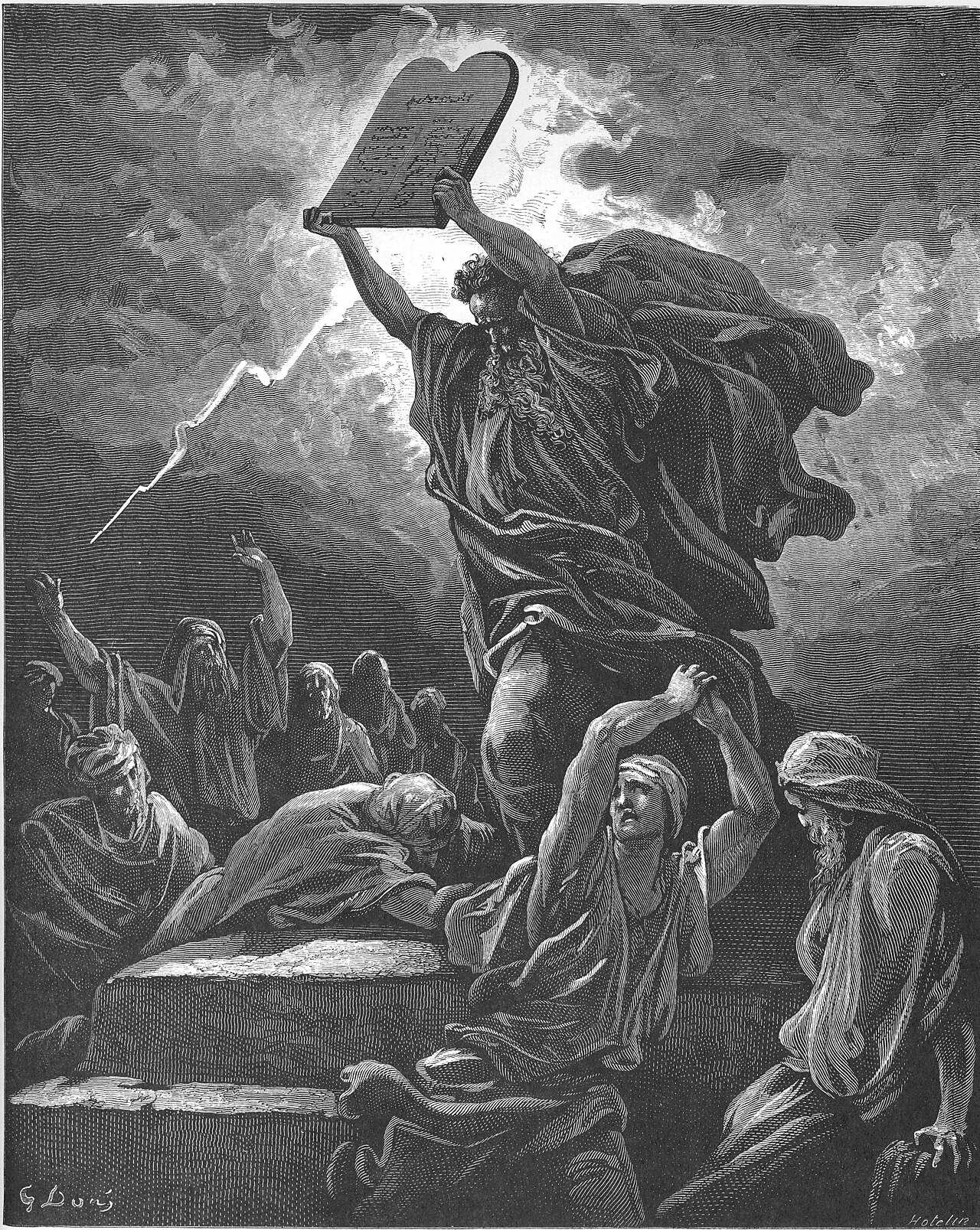
in Exodus 32Now when the people saw that Moses was delayed in coming down from the mountain, they gathered around Aaron and said, “Come, make us gods who will go before us. As for this Moses who brought us up out of the land of Egypt, we do not know what has happened to him!”
BSB
The same verse in ASV and KJV ▾
ASV
And when the people saw that Moses delayed to come down from the mount, the people gathered themselves together unto Aaron, and said unto him, Up, make us gods, which shall go before us; for as for this Moses, the man that brought us up out of the land of Egypt, we know not what is become of him.
KJV
And when the people saw that Moses delayed to come down out of the mount, the people gathered themselves together unto Aaron, and said unto him, Up, make us gods, which shall go before us; for as for this Moses, the man that brought us up out of the land of Egypt, we wot not what is become of him.
⋯
This verse in Exodus 32
Commentary
7 notes on this verseA commentator
Jamieson, Fausset & Brown1802–1910
Commentary Critical and Explanatory on the Whole Bible (1871)
The image made was single, and therefore it would be imputing to the Israelites a greater sin than they were guilty of, to charge them with renouncing the worship of the true God for idols.
This site's exposition
the people gathered themselves together unto Aaron
Forty days earlier the people had answered at 24:3 and 24:7 that all the LORD had spoken they would do, and 24:18 says Moses was in the mount forty days and forty nights. What they ask for is something to go before them, which is what the pillar had done since 13:21. They also hand the deliverance to Moses, calling him the man that brought us up out of the land of Egypt, and verse 7 puts that same phrase back in God's mouth.
The record, by era
The Church Fathers1 voice
For he was of the sons of Israel, whom terrible signs accompanied up to the sea, that they might fear; and blessed miracles surrounded in the waste desert, that they might be reconciled; but through lack of faith, for a slight cause, they rejected them, …
The Puritans and the Awakening2 voices
And when the people saw that Moses delayed to come down out of the mount,....
Secondly, Misinterpretations of our Redeemer's delays are the occasion of a great deal of wickedness. Our Lord Jesus has gone up into the mount of glory, where he is appearing in the presence of Gold for us, but out of our sight; the heavens must contain him, must conceal him, that we may live by faith. There he has been long; there he is yet.
The Nineteenth Century2 voices
When the people saw that Moses delayed - How long this was before the expiration of the forty days, we cannot tell; but it certainly must have been some considerable time, as the ornaments must be collected, and the calf or ox, after having been founded, must require a considerable time to fashion it with the graving tool; and certainly not more than two or three persons could work on it at once. This work therefore, must have required several days. The people gathered themselves together - They came in a tumultuous and seditious manner, insisting on having an object of religious worship made for them, as they intended under its direction to return to Egypt. See Act 7:39, Act 7:40. As for this Moses, the man that brought us up - This seems to be the language of great contempt, and by it we may see the truth of the character given them by Aaron, Exo 32:22, they were set on mischief. It is likely they might have supposed that Moses had perished in the fire, which they saw had invested the top of the mountain into which he went.
A commentator
Albert Barnes1798–1870
Notes, Explanatory and Practical, on the Old and New Testaments (1832-1869)
proposed
In all probability these three chapters originally formed a distinct composition. The main incidents recorded in them follow in the order of time, and are therefore in their proper place as regards historical sequence. The golden calf - The people had, to a great extent, lost the patriarchal faith, and were but imperfectly instructed in the reality of a personal unseen God. Being disappointed at the long absence of Moses, they seem to have imagined that he had deluded them, and had probably been destroyed amidst the thunders of the mountain Exo 24:15-
How the passage was read
What the Jewish commentators add
MAKE US A GOD WHO ‘YEILCHU’ (SHALL GO — in the plural) BEFORE US. “They wished to have many gods.
This section is reception history: how the passage was read and kept in the Jewish tradition. Where a reading parts from an essential of the Christian faith, the section says so at that point.
Texts and citation data: Sefaria; each excerpt follows its version’s licence. 4 further sources are cited on this chapter that carry no English text this site may quote or only restate the verse.
The words behind it
34 Hebrew wordsEvery Hebrew word of this verse in the order it stands, with what it means and the door to its own study. The last column counts the times a word stands in the whole Bible: the rarer the word, the more the places it appears belong together.
| Hebrew | Sound | Meaning | Word study | In the Bible |
|---|---|---|---|---|
| וַיַּ֣רְא | vaiyar' | and it saw | H7200 → | 1300 times |
| הָעָ֔ם | haam | the people | H5971 → | 1873 times |
| כִּֽי־ | ki- | that | H3588 → | 4482 times |
| בֹשֵׁ֥שׁ | voshesh | he delayed | H954 → | |
| מֹשֶׁ֖ה | mosheh | Moses | H4872 → | 765 times |
| לָרֶ֣דֶת | laredet | to come down | H3381 → | 381 times |
| מִן־ | min- | from | H4480 → | 1188 times |
| הָהָ֑ר | hahar | the mountain | H2022 → | 546 times |
| וַיִּקָּהֵ֨ל | vaiyikahel | and it assembled | H6950 → | |
| הָעָ֜ם | haam | the people | H5971 → | 1873 times |
| עַֽל־ | ʾal- | to | H5921 → | 5755 times |
| אַהֲרֹ֗ן | ʾaharon | Aaron | H175 → | 347 times |
| וַיֹּאמְר֤וּ | vaiyomeru | and they said | H559 → | 5305 times |
| אֵלָיו֙ | ʾelav | to him | H413 → | 5510 times |
| ק֣וּם׀ | kum | arise | H6965 → | 628 times |
| עֲשֵׂה־ | ʾaseh- | make | H6213 → | 2628 times |
| לָ֣נוּ | lanu | for <the> us | ||
| אֱלֹהִ֗ים | ʾelohim | gods | H430 → | 2601 times |
| אֲשֶׁ֤ר | ʾasher | which | H834 → | 5497 times |
| יֵֽלְכוּ֙ | yelekhu | they will go | H1980 → | 1546 times |
| לְפָנֵ֔ינוּ | lefaneinu | <to> before us | H6440 → | 2123 times |
| כִּי־ | ki- | for | H3588 → | 4482 times |
| זֶ֣ה׀ | zeh | this | H2088 → | 1180 times |
| מֹשֶׁ֣ה | mosheh | Moses | H4872 → | 765 times |
| הָאִ֗ישׁ | haish | the man | H376 → | 1663 times |
| אֲשֶׁ֤ר | ʾasher | who | H834 → | 5497 times |
| הֶֽעֱלָ֙נוּ֙ | heelanu | he brought up us | H5927 → | 890 times |
| מֵאֶ֣רֶץ | meeretz | from [the] land of | H776 → | 2504 times |
| מִצְרַ֔יִם | mitzrayim | Egypt | H4714 → | 641 times |
| לֹ֥א | lo' | not | H3808 → | 5168 times |
| יָדַ֖עְנוּ | yada'nu | we know | H3045 → | 945 times |
| מֶה־ | meh- | what? | H4100 → | 752 times |
| הָ֥יָה | hayah | has it happened | H1961 → | 3559 times |
| לֽוֹ׃ | lo | to <the> him |
וַיַּ֣רְאand it saw
vaiyar'H7200 →1300 times
הָעָ֔םthe people
haamH5971 →1873 times
כִּֽי־that
ki-H3588 →4482 times
בֹשֵׁ֥שׁhe delayed
vosheshH954 →
מֹשֶׁ֖הMoses
moshehH4872 →765 times
לָרֶ֣דֶתto come down
laredetH3381 →381 times
מִן־from
min-H4480 →1188 times
הָהָ֑רthe mountain
haharH2022 →546 times
וַיִּקָּהֵ֨לand it assembled
vaiyikahelH6950 →
הָעָ֜םthe people
haamH5971 →1873 times
עַֽל־to
ʾal-H5921 →5755 times
אַהֲרֹ֗ןAaron
ʾaharonH175 →347 times
וַיֹּאמְר֤וּand they said
vaiyomeruH559 →5305 times
אֵלָיו֙to him
ʾelavH413 →5510 times
ק֣וּם׀arise
kumH6965 →628 times
עֲשֵׂה־make
ʾaseh-H6213 →2628 times
לָ֣נוּfor <the> us
lanu
אֱלֹהִ֗יםgods
ʾelohimH430 →2601 times
אֲשֶׁ֤רwhich
ʾasherH834 →5497 times
יֵֽלְכוּ֙they will go
yelekhuH1980 →1546 times
לְפָנֵ֔ינוּ<to> before us
lefaneinuH6440 →2123 times
כִּי־for
ki-H3588 →4482 times
זֶ֣ה׀this
zehH2088 →1180 times
מֹשֶׁ֣הMoses
moshehH4872 →765 times
הָאִ֗ישׁthe man
haishH376 →1663 times
אֲשֶׁ֤רwho
ʾasherH834 →5497 times
הֶֽעֱלָ֙נוּ֙he brought up us
heelanuH5927 →890 times
מֵאֶ֣רֶץfrom [the] land of
meeretzH776 →2504 times
מִצְרַ֔יִםEgypt
mitzrayimH4714 →641 times
לֹ֥אnot
lo'H3808 →5168 times
יָדַ֖עְנוּwe know
yada'nuH3045 →945 times
מֶה־what?
meh-H4100 →752 times
הָ֥יָהhas it happened
hayahH1961 →3559 times
לֽוֹ׃to <the> him
lo
A shaded row is a word that stands 400 times or fewer in the Bible.
The walk
8 stopsEach card is a verse this one points to, and under it the verses that one points to in turn. Where several paths arrive at the same place, that place is listed first: the text keeps returning to it.
Through
2 Peter 3:4“Where is the promise of His coming?” they will ask. “Ever since our fathers fell asleep, everything continues as it has from the beginning of creation.”
it leads to
- Luke 12:45
But suppose that servant says in his heart, ‘My master will be a long time in coming,’ and he begins to beat the menservants and maidservants, and to eat and drink and get drunk.
Reached by 2 separate paths from here.
- Jeremiah 17:15
Behold, they keep saying to me, “Where is the word of the LORD? Let it come now!”
- Malachi 2:17
You have wearied the LORD with your words; yet you ask, “How have we wearied Him?” By saying, “All who do evil are good in the sight of the LORD, and in them He…
- Jeremiah 5:12–13
They have lied about the LORD and said: “He will not do anything; harm will not come to us; we will not see sword or famine.
- Isaiah 5:18–19
Woe to those who draw iniquity with cords of deceit and pull sin along with cart ropes,
- Luke 12:45
Through
Deuteronomy 9:9When I went up on the mountain to receive the tablets of stone, the tablets of the covenant that the LORD made with you, I stayed on the mountain forty days and forty nights.…
it leads to
- Exodus 34:28
So Moses was there with the LORD forty days and forty nights without eating bread or drinking water. He wrote on the tablets the words of the covenant—the Ten Commandments.
Reached by 2 separate paths from here.
- Exodus 24:18
Moses entered the cloud as he went up on the mountain, and he remained on the mountain forty days and forty nights.
- Exodus 34:28
Through
Matthew 24:48But suppose that servant is wicked and says in his heart, ‘My master will be away a long time.’
it leads to
- 2 Peter 3:3–5
Most importantly, you must understand that in the last days scoffers will come, scoffing and following their own evil desires.
- 2 Peter 3:3–5
Where this verse is studied
About Exodus
Who and where
3 names in this verse with a page on the site.
- PersonExodus and Wilderness PeriodMosesIsrael's deliverer from Egyptian slavery, covenant mediator, and lawgiver.
- PersonExodus eraAaronBrother of Moses and Israel's first high priest; his rod budded, his garments were for glory and beauty, and his line carried the…
- PlaceThe NileEgyptThe land where Joseph rose, where Israel grew into a nation in bondage, where the Passover lamb was slain and the sea opened, and…
This page draws on Adam Clarke, Commentary on the Bible; Albert Barnes, Notes, Explanatory and Practical, on the Old and New Testaments (1832-1869); Ephrem the Syrian, Homily - On Our Lord; Jamieson, Fausset & Brown, Commentary Critical and Explanatory on the Whole Bible; John Gill, Exposition of the Old Testament (1748-1763); Keil and Delitzsch, Biblical Commentary on the Old Testament: The Pentateuch and Matthew Henry, Commentary on the Whole Bible.