
Exodus 32:35
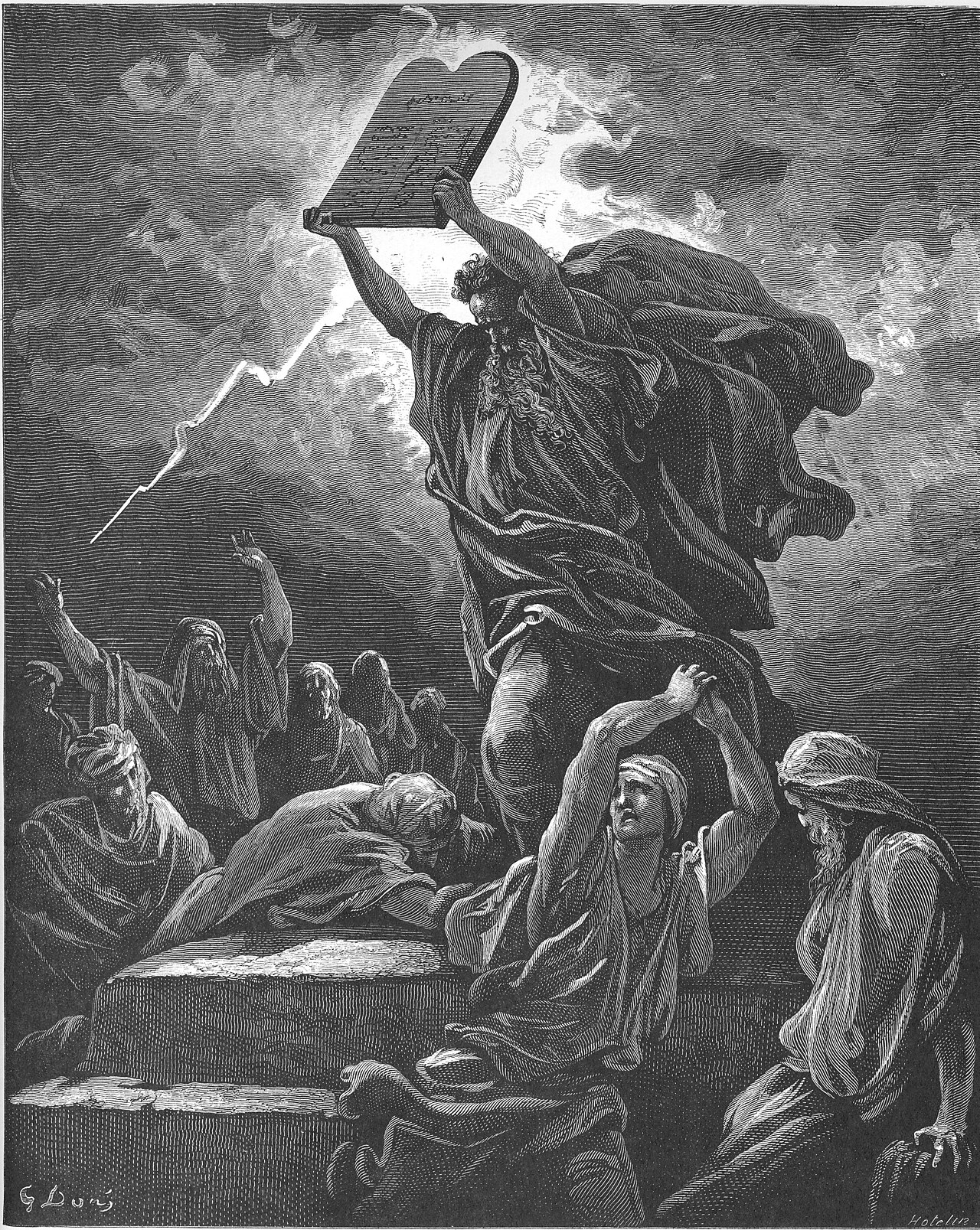
in Exodus 32And the LORD sent a plague on the people because of what they had done with the calf that Aaron had made.
BSB
The same verse in ASV and KJV ▾
ASV
And Jehovah smote the people, because they made the calf, which Aaron made.
KJV
And the Lord plagued the people, because they made the calf, which Aaron made.
⋯
This verse in Exodus 32
Commentary
7 notes on this verseThe Lord plagued the people - Every time they transgressed afterwards Divine justice seems to have remembered this transgression against them. The Jews have a metaphorical saying, apparently founded on this text: “No affliction has ever happened to Israel in which there was not some particle of the dust of the golden calf.” 1. The attentive reader has seen enough in this chapter to induce him to exclaim, How soon a clear sky may be overcast! How soon may the brightest prospects be obscured!
This site's exposition
Behold, My angel shall go before you
on Exodus 32:34-35
God promises My angel shall go before you, what the people demanded of their gods in verse 1. At 33:12 to 16 Moses refuses the substitute and asks for the presence itself.
This site's exposition
the LORD sent a plague on the people
The plague fell on the people for the calf that Aaron had made, after Moses had pleaded for their sin in verses 31 and 32. Adam Clarke cites a Jewish saying that every later affliction of Israel carries some dust of the golden calf.
The record, by era
The Church Fathers1 voice
Thus is it written: "The Lord therefore struck the people for their guilt on the occasion of the calf which Aaron had made." What greater and more manifest judgment could God have made regarding sinners than that punishment immediately follow their sins? Yet, since all …
The Puritans and the Awakening2 voices
Those are angry and sin not, that are angry at sin only. Moses shewed himself angry, both by breaking the tables, and burning the calf, that he might by these expressions of a strong passion awaken the people to a sense of the greatness of their sin.
And the Lord plagued the people,....
The Nineteenth Century1 voice
A commentator
Jamieson, Fausset & Brown1802–1910
Commentary Critical and Explanatory on the Whole Bible (1871)
proposed
the Lord plagued the people, because they made the calf--No immediate judgments were inflicted, but this early lapse into idolatry was always mentioned as an aggravation of their subsequent apostasies.
quarantine:debris (2026-07-29) — starts-lowercase
The words behind it
12 Hebrew wordsEvery Hebrew word of this verse in the order it stands, with what it means and the door to its own study. The last column counts the times a word stands in the whole Bible: the rarer the word, the more the places it appears belong together.
| Hebrew | Sound | Meaning | Word study | In the Bible |
|---|---|---|---|---|
| וַיִּגֹּ֥ף | vaiyigof | and he struck | H5062 → | 49 times |
| יְהוָ֖ה | yahweh | Yahweh | H3068 → | 6520 times |
| אֶת־ | ʾet- | <obj.> | H853 → | 10935 times |
| הָעָ֑ם | haam | the people | H5971 → | 1873 times |
| עַ֚ל | ʾal | on | H5921 → | 5755 times |
| אֲשֶׁ֣ר | ʾasher | that | H834 → | 5497 times |
| עָשׂ֣וּ | ʾasu | they had made | H6213 → | 2628 times |
| אֶת־ | ʾet- | <obj.> | H853 → | 10935 times |
| הָעֵ֔גֶל | haegel | the calf | H5695 → | 35 times |
| אֲשֶׁ֥ר | ʾasher | which | H834 → | 5497 times |
| עָשָׂ֖ה | ʾasah | he had made | H6213 → | 2628 times |
| אַהֲרֹֽן׃ ס | ʾaharon | Aaron | H175 → | 347 times |
וַיִּגֹּ֥ףand he struck
vaiyigofH5062 →49 times
יְהוָ֖הYahweh
yahwehH3068 →6520 times
אֶת־<obj.>
ʾet-H853 →10935 times
הָעָ֑םthe people
haamH5971 →1873 times
עַ֚לon
ʾalH5921 →5755 times
אֲשֶׁ֣רthat
ʾasherH834 →5497 times
עָשׂ֣וּthey had made
ʾasuH6213 →2628 times
אֶת־<obj.>
ʾet-H853 →10935 times
הָעֵ֔גֶלthe calf
haegelH5695 →35 times
אֲשֶׁ֥רwhich
ʾasherH834 →5497 times
עָשָׂ֖הhe had made
ʾasahH6213 →2628 times
אַהֲרֹֽן׃ סAaron
ʾaharonH175 →347 times
A shaded row is a word that stands 400 times or fewer in the Bible.
The walk
8 stopsEach card is a verse this one points to, and under it the verses that one points to in turn. Where several paths arrive at the same place, that place is listed first: the text keeps returning to it.
Through
Exodus 32:4He took the gold from their hands, and with an engraving tool he fashioned it into a molten calf. And they said, “These, O Israel, are your gods, who brought you up out of…
it leads to
- Nehemiah 9:18
Even when they cast for themselves an image of a calf and said, ‘This is your God who brought you up out of Egypt,’ and when they committed terrible blasphemies,
Reached by 2 separate paths from here.
- 1 Kings 12:28
After seeking advice, the king made two golden calves and said to the people, “Going up to Jerusalem is too much for you. Here, O Israel, are your gods, who brought you up out…
- Acts 7:41
At that time they made a calf and offered a sacrifice to the idol, rejoicing in the works of their hands.
- Deuteronomy 9:16
And I saw how you had sinned against the LORD your God; you had made for yourselves a molten calf. You had turned aside quickly from the way that the LORD had commanded you.
- Exodus 32:8
How quickly they have turned aside from the way that I commanded them! They have made for themselves a molten calf and have bowed down to it. They have sacrificed to it and said,…
- Nehemiah 9:18
Through
Acts 1:18(Now with the reward for his wickedness Judas bought a field; there he fell headlong and burst open in the middle, and all his intestines spilled out.
it leads to
- Matthew 27:3–10
When Judas, who had betrayed Him, saw that Jesus was condemned, he was filled with remorse and returned the thirty pieces of silver to the chief priests and elders.
- Matthew 27:3–10
Through
Acts 7:41At that time they made a calf and offered a sacrifice to the idol, rejoicing in the works of their hands.
it leads to
- Psalms 106:19–21
At Horeb they made a calf and worshiped a molten image.
- Psalms 106:19–21
Through
Exodus 32:25Moses saw that the people were out of control, for Aaron had let them run wild and become a laughingstock to their enemies.
it leads to
- Isaiah 47:3
Your nakedness will be uncovered and your shame will be exposed. I will take vengeance; I will spare no one.”
- Isaiah 47:3
Where this verse is studied
On this page
Studies16
About Exodus
Who and where
1 name in this verse with a page on the site.
This page draws on Adam Clarke, Commentary on the Bible; Jamieson, Fausset & Brown, Commentary Critical and Explanatory on the Whole Bible; John Gill, Exposition of the Old Testament (1748-1763); John Wesley, Explanatory Notes upon the Old Testament; Keil and Delitzsch, Biblical Commentary on the Old Testament: The Pentateuch; Matthew Henry, Commentary on the Whole Bible and Salvian the Presbyter, THE GOVERNANCE OF GOD 1.11.48.