
On this page, 6 sections
The one drawing
Across the canon
Old Testament
New Testament
The other 56 books of the canon carry none.
10 passages
Where Scripture speaks
The passages this subject stands on, in canon order.
“What have you done?” replied the LORD. “The voice of your brother’s blood cries out to Me from the ground.You must not mistreat any widow or orphan.Tell him that this is what the LORD says: ‘Have you not murdered a man and seized his land?’ Then tell him that this is also what the LORD says: ‘In the place where the dogs licked up the blood of Naboth, there also the dogs will lick up your blood—yes, yours!’”“Why does the Almighty not reserve times for judgment? Why may those who know Him never see His days?For I envied the arrogant when I saw the prosperity of the wicked.Again I looked, and I considered all the oppression taking place under the sun. I saw the tears of the oppressed, and they had no comforter; the power lay in the hands of their oppressors, and there was no comforter.Woe to those who enact unjust statutes and issue oppressive decrees,But let justice roll on like a river, and righteousness like an ever-flowing stream.Therefore the law is paralyzed, and justice never goes forth. For the wicked hem in the righteous, so that justice is perverted.Will not God bring about justice for His elect who cry out to Him day and night? Will He continue to defer their help?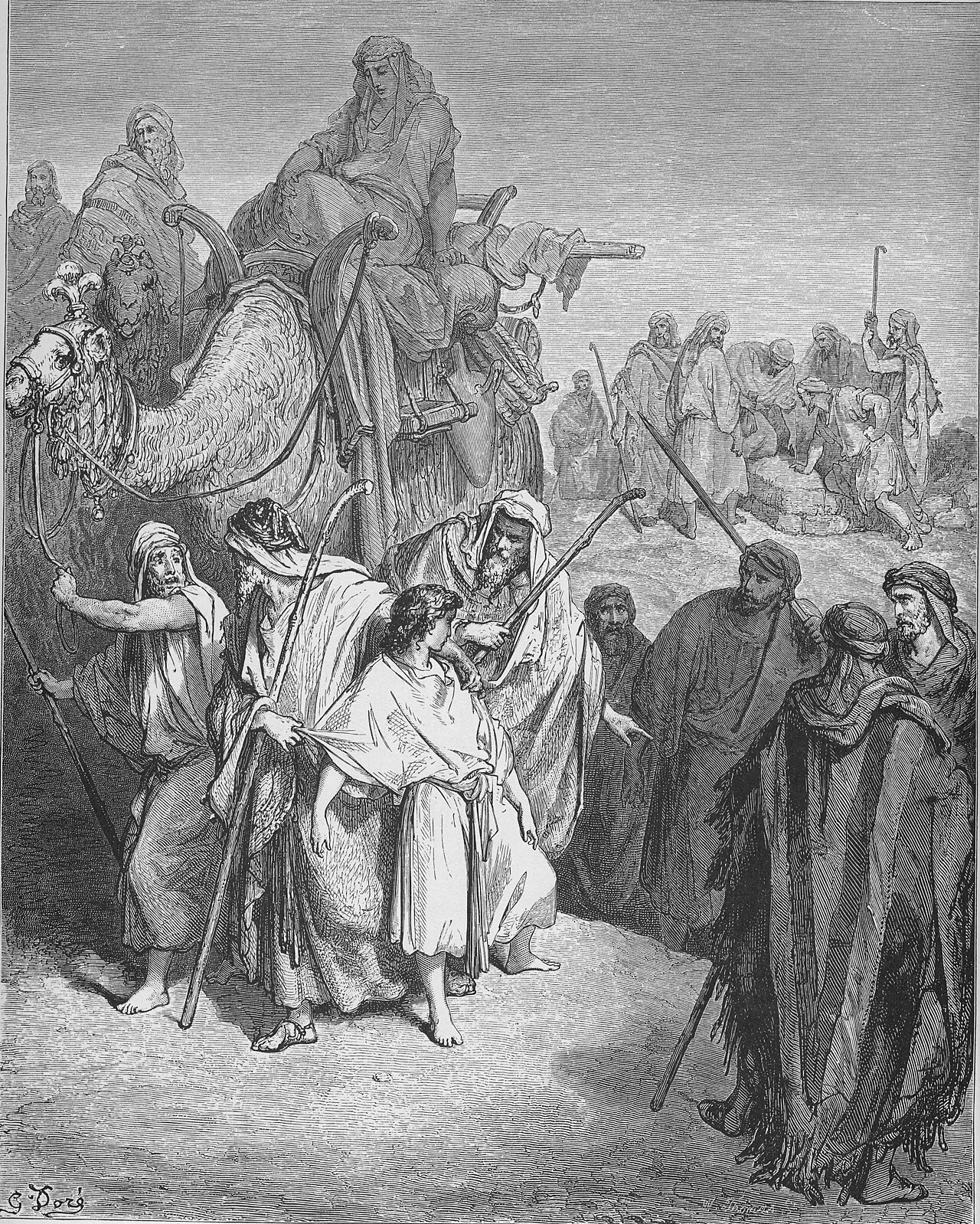
Injustice in Scripture, in full
The Bible does not pretend injustice is rare or temporary. From its earliest pages to its last, wrong wins for a while, and Scripture is honest about how long "a while" can feel.
The very first murder is also the first recorded injustice. Cain kills his brother Abel, and God tells Cain that Abel's blood is crying out to him from the ground (Genesis 4:10). Injustice, from the opening chapters, is something God hears even when no human court does.
The law given at Sinai builds protection for the most vulnerable directly into Israel's identity. God commands, in his own voice, that widows and orphans must not be afflicted, warning that he himself will hear their cry if they are (Exodus 22:22-23). Justice was not left to be figured out later. It was written into the foundation.
Even so, Israel's own history is full of failures against that standard. King Ahab wants Naboth's vineyard, and when Naboth refuses to sell his family's inheritance, Ahab's wife Jezebel arranges false charges and has him stoned to death (1 Kings 21). The prophet Elijah is sent to confront the king directly: a picture of a God who does not let power quietly get away with murder dressed up as legal process.
The wisdom and prophetic books wrestle openly with how long injustice is allowed to stand. Job asks bluntly why the wicked live on, grow old, and increase in power while the innocent suffer (Job 21; 24:1). The psalmist admits he nearly stumbled watching the arrogant prosper while he himself struggled to stay faithful (Psalm 73:2-3). The Preacher looks at the tears of the oppressed and finds, with unusual bluntness, that they have no one to comfort them (Ecclesiastes 4:1). Scripture does not rush past this. It sits in the discomfort before it answers it.
The prophets refuse to let injustice hide behind religion or law. Isaiah pronounces a woe on those who write unjust laws and use legislation itself to rob the poor (Isaiah 10:1-2). Amos, preaching to a nation that kept its religious festivals while crushing the needy, delivers one of Scripture's most quoted lines: "let justice run down as waters, and righteousness as a mighty stream" (Amos 5:24). Habakkuk simply asks God why he tolerates it, and waits (honestly, out loud), for an answer (Habakkuk 1:2-4).
Jesus enters this story and, in the end, becomes its clearest victim. He is arrested on false testimony, tried in an irregular night session, and handed over by a governor who declares him innocent and crucifies him anyway (Luke 23:4, 24). Where judgment was looked for, there was oppression instead. The cross is the Bible's starkest picture of injustice, and, at the very same time, the place where God turns humanity's worst wrong into the world's only rescue.
Jesus also tells a parable about a widow who keeps demanding justice from a corrupt judge until, worn down, he finally gives it to her: not because he is good, but because she will not stop asking (Luke 18:1-8). The point is not that God is like the unjust judge. It is that if even an unjust judge eventually acts, how much more will a good Father act for those who cry out to him day and night?
Injustice is real, and Scripture never tells its readers to pretend otherwise. But it also insists that wrong winning for a while is not wrong winning forever. God sees, God hears, and God has already shown, at the cross, exactly how far he is willing to go to make it right.
4 voices
What teachers have said
Now was truth fallen in the street, and equity could not enter; where one looked for judgment, behold, oppression, the worst kind of oppression; for righteousness, behold, a cry, the worse cry that ever was, Crucify, crucify the Lord of glory.
Matthew Henry · Commentary on the Whole Bible, 1710
Woe to him who builds his house with injustice, and his upper rooms without justice. He oppresses his neighbor in vain, and does not pay him his wages.
Jerome · Commentary on Jeremiah
Written before 420.
Thou shalt not oppress an hired servant that is poor and needy--Hired servants in the East are paid at the close of the day; and for a master to defraud the laborer of his hire, or to withhold it wrongfully for a night, might have subjected a poor man with his family to suffering and was therefore an injustice to be avoided
Jamieson, Fausset & Brown · Commentary Critical and Explanatory on the Whole Bible, 1871
When the wicked man is seen in power, when he is utterly without check or restraint in his acts of oppression and violence, by the imaginations of the weak he is accounted too well ballasted, and as rooted in this world.
Gregory the Dialogist · Morals on the Book of Job, Book XV
Written before 604.
The words underneath
Each card is one Hebrew or Greek word behind injustice. It gives the sense, the count across the canon, and the number in Strong's 1890 concordance.
chamas: violence
Hebrew · H2555Strong's entry: violence; by implication, wrong; by meton. unjust gain
the word that filled the earth before the flood
60 times in the Old Testament · chamas, in full →
shod: violence
Hebrew · H7701Strong's entry: violence, ravage
the wreckage injustice leaves behind
25 times in the Old Testament · shod, in full →
adikia: unrighteousness
Greek · G93Strong's entry: (legal) injustice (properly, the quality, by implication, the act); morally, wrongfulness (of character, life or act)
Paul's term for wrong done to another
25 times in the New Testament · adikia, in full →
ashaq: to oppress
Hebrew · H6231Strong's entry: to press upon, i.e. oppress, defraud, violate, overflow
the verb behind "oppression"
36 times in the Old Testament · ashaq, in full →
Life questions