
Daniel 6:4
in Daniel 6Thus the administrators and satraps sought a charge against Daniel concerning the kingdom, but they could find no charge or corruption, because he was trustworthy, and no negligence or corruption was found in him.
BSB
The same verse in ASV and KJV ▾
ASV
Then the presidents and the satraps sought to find occasion against Daniel as touching the kingdom; but they could find no occasion nor fault, forasmuch as he was faithful, neither was there any error or fault found in him.
KJV
Then the presidents and princes sought to find occasion against Daniel concerning the kingdom; but they could find none occasion nor fault; forasmuch as he was faithful, neither was there any error or fault found in him.
⋯
This verse in Daniel 6
Commentary
8 notes on this verseVerses 3, 4. "Moreover the king was planning to set Daniel over the whole realm. Consequently the princes and satraps sought an opportunity to find out something against Daniel as touching the king..." Instead of "princes" - the rendering used by Symmachus - Theodotion translated it as taktikoi, and Aquila as synektikoi. And when I inquired as to who these tacticians or liaison princes might be, I read it more clearly specified in the Septuagint, which renders: "...and the two men whom the king had appointed with Daniel, and also the one hundred twenty satraps."
This site's exposition
sought a charge against Daniel
on Daniel 6:4-5
The administrators and satraps search Daniel's record and “could find no charge or corruption, because he was trustworthy”. Their words concede it: “We will never find any charge against this Daniel, unless we find something against him concerning the law of his God”. The plot turns on that law.
The record, by era
The Church Fathers1 voice
Accordingly, after this happened, the governors and satraps were stirred with jealousy and sought to find a pretext against Daniel, so that they might take some occasion against him and accuse him and kill him. In which manner the word was fulfilled, which we spoke a little before, that a pious man or one who fears God and has grace and wisdom from God is hated by the rest of men because they also were not honored with the same gift.
The Puritans and the Awakening3 voices
Commentary on Chapter VI 2. Daniel was first - Belshazzar's promise to Daniel was, that he should be the third ruler in the kingdom, chap. v, 7, 16, 29. The first was general of the army, the second president of the palace, the third of the land and provinces.
Then the presidents and princes sought to find occasion against Daniel concerning the kingdom,....
This is recorded for an example to all that are in places of public trust to approve themselves both careful and conscientious, that they may be free, not only from fault, but from error, not only from crime, but from mistake. What ill-will was borne him, both for his greatness and for his goodness.
The Nineteenth Century1 voice
Sought to find occasion against Daniel - But they found no blemish in his administration, for he was faithful to his king: this was a virtue. But he was also faithful to his God: this they hoped to construe into a crime, and make it the cause of his ruin.
1 more voice on this verse
The Nineteenth Century1 voice
A commentator
Albert Barnes1798–1870
Notes, Explanatory and Practical, on the Old and New Testaments (1832-1869)
proposed
Then the presidents and princes sought to find occasion against Daniel - The word rendered “occasion” (עלה ‛illâh) means a pretext or pretence. “The Arabs use the word of any business or affair which serves as a cause or pretext for neglecting another business.” - Gesenius, Lexicon The meaning is, that they sought to find some plausible pretext or reason in respect to Daniel, by which the contemplated appointment might be prevented, and by which he might be effectually humbled. No one who is acquainted with the intrigues of cabinets and courts can have any doubts as to the probability of what is here stated. Nothing has been more common in the world than intrigues of this kind to humble a rival, and to bring down those who are meritorious to a state of degradation. The cause of the plot here laid seems to have been mere envy and jealousy - and perhaps the consideration that Daniel was a foreigner, and was one of a despised people held in captivity. “Concerning the kingdom.” In respect to the administration of the kingdom. They sought to find evidence of malversation in office, or abuse of power, or attempts at personal aggrandizement, or inattention to the duties of the office. This is literally “from the side of the kingdom;” and the meaning is, that the accusation was sought in that quarter, or in that respect. No other charge would be likely to be effectual, except one which pertained to maladministration in office. But they could find none occasion nor fault - This is an honorable testimony to the fidelity of Daniel, and to the uprightness of his character. If there had been any malversation in office, it would have been detected by these men.
The words behind it
27 Hebrew wordsEvery Hebrew word of this verse in the order it stands, with what it means and the door to its own study. The last column counts the times a word stands in the whole Bible: the rarer the word, the more the places it appears belong together.
| Hebrew | Sound | Meaning | Word study | In the Bible |
|---|---|---|---|---|
| אֱדַ֨יִן | ʾedayin | then | H116 → | 57 times |
| סָֽרְכַיָּ֜א | sarekhaiya' | overseers the | H5632 → | 5 times |
| וַאֲחַשְׁדַּרְפְּנַיָּ֗א | vaachashdarpenaiya' | and satraps the | H324 → | 9 times |
| הֲו֨וֹ | havo | they were | H1934 → | 71 times |
| בָעַ֧יִן | vaayin | seeking | H1156 → | 12 times |
| עִלָּ֛ה | ʾilah | an occasion | H5931 → | 3 times |
| לְהַשְׁכָּחָ֥ה | lehashkachah | to find | H7912 → | 18 times |
| לְדָנִיֵּ֖אל | ledaniyel | to Daniel | H1841 → | 57 times |
| מִצַּ֣ד | mitzad | from [the] side of | H6655 → | |
| מַלְכוּתָ֑א | malkhuta' | kingdom the | H4437 → | 57 times |
| וְכָל־ | vekhol | and any | H3606 → | 82 times |
| עִלָּ֨ה | ʾilah | occasion | H5931 → | 3 times |
| וּשְׁחִיתָ֜ה | ushechitah | and corruption | H7844 → | 3 times |
| לָא־ | la'- | not | H3809 → | 82 times |
| יָכְלִ֣ין | yakhelin | [they were] able | H3202 → | 11 times |
| לְהַשְׁכָּחָ֗ה | lehashkachah | to find | H7912 → | 18 times |
| כָּל־ | kol- | as to | ||
| קֳבֵל֙ | kovel | because | H6903 → | 29 times |
| דִּֽי־ | di- | that | H1768 → | 345 times |
| מְהֵימַ֣ן | meheiman | [was] trustworthy | H540 → | 3 times |
| ה֔וּא | hu' | he | H1932 → | 22 times |
| וְכָל־ | vekhol | and any | H3606 → | 82 times |
| שָׁלוּ֙ | shalu | negligence | H7960 → | |
| וּשְׁחִיתָ֔ה | ushechitah | and corruption | H7844 → | 3 times |
| לָ֥א | la' | not | H3809 → | 82 times |
| הִשְׁתְּכַ֖חַת | hishtekhachat | it was found | H7912 → | 18 times |
| עֲלֽוֹהִי׃ | alohi | concerning him | H5922 → | 104 times |
אֱדַ֨יִןthen
ʾedayinH116 →57 times
סָֽרְכַיָּ֜אoverseers the
sarekhaiya'H5632 →5 times
וַאֲחַשְׁדַּרְפְּנַיָּ֗אand satraps the
vaachashdarpenaiya'H324 →9 times
הֲו֨וֹthey were
havoH1934 →71 times
בָעַ֧יִןseeking
vaayinH1156 →12 times
עִלָּ֛הan occasion
ʾilahH5931 →3 times
לְהַשְׁכָּחָ֥הto find
lehashkachahH7912 →18 times
לְדָנִיֵּ֖אלto Daniel
ledaniyelH1841 →57 times
מִצַּ֣דfrom [the] side of
mitzadH6655 →
מַלְכוּתָ֑אkingdom the
malkhuta'H4437 →57 times
וְכָל־and any
vekholH3606 →82 times
עִלָּ֨הoccasion
ʾilahH5931 →3 times
וּשְׁחִיתָ֜הand corruption
ushechitahH7844 →3 times
לָא־not
la'-H3809 →82 times
יָכְלִ֣ין[they were] able
yakhelinH3202 →11 times
לְהַשְׁכָּחָ֗הto find
lehashkachahH7912 →18 times
כָּל־as to
kol-
קֳבֵל֙because
kovelH6903 →29 times
דִּֽי־that
di-H1768 →345 times
מְהֵימַ֣ן[was] trustworthy
meheimanH540 →3 times
ה֔וּאhe
hu'H1932 →22 times
וְכָל־and any
vekholH3606 →82 times
שָׁלוּ֙negligence
shaluH7960 →
וּשְׁחִיתָ֔הand corruption
ushechitahH7844 →3 times
לָ֥אnot
la'H3809 →82 times
הִשְׁתְּכַ֖חַתit was found
hishtekhachatH7912 →18 times
עֲלֽוֹהִי׃concerning him
alohiH5922 →104 times
A shaded row is a word that stands 400 times or fewer in the Bible.
The walk
8 stopsEach card is a verse this one points to, and under it the verses that one points to in turn. Where several paths arrive at the same place, that place is listed first: the text keeps returning to it.
Through
Philippians 2:15so that you may be blameless and pure, children of God without fault in a crooked and perverse generation, in which you shine as lights in the world
it leads to
- Matthew 5:14–16
You are the light of the world. A city on a hill cannot be hidden.
- 1 Peter 2:12
Conduct yourselves with such honor among the Gentiles that, though they slander you as evildoers, they may see your good deeds and glorify God on the day He visits us.
Reached by 2 separate paths from here.
- Matthew 5:45
that you may be sons of your Father in heaven. He causes His sun to rise on the evil and the good, and sends rain on the righteous and the unrighteous.
- Matthew 5:14–16
Through
1 Peter 2:12Conduct yourselves with such honor among the Gentiles that, though they slander you as evildoers, they may see your good deeds and glorify God on the day He visits us.
it leads to
- 1 Peter 3:16
keeping a clear conscience, so that those who slander you may be put to shame by your good behavior in Christ.
- Matthew 5:16
In the same way, let your light shine before men, that they may see your good deeds and glorify your Father in heaven.
- Titus 2:7–8
In everything, show yourself to be an example by doing good works. In your teaching show integrity, dignity,
- Philippians 2:15–16
so that you may be blameless and pure, children of God without fault in a crooked and perverse generation, in which you shine as lights in the world
- 2 Corinthians 8:21
For we are taking great care to do what is right, not only in the eyes of the Lord, but also in the eyes of men.
- 1 Peter 3:16
Where this verse is studied
On this page
About Daniel
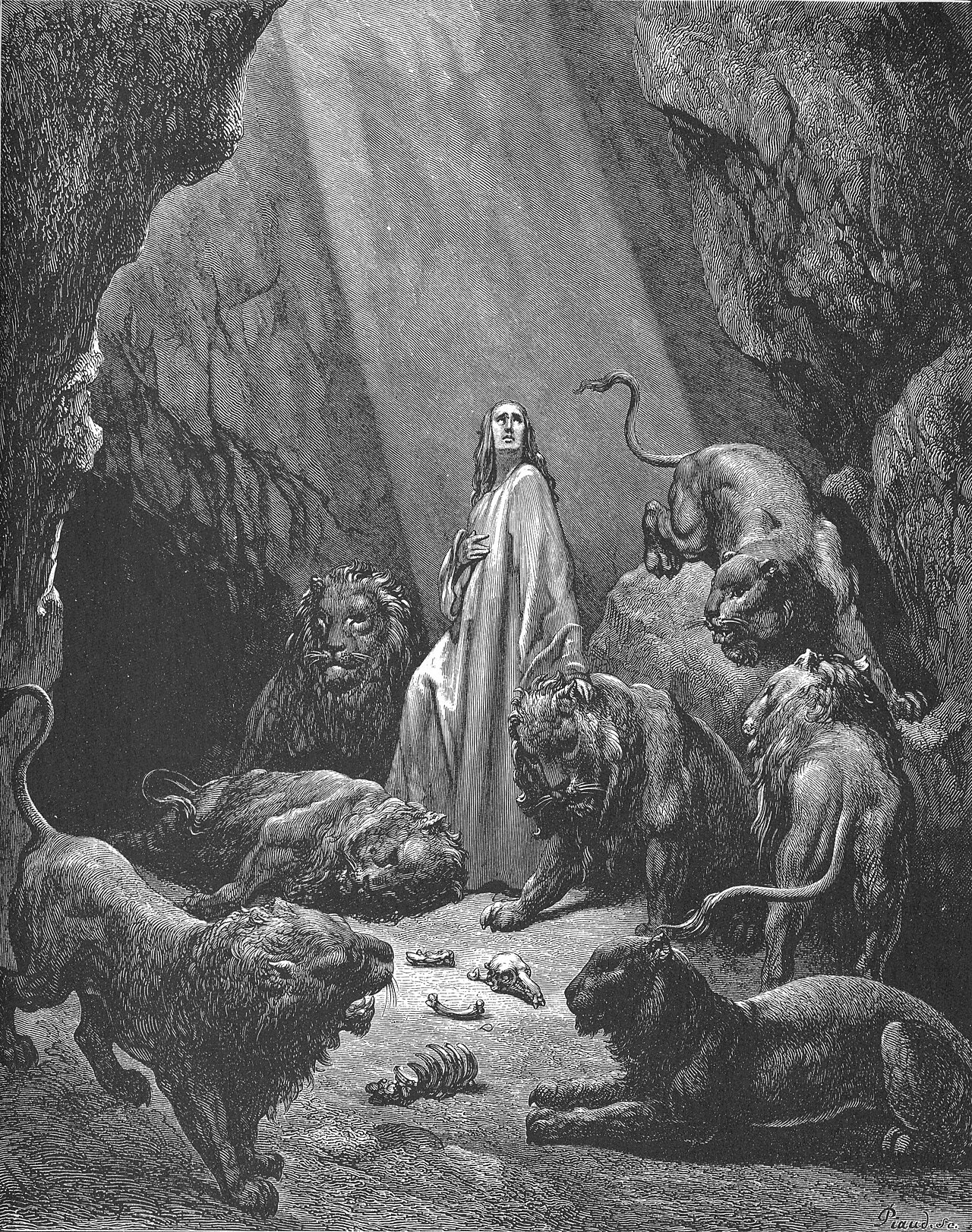
Who and where
1 name in this verse with a page on the site.
This page draws on Adam Clarke, Commentary on the Bible; Albert Barnes, Notes, Explanatory and Practical, on the Old and New Testaments (1832-1869); Hippolytus of Rome, Commentary on Daniel 3.19.3-6; Jerome, Commentary on Daniel; John Gill, Exposition of the Old Testament; John Gill, Exposition of the Old Testament (1748-1763); John Wesley, Explanatory Notes upon the Old Testament and Matthew Henry, Commentary on the Whole Bible.