
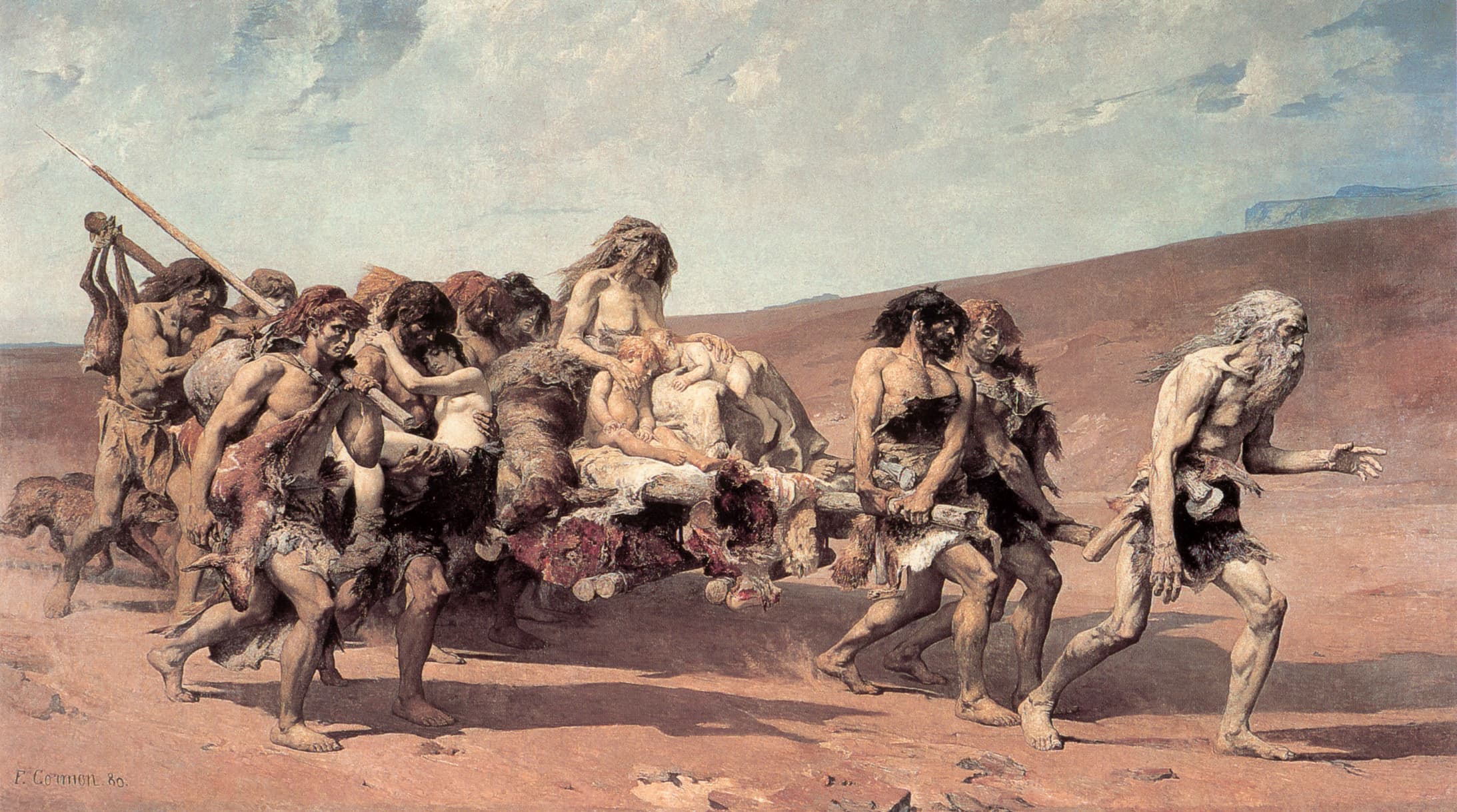
Genesis 6:11 · Symbol · Injustice
The Words Chamas and Adikia
Chamas in the Hebrew Bible and adikia in the New Testament are the chief nouns for violence, oppression and injustice.
Proverbs 8:36 uses the verb chamas for the harm a man does to himself when he fails to find wisdom.
He was assigned a grave with the wicked, and with a rich man in His death, although He had done no violence, nor was any deceit in His mouth.
- The word
- חָמָס (chamas), H2555
- First appears
- Genesis 6:11 “Now the earth was corrupt in the sight…”
Summary
Chamas fills the earth before the flood, and Job and Habakkuk both cry it out to God. It stands most often in the Psalms, and its range runs from bloodshed to unjust gain. In the New Testament adikia names the same wrong. Paul and John set it under God's judgment and under His forgiveness.
- The Berean gives chamas several English words, among them violence, wrong and malicious, so its sense is read from each verse.
- Adikia names the wrong act and also the wrongfulness of the character and life behind it.
- Five Hebrew and three Greek words make up the family, and chamas and evel stand most often among the Hebrew.
Chamas Fills the Earth
The noun enters the Bible in the account of the world before the flood.
The Words Chamas and Adikia studies the Hebrew and Greek words the Bible uses for the wrong one person does another. It belongs to the trial of injustice, and its words are the ones the wronged cry out and the ones God judges.
The question it answers is what these words name and where they stand, from the flood to the letters of Paul and John. It gives the word family with the count of each word, chamas from Genesis to Malachi, and the Servant of Isaiah who did none. It also follows adikia and the verb adikeo through the New Testament and gives a caution for each word.
Now the earth was corrupt in the sight of God, and full of violence. And God looked upon the earth and saw that it was corrupt; for all living creatures on the earth had corrupted their ways. Then God said to Noah, “The end of all living creatures has come before Me, because through them the earth is full of violence. Now behold, I will destroy both them and the earth.The first use of chamas comes twice in three verses, once in the narrator's account and once in God's own reason for the flood.
The flood, the ark and the covenant after them are taught on The Flood.
Eight Words for Violence, Oppression and Wrong
The Hebrew words run from violence to fraud, and the Greek words from the unjust act to the unjust man.
Chamas and adikia stand beside six kin words for the wrong done to a person, from the Hebrew of the Law to the Greek of Paul.
| Word | Sense | Uses | A verse and the form there |
|---|---|---|---|
| chamas, Hebrew חָמָס, H2555, noun | violence; by implication, wrong | 60 | Ezekiel 45:9, chamas, violence |
| chamas, Hebrew חָמַס, H2554, verb | to be violent; to injure | 8 | Jeremiah 22:3, tachmosu, violence |
| evel, Hebrew עֶוֶל, H5766 | moral evil; injustice | 54 | Leviticus 19:15, avel, pervert justice |
| ashaq, Hebrew עָשַׁק, H6231 | to press upon, oppress, defraud | 36 | Leviticus 19:13, taashoq, defraud |
| osheq, Hebrew עֹשֶׁק, H6233 | injury, fraud, unjust gain | 15 | Ecclesiastes 5:8, osheq, the oppression of the poor |
| adikeo, Greek ἀδικέω, G91 | to do wrong | 28 | Acts 25:10, edikesa, I have done nothing wrong |
| adikia, Greek ἀδικία, G93 | injustice, the quality and the act | 25 | 1 Corinthians 13:6, adikia, evil |
| adikos, Greek ἄδικος, G94 | unjust | 12 | Matthew 5:45, adikous, the unrighteous |
adikia, Greek ἀδικία, G93, adikos, Greek ἄδικος, G94
Chamas from Sarai to Malachi
After the flood the noun moves from the whole earth to single lives, a household, a court and a city.
It names the wrong a person suffers, the wrong a person does and the wrong God hates.
A WIFE'S GRIEVANCE
Sarai told Abram, “May the wrong done to me be upon you!”, and the noun of her wrong is chamas.
SWORDS OF VIOLENCE
Jacob called the swords of two of his sons “weapons of violence” when he blessed his sons.
A MALICIOUS WITNESS
The Law forbids anyone to “join the wicked by being a malicious witness”, a witness of chamas.
A FALSE WITNESS
Deuteronomy names “a false witness” who accuses a man of a crime, and the Hebrew phrase is a witness of chamas.
A CRY WITH NO ANSWER
Job cried out “Violence!” and got no response, and no justice came to him.
THE LOVER OF VIOLENCE
The LORD tests the righteous and the wicked, and His soul hates the one who loves chamas.
A CITY THAT TURNED
The king of Nineveh told each one to turn “from the violence in his hands”.
A GARMENT COVERED
Malachi says the man who divorces his wife “covers his garment with violence”.
A malicious witness, A false witness, A cry with no answer, The lover of violence, A city that turned, A garment covered
Habakkuk's complaint uses the word twice, “Violence!” in Habakkuk 1:2 and “Destruction and violence are before me” in Habakkuk 1:3. Isaiah promises Zion a day when “No longer will violence be heard in your land” (Isaiah 60:18).
The verb stands far less often. Zephaniah says the priests of Jerusalem “do violence to the law” (Zephaniah 3:4).
Two Cautions in Reading the Words
Each word reaches further than any one English word, so its sense is read from its verse.
One Hebrew noun, many English wordsH2555
The STEP Bible lexicon of Tyndale House gives chamas as violence and by implication wrong, and it lists among the noun's King James renderings cruelty, damage, false, injustice, unrighteous and violence. A reader who puts “violence” in every verse misses the wrongs done by words and by fraud.
Adikia and the act behind the wordG93
In Luke 16:8 the Berean renders the genitive of adikia as “dishonest”, and in Luke 16:9 as “worldly” wealth. In those two verses the noun describes a manager and his money, so its sense there is dishonesty and worldliness.
Adikia in the New Testament
Paul uses the noun of God's wrath and God's justice, and the verb of wrongs between believers.
The wrath of God is being revealed from heaven against all the godlessness and wickedness of men who suppress the truth by their wickedness.Paul uses adikia twice here, so the noun stands at the head of his account of human sin.
What then shall we say? Is God unjust? Certainly not!The verse stands here because it sets the noun against God Himself.
Jesus' parable of the widow and the judge in Luke 18 is taught on The Persistent Widow.
The very fact that you have lawsuits among you means that you are thoroughly defeated already. Why not rather be wronged? Why not rather be cheated? Instead, you yourselves cheat and do wrong, even against your own brothers!The verses stand here because Paul uses the verb both ways in one breath, for the believer who suffers wrong and for the believer who does it.
The Servant Who Did No Violence
Peter carries Isaiah's verse about the Servant into Greek.
Isaiah 53:9 says the Servant was given a grave with the wicked, and it names chamas as the wrong He had never done.
“He committed no sin, and no deceit was found in His mouth.”The verse stands here because Peter quotes Isaiah 53:9 of Christ in his own Greek.
Voices on the Words
An English Presbyterian of 1710 and a Greek father of the third century.
died 253 · Origen of Alexandria
Origen read Romans 1:18 as a charge against those who know the truth.
The reading1 paragraph
Origen of Alexandria wrote on the verse in his Commentary on the Epistle to the Romans. “They do hold it, indeed, but they hold it in injustice.”
1662 to 1714 · Matthew Henry
Matthew Henry read Genesis 6:11 as a charge on two counts.
The reading1 paragraph
Matthew Henry wrote on the verse in his Commentary on the Whole Bible (1710). “The earth was also filled with violence and injustice towards men.”
Wrong Named and Cleansed
John's letter sets the Greek word for the wrong beside the promise of forgiveness.
From the earth before the flood to the courts of Corinth, Scripture names the wrong people do one another. It names the Servant who bore wrong without doing it, and it ends the word's story with a washing.
If we confess our sins, He is faithful and just to forgive us our sins and to cleanse us from all unrighteousness.The verse closes the study because it puts adikia, the word for the wrong, under the faithfulness of God who forgives it.
Sources
Scripture is the Berean Standard Bible.
- STEP Bible, the tagged Hebrew Bible and the Translators Amalgamated Greek New Testament (Tyndale House, Cambridge), CC BY 4.0.
- STEP Bible brief lexicons of Extended Strongs for Hebrew and Greek (Tyndale House, Cambridge), CC BY 4.0, with the Strong's glosses and definitions.
- Matthew Henry, Commentary on the Whole Bible (1710), on Genesis 6:11.
- Origen of Alexandria, Commentary on the Epistle to the Romans, on Romans 1:18.
- James Strong, The Exhaustive Concordance of the Bible (1890)
Keep Studying
Studies2
In this trial6
People and groups16